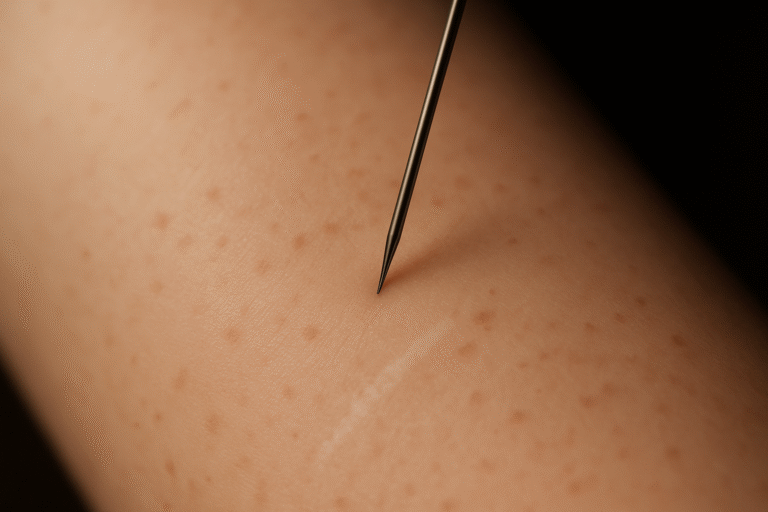
My Skin’s Story Before the Ink
My skin was never truly blank. It was a landscape already mapped with the small accidents and unintended consequences of a life lived. A faint white line on my left knee tells the story of a bicycle and a steep hill. A smattering of freckles across my shoulders speaks of summers spent careless in the sun. My body was already telling a story, but it was a story written for me, not by me.
These marks were chapters of happenstance. They were beautiful in their own way, I suppose, but they were not deliberate. I felt a growing desire to add my own punctuation, to write a sentence or two in my own hand. The idea of choosing a mark, of placing a permanent piece of art onto this living document, felt like a powerful act of self-definition. It was a way to claim a small part of the narrative for myself.
The Beautiful Trauma of the Needle
The sound of a tattoo machine is a unique kind of hum, a low, electric buzz that promises a specific kind of pain. It’s a sound that builds anticipation and a little bit of dread. Then comes the first touch of the needle.
It’s not a simple prick. It’s a sharp, vibrating line being dragged through your skin. It is a controlled wound, an intentional trauma inflicted in the name of creation. For me, it was a strangely meditative experience. The persistent sting forces you into the present moment. You can’t think about yesterday or tomorrow; you can only focus on the feeling, on your breathing, on the artist’s steady hand. The pain is real, but it’s purposeful. Each moment of discomfort is a down payment on a piece of art you will carry forever. The skin breaks, bleeds a tiny amount, and begins the process of becoming something new.
It’s a strange bargain to make with your own body. You subject it to hours of this beautiful trauma, this methodical injury, trusting that what emerges from the redness and swelling will be worth the ordeal.
An Immune System’s Reluctant Embrace
The moment the artist wipes the finished piece and covers it in a protective film, a silent, microscopic war begins. My body, in its infinite and tireless wisdom, immediately recognized an intruder. Thousands of pigment particles were suddenly lodged in the dermis, a place they did not belong.
My immune system, my personal and very loyal army, went on high alert. It dispatched macrophages, the cleanup crew of the bloodstream, to investigate the foreign invasion. Their job is to consume and carry away debris, and they tried their best. They engulfed the tiny dots of ink, attempting to transport them to the lymph nodes for disposal. But the ink particles were too large. The cells tried, failed, and ultimately died, trapping the ink right where it was.
This is the process you feel on the surface. The initial redness and swelling is the body’s inflammatory response. The maddening itch that follows a few days later is the skin knitting itself back together. The peeling is the final shedding of the damaged top layer, revealing the healed art beneath. My immune system fought a good fight, but in the end, it was forced into a truce. It couldn’t remove the ink, so it did the next best thing: it walled it off, surrounding each particle in a fibrous network of cells, holding it in a permanent, reluctant embrace.
Living with Art That Breathes and Fades
A fresh tattoo is a liar. It sits bold and dark on the surface of your skin, screaming its presence. But that’s not its final form. The true life of a tattoo begins after it has healed, after it has settled into its new home.
My own tattoos have become living things. They are not static images. They stretch when I move, they soften with the years, and they are at the mercy of the sun. The crisp, black lines of a decade-old piece on my arm are now a gentler, softer gray. The colors are less vibrant than they were on day one, but they feel more a part of me. They have aged as I have aged.
This is a truth that every tattooed person must accept. You are not acquiring a perfect, permanent sticker. You are commissioning a piece of art on a canvas that is alive, that is constantly regenerating, and that will inevitably decay. To me, there is a profound beauty in that. The art does not exist in a vacuum; it exists as part of a human body, and it shares in that body’s journey through time.
The Hidden Dialogue Between Ink and Body
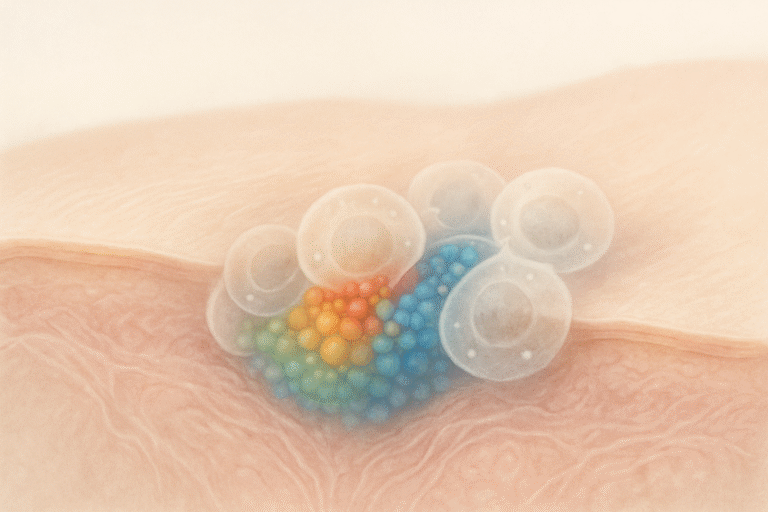
There is a conversation happening just beneath my skin, a dialogue I cannot hear but can sometimes feel. It is the silent, ongoing interaction between my biological self and the foreign pigment it holds captive. For the rest of my life, my body will be aware of this ink. It will continue its surveillance, its macrophages standing guard around the particles they could not defeat.
This relationship changes the very texture of my being. The tattoo is not just on my skin; it is in my skin. It has fundamentally altered a small piece of my physical makeup. It is a permanent modification that goes down to the cellular level. This is why a tattoo feels so personal, so integral. It has survived the body’s most vigorous attempts to reject it and has earned its place. It has become part of the anatomy, another layer to my own complex biology.
A Canvas Worth the Commitment
Looking at the art that now adorns my body, I can trace the path from idea to reality. It was a path of pain, of patient healing, and of acceptance—both from my mind and from my own immune system. The process is a serious commitment, a permanent alteration that should never be taken lightly.
For me, the exchange was more than fair. The temporary pain gave way to a permanent expression. My skin, once a record of accidents, now also bears the marks of my intentions. They are symbols of moments, beliefs, and people I chose to honor. They are part of my story, written in a language of ink and needles. The canvas was mine, but now the art is me.