

Last updated: July 9, 2026
Quick Answer: Intravenous vitamin infusion delivers vitamins and minerals directly into the bloodstream, bypassing the digestive system for near-complete absorption. The main appeal is speed and bioavailability, but the evidence for general wellness benefits is weak, costs are high, and the risks are real. For most healthy adults, IV vitamin therapy offers little advantage over a balanced diet and quality oral supplements.
Key Takeaways
- IV vitamin infusions deliver nutrients directly into the bloodstream, achieving 100% bioavailability compared to oral supplements
- The American College of Clinical Pharmacy (ACCP) has concluded there is no evidence that the benefits of IV vitamin infusions outweigh the possible risks [1]
- Sessions typically cost between $150 and $1,000, and are rarely covered by insurance
- Risks include infection, vein irritation, vitamin toxicity, kidney damage, and in rare cases, severe adverse reactions [2]
- The FDA has warned about safety at unregulated hydration clinics and spas [3]
- IV therapy may have legitimate medical uses for people with documented nutrient deficiencies or malabsorption conditions
- Healthy adults with no deficiencies are unlikely to benefit beyond a placebo effect
- Effects typically last days to a week, not months
- A balanced diet remains the safest, most cost-effective way to maintain adequate vitamin levels
What Is IV Vitamin Infusion and How Does It Work
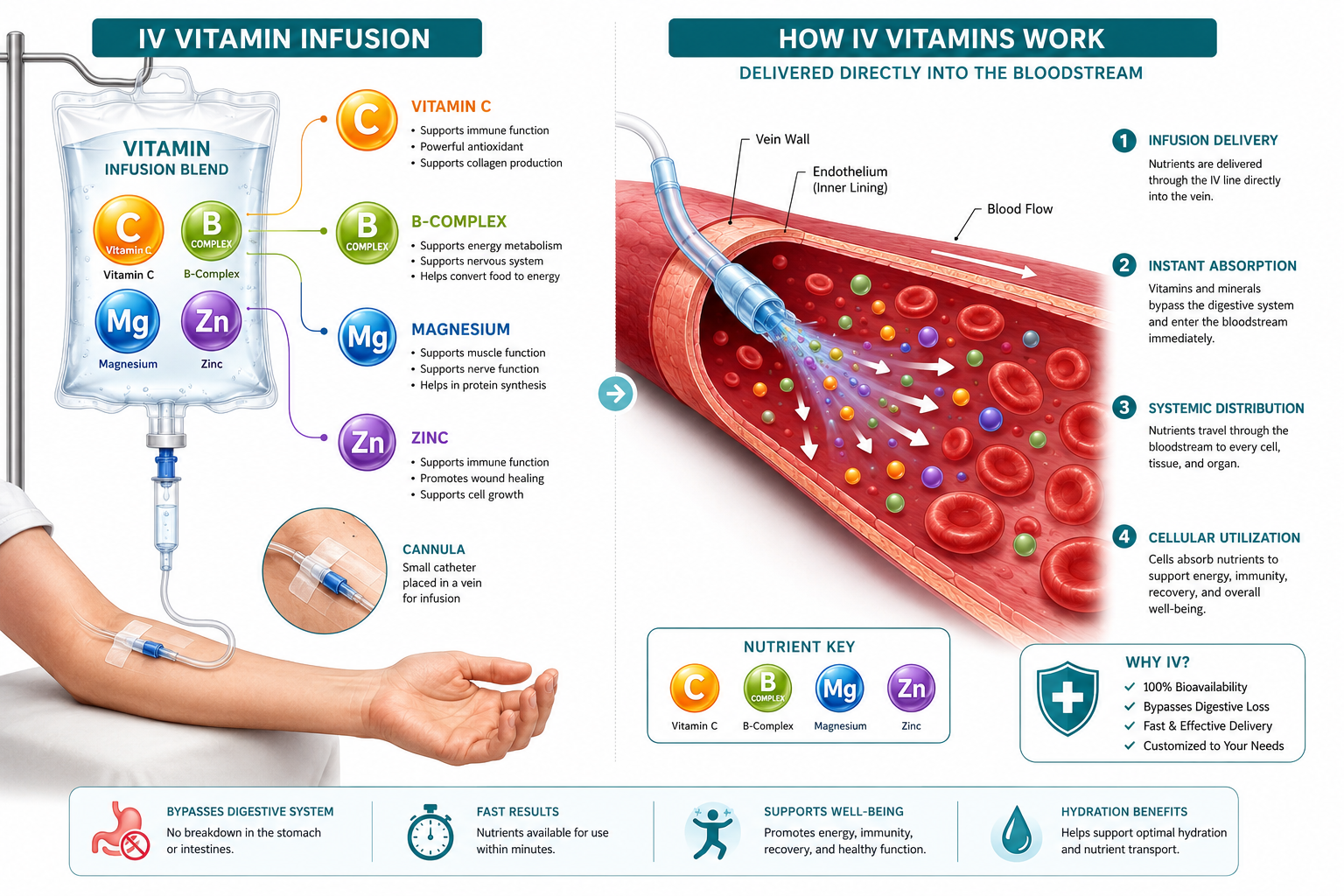
IV vitamin infusion is a medical procedure that delivers a solution of vitamins, minerals, and fluids directly into a vein through a catheter. Because the nutrients bypass the digestive tract entirely, the body absorbs close to 100% of what is administered, compared to the variable absorption rates of oral supplements.
The most well-known formulation is the “Myers’ Cocktail,” developed by physician John Myers in the 1970s. It typically contains magnesium, calcium, B vitamins, and vitamin C in a saline solution. Modern clinics have expanded far beyond this original formula, offering branded “drips” targeting energy, immunity, skin health, and athletic recovery [4].
The procedure itself takes 20 to 60 minutes. A trained provider inserts a small catheter into a vein, usually in the arm, and the solution drips in at a controlled rate. At medical clinics, a physician or nurse administers the infusion. At wellness spas, oversight varies considerably.
What Vitamins Are Typically in an IV Infusion
Most IV vitamin formulas share a core set of ingredients, though branding and dosages differ by clinic.
Common components include:
- Vitamin C (ascorbic acid), antioxidant support, immune function
- B-complex vitamins (B1, B2, B3, B5, B6, B12), energy metabolism, nerve function
- Magnesium, muscle relaxation, migraine relief
- Calcium, bone and nerve support
- Zinc, immune defense
- Glutathione, antioxidant, often marketed for skin brightening
- Saline or lactated Ringer’s solution, hydration base
Specialty drips may add amino acids, NAD+, or high-dose vitamin C (10,000 mg or more) for specific claims. The exact dosages matter significantly, because what’s therapeutic at one level can be toxic at another.
Is IV Vitamin Infusion Actually Effective, or Just Hype
For most healthy people, the evidence leans toward hype. The ACCP has stated there is no evidence that the benefits of IV vitamin infusions outweigh the possible risks for general wellness purposes [1]. A small 2009 study on fibromyalgia found that patients reported improvements after eight weeks of IV therapy, but there was no significant difference between the IV vitamin group and the placebo group [3].
Where IV therapy does have a stronger evidence base is in clinical medicine: treating severe deficiencies (such as vitamin B12 deficiency in patients with pernicious anemia), supporting patients with malabsorption disorders, or providing nutrition to those who cannot eat. These are very different scenarios from a healthy person visiting a wellness spa.
The core problem: If your body already has adequate levels of a vitamin, adding more does not improve function. The kidneys simply excrete the excess. Paying premium prices for expensive urine is a fair description for many IV wellness sessions.
Intravenous Vitamin Infusion Pros and Cons: A Direct Comparison
Understanding the full picture of intravenous vitamin infusion pros and cons requires looking at both sides honestly.
| Pros | Cons |
|---|---|
| 100% bioavailability, no digestive loss | Weak evidence for general wellness benefits |
| Rapid delivery, effects felt within minutes | Risk of infection, vein irritation, toxicity |
| Useful for documented deficiencies or malabsorption | High cost ($150,$1,000 per session) |
| Can correct severe deficiencies quickly | Largely unregulated in wellness spa settings |
| Hydration benefit from saline base | Effects are short-lived (days to one week) |
| Bypasses gut for patients with absorption issues | Risk of overdose and vitamin toxicity |
What Are the Risks and Side Effects of IV Vitamin Therapy
IV vitamin therapy carries real risks that are often downplayed in marketing materials. Because nutrients are delivered directly into the bloodstream, the body cannot regulate intake the way it does with food or oral supplements.
Documented risks include [2][3]:
- Infection at the injection site or systemic bloodstream infection
- Vein irritation or inflammation (phlebitis)
- Vitamin toxicity from excessive doses
- Kidney damage from high-dose vitamin C (which can also cause kidney stones)
- Nerve damage from excessive vitamin B6
- Heart rhythm abnormalities and blood pressure changes from high magnesium doses
- Allergic reactions, ranging from mild to severe
- Air embolism if the IV line is not properly managed
In rare but serious cases, improper sterilization of equipment at unregulated clinics has led to severe infections and, in some reported instances, death [4]. The FDA has specifically warned about the safety of IV mixtures compounded at hydration clinics and spas, noting that these facilities operate largely outside standard medical oversight [3].
Choose IV therapy only if: a licensed medical provider has assessed your health, confirmed a deficiency or clinical need, and will administer the infusion in a properly equipped setting.
Who Should Get IV Vitamin Infusions and Who Shouldn’t
IV vitamin therapy is appropriate in specific clinical situations, not as a routine wellness treatment.
Candidates who may genuinely benefit:
- Patients with confirmed vitamin deficiencies (e.g., B12, iron, vitamin D in severe cases)
- People with malabsorption conditions such as Crohn’s disease, celiac disease, or short bowel syndrome
- Cancer patients undergoing chemotherapy who cannot maintain adequate nutrition orally
- Patients recovering from surgery with restricted oral intake
- Those with severe dehydration who need rapid fluid and electrolyte replacement
Who should avoid or skip it:
- Healthy adults with no documented deficiencies
- People seeking a “quick fix” for general fatigue without a medical workup
- Anyone with kidney disease (impaired ability to excrete excess vitamins and minerals)
- Pregnant women, unless specifically directed by an obstetrician
- People with certain heart conditions sensitive to rapid electrolyte changes
“IV vitamin therapy should not be viewed as a miracle cure and is not a substitute for prescribed medications and a healthy diet.”, Dr. Melissa Young, functional medicine specialist, Cleveland Clinic [3]
IV Vitamin Infusion vs. Oral Supplements: Which Is Better
For most people, oral supplements are safer, cheaper, and sufficiently effective. IV infusions are superior only in specific circumstances.
Choose oral supplements if: you are generally healthy, have no malabsorption issues, and are managing a mild-to-moderate deficiency. High-quality oral supplements achieve adequate absorption for most nutrients when taken correctly.
Choose IV therapy if: a physician has confirmed you cannot absorb nutrients through the gut, you have a severe deficiency requiring rapid correction, or you are in a clinical setting where IV nutrition is medically indicated.
The bioavailability argument for IV therapy is real but often irrelevant. If your gut works normally, oral supplements can raise blood levels of most vitamins effectively over days to weeks. Paying hundreds of dollars to achieve the same result faster is rarely justified for wellness purposes [1].
IV Vitamin Infusion vs. Eating Healthy Foods
Whole foods deliver vitamins alongside fiber, phytonutrients, and thousands of compounds that science has not yet fully catalogued. An IV drip delivers only what is in the bag.
No IV formulation replicates the synergistic effect of a varied, nutrient-dense diet. Foods also regulate absorption naturally: the gut absorbs more iron when the body is deficient and less when stores are full. IV delivery bypasses this regulation entirely, which is both its advantage in clinical settings and its risk in wellness contexts.
For the cost of a single IV session ($150 to $1,000), a person could fund weeks of high-quality whole foods or a comprehensive oral supplement regimen with far more evidence behind it.
Can IV Vitamins Help With Energy and Fatigue
IV vitamins may help with energy if fatigue is directly caused by a documented nutrient deficiency, such as low B12, magnesium, or iron. In those cases, correcting the deficiency through any route, including IV, can improve energy levels.
However, fatigue has many causes: poor sleep, thyroid dysfunction, anemia, depression, and chronic illness, among others. IV vitamin therapy does not address these root causes. Feeling energized after a session is often attributable to the hydration component (saline) and placebo effect rather than the vitamins themselves.
Before spending money on IV therapy for fatigue, a standard blood panel with a physician is a far more useful first step.
IV Vitamin Infusion for Hangover: Does It Really Work
IV hangover drips are one of the most popular commercial offerings, and the short answer is: the hydration helps, the vitamins probably don’t add much. Hangovers are caused by dehydration, acetaldehyde toxicity, electrolyte imbalance, and inflammation. Saline and electrolytes delivered intravenously can address the hydration component quickly, which is why people often feel better.
But the same effect can be achieved by drinking water and electrolyte solutions orally, at a fraction of the cost. The added vitamins in a hangover drip have no proven benefit beyond what the body would recover on its own within 24 hours. Paying $200 or more for a faster hangover recovery is a personal choice, but it is not a medically supported one.
How Much Does an IV Vitamin Infusion Cost
Basic IV vitamin sessions typically start above $150, with more specialized or high-dose formulations reaching up to $1,000 per session [3]. Prices vary by location, clinic type, and the specific formula used.
Typical price ranges:
- Basic hydration with vitamins: $100,$200
- Myers’ Cocktail: $150,$300
- High-dose vitamin C: $200,$500
- NAD+ infusions: $500,$1,000+
These costs are almost always out-of-pocket. Insurance does not cover IV vitamin therapy for general wellness purposes.
Are IV Vitamin Infusions Covered by Insurance
No, IV vitamin infusions for wellness purposes are not covered by health insurance in the United States. Insurance may cover IV nutrient therapy when it is medically necessary, for example, treating a diagnosed deficiency or supporting a patient with a malabsorption disorder, but this requires physician documentation and prior authorization.
Wellness clinics and spas that offer IV drips operate outside insurance networks. Patients pay entirely out of pocket, making the cost-benefit calculation particularly important.
How Often Should You Get IV Vitamin Infusions
There is no evidence-based guideline for frequency in healthy individuals, because routine IV vitamin therapy for general wellness is not medically recommended. In clinical settings, frequency is determined by the specific deficiency being treated and the patient’s response.
Some wellness clinics suggest weekly or monthly sessions, but this recommendation is commercially motivated rather than clinically supported. Repeated IV sessions also increase cumulative risk of vein damage, infection, and toxicity.
If a physician has prescribed IV therapy for a medical condition, follow their specific protocol.
How Long Do the Effects of IV Vitamins Last
The effects of IV vitamin infusions are short-lived for most nutrients. Water-soluble vitamins (B vitamins, vitamin C) are excreted by the kidneys within hours to days if they exceed the body’s immediate needs. Any subjective boost in energy or well-being typically fades within a few days to one week.
Fat-soluble vitamins (A, D, E, K) are stored in tissue longer, but these are rarely the primary components of commercial IV drips. The hydration benefit from saline dissipates within hours as the body returns to its normal fluid balance.
Common Mistakes People Make With IV Therapy
Understanding the intravenous vitamin infusion pros and cons also means recognizing where people go wrong.
- Skipping a medical evaluation: Getting IV therapy without bloodwork means you may be paying to correct a deficiency you don’t have, or missing a serious underlying condition causing your symptoms
- Choosing unregulated clinics: Spas and pop-up hydration bars are not held to the same standards as medical facilities. Equipment sterilization and staff qualifications vary widely [3]
- Expecting lasting results: One session does not “load up” the body with vitamins for months. The effect is temporary
- Replacing medications or medical treatment: IV vitamins are not a substitute for prescribed treatments, no matter what a clinic’s marketing suggests
- Ignoring the dose: High-dose formulas carry higher toxicity risk. Always ask for the exact dosage of each component before agreeing to a drip
Conclusion: Should You Try IV Vitamin Therapy
The intravenous vitamin infusion pros and cons come down to a straightforward calculus: the benefits are real but narrow, and the risks and costs are significant enough to warrant caution for most people.
Actionable next steps:
- Get a blood panel first. Before spending money on IV therapy, ask your doctor to check your actual vitamin and mineral levels. Treat what is confirmed, not what is assumed.
- Exhaust oral options. For most documented deficiencies, high-quality oral supplements are effective, safe, and far cheaper. Start there.
- If you pursue IV therapy, choose a licensed medical provider. Avoid unregulated spas. Confirm that a physician will review your health history and that the facility follows proper sterilization protocols.
- Be skeptical of broad wellness claims. Clinics that promise IV therapy will cure fatigue, boost immunity, or slow aging are making claims the evidence does not support.
- Prioritize diet and sleep. No IV drip compensates for chronic poor nutrition or sleep deprivation. These fundamentals remain the strongest predictors of sustained energy and health.
IV vitamin infusions have a legitimate place in medicine. For the average healthy adult in 2026, they are an expensive, largely unproven shortcut that carries real risks. Spend the money on a physician visit and a quality diet instead.
FAQ
What is the main benefit of IV vitamin infusion over oral supplements? IV infusion delivers nutrients directly into the bloodstream, achieving close to 100% absorption. This matters most for people with malabsorption conditions who cannot absorb nutrients through the gut effectively.
Is IV vitamin therapy safe for healthy people? It carries more risk than benefit for healthy adults with no deficiencies. Risks include infection, vein irritation, and vitamin toxicity. The ACCP has stated that evidence does not support the benefits outweighing the risks for general wellness [1].
Can IV vitamin therapy cause vitamin toxicity? Yes. Because IV delivery bypasses the gut’s natural regulatory mechanisms, it is easier to exceed safe levels. High-dose vitamin C can cause kidney stones, and excess B6 can cause nerve damage [2].
How long does an IV vitamin infusion session take? Most sessions last between 20 and 60 minutes, depending on the volume and formulation being administered.
Does the Myers’ Cocktail actually work? The Myers’ Cocktail has been studied for conditions like fibromyalgia and migraines, but clinical trials have not shown it to outperform placebo in controlled studies [3].
Are IV hangover drips worth the cost? The hydration component helps, but oral rehydration with water and electrolytes achieves a similar result at a fraction of the cost. The added vitamins do not have proven hangover-specific benefits.
Who regulates IV vitamin clinics? Regulation is inconsistent. The FDA has warned about safety at hydration clinics and spas, and the National Association of Boards of Pharmacy has also raised concerns about oversight at such facilities [3].
What should I ask before getting an IV vitamin infusion? Ask for the exact dosage of each ingredient, confirm a licensed physician will oversee the procedure, ask about sterilization protocols, and verify that your health history has been reviewed.
Can IV vitamins help with weight loss? No credible evidence supports IV vitamin therapy as a weight loss treatment. Claims to the contrary are marketing, not medicine.
How do I know if I actually need IV vitamins? A blood test ordered by a physician is the only reliable way to confirm a deficiency. Self-diagnosing based on fatigue or general wellness concerns is not sufficient justification for IV therapy.
References
[1] IV Vitamin Infusion – https://www.consumerlab.com/answers/are-iv-vitamin-infusions-safe-and-beneficial/iv-vitamin-infusion/?+Electrolyte+Balance=&search=Hydration+&utm_source=openai
[2] Is IV Vitamin Therapy Safe Risks And Red Flags – https://scienceinsights.org/is-iv-vitamin-therapy-safe-risks-and-red-flags/?utm_source=openai
[3] IV Vitamin Therapy – https://health.clevelandclinic.org/iv-vitamin-therapy?utm_source=openai
[4] Intravenous Vitamin Therapy Myers Cocktail – https://www.msdmanuals.com/home/special-subjects/dietary-supplements-and-vitamins/intravenous-vitamin-therapy-myers-cocktail?utm_source=openai
