The Allure and Agony of the Home Gym
The dream is a powerful one. It’s a vision of convenience, of sweating on your own terms, without the commute, the crowds, or the monthly membership fees bleeding your bank account dry. The idea of a home gym is sold to us as the ultimate life hack, a shortcut to a healthier, stronger self, accessible anytime, day or night. It’s a private sanctuary where you can blast your own music and grunt without judgment.
But there is a dark side to this dream. A dusty, neglected corner where ambition goes to die.
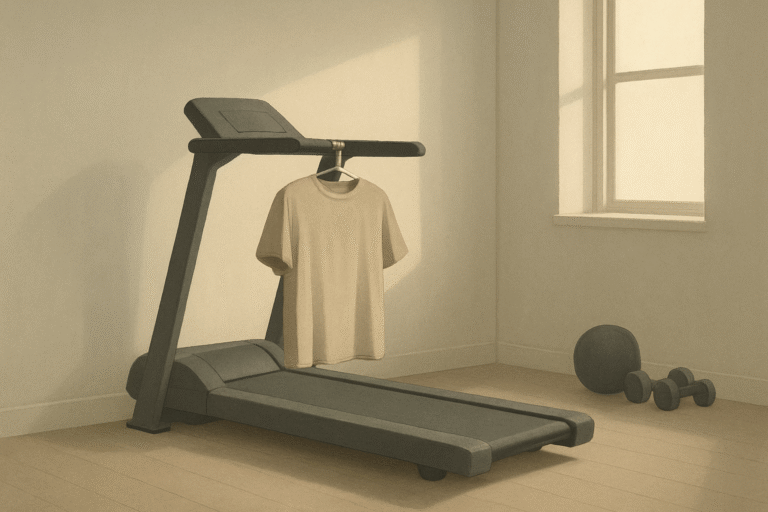
We’ve all seen it. The treadmill that has become the world’s most expensive laundry drying rack. The set of dumbbells that now serve as a doorstop. The stationary bike that stares out the window, a silent, stationary monument to forgotten New Year’s resolutions. The allure quickly fades into agony, a constant, physical reminder of good intentions that never quite translated into action. The initial investment, once a symbol of commitment, turns into a source of guilt. I believe the path to a successful home gym is not paved with brand-new, glossy equipment, but with a smarter, more calculated approach.
Why Most Home Gyms End Up as Expensive Clothes Racks
The primary reason for this failure, in my opinion, is a disconnect between fantasy and reality. People purchase equipment based on an idealized version of themselves. They buy the machine they think they should use, not the one they will actually enjoy using. They imagine themselves running for an hour every morning, but in reality, they despise running. The novelty wears off in a few weeks, and the machine sits.
Then there’s the initial excitement. A brand-new piece of equipment feels like a fresh start. The unboxing, the assembly, the first few workouts—it all feels charged with potential. But motivation is a finite resource. When life gets busy, when work is stressful, when you’re just plain tired, the pull of the couch is often stronger than the call of the elliptical in the next room. Unlike a commercial gym, which you have financially committed to visiting each month, the home gym asks for a different kind of payment: self-discipline. And that’s a currency many of us find we are short on.
It’s a cycle of guilt and avoidance. The equipment becomes a visual cue for failure, so you start to ignore it. You drape a shirt over it. Then a pair of pants. Soon, it’s completely buried, out of sight and out of mind, its true purpose forgotten.
My Secret Weapon for a Budget-Friendly Gym: Used Is The New New
I’m going to let you in on something that has saved me thousands of dollars and helped me build a fitness space I actually use. Forget the showroom floor. Forget the smell of new plastic and factory rubber. My philosophy is simple.
Used is the new new.
Think about all those failed home gyms I just mentioned. They are everywhere. Homes across your city are filled with nearly-new fitness machines bought by people with big dreams and short attention spans. After three or four months, the reality sets in, and that once-exciting purchase becomes a bulky inconvenience they just want gone. Their loss is your massive gain. You get a piece of equipment with minimal wear and tear for a fraction of its original price.
Where to Hunt for Hidden Gems
Finding these deals requires a bit of detective work, but it’s part of the fun. Your first stop should be online marketplaces. Facebook Marketplace, Craigslist, and local classified apps are goldmines. People are often motivated to sell quickly to reclaim their space, which gives you negotiating power. I’ve seen treadmills that retail for over two thousand dollars listed for a few hundred, simply because someone was moving.
Don’t forget about dedicated secondhand sports stores like Play It Again Sports. They test the equipment and you can often see it in person before buying. Estate sales can be another unexpected source; you never know what you might find. The key is to be patient and persistent. Set up alerts for keywords like “treadmill,” “squat rack,” or “elliptical” and be ready to act when a good deal appears.
The Non-Negotiable Pre-Purchase Checklist
Before you hand over any cash for a used piece of equipment, you need to be thorough. A great price means nothing if the machine is a lemon. Always try to test it yourself. If it’s a treadmill, walk and run on it at various speeds and inclines. Listen for any strange clunking, grinding, or high-pitched squealing. Check the belt for signs of fraying or excessive wear.
For strength equipment like a squat rack or a bench, check for stability. Does it wobble? Are there any signs of rust on the welds or bolts? Make sure all the safety pins and adjustment mechanisms work smoothly and lock securely. With ellipticals or bikes, feel the resistance. Does it change smoothly? Is the motion fluid or does it feel jerky? A quick inspection can save you from a huge headache later. Ask the seller why they are getting rid of it. Their answer can be very telling.
Why I Believe in Bringing the Gym Home: Go Commercial or Go Home
If you are serious about building a lasting home gym and you have the funds, I have some strong advice. Skip the flimsy, residential-grade stuff.
Go commercial or go home.
There’s a reason the equipment at your local health club feels different. It’s built to withstand constant use, day in and day out, by people of all shapes and sizes. It’s tougher, smoother, and more robust. While it might seem like overkill for a home setting, that’s precisely the point. A commercial machine in your basement will likely last you a lifetime.
You can often buy this exact equipment for your own house. Imagine having the very same leg press or stair climber that you use at the gym, available 24/7 without a wait. When you bring that level of quality into your home, it changes your mental relationship with the workout. It feels more serious, more legitimate.
The Upfront Cost vs. The Long-Term Gain
Yes, the initial price is higher. Significantly higher, in many cases. This is where most people balk. But you have to think beyond the sticker price. Consider the math. Let’s say a gym membership costs you fifty dollars a month. That’s six hundred dollars a year. Over five years, that’s three thousand dollars. Over a decade, it’s six thousand dollars, and that’s assuming the price never increases.
A high-quality commercial treadmill might cost you three or four thousand dollars. It’s a big hit upfront, but after five or six years, you’ve broken even. From that point forward, every workout is essentially free. You’re not just buying a machine; you’re making a long-term investment in your health that eventually pays for itself.
Built to Last: A Lesson in Durability
The difference in construction is staggering. Residential equipment is often made with more plastic components, thinner steel frames, and less powerful motors. It’s designed for occasional use. Commercial equipment, on the other hand, is over-engineered for the home environment. The welds are stronger, the bearings are sealed and self-lubricating, and the electronics are more resilient.
This durability means fewer breakdowns and less maintenance. You won’t be dealing with a wobbly frame or a sputtering motor two years down the line. That peace of mind is worth a lot. You are buying a machine that is designed not to fail, which is exactly what you want when you’re counting on it for your daily exercise.
The Money Talk You Need to Have With Yourself
This brings us to the most delicate part of the process: the money. Buying fitness equipment, whether new or used, commercial or residential, is a significant financial decision. It’s easy to get caught up in the excitement and make an impulsive choice that your wallet will regret for years. Before you even start browsing, you need to have an honest conversation with yourself about your budget.
You must be brutally realistic about what you can afford. This isn’t just about the purchase price, but about the entire financial picture of this new addition to your life. An honest self-assessment now will prevent a financial hangover later.
Beyond the Price Tag: The True Cost of Ownership
The number on the price tag is only the beginning. You have to consider the other costs. Will there be a delivery fee? If you’re buying a heavy commercial piece, that fee could be several hundred dollars. Do you need to pay for professional assembly? For complex machines, this is often a wise choice.
What about the space itself? Do you need to install special flooring, like rubber mats, to protect your floor and absorb noise? Will you need to run a dedicated electrical circuit for a powerful treadmill? And what about future maintenance? Even the best machines might need a new belt or a replacement part eventually. These ancillary costs can add up, and they should absolutely be factored into your total budget.
Navigating Financing Without the Financial Hangover
If you can’t pay for the equipment outright, you’ll be looking at financing. Be very careful here. Many fitness stores offer what seem like attractive financing plans, but they can be laden with high interest rates if you don’t pay them off within a promotional period. Reading the fine print is absolutely mandatory.
You do not want to be paying double-digit interest on a piece of equipment that is depreciating in value. A better option might be to save up for a few more months and pay cash. Or, if you must finance, look for a true zero-percent interest offer and create a strict payment plan to ensure it’s paid off before the interest kicks in. Avoid putting it on a high-interest credit card at all costs. The goal is to get physically fit, not financially crippled.
Conclusion: Building Your Fitness Sanctuary on Your Own Terms
Creating a home gym that you will actually use is not about buying the most popular or the most expensive machine. It’s about being a smart, informed consumer. It’s about understanding your own habits and motivations with brutal honesty. It’s about hunting for value in the secondhand market and recognizing that true quality often means investing in durability over bells and whistles.
By combining the savvy of a bargain hunter with the foresight of a long-term investor, you can bypass the common pitfalls. You can avoid creating another expensive clothes rack. Instead, you can build a personal fitness sanctuary, a space designed by you, for you, on your own terms. A place that not only serves your physical health but also stands as a testament to a smart decision, well-made.