

Last updated: July 11, 2026
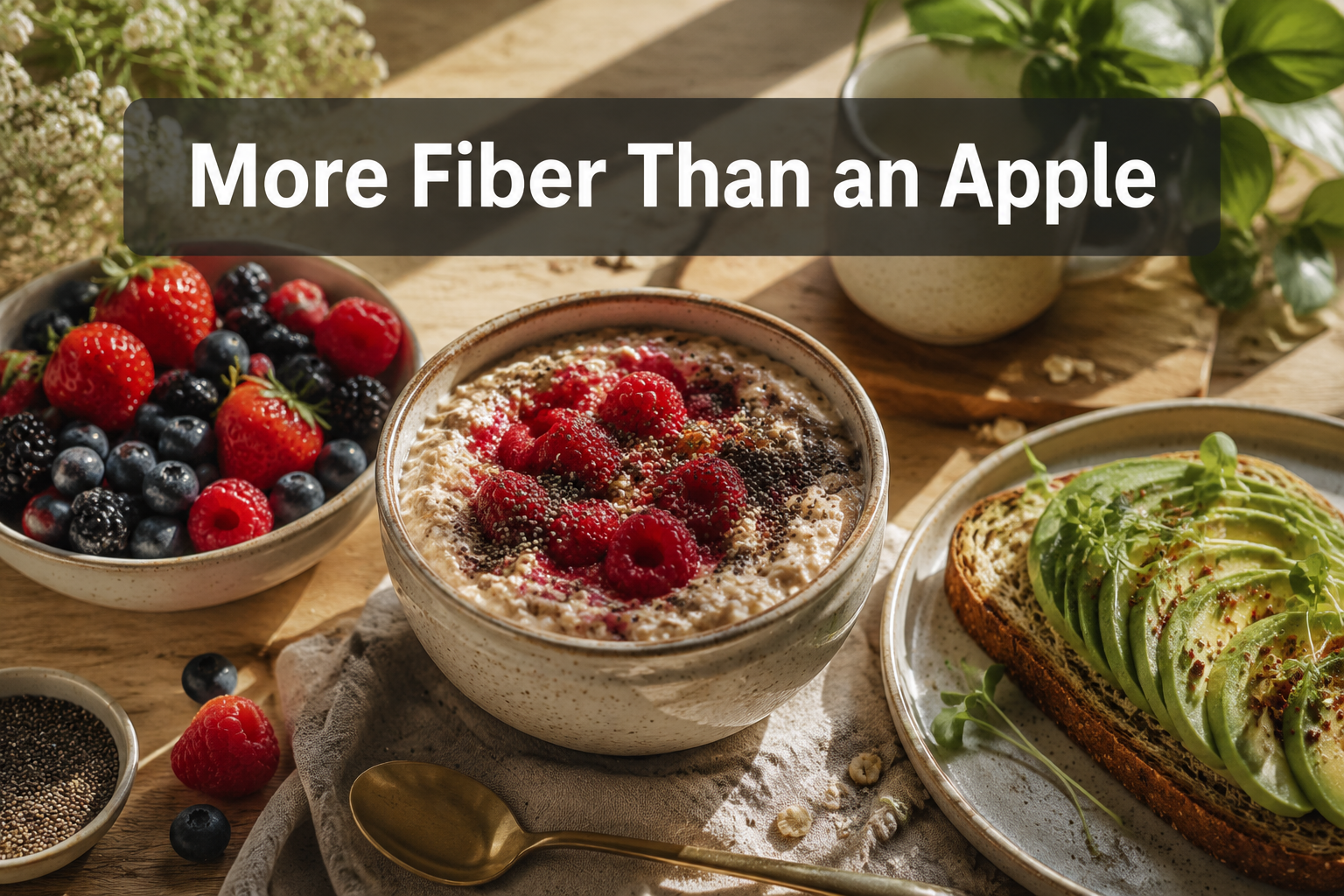
Quick Answer: A medium apple contains roughly 4 to 5 grams of dietary fiber, which sounds impressive until you compare it to breakfast staples like overnight oats, chia seeds, and high-fiber cereals. Many common morning foods deliver two to three times that amount in a single serving. This guide covers the best breakfast foods with more fiber than an apple, who they work best for, and how to build a habit around them in July 2026.
Key Takeaways
- A medium apple provides approximately 4.4 grams of fiber (with skin), according to Mayo Clinic [1].
- Chia seeds deliver about 10 grams of fiber per 2 tablespoons, making them one of the most concentrated breakfast fiber sources available [1].
- Overnight oats with chia seeds and berries can yield more than 11 grams of fiber per serving [2].
- Raspberries contain roughly 8 grams of fiber per cup, more than double the fiber in most apple varieties [1].
- Whole-grain avocado toast provides approximately 9.5 grams of fiber per serving [1].
- High-fiber breakfasts support digestive health, blood sugar regulation, and sustained morning energy.
- Most adults need 25 to 38 grams of fiber daily; breakfast is the easiest meal to close that gap.
- Adding fiber gradually and drinking enough water prevents digestive discomfort.
- Budget-friendly options like oats and canned beans make high-fiber breakfasts accessible for most households.
- Cooking generally does not destroy fiber, though raw preparations can slightly preserve soluble fiber content.
How Much Fiber Does an Apple Actually Have?
A medium apple with skin contains approximately 4.4 grams of dietary fiber, according to Mayo Clinic [1]. Without the skin, that number drops closer to 2 grams. Most of an apple’s fiber is pectin, a soluble fiber that supports gut health and helps slow glucose absorption.
That’s a solid contribution, but it’s far from the ceiling. Many breakfast foods exceed that amount easily, and some nearly triple it. Understanding this baseline is the first step toward building a genuinely high-fiber morning routine.
What Breakfast Foods Have More Fiber Than an Apple
Several common breakfast foods outperform a medium apple on fiber content. The standouts include chia seeds, raspberries, whole-grain toast with avocado, oatmeal, bran cereals, flaxseeds, and quinoa.
Here’s a direct comparison:
| Breakfast Food | Serving Size | Approx. Fiber |
|---|---|---|
| Chia seeds | 2 tablespoons | ~10 g [1] |
| Raspberries | 1 cup | ~8 g [1] |
| Avocado toast (whole-grain) | 1 slice + 1/2 avocado | ~9.5 g [1] |
| Overnight oats + chia + berries | 1 serving | >11 g [2] |
| Cooked quinoa | 1 cup | ~5 g [3] |
| Almonds | 1 ounce | ~3.5 g [1] |
| Banana | 1 medium | ~3 g [1] |
| Medium apple (benchmark) | 1 medium (with skin) | ~4.4 g [1] |
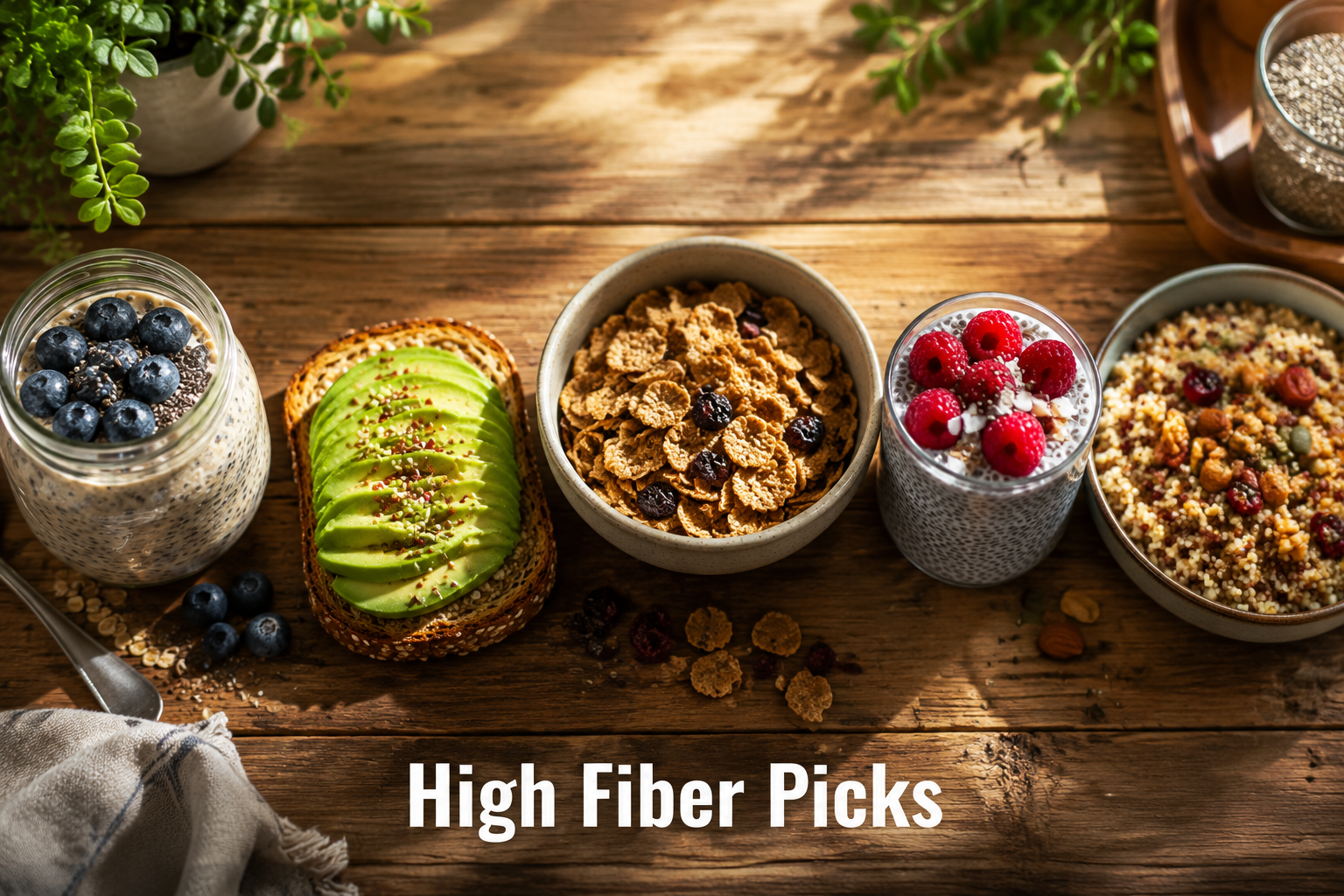
Decision rule: Choose chia seeds or raspberries if you want the highest fiber-per-calorie ratio. Choose overnight oats if you want a filling, complete breakfast in one bowl.
Best High-Fiber Cereals Ranked by Fiber Content
High-fiber cereals are one of the fastest ways to beat an apple’s fiber count before 8 a.m. Look for cereals where the first ingredient is whole grain and the fiber per serving is at least 5 grams.
- Bran-based cereals (such as All-Bran or Fiber One): Often deliver 9 to 14 grams of fiber per serving, though exact amounts vary by brand. Always check the nutrition label.
- Whole-grain oat cereals: Typically 3 to 5 grams per serving; lower than bran cereals but gentler on the stomach.
- Granola with seeds: Fiber varies widely; choose versions with flax or chia added, and watch for added sugar.
Common mistake: Picking a cereal that says “multigrain” or “natural” on the front label without checking the actual fiber content. Many of these cereals contain under 2 grams per serving.
High-Fiber Breakfast Ideas for Weight Loss
High-fiber breakfasts support weight management by slowing digestion, reducing post-meal blood sugar spikes, and extending the feeling of fullness. For people focused on weight loss, the goal is to maximize fiber without dramatically increasing calories.
Top picks for this goal:
- Chia seed pudding with mixed berries: Two tablespoons of chia seeds provide 10 grams of fiber and expand in liquid, creating a filling texture with relatively few calories [1].
- Greek yogurt with raspberries and chia seeds: Raspberries add 8 grams of fiber per cup, and the protein in Greek yogurt helps curb hunger further [1].
- Vegetable omelet with whole-grain toast: Spinach and bell peppers add fiber and micronutrients; a slice of whole-grain toast contributes an additional 2 to 3 grams [3].
For more on how supplements and nutrients interact with weight and health goals, see our guide to using vitamins and supplements as a treatment.
Are Oats or Chia Seeds Better for Fiber?
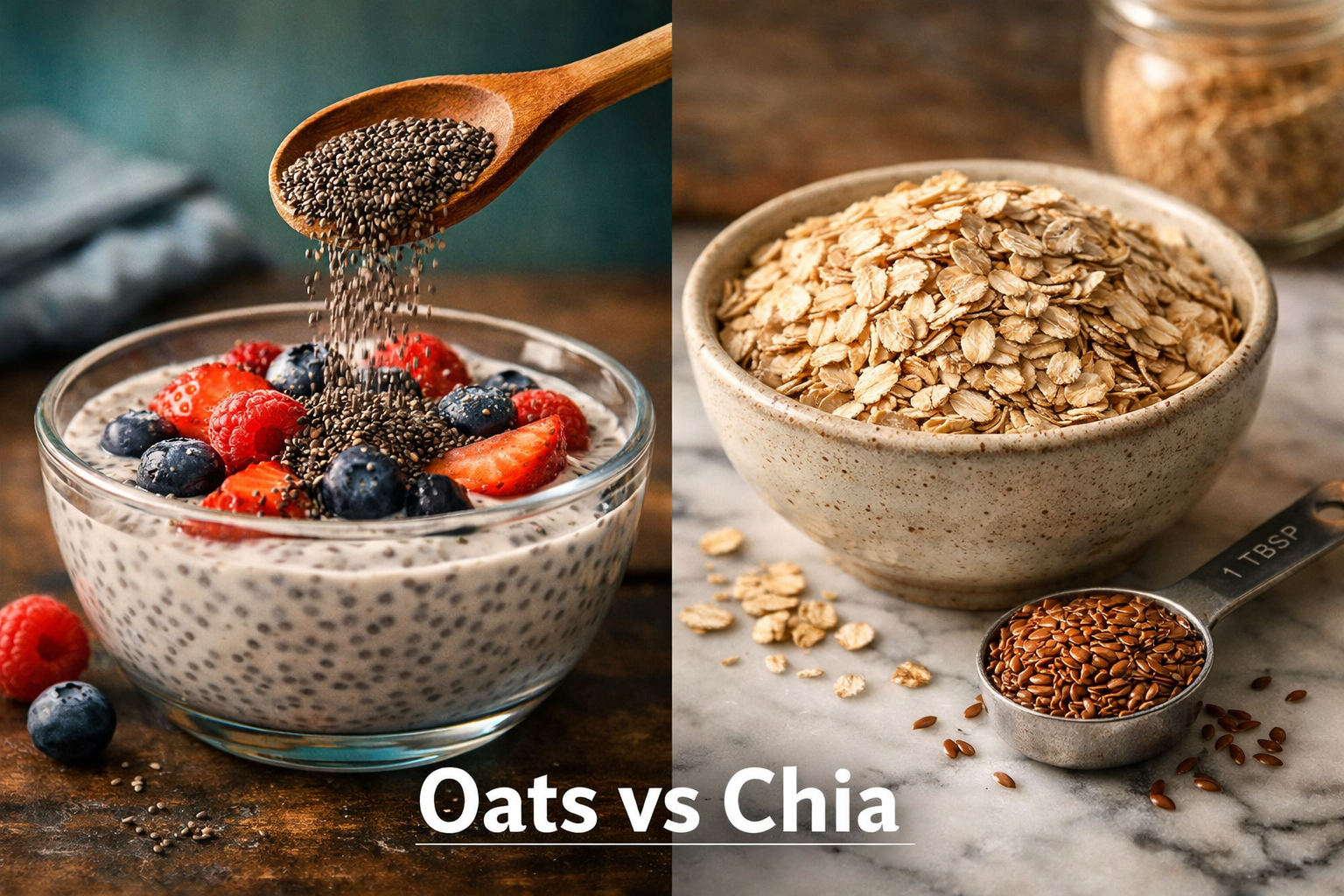
Chia seeds contain more fiber per gram than oats, but oats provide a more balanced, complete breakfast base. Two tablespoons of chia seeds deliver approximately 10 grams of fiber [1], while a half-cup of dry rolled oats provides around 4 grams. However, oats are more filling as a standalone meal and offer beta-glucan, a soluble fiber specifically linked to lower LDL cholesterol.
Choose oats if you want a warm, savory-or-sweet base that keeps you full for hours. Choose chia seeds if you want maximum fiber density in a small volume, or you’re adding a booster to yogurt, smoothies, or pudding.
Combining both, as in overnight oats with chia seeds, is the highest-impact strategy. A single serving can exceed 11 grams of fiber [2].
Quick High-Fiber Breakfast Under 5 Minutes
Speed is often the real barrier to eating well in the morning. These options require minimal preparation and still beat an apple on fiber.
- Overnight oats (prep the night before, grab in the morning): Combine rolled oats, chia seeds, and any milk in a jar. Add berries in the morning. Total prep: 3 minutes the evening before [2].
- Whole-grain toast with avocado: Toast one slice of whole-grain bread, mash half an avocado on top. Approximately 9.5 grams of fiber [1].
- Chia pudding (pre-made): Mix chia seeds with milk and refrigerate overnight. Top with raspberries in the morning.
- High-fiber cereal with milk and a banana: Pour, add banana, done. Choose a bran-based cereal for maximum fiber.
High-Fiber Breakfast Foods That Don’t Taste Healthy
Not every high-fiber breakfast has to feel like a nutrition assignment. Several genuinely satisfying options pack more fiber than an apple without tasting like cardboard.
- Whole-grain pancakes with blueberries: Blueberries provide 3.6 grams of fiber per cup [1], and swapping all-purpose flour for whole-wheat flour adds more. These taste like a weekend treat.
- Baked oatmeal with nuts and seeds: Warm, slightly sweet, and closer to a baked good than a health food [3]. Add cinnamon, maple syrup, and walnuts.
- Avocado toast with everything bagel seasoning: Feels indulgent, delivers nearly 9.5 grams of fiber [1].
- Smoothie bowl with spinach and flaxseeds: Spinach adds 4 grams of fiber per cup and is nearly tasteless when blended with fruit [3]. Flaxseeds add another 3 grams per 2 tablespoons.
Can You Eat Too Much Fiber at Breakfast?
Yes, eating too much fiber too quickly can cause bloating, gas, and cramping. The recommended daily intake is 25 grams for women and 38 grams for men, according to general dietary guidelines. Consuming a large share of that in one sitting, especially if your current diet is low in fiber, can overwhelm the digestive system.
Practical rules:
- Increase fiber intake gradually over two to three weeks.
- Drink at least one full glass of water with a high-fiber breakfast.
- If you experience consistent discomfort, spread fiber intake across all three meals rather than front-loading it.
High-Fiber Breakfast for People with Sensitive Stomachs
People with irritable bowel syndrome (IBS) or general digestive sensitivity need to distinguish between soluble and insoluble fiber. Soluble fiber (found in oats, chia seeds, and bananas) is generally better tolerated. Insoluble fiber (found in wheat bran and some raw vegetables) can aggravate symptoms in sensitive individuals.
Good starting points for sensitive stomachs:
- Cooked oatmeal: Gentle, high in soluble fiber, and easy to digest.
- Banana with almond butter: Provides around 3 grams of fiber from the banana [1] with minimal digestive irritation.
- Chia seed pudding: The gel-forming nature of chia seeds is soothing rather than abrasive for most people [1].
Avoid starting with large amounts of raw bran cereal or flaxseeds if your stomach is sensitive.
High-Fiber Breakfast for Kids Who Are Picky Eaters
Getting children to eat more fiber works best when the food doesn’t look or taste “healthy.” The goal is to embed fiber into foods they already enjoy.
- Whole-grain pancakes with blueberries: Kids rarely notice the flour swap, and blueberries add natural sweetness alongside fiber [1].
- Smoothies with spinach and banana: Spinach disappears visually and in taste when blended with frozen banana and berries [3].
- Oatmeal with honey and berries: A small amount of honey makes oatmeal appealing to most children, and the berries add color and extra fiber.
- Whole-grain cereal with milk: Choose a low-sugar, high-fiber cereal and let kids pick the toppings.
Best High-Fiber Breakfast if You’re Diabetic
For people managing blood sugar, soluble fiber is particularly valuable because it slows glucose absorption and helps prevent post-meal spikes. The best high-fiber breakfast choices for diabetics combine soluble fiber with protein and healthy fats.
- Overnight oats with chia seeds and berries: The combination of beta-glucan from oats and soluble fiber from chia seeds makes this one of the most blood-sugar-friendly breakfasts available [2].
- Greek yogurt with raspberries and chia seeds: High protein, high fiber, and low glycemic impact [1].
- Vegetable omelet with whole-grain toast: Eggs provide protein with zero fiber impact; the toast and vegetables add fiber without a large carbohydrate load [3].
Important note: Anyone managing diabetes should work with a registered dietitian or physician before making significant dietary changes. For broader context on nutrition and health management, see our health resources section.
High-Fiber Breakfast on a Budget
Eating more fiber doesn’t require expensive specialty foods. The most affordable high-fiber breakfast ingredients are also among the most effective.
- Rolled oats: One of the cheapest fiber sources per serving. A large container typically costs under $4 and provides dozens of servings.
- Bananas: Widely available, inexpensive, and provide around 3 grams of fiber each [1].
- Canned beans: A half-cup of black beans or chickpeas at breakfast (in a savory egg bowl, for example) provides 6 to 8 grams of fiber at very low cost.
- Frozen berries: Nutritionally comparable to fresh, significantly cheaper, and available year-round. Raspberries and blueberries both freeze well.
- Flaxseeds: A bag of ground flaxseeds costs very little and adds 3 grams of fiber per 2 tablespoons to anything [3].
High-Fiber Breakfast Meal Prep for the Week
Meal prepping fiber-rich breakfasts in July makes it easier to stay consistent during busy weeks. Most high-fiber breakfasts either keep well in the refrigerator or can be assembled in batches.
Sunday prep checklist:
- Make a batch of overnight oats in five individual jars (oats, chia seeds, milk). Add toppings each morning.
- Prepare chia seed pudding in four to five small containers. Store in the refrigerator for up to five days.
- Bake a tray of oatmeal cups with nuts, seeds, and berries. These reheat in 60 seconds and last all week [3].
- Hard-boil eggs to pair with whole-grain toast and avocado for quick savory breakfasts.
- Portion frozen berries into individual bags for easy smoothie or topping use.
Does Cooking Affect Fiber Content in Breakfast Foods?
Cooking does not destroy dietary fiber, but it can change its structure. Heat breaks down some insoluble fiber into soluble fiber, which can actually improve digestibility for people with sensitive stomachs. The total fiber content remains largely intact.
For example, cooked oatmeal retains the same fiber as raw oats by weight. Baked oatmeal with nuts and seeds delivers the same fiber as its uncooked ingredients [3]. The main consideration is water content: cooked foods weigh more due to absorbed water, so a cup of cooked oats has less fiber than a cup of dry oats by volume, but the same amount by dry weight.
Bottom line: Don’t avoid cooking high-fiber foods out of concern for nutrient loss. The fiber survives heat well.
Conclusion
Breakfast foods with more fiber than an apple are not hard to find or expensive to buy. From chia seed pudding and overnight oats to whole-grain avocado toast and raspberry-topped yogurt, July 2026 is a good time to rethink what a fiber-rich morning actually looks like.
Actionable next steps:
- Start with one swap this week: replace a low-fiber breakfast with overnight oats or whole-grain toast with avocado.
- Add chia seeds or ground flaxseeds to whatever you already eat in the morning. Two tablespoons can add up to 10 grams of fiber with no recipe change required [1].
- Batch-prep two or three fiber-rich breakfasts on Sunday to remove the daily decision.
- Increase fiber gradually, drink more water, and give your digestive system two to three weeks to adjust.
- Check the nutrition label on any cereal or bread before buying. Look for at least 3 grams of fiber per serving as a baseline.
For those exploring broader nutritional strategies, our health content hub covers related topics in depth.
FAQ
How much fiber does a medium apple have? A medium apple with skin contains approximately 4.4 grams of dietary fiber. Without the skin, this drops to around 2 grams [1].
What is the highest-fiber breakfast food? Chia seeds are among the most fiber-dense breakfast ingredients, providing approximately 10 grams of fiber per 2 tablespoons. Combined with oats and berries in overnight oats, a single serving can exceed 11 grams [2].
Are overnight oats a good high-fiber breakfast? Yes. Overnight oats made with rolled oats, chia seeds, and berries can deliver more than 11 grams of fiber per serving, well above the roughly 4.4 grams in a medium apple [2].
Is avocado toast actually high in fiber? Whole-grain avocado toast (one slice of whole-grain bread plus half an avocado) provides approximately 9.5 grams of fiber per serving, more than double the fiber in a medium apple [1].
Can high-fiber breakfasts help with blood sugar? Yes. Soluble fiber, found in oats, chia seeds, and berries, slows glucose absorption and can help reduce post-meal blood sugar spikes. This makes high-fiber breakfasts particularly useful for people managing or preventing type 2 diabetes.
What’s the fastest high-fiber breakfast? Whole-grain toast with half an avocado takes under five minutes and provides roughly 9.5 grams of fiber [1]. Pre-made overnight oats or chia pudding (prepared the night before) are equally fast in the morning.
Are frozen berries as high in fiber as fresh? Yes. Freezing does not significantly reduce fiber content. Frozen raspberries and blueberries are nutritionally comparable to fresh and are often more affordable.
Is oatmeal high in fiber? A half-cup of dry rolled oats contains around 4 grams of fiber. Adding chia seeds and berries can push a single oatmeal bowl well past 10 grams.
What high-fiber breakfast is best for kids? Whole-grain pancakes with blueberries and smoothies with hidden spinach are among the most child-friendly options. Both deliver meaningful fiber without tasting “healthy” [1][3].
Can you eat too much fiber at breakfast? Yes. Consuming a very large amount of fiber in one sitting, especially if your diet is normally low in fiber, can cause bloating and gas. Increase fiber intake gradually and drink plenty of water.
What is the cheapest high-fiber breakfast? Rolled oats are the most cost-effective option, providing several grams of fiber per serving at very low cost. Adding a banana and ground flaxseeds keeps costs minimal while significantly boosting fiber content [1][3].
Does cooking oatmeal reduce its fiber content? No. Cooking oats does not destroy fiber. The total fiber content remains the same; the texture and digestibility simply change with heat and water absorption [3].
References
[1] Art 20050948 – https://www.mayoclinic.org/healthy-lifestyle/nutrition-and-healthy-eating/in-depth/high-fiber-foods/art-20050948?footprints=mine&s=3&utm_source=openai
[2] Best High Fiber Breakfast Mediterranean 110000168 – https://health.yahoo.com/wellness/nutrition/healthy-eating/articles/best-high-fiber-breakfast-mediterranean-110000168.html?utm_source=openai
[3] High Fiber Breakfast – https://www.katheats.com/high-fiber-breakfast?utm_source=openai
