

Last updated: July 17, 2026
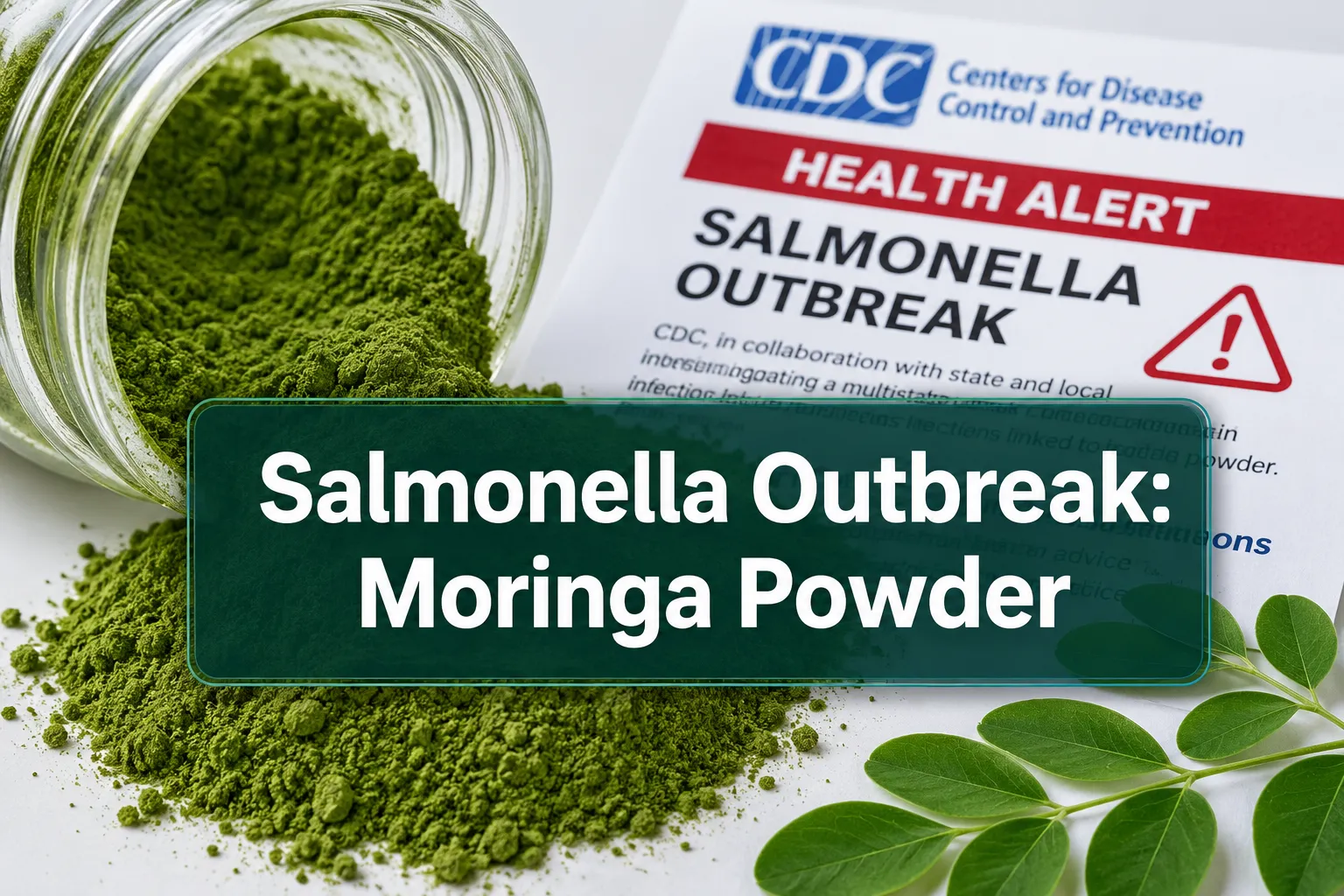
Quick Answer: As of mid-2026, the FDA and CDC have confirmed a multi-state Salmonella outbreak directly tied to moringa leaf powder supplements, with 119 cases reported across 36 states. Several brands have issued recalls. If you have moringa powder or capsules at home, stop using them immediately, check the recall list, and discard or return any affected products.
Key Takeaways
- The CDC confirmed 119 Salmonella infections across 36 states as of May 27, 2026, with 32 hospitalizations and no deaths reported. [1]
- Recalled brands include TNVitamins, Doctor’s Pride Ultra Potent Complete Green Superfood Moringa, MOGO-brand Pure Moringa Oleifera, and Rosabella-brand moringa powder capsules. [2][3]
- An extensively drug-resistant strain of Salmonella was identified in February 2026, linked to Rosabella-brand moringa capsules. [3]
- The outbreak has international reach, with Spain’s food safety agency issuing alerts for organic moringa products imported from Germany. [4]
- Symptoms typically begin 6 hours to 6 days after exposure and include diarrhea, fever, and stomach cramps. [1]
- Heating moringa powder does not reliably kill Salmonella in supplement form; discarding recalled products is the safest action.
- High-risk groups include infants, adults over 65, pregnant women, and immunocompromised individuals.
- The FDA is actively conducting a traceback investigation to identify the contamination source. [2]
- Consumers can verify recalls at FDA.gov and CDC.gov using lot numbers printed on product packaging.
What Is Salmonella and How Does It Spread in Food Products
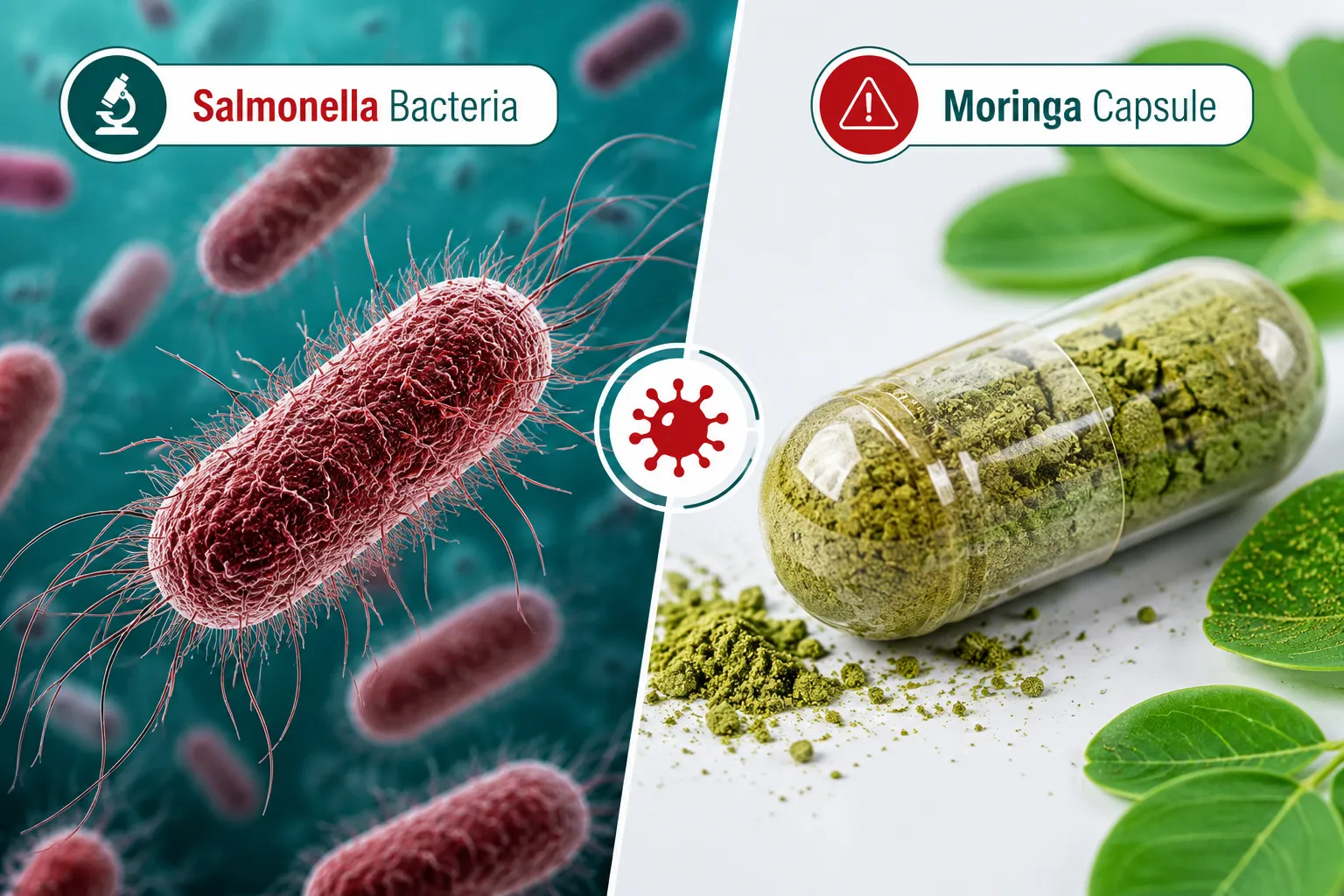
Salmonella is a group of bacteria that causes one of the most common foodborne illnesses in the United States. It spreads when food or supplements become contaminated during growing, processing, or packaging, and a person then consumes the contaminated product without adequate heat treatment.
In the context of dietary supplements like moringa powder, contamination typically occurs at the source, often during harvesting or drying of plant material in conditions where animal feces or contaminated water are present. Unlike fresh produce, dried powders can harbor Salmonella for extended periods because low moisture does not kill the bacteria. It simply keeps them dormant until they enter a warm, moist environment, such as the human digestive tract.
Key transmission facts:
- Salmonella does not change the smell, taste, or appearance of food or supplements.
- Cross-contamination can occur if recalled products touch kitchen surfaces, utensils, or other foods.
- The bacteria can survive in low-moisture environments, including dried plant powders, for months.
For a broader look at how supplement safety standards work and where they fall short, see this guide on using vitamins and supplements as a treatment.
Moringa Leaf Powder Salmonella Outbreak: Timeline and Symptoms
The Salmonella outbreak linked to moringa leaf powder began in January 2026 and has grown significantly through mid-year. By May 27, 2026, the CDC had confirmed 119 cases across 36 states, resulting in 32 hospitalizations. [1] No deaths have been reported as of the latest update.
Outbreak timeline at a glance:
| Date | Event |
|---|---|
| January 2026 | Outbreak investigation begins |
| February 2026 | CDC identifies extensively drug-resistant Salmonella strain tied to Rosabella-brand moringa capsules [3] |
| May 25, 2026 | MOGO Moringa LLC recalls two lots of Pure Moringa Oleifera capsules after 18 illnesses in 14 states [2] |
| May 26, 2026 | Total Nutrition, Inc. recalls TNVitamins and Doctor’s Pride moringa capsules [1] |
| June 2, 2026 | Recall expanded to include additional lots [1] |
| June 2026 | Spain’s AESAN issues expanded alert for organic moringa products from Germany [4] |
Symptoms of Salmonella infection from moringa powder:
- Diarrhea (often severe)
- Fever
- Stomach cramps and nausea
- Vomiting in some cases
- Symptoms typically appear 6 hours to 6 days after consuming a contaminated product [1]
- Most people recover within 4 to 7 days without medical treatment
Which Moringa Powder Brands Are Affected by the Salmonella Recall
Several specific brands and lot numbers have been recalled. Do not use any moringa product until you have verified it is not on the recall list.
Confirmed recalled products (as of July 2026):
- MOGO-brand Pure Moringa Oleifera capsules: Lot #15525AA (EXP 6/2027) and Lot #00926AA (EXP 1/2028), recalled May 25, 2026 [2]
- TNVitamins moringa capsules: Specific lots recalled by Total Nutrition, Inc. on May 26, 2026; recall expanded June 2, 2026 [1]
- Doctor’s Pride Ultra Potent Complete Green Superfood Moringa: Included in the Total Nutrition, Inc. recall [1]
- Rosabella-brand moringa powder capsules: Linked to the drug-resistant strain identified in February 2026 [3]
- European brands: Samskara, Energy Feelings, and Eco-Salim moringa products flagged by Spain’s AESAN in June 2026 [4]
Minnesota health officials confirmed two cases tied to TNVitamins moringa capsules purchased through Amazon. Both individuals recovered without hospitalization. [5]
Where to Check If Your Moringa Powder Batch Is Recalled
The fastest way to verify a recall is to cross-reference your product’s lot number against the official FDA and CDC recall databases.
Steps to check your product:
- Locate the lot number on your moringa product packaging (usually on the bottom or side label).
- Visit the FDA outbreak investigation page for the current list of recalled lots. [2]
- Check the CDC outbreak page for updated case counts and brand information. [1]
- If your lot number matches any recalled batch, stop using the product immediately.
- Do not donate recalled products; dispose of them in a sealed bag in the trash or return them to the retailer for a refund.
Can You Kill Salmonella by Heating Moringa Powder
Heating food to an internal temperature of 165°F (74°C) or higher can kill Salmonella. However, this approach is not practical or reliable for moringa supplements in capsule or powder form.
Most people consume moringa powder by mixing it into cold smoothies, water, or food without cooking it. Even if you add moringa powder to a hot drink, the temperature may not be uniform enough throughout the powder to guarantee elimination of all bacteria. Capsules are swallowed whole, bypassing any heat treatment entirely.
Bottom line: Do not attempt to “heat-treat” recalled moringa powder at home. The safest action is to discard any recalled product and contact the retailer for a refund.
Is Moringa Powder Safe to Use Now, or Should You Throw It Away
If your moringa product is not on any recall list and was not purchased from a recalled brand or lot, current guidance does not require you to discard it. However, given the ongoing FDA investigation and the possibility that additional lots may be added to recall lists, caution is warranted. [2]
Decision guide:
- Recalled lot number: Discard immediately. Do not consume.
- Same brand, different lot: Check the FDA recall page; if not listed, monitor for updates.
- Different brand, not recalled: Use with caution; verify the brand’s sourcing and quality testing practices.
- Unsure of lot number or brand origin: Err on the side of caution and discard until you can verify.
Who Is Most at Risk from Salmonella Contamination
Anyone can get a Salmonella infection, but certain groups face a much higher risk of severe illness or complications.
High-risk groups:
- Infants and young children (immune systems still developing)
- Adults aged 65 and older
- Pregnant women (Salmonella can cause pregnancy complications)
- People with weakened immune systems, including those undergoing chemotherapy, living with HIV/AIDS, or taking immunosuppressive medications
For high-risk individuals, even a mild Salmonella infection can escalate to a bloodstream infection (bacteremia), which requires immediate medical attention. The drug-resistant strain identified in this outbreak is particularly concerning for these groups because standard antibiotic treatments may be less effective. [3]
How Long Does Salmonella Last and When Should You See a Doctor
Most healthy adults recover from Salmonella within 4 to 7 days. The infection typically resolves on its own without antibiotics.
See a doctor promptly if you experience:
- Diarrhea lasting more than 3 days
- Fever above 102°F (38.9°C)
- Blood in stool
- Signs of severe dehydration: very little urination, dry mouth, dizziness
- Symptoms in a high-risk individual (infant, elderly person, pregnant woman, or immunocompromised person)
The drug-resistant Salmonella strain linked to this outbreak may not respond to common antibiotics. [3] Tell your doctor you consumed moringa powder and mention the current outbreak so they can order appropriate testing and consider alternative treatments if needed.
What Should You Do If You Already Consumed Affected Moringa Powder
If you consumed moringa powder from a recalled lot, monitor yourself closely for symptoms for up to 6 days after your last dose. [1]
Immediate steps:
- Stop taking the product right now.
- Check the FDA recall list to confirm whether your specific lot is affected. [2]
- If you develop any symptoms, contact your healthcare provider and mention the moringa outbreak.
- Report your illness to the FDA’s MedWatch program or through your state health department to help authorities track the outbreak.
- Sanitize any surfaces, blenders, or utensils that came into contact with the powder using hot soapy water followed by a food-safe disinfectant.
- Inform others in your household who may have also consumed the product.
What Are the Alternatives to Moringa Leaf Powder
If you were using moringa primarily for its nutritional profile (protein, iron, vitamins A, C, and E), several safer alternatives can provide similar benefits while the outbreak investigation continues.
Practical alternatives:
- Spirulina or chlorella: Other green superfood powders with strong nutritional profiles; choose brands with third-party testing certificates.
- Whole food sources: Dark leafy greens like spinach, kale, and broccoli provide comparable micronutrients without supplement contamination risk.
- Wheatgrass powder: A common moringa substitute; again, verify third-party testing.
- Standard multivitamins: For general nutritional support, a well-tested multivitamin may be a lower-risk option.
Before adding any new supplement to your routine, it is worth reviewing what the evidence actually says about using vitamins and supplements as a treatment to make an informed decision. For general health guidance and related articles, visit the health section at VirtualArticle.com.
How to Treat Salmonella Infection at Home
Mild Salmonella infections are managed primarily through supportive care. Antibiotics are not recommended for most healthy adults because they can sometimes prolong the carrier state and do not significantly shorten illness duration in uncomplicated cases.
Home care steps:
- Stay hydrated: Drink water, clear broths, or oral rehydration solutions to replace fluids lost through diarrhea and vomiting.
- Rest: Allow your body time to fight the infection.
- Avoid anti-diarrheal medications: Products like loperamide can trap bacteria in the intestines and worsen the infection; consult a doctor before using them.
- Eat bland foods: Toast, crackers, bananas, and rice are easier on an irritated digestive system.
- Wash hands frequently: Salmonella spreads easily from person to person; thorough handwashing protects others in your household.
Do not attempt to self-treat with leftover antibiotics. If antibiotics are needed, a doctor must determine the appropriate type, especially given the drug-resistant strain identified in this outbreak. [3]
What Does Salmonella Contamination in Supplements Mean for Safety Regulations
The moringa outbreak highlights a structural gap in U.S. dietary supplement regulation. Unlike prescription drugs, supplements do not require FDA approval before they go to market. Manufacturers are responsible for ensuring product safety, but third-party testing is voluntary, not mandatory.
This outbreak is not isolated. The FDA has investigated multiple Salmonella cases tied to green superfood powders and botanical supplements in recent years. The identification of an extensively drug-resistant strain in this outbreak raises the stakes considerably. [3]
What this means for consumers:
- Always look for supplements that carry third-party certification marks (NSF International, USP, or Informed Sport).
- Purchase from retailers that can provide lot traceability and recall response.
- Register your supplement purchases where possible so manufacturers can notify you of recalls directly.
For more on evaluating supplement quality and safety, see this comprehensive guide on using vitamins and supplements as a treatment.
FAQ
Q: Is all moringa powder contaminated with Salmonella? No. Not all moringa products are contaminated. Only specific brands and lot numbers have been recalled. Check the FDA recall list with your product’s lot number before discarding products that are not on the list. [2]
Q: Can I get Salmonella from moringa powder if I cook with it? If moringa powder is thoroughly cooked to 165°F (74°C) throughout, the bacteria can be killed. However, most moringa supplements are consumed raw or in cold drinks, making heat treatment impractical. Discard recalled products rather than attempting to cook them. [1]
Q: How do I know if my illness is from moringa powder specifically? Tell your doctor you consumed moringa powder and mention the current outbreak. A stool culture can confirm Salmonella infection. Health authorities use genetic fingerprinting to link cases to specific outbreaks, so reporting your illness helps investigators. [2]
Q: Were any moringa products sold on Amazon recalled? Yes. Minnesota health officials confirmed two Salmonella cases linked to TNVitamins moringa capsules purchased on Amazon. Both individuals recovered without hospitalization. [5]
Q: What is an extensively drug-resistant Salmonella strain? It is a strain that has developed resistance to multiple classes of antibiotics, making it harder to treat. The strain identified in February 2026 linked to Rosabella-brand moringa capsules falls into this category, which is why early medical attention is especially important for high-risk individuals. [3]
Q: Is the moringa outbreak affecting countries outside the U.S.? Yes. In June 2026, Spain’s AESAN expanded its food safety alert to cover organic moringa products imported from Germany, including brands Samskara, Energy Feelings, and Eco-Salim. [4]
Q: Should I go to the emergency room if I think I have Salmonella? Most healthy adults do not need emergency care. Go to an emergency room if you have severe dehydration, blood in stool, a fever above 102°F, or if the affected person is an infant, elderly, pregnant, or immunocompromised.
Q: How long can Salmonella survive in dried moringa powder? Salmonella can survive in low-moisture environments like dried plant powders for months, sometimes longer, under typical storage conditions. The bacteria remain viable and infectious even when the powder appears and smells normal.
Q: Can I return recalled moringa products for a refund? Yes. Most retailers, including online platforms, will accept returns of recalled products. Contact the retailer directly. Some manufacturers also offer refund programs; check the brand’s website or the FDA recall notice for specific instructions. [2]
Q: Where should I report a Salmonella illness linked to moringa powder? Report to the FDA’s MedWatch Safety Reporting Portal (fda.gov/safety/medwatch) and to your state or local health department. Reporting helps authorities track the outbreak and identify additional contaminated lots.
Conclusion
The Salmonella outbreak linked to moringa leaf powder is an active, evolving public health situation that directly affects consumers across the United States and beyond. As of July 2026, 119 confirmed cases span 36 states, multiple brands have been recalled, and an extensively drug-resistant strain has been identified, making this outbreak more serious than a typical foodborne illness event. [1][3]
Actionable next steps for consumers:
- Check your moringa products against the current FDA recall list using your lot number today.
- Discard any recalled products in a sealed bag; do not donate or share them.
- Sanitize any surfaces or equipment that contacted recalled powder.
- Monitor for symptoms for up to 6 days if you have already consumed a recalled product.
- Seek medical attention promptly if symptoms are severe or if a high-risk person in your household is affected.
- Report any illness to the FDA and your state health department to support the ongoing investigation.
- When choosing a replacement supplement, prioritize brands with verified third-party testing certifications.
Stay updated through official channels: the FDA outbreak investigation page [2] and the CDC outbreak page [1] are updated as new information becomes available. Consumer safety in the supplement market depends on both regulatory oversight and individual vigilance, and this outbreak is a clear reminder of why both matter.
References
[1] Index – https://www.cdc.gov/salmonella/outbreaks/supergreenssupplementpowders-1-26/index.html?utm_source=openai
[2] Outbreak Investigation Salmonella Moringa Leaf Powder May 2026 – https://www.fda.gov/food/outbreaks-foodborne-illness/outbreak-investigation-salmonella-moringa-leaf-powder-may-2026?utm_source=openai
[3] Index – https://www.cdc.gov/salmonella/outbreaks/moringacapsules-02-26/index.html?utm_source=openai
[4] Sanidad Amplia Su Alerta Por Presencia De Salmonella En Este Superalimento Cadena Ser – https://cadenaser.com/nacional/2026/06/19/sanidad-amplia-su-alerta-por-presencia-de-salmonella-en-este-superalimento-cadena-ser/?utm_source=openai
[5] Salmonella052226 – https://www.health.state.mn.us/news/pressrel/2026/salmonella052226.html?utm_source=openai
