

Last updated: July 15, 2026
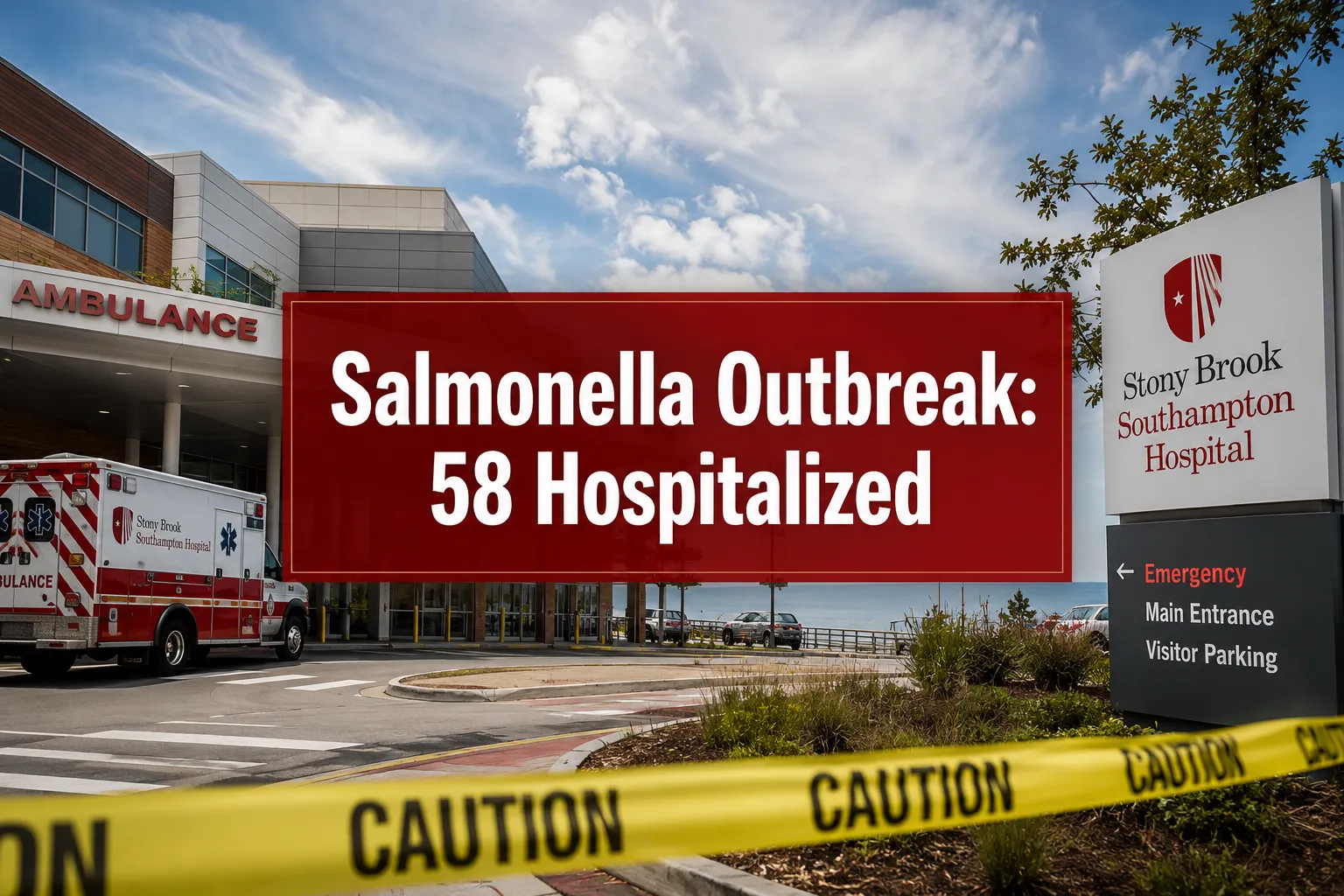
Quick Answer: A Salmonella outbreak has hospitalized 58 people in Long Island this week, concentrated in the East End community near Southampton. The cluster is linked to a communal funeral meal held on June 30 within the Shinnecock Indian Nation, with investigators examining whether food from the Palm Tree Music Festival was reused at that gathering. Suffolk County and New York State health authorities are actively investigating the source.
Key Takeaways
- 58 people have been treated at Stony Brook Southampton Hospital for salmonella symptoms since early July 2026
- The outbreak is geographically focused on Long Island’s South Fork/East End, primarily within the Shinnecock Indian Nation community
- A communal meal following a June 30 funeral is the central event under investigation
- A leading hypothesis links the contamination to food from the Palm Tree Music Festival that was allegedly reused at the funeral meal
- Most patients have recovered or are recovering; no widespread commercial food source has been identified
- The Suffolk County Department of Health Services and the New York State Department of Health are jointly investigating
- Salmonella causes an estimated 1.35 million infections and 26,500 hospitalizations annually in the United States
- Long Island is simultaneously managing a separate parasitic “explosive diarrhea” outbreak affecting at least 17 people, straining regional public health resources
- High-risk groups including the elderly, young children, and immunocompromised individuals face greater danger from severe salmonella infection
- Prevention centers on safe food handling, proper cooking temperatures, and avoiding reuse of perishable foods at large gatherings
What Is Salmonella and How Does It Spread
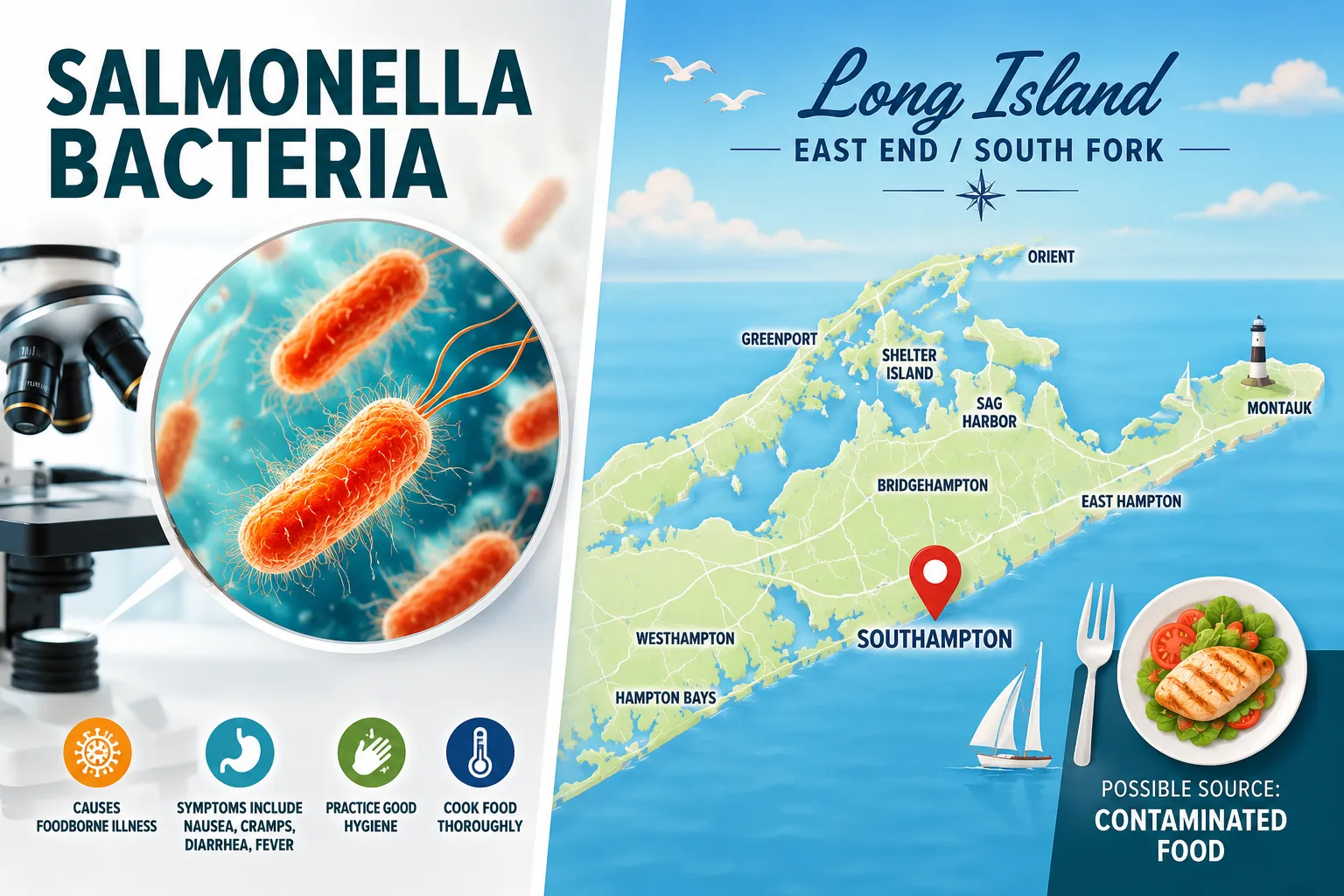
Salmonella is a genus of bacteria that infects the intestinal tract, causing a condition called salmonellosis. It spreads primarily through consuming contaminated food or water, or through contact with infected animals or people who have not washed their hands properly.
The bacteria thrive in raw or undercooked poultry, eggs, beef, and seafood. They can also contaminate fruits, vegetables, and prepared foods if cross-contamination occurs during handling. At large communal gatherings, the risk multiplies when food is left at unsafe temperatures or prepared in bulk without strict hygiene controls.
Key transmission routes:
- Eating undercooked meat, poultry, or eggs
- Consuming food prepared by someone with unwashed hands
- Cross-contamination between raw and cooked foods
- Reusing food that has been improperly stored after a prior event
- Contact with reptiles, poultry, or farm animals
The Centers for Disease Control and Prevention estimates salmonella causes approximately 1.35 million infections, 26,500 hospitalizations, and 420 deaths each year in the United States alone, making it one of the most significant foodborne pathogens in the country.
Salmonella Outbreak Long Island 2026: Latest Updates
As of mid-July 2026, the Salmonella outbreak hospitalizes 58 in Long Island this week, with all identified patients treated at Stony Brook Southampton Hospital [1][2]. Hospital officials confirmed that the majority of those 58 patients were evaluated, treated, and discharged, though a subset required extended hospitalization [2][9].
The outbreak is tightly clustered within the Shinnecock Indian Nation community near Southampton on Long Island’s South Fork. Tribal Chairwoman Lisa Goree told local media that approximately 60 tribe members were diagnosed with salmonella poisoning, with several requiring hospital care [6][9].
What investigators know so far:
- The central event is a communal meal following a funeral for a Shinnecock member on June 30 [4][6][9]
- A leading hypothesis suggests food from the Palm Tree Music Festival, held on the Shinnecock reservation in late June, was reused at the funeral meal [1][3][4]
- Health authorities have not yet publicly confirmed the exact contaminated food item [2][3][6]
- There is no current evidence of a widespread, island-wide commercial food distribution source [1][2][3]
Stony Brook Southampton Hospital notified the New York State Department of Health after recognizing the unusual cluster of cases from a single community event [2][9]. The Suffolk County Department of Health Services is actively collecting data and tracing potential supply chains connected to the festival catering [1][2][6].
A separate, smaller outbreak of a parasitic infection causing severe gastrointestinal illness has also been reported on Long Island, with at least 17 infections recorded. Health officials have distinguished this parasitic cluster from the salmonella outbreak, but the two simultaneous events are placing notable strain on regional public health resources [3].
Symptoms of Salmonella Poisoning: What to Watch For
Salmonella infection typically produces diarrhea, fever, and abdominal cramps beginning six hours to several days after consuming contaminated food. Symptoms in the Long Island cases match this classic profile, with patients reporting severe diarrhea, cramping, fever, and dehydration [1][2][4][9].
Common symptoms include:
- Watery or bloody diarrhea
- Abdominal cramps and pain
- Fever (often 100-102 degrees Fahrenheit)
- Nausea and vomiting
- Headache and muscle aches
- Dehydration (dry mouth, reduced urination, dizziness)
Symptoms generally last four to seven days. Most healthy adults recover without medical intervention, but dehydration can become dangerous quickly, particularly in vulnerable populations.
When Should You Go to the Hospital for Salmonella
Most salmonella cases resolve at home with rest and fluids. However, certain warning signs require immediate medical evaluation.
Go to the emergency room or call a doctor if you experience:
- Diarrhea lasting more than three days without improvement
- Fever above 102 degrees Fahrenheit
- Blood in stool
- Signs of severe dehydration (no urination for 8+ hours, extreme dizziness, rapid heartbeat)
- Inability to keep any fluids down
- Confusion or extreme weakness
Children under 5, adults over 65, pregnant women, and anyone with a weakened immune system should seek medical care sooner rather than later. These groups are at the highest risk of the infection spreading beyond the intestines into the bloodstream, a condition called bacteremia that can be life-threatening.
Can Salmonella Be Fatal: Who Is at Highest Risk
Salmonella can be fatal, though death is uncommon in otherwise healthy adults who receive prompt care. The greatest danger lies in invasive salmonellosis, where the bacteria enter the bloodstream and spread to other organs.
Highest-risk groups:
- Infants and young children
- Adults over 65
- Pregnant women (risk of miscarriage or premature birth)
- People with HIV/AIDS, cancer, or those on immunosuppressive medications
- Individuals with sickle cell disease
For these groups, hospitalization is more likely and complications such as septicemia, meningitis, or reactive arthritis are real possibilities. This is why the Long Island outbreak, centered in a community that includes members across all age groups, prompted immediate hospital notification and public health escalation [2][9].
Salmonella Treatment: Antibiotics or Home Care
For most healthy adults, salmonella treatment is supportive, meaning rest, oral rehydration, and time. Antibiotics are not routinely recommended for uncomplicated salmonella because they can prolong the carrier state and do not significantly shorten illness duration in mild cases.
Home care approach:
- Drink clear fluids, broth, or oral rehydration solutions frequently
- Avoid dairy, fatty foods, and high-fiber foods until symptoms resolve
- Rest and monitor symptoms closely
- Do not take anti-diarrheal medications like loperamide without medical advice, as they can slow the clearance of the bacteria
When antibiotics are used:
- Severe illness or high fever
- Bacteremia or invasive infection
- High-risk patients (elderly, immunocompromised)
- Infants under 3 months
A doctor will determine the appropriate antibiotic based on susceptibility testing, since antibiotic-resistant salmonella strains are increasingly common. For general guidance on supplements that may support recovery, see our guide to using vitamins and supplements as a treatment.

How Long Does Salmonella Last and How Long Is Hospitalization
Salmonella symptoms typically last four to seven days in healthy adults. Hospitalization, when required, usually ranges from two to five days, though severe cases involving bacteremia or complications can extend significantly longer.
Most of the 58 patients treated at Stony Brook Southampton Hospital were evaluated and discharged, with only a subset needing extended stays [2][9]. This pattern is consistent with national data: the majority of salmonella hospitalizations are for monitoring and intravenous fluid replacement rather than for treatment of life-threatening complications.
Recovery timeline (general estimates):
- Mild cases: 3-5 days, managed at home
- Moderate cases requiring hospital evaluation: 1-2 days
- Cases needing IV fluids or antibiotics: 2-5 days
- Severe or invasive cases: 1-2 weeks or longer
What Foods Are Most Likely to Have Salmonella
Salmonella is most commonly associated with animal-based foods, but it can contaminate almost any food item under the right conditions. At communal events like the ones under investigation in this Long Island outbreak, the risk increases when large quantities of food are prepared in advance, transported, and then reused or held at unsafe temperatures [3][4].
High-risk foods:
- Raw or undercooked chicken, turkey, and other poultry
- Raw or undercooked eggs and egg-based dishes
- Unpasteurized milk and dairy products
- Raw ground beef
- Raw sprouts
- Cut melons and leafy greens (cross-contamination risk)
- Prepared foods left at room temperature for more than two hours
The hypothesis that festival catering food was reused at the June 30 funeral meal is particularly concerning from a food safety standpoint [1][3][4]. Food that has been cooked, cooled, transported, and reheated multiple times accumulates bacterial risk at each stage, especially if temperature controls are not maintained. For anyone hosting outdoor gatherings, proper grill and food preparation hygiene is a critical line of defense.
Long Island Health Department Salmonella Investigation
The Suffolk County Department of Health Services is leading the ground-level investigation, supported by the New York State Department of Health [1][2][6]. Investigators are focused on the Shinnecock Indian Nation community events in late June and are tracing the catering supply chain connected to the Palm Tree Music Festival [3][4].
Current investigation status:
- Active case interviews and food history collection from affected individuals
- Laboratory testing of stool samples to confirm salmonella serotype
- Tracing of food vendors and catering companies associated with the festival
- Coordination between tribal health officials and county/state agencies
Health officials have emphasized that this outbreak does not appear to involve any commercial restaurant or grocery chain serving the broader Long Island public [1][2][3]. The cluster is tightly linked to specific community events, which is both reassuring for the general public and a clear signal for investigators to focus their resources on the identified gathering points.
How to Prevent Salmonella Food Poisoning at Home
Salmonella prevention at home comes down to four core practices: clean, separate, cook, and chill. These steps, consistently applied, eliminate the vast majority of contamination risk.
Prevention checklist:
- Wash hands thoroughly with soap and water before and after handling raw meat, poultry, or eggs
- Keep raw meats separate from ready-to-eat foods on cutting boards and in the refrigerator
- Cook poultry to an internal temperature of 165 degrees Fahrenheit; ground beef to 160 degrees
- Refrigerate leftovers within two hours of cooking (one hour if the ambient temperature exceeds 90 degrees)
- Never reuse food that has been left at room temperature for extended periods at large events
- Avoid consuming raw or undercooked eggs in dishes like homemade Caesar dressing or cookie dough
For large community events specifically, designate one person to oversee food temperature management and never assume that “it looks fine” is a sufficient safety check. Bacteria are invisible and odorless at dangerous concentrations.
For broader health and wellness resources, visit the health section at VirtualArticle.
Salmonella vs. Food Poisoning: What Is the Difference
Salmonella is a specific type of food poisoning. “Food poisoning” is a broad term covering any illness caused by consuming contaminated food or drink, including bacteria, viruses, parasites, and toxins. Salmonella is one of dozens of pathogens that can cause food poisoning.
The distinction matters clinically because different pathogens require different treatments and have different risk profiles. For example, the separate parasitic outbreak currently affecting Long Island requires different management than the salmonella cluster, even though both present with gastrointestinal symptoms [3].
Quick comparison:
| Feature | Salmonella | General Food Poisoning |
|---|---|---|
| Cause | Salmonella bacteria | Bacteria, viruses, parasites, toxins |
| Onset | 6 hours to 3 days | Minutes to several days |
| Duration | 4-7 days | Hours to weeks |
| Treatment | Supportive; antibiotics if severe | Varies by cause |
| Diagnosis | Stool culture | Stool culture, blood test, history |
Salmonella Outbreak Compensation or Lawsuit Options
People sickened in a salmonella outbreak may have legal recourse if a negligent food handler, caterer, or food producer caused their illness. In the context of this Long Island outbreak, legal analysts have noted that if the contamination is traced to a specific vendor or catering company, affected individuals could pursue personal injury or product liability claims.
Potential legal pathways:
- Personal injury claim against the food preparer or caterer
- Product liability claim if a commercially distributed food item is identified as the source
- Class action if multiple plaintiffs share the same source and defendant
To pursue a claim, documentation is essential: medical records confirming the salmonella diagnosis, receipts or records showing attendance at the event, and any communication from health authorities linking your case to the outbreak. Consult a personal injury attorney with food safety experience before filing.
Note: The investigation is still ongoing as of July 2026, and no specific vendor or individual has been publicly named as liable. Legal options will become clearer once health authorities confirm the contamination source [2][3][6].
Conclusion
The Salmonella outbreak hospitalizes 58 in Long Island this week, representing one of the more significant community-level foodborne illness clusters seen in the region in recent years. While the outbreak appears contained within a specific community and set of events rather than a commercial food supply, the situation underscores how quickly salmonella can spread when food safety protocols break down at large gatherings.
Actionable next steps for Long Island residents and the public:
- If you attended the Palm Tree Music Festival or the June 30 Shinnecock funeral meal, monitor for symptoms and contact a healthcare provider if you develop diarrhea, fever, or abdominal cramps.
- Seek emergency care if you experience bloody stool, fever above 102 degrees, or signs of severe dehydration.
- Practice the clean-separate-cook-chill framework at every home gathering, especially when preparing food for large groups.
- Never reuse catered or event food that has been held at uncertain temperatures, even if it appears and smells normal.
- Stay updated through the Suffolk County Department of Health Services and News12 Long Island for official investigation findings [1][2][6].
For the Shinnecock community and the broader East End, the priority now is supporting those still recovering while health officials work to confirm the exact source and prevent further cases.
Frequently Asked Questions
Q: How many people were hospitalized in the Long Island salmonella outbreak? A: 58 people were treated at Stony Brook Southampton Hospital for salmonella symptoms as of mid-July 2026. The majority were evaluated and discharged; a smaller number required extended hospitalization.
Q: Where exactly is the Long Island salmonella outbreak located? A: The outbreak is concentrated on Long Island’s South Fork/East End, specifically within the Shinnecock Indian Nation community near Southampton.
Q: What food caused the Long Island salmonella outbreak? A: The exact food item has not been publicly confirmed. Investigators are examining whether food from the Palm Tree Music Festival was reused at a communal funeral meal on June 30, but the investigation is ongoing.
Q: Is the Long Island salmonella outbreak a risk to the general public? A: Health officials have stated there is no evidence of a widespread commercial food source. The cluster is linked to specific community events, not restaurants or grocery stores serving the broader public.
Q: How long does salmonella last? A: In healthy adults, salmonella symptoms typically last four to seven days. Most people recover fully without antibiotics.
Q: Do you need antibiotics for salmonella? A: Not usually. Most cases resolve with rest and fluids. Antibiotics are reserved for severe illness, invasive infection, or high-risk patients such as the elderly or immunocompromised.
Q: Can you get salmonella from reheated food? A: Yes. Reheating does not always eliminate salmonella if the food was heavily contaminated or if reheating is uneven. Food that has been improperly stored between events carries elevated risk.
Q: Who is most at risk of dying from salmonella? A: Infants, adults over 65, pregnant women, and people with weakened immune systems face the highest risk of severe or fatal outcomes from salmonella infection.
Q: Is there a separate outbreak on Long Island besides salmonella? A: Yes. A parasitic infection causing severe gastrointestinal illness has been reported separately, with at least 17 cases on Long Island. It is distinct from the salmonella cluster.
Q: How do I report a possible salmonella case? A: Contact the Suffolk County Department of Health Services or your primary care physician. Your doctor can order a stool culture to confirm the diagnosis and report confirmed cases to the health department.
References
[1] 58 People Hospitalized From East End Salmonella Outbreak – https://longisland.news12.com/58-people-hospitalized-from-east-end-salmonella-outbreak
[2] Salmonella Outbreak That Hospitalized 58 East End Residents Under Investigation – https://longisland.news12.com/salmonella-outbreak-that-hospitalized-58-east-end-residents-under-investigation
[3] Explosive Diarrhea Parasite Invades Long Island As Separate Bacteria Outbreak Tied To Music Festival – https://nypost.com/2026/07/13/us-news/explosive-diarrhea-parasite-invades-long-island-as-separate-bacteria-outbreak-tied-to-music-festival/
[4] Watch – https://www.youtube.com/watch?v=MQr7Qn6BKPc
[6] Salmonella Outbreak East End – https://www.newsday.com/news/health/salmonella-outbreak-east-end-qmlq5syo
[9] Watch – https://www.youtube.com/watch?v=mYOY_VJctqk
