

Last updated: July 6, 2026
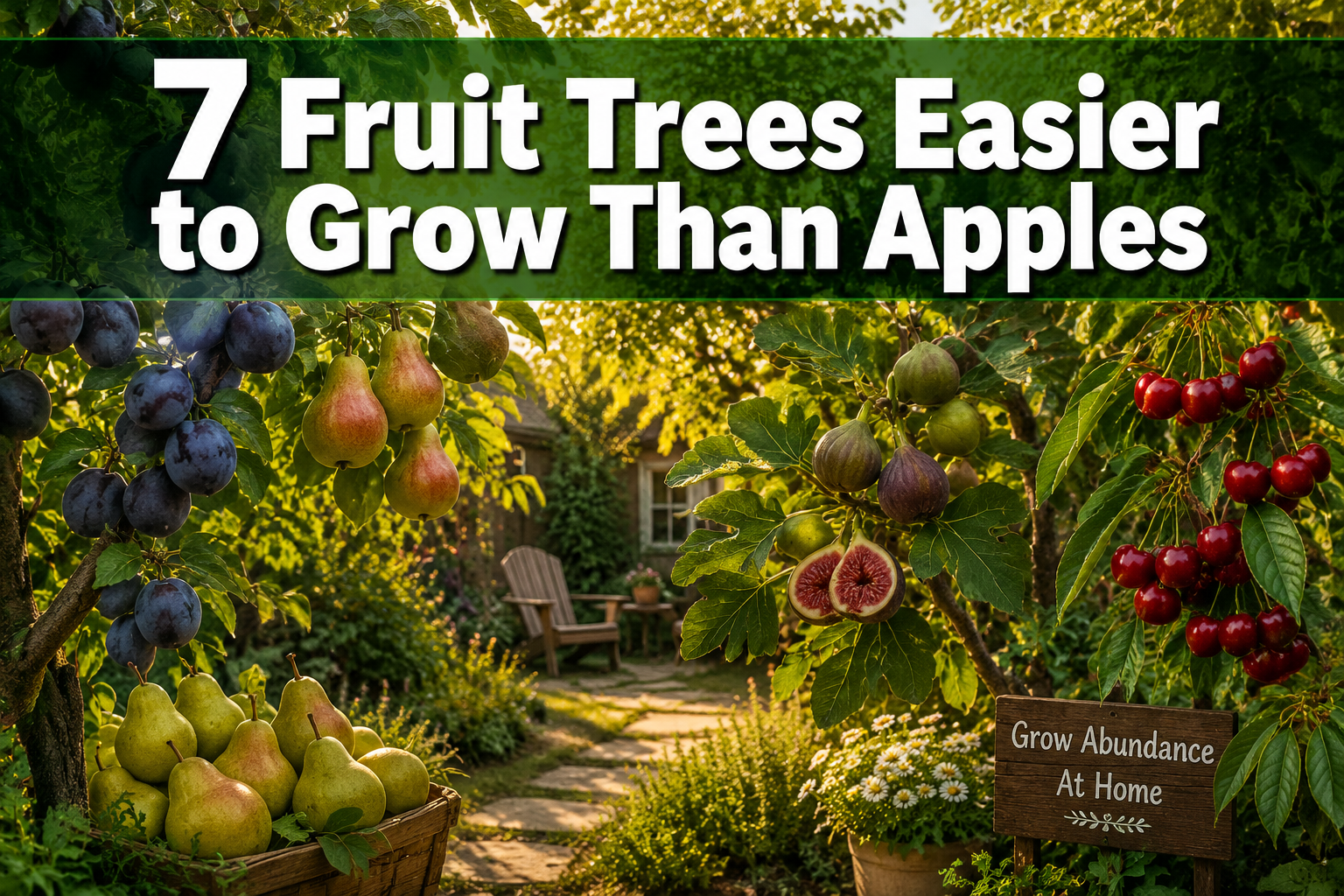
Quick Answer: Apple trees are notoriously demanding, requiring regular spraying, precise pruning, and careful disease management. According to orchardist Susan Poizner and gardening author Christy Wilhelmi, there are 7 fruit trees easier to grow than apples, including pears, figs, mulberries, and plums, that offer abundant harvests with far less effort for home gardeners.
Key Takeaways
- Apple trees are among the most high-maintenance fruit trees due to their susceptibility to pests, diseases, and complex pruning needs.
- Pear trees, fig trees, and mulberry trees are consistently ranked by experts as low-maintenance alternatives to apples.
- Several of these 7 fruit trees, including Meyer lemon and fig, grow well in containers, making them suitable for small spaces or patios.
- Toka plum trees are hardy to -40°F, making them one of the best options for cold-climate gardeners.
- Most of these trees produce fruit within 2 to 5 years of planting, with figs sometimes fruiting in their second year.
- Cross-pollination matters: pear trees and sweet cherry trees benefit from a second tree nearby, while Toka plum and fig trees are largely self-sufficient.
- Serviceberry trees are native to much of North America, meaning they adapt easily to local soil and climate conditions with minimal intervention.
- Container growing is a practical option for Meyer lemon, fig, and blueberry plants in colder or space-limited settings.
Why Are Apples Hard to Grow Compared to Other Fruit Trees
Apple trees are harder to grow than most other backyard fruit trees because they are highly vulnerable to a long list of pests and diseases, including apple scab, fire blight, codling moth, and powdery mildew. Managing these problems typically requires a strict spray schedule throughout the growing season, along with annual pruning and careful variety selection based on local chill hours.
For a beginner, that level of attention is a significant barrier. Many home gardeners plant an apple tree expecting low effort and end up frustrated when the fruit is damaged or the tree struggles without intervention. The 7 fruit trees easier to grow than apples covered in this article sidestep most of those problems by being naturally more disease-resistant, less pest-prone, or better adapted to a wider range of conditions. [1]
What Fruit Trees Are Easier to Grow Than Apples
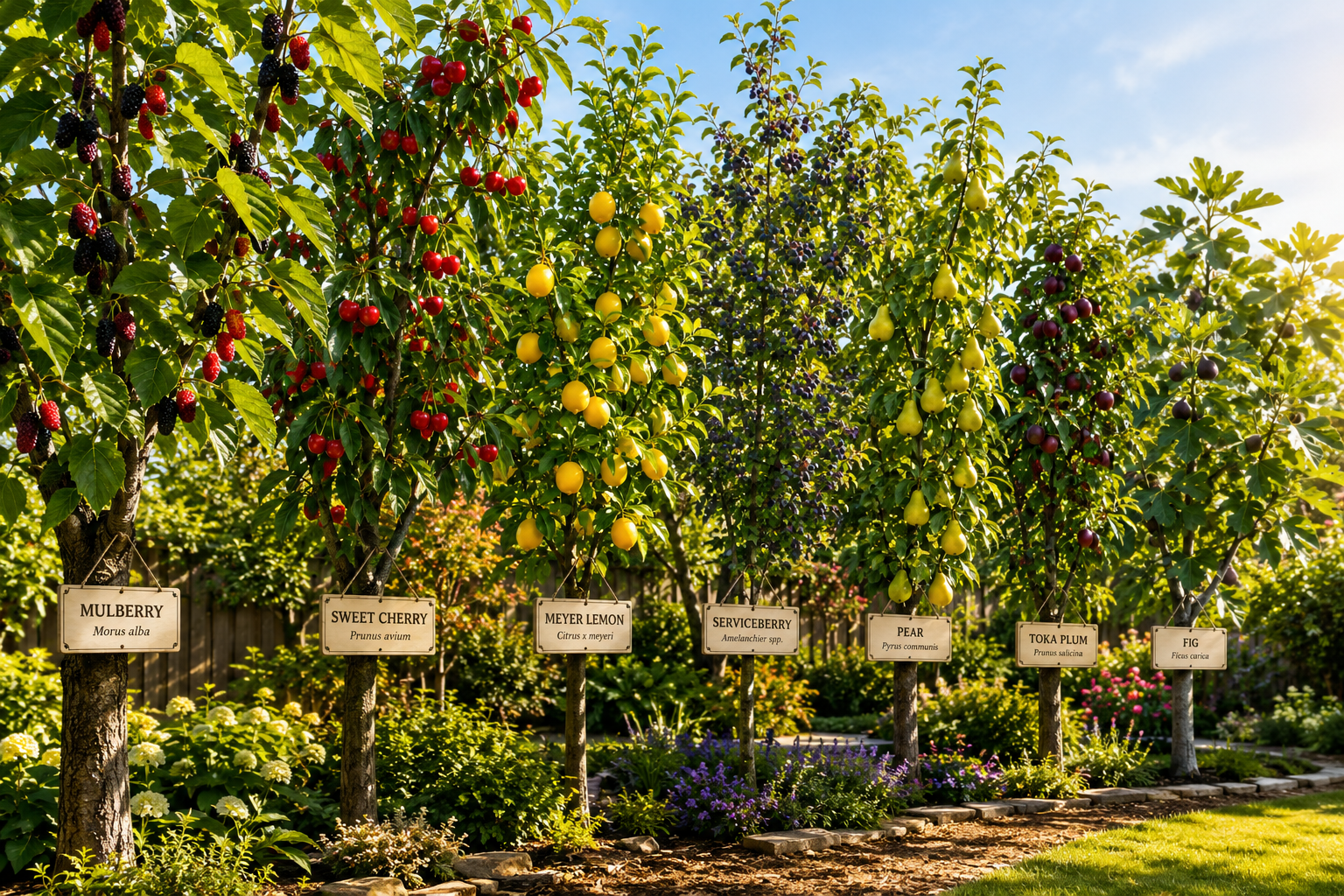
According to experts featured in Martha Stewart Living, the following seven trees consistently outperform apples in ease of care for home gardeners [1]:
- Pear trees (Pyrus communis)
- Mulberry trees (Morus)
- Sweet cherry trees (Prunus avium)
- Meyer lemon trees (Citrus x meyeri)
- Serviceberry trees (Amelanchier)
- Navel orange trees (Citrus x sinensis)
- Toka plum trees (Prunus ‘Toka’)
Each of these trees requires less spraying, less complex pruning, or tolerates a wider range of growing conditions than a standard apple tree. The right choice depends on your climate zone, available space, and how much maintenance you’re willing to do.
Best Fruit Trees for Beginners: A Closer Look at All 7
Each of these trees has specific strengths that make it beginner-friendly. Here’s what experts say about each one.
Pear Trees
Pear trees are widely considered one of the easiest fruit trees for beginners. Their upright growth habit means less pruning is needed compared to apples, and they show stronger resistance to many common pests and diseases. Planting a second pear tree nearby improves yields through cross-pollination, though some varieties are partially self-fertile. [1]
Mulberry Trees
Orchardist Susan Poizner highlights mulberry trees for their toughness and low pest pressure. They produce sweet berries over an extended harvest window, since berries ripen gradually rather than all at once. Mulberries require very little spraying and adapt well to many soil types. [1]
Sweet Cherry Trees
Sweet cherry trees can produce abundant fruit with minimal maintenance when the right variety is matched to the local climate. Poizner notes that climate adaptation is the key factor: choose a variety suited to your region and the tree largely takes care of itself. [1]
Meyer Lemon Trees
Meyer lemon trees are compact, typically reaching around 10 feet tall, and grow well in containers. They thrive in warm climates but can be brought indoors during winter in colder regions. Their smaller size makes pruning and harvesting straightforward. [1]
Serviceberry Trees
Native to much of North America, serviceberry trees are naturally adapted to local soils and climates, which dramatically reduces the need for intervention. They produce white spring flowers followed by edible purple berries in early summer, and the berries work well fresh or in baked goods. [1]
Navel Orange Trees
Gardening author Christy Wilhelmi recommends navel orange trees for warm-climate gardeners, particularly in regions with low chill requirements. They prefer full sun and well-draining soil, and once established, they need far less attention than apple trees. [1]
Toka Plum Trees
Toka plum trees are hardy to -40°F, making them an outstanding choice for cold climates where many fruit trees struggle. They are self-pollinating but produce more fruit with another plum tree nearby. Full sun and well-draining soil are the main requirements. [1]
Fruit Trees That Need Less Maintenance Than Apples
The core reason these trees are lower-maintenance comes down to three factors: disease resistance, simpler pruning, and pest tolerance.
| Tree | Key Advantage Over Apples | Spray Needed? | Container-Friendly? |
|---|---|---|---|
| Pear | Less pruning, pest-resistant | Rarely | Dwarf varieties yes |
| Mulberry | Very low pest pressure | No | No |
| Sweet Cherry | Minimal care in right climate | Sometimes | Dwarf varieties yes |
| Meyer Lemon | Compact, container-ready | No | Yes |
| Serviceberry | Native, self-adapting | No | No |
| Navel Orange | Low chill, warm-climate easy | No | Yes |
| Toka Plum | Cold-hardy, self-pollinating | Rarely | No |
Which Fruit Trees Grow Fastest and Produce Fruit Soonest
Fig trees are among the fastest-producing options for home gardeners, often yielding fruit in their second or third year after planting. [2] Mulberry trees also establish quickly and begin producing within a few years. Most of the 7 fruit trees easier to grow than apples will produce a meaningful harvest within 3 to 5 years, compared to apple trees, which can take 5 to 10 years depending on rootstock.
General timeline by tree type:
- Fig: fruit possible in year 2 to 3
- Mulberry: fruit typically by year 3 to 4
- Pear (dwarf): fruit often by year 3 to 5
- Cherry: fruit often by year 3 to 5
- Plum: fruit often by year 3 to 5
- Citrus (in-ground, warm climate): fruit often by year 2 to 4
- Serviceberry: fruit often by year 3 to 4
Choosing a dwarf or semi-dwarf rootstock generally speeds up fruiting compared to standard-size trees.
Can You Grow Fruit Trees in Containers Instead of in the Ground
Yes, several of the 7 fruit trees easier to grow than apples adapt well to container growing. Meyer lemon trees are a top choice for containers because of their compact size and the ability to move them indoors during winter. Navel orange trees also perform well in large pots in warm climates. Dwarf pear and dwarf cherry varieties can thrive in containers with adequate drainage and a pot of at least 15 to 20 gallons. [1]
For gardeners with no yard at all, blueberry bushes are a practical container-friendly alternative. They are compact, self-fertile, and easier to manage than apple trees, with lower susceptibility to pests and diseases. [3]
Choose container growing if: you live in a cold climate and grow citrus, you have a patio or balcony instead of a yard, or you want to move the tree indoors seasonally.
What Is the Difference Between Dwarf and Standard Fruit Trees
Dwarf fruit trees are grafted onto a rootstock that limits their size, typically reaching 8 to 10 feet tall, while standard trees can grow 20 to 30 feet. Semi-dwarf trees fall in between, usually 12 to 15 feet.
For most home gardeners, dwarf or semi-dwarf trees are the better choice because they:
- Produce fruit sooner after planting
- Are easier to prune and harvest without a ladder
- Fit in smaller yards or containers
- Still yield a generous amount of fruit for household use
The trade-off is that dwarf trees may have a shorter productive lifespan and need more consistent watering since their root systems are smaller.
Best Fruit Trees for Cold Climate Zones
Toka plum trees are the standout option for cold climates, rated hardy to -40°F, which covers USDA zones 3 and above. Serviceberry trees are also cold-tolerant and native to many northern regions of North America. Pear trees, particularly varieties like ‘Harrow Sweet’ or ‘Moonglow,’ handle cold winters well and are a reliable choice for zone 4 and above. [1]
Citrus trees, including Meyer lemon and navel orange, are not suited for cold climates unless grown in containers that can be brought indoors.
Choose Toka plum if: you live in a northern state or Canadian province with harsh winters and want a reliable, low-spray fruit crop.
Fruit Trees vs. Berry Bushes: Which Is Easier
Berry bushes, particularly blueberries, are generally easier to manage than any fruit tree, including the low-maintenance options on this list. Blueberries are compact, self-fertile, thrive in containers, and are less susceptible to the pests and diseases that affect tree fruits. [3] They also begin producing fruit sooner, often in their second or third year.
That said, fruit trees produce a larger volume of fruit per plant once established, and many homeowners prefer the visual appeal and shade a tree provides. The best approach for a small garden is to combine one or two dwarf fruit trees with a few berry bushes for a continuous harvest across the season.
Common Mistakes People Make When Growing Fruit Trees
Even with easy-to-grow trees, a few consistent mistakes limit success:
- Planting in the wrong location: Most fruit trees need at least 6 to 8 hours of direct sun daily. Shade is the single most common cause of poor fruiting.
- Ignoring soil drainage: Fruit tree roots rot in waterlogged soil. Always test drainage before planting.
- Skipping the second tree: Pear and cherry trees produce far more fruit with a pollination partner nearby.
- Over-pruning in the first two years: Young trees need their leaves to build energy. Heavy pruning delays fruiting.
- Choosing the wrong variety for the climate: A sweet cherry variety suited to California will struggle in Minnesota. Always check chill hour requirements and hardiness zones before buying.
- Watering inconsistently: Irregular watering during fruit development causes splitting and drop, especially in cherries and plums.
How Much Space Do Fruit Trees Need to Grow
Standard fruit trees typically need 20 to 25 feet of spacing between trees. Semi-dwarf trees need 12 to 15 feet, and dwarf trees can be planted as close as 8 to 10 feet apart. For very small gardens, espalier training (growing a tree flat against a wall or fence) can reduce the footprint to as little as 6 feet wide.
Mulberry trees are the exception: they can grow quite large if left unpruned and may need 20 to 30 feet of space at maturity. Serviceberry trees stay more compact, often reaching 15 to 25 feet, and work well as ornamental trees in a mixed landscape.
Frequently Asked Questions
What is the single easiest fruit tree to grow for a complete beginner? Pear trees and fig trees are consistently cited as the easiest for beginners. Pears need minimal pruning and resist most common pests. Figs require almost no spraying and often fruit in their second or third year.
Do any of these 7 trees produce fruit in the first year? It is uncommon for any fruit tree to produce in its first year. Figs are the fastest, sometimes fruiting in year two. Most trees on this list take 3 to 5 years for a meaningful harvest.
Can Meyer lemon trees survive winter outdoors? Meyer lemon trees are cold-sensitive and should not be left outdoors in temperatures below about 20°F. In cold climates, grow them in containers and bring them indoors before the first frost.
Do pear trees need two trees to produce fruit? Most pear varieties produce more fruit with a second tree nearby for cross-pollination. Some varieties are partially self-fertile, but yields are significantly better with a pollination partner.
Are mulberry trees messy? Yes. Mulberries drop fruit as they ripen, which can stain patios and walkways. Plant them away from paved areas or over a lawn where fallen fruit is less of a problem.
Is a Toka plum tree truly self-pollinating? Toka plum trees are self-pollinating but produce larger crops when another plum tree is planted within pollination range. They are still a practical solo planting for small yards.
What is the best fruit tree for a warm, dry climate? Navel orange and Meyer lemon trees are well-suited to warm, dry climates with low chill requirements, as recommended by gardening author Christy Wilhelmi.
Can blueberries replace a fruit tree in a small garden? Blueberry bushes are a practical alternative in small gardens. They are compact, container-friendly, and easier to manage than apple trees or most fruit trees, with strong pest and disease resistance. [3]
How do I know which hardiness zone I’m in? The USDA Plant Hardiness Zone Map is the standard reference for North American gardeners. Enter your zip code at the USDA website to find your zone before selecting any fruit tree.
Do these trees need fertilizer? Most established fruit trees benefit from a balanced fertilizer in early spring. Over-fertilizing with nitrogen encourages leafy growth at the expense of fruit, so follow product guidelines and test your soil first.
Conclusion
Growing your own fruit does not have to mean wrestling with a high-maintenance apple tree. The 7 fruit trees easier to grow than apples, according to experts, cover a wide range of climates, garden sizes, and skill levels. Pears and mulberries suit most temperate gardens. Toka plum handles extreme cold. Meyer lemon and navel orange thrive in warm climates or containers. Serviceberry fits naturally into North American landscapes. Sweet cherries reward gardeners who match variety to climate.
Actionable next steps for 2026:
- Check your USDA hardiness zone and match it to the tree that fits best from the list above.
- Decide between standard, semi-dwarf, or dwarf based on your available space.
- Purchase bare-root or container-grown trees from a reputable local nursery in early spring for best establishment.
- If space is limited, start with a fig or Meyer lemon in a large container before committing to an in-ground planting.
- Add a second compatible tree for pears or cherries to maximize your harvest from the start.
The payoff is real: a well-chosen, low-maintenance fruit tree can produce for decades with only a fraction of the effort that apple trees demand.
References
[1] Fruit Trees Easier To Grow Than Apples 12009356 – https://www.marthastewart.com/fruit-trees-easier-to-grow-than-apples-12009356?utm_source=openai
[2] Fruit Trees That Grow Fast – https://www.goodhousekeeping.com/home/gardening/g71258853/fruit-trees-that-grow-fast/?utm_source=openai
[3] Blueberries Are Replacing Apple Trees In Small Gardens – https://www.homesandgardens.com/gardens/blueberries-are-replacing-apple-trees-in-small-gardens?utm_source=openai
