


Last updated: July 6, 2026
Quick Answer
For decades, coffee carried an undeserved reputation as a health hazard. Current research tells a different story: moderate coffee consumption is associated with a reduced risk of type 2 diabetes, liver disease, depression, and stroke for most healthy adults. The phrase “and you thought coffee was bad for you” has become something of a running joke among nutrition researchers, because the evidence keeps pointing in the opposite direction.
Key Takeaways
- Moderate coffee intake (roughly 3 to 4 cups per day) is considered safe and even beneficial for most adults
- Coffee contains vitamins B2, B3, B5, manganese, potassium, and magnesium, making it more nutritious than most people realize [1]
- A 2021 review found all coffee types, including decaf, may protect against chronic liver disease [1]
- A 2018 study linked drinking four or more cups daily to a 63% lower risk of depression [1]
- Excessive intake can cause anxiety, jitteriness, heart palpitations, and disrupted sleep [1]
- A 2023 systematic review suggested long-term coffee drinkers may actually have a lower risk of high blood pressure [1]
- Unfiltered coffee (French press, espresso) raises cholesterol more than filtered coffee [3]
- Pregnant women should limit caffeine to under 200 mg per day, per most health guidelines
- The best time to drink coffee for energy is mid-morning, not immediately upon waking
- Decaf coffee retains most of the antioxidant and liver-protective benefits of regular coffee

Is Coffee Actually Bad for Your Health?
No, coffee is not bad for most healthy adults when consumed in moderation. Decades of observational research have consistently shown neutral to positive health outcomes for people who drink 3 to 4 cups per day. The old warnings about coffee causing heart disease or stunting growth have not held up to scientific scrutiny.
The confusion largely stems from older studies that failed to control for confounding factors, such as the fact that heavy coffee drinkers in earlier decades were also more likely to smoke. Once researchers accounted for smoking, many of the apparent risks associated with coffee disappeared.
What the evidence actually shows:
- Lower risk of type 2 diabetes among regular coffee drinkers [1]
- Reduced risk of stroke in both men and women [2]
- Potential protective effects against Parkinson’s disease [1]
- Association with lower rates of depression [1]
What Are the Real Health Benefits of Drinking Coffee?
Coffee delivers a meaningful set of health benefits, backed by multiple large studies. It is one of the richest dietary sources of antioxidants in the Western diet, and it contains several essential nutrients that most people overlook.
Nutrients found in a standard cup of coffee include [1]:
- Vitamin B2 (riboflavin)
- Vitamin B5 (pantothenic acid)
- Vitamin B1 (thiamine) and B3 (niacin)
- Folate, manganese, potassium, magnesium, and phosphorus
Beyond nutrients, caffeine blocks adenosine, an inhibitory neurotransmitter that makes you feel tired. This triggers the release of norepinephrine and dopamine, which improves alertness, reaction time, and mood [1].
A 2021 review found that all types of coffee, including decaf, appear to protect against chronic liver disease [1]. A 2018 study found that people who drank at least four cups per day had a 63% lower risk of depression compared to those who drank less than one cup [1]. Research from Harvard Health also links regular coffee consumption to a reduced risk of stroke [2].
“And you thought coffee was bad for you” is now a phrase that nutrition scientists use with genuine irony, given how consistently the data favors moderate consumption.
How Much Coffee Per Day Is Safe to Drink?
For most healthy adults, 3 to 4 cups per day (roughly 400 mg of caffeine) is considered safe and is the range most commonly associated with health benefits. The U.S. Food and Drug Administration recognizes 400 mg of caffeine per day as a generally safe threshold for healthy adults.
Going beyond this amount increases the risk of side effects without adding meaningful health benefits.
General daily caffeine guidelines by group:
| Group | Recommended Max |
|---|---|
| Healthy adults | Up to 400 mg/day (~4 cups) |
| Pregnant women | Under 200 mg/day (~2 cups) |
| Adolescents | Under 100 mg/day |
| People with anxiety disorders | Consult a physician; often lower |
Does Coffee Cause Anxiety or Sleep Problems?
Yes, coffee can cause or worsen anxiety and sleep problems, particularly in people who are sensitive to caffeine or who drink it too late in the day. Caffeine has a half-life of roughly 5 to 6 hours, meaning half the caffeine from a 3 p.m. cup is still active in your system at 9 p.m.
For people with generalized anxiety disorder or panic disorder, even moderate caffeine intake can amplify symptoms. Jitteriness and heart palpitations are among the most commonly reported side effects of excessive consumption [1].
Practical rules to avoid sleep disruption:
- Stop caffeine intake by early-to-mid afternoon (around 2 p.m. for most people)
- If you’re sensitive to caffeine, cut off by noon
- Switch to decaf after your second cup if you want to keep the ritual without the stimulant
Can Coffee Raise Your Blood Pressure or Heart Rate?
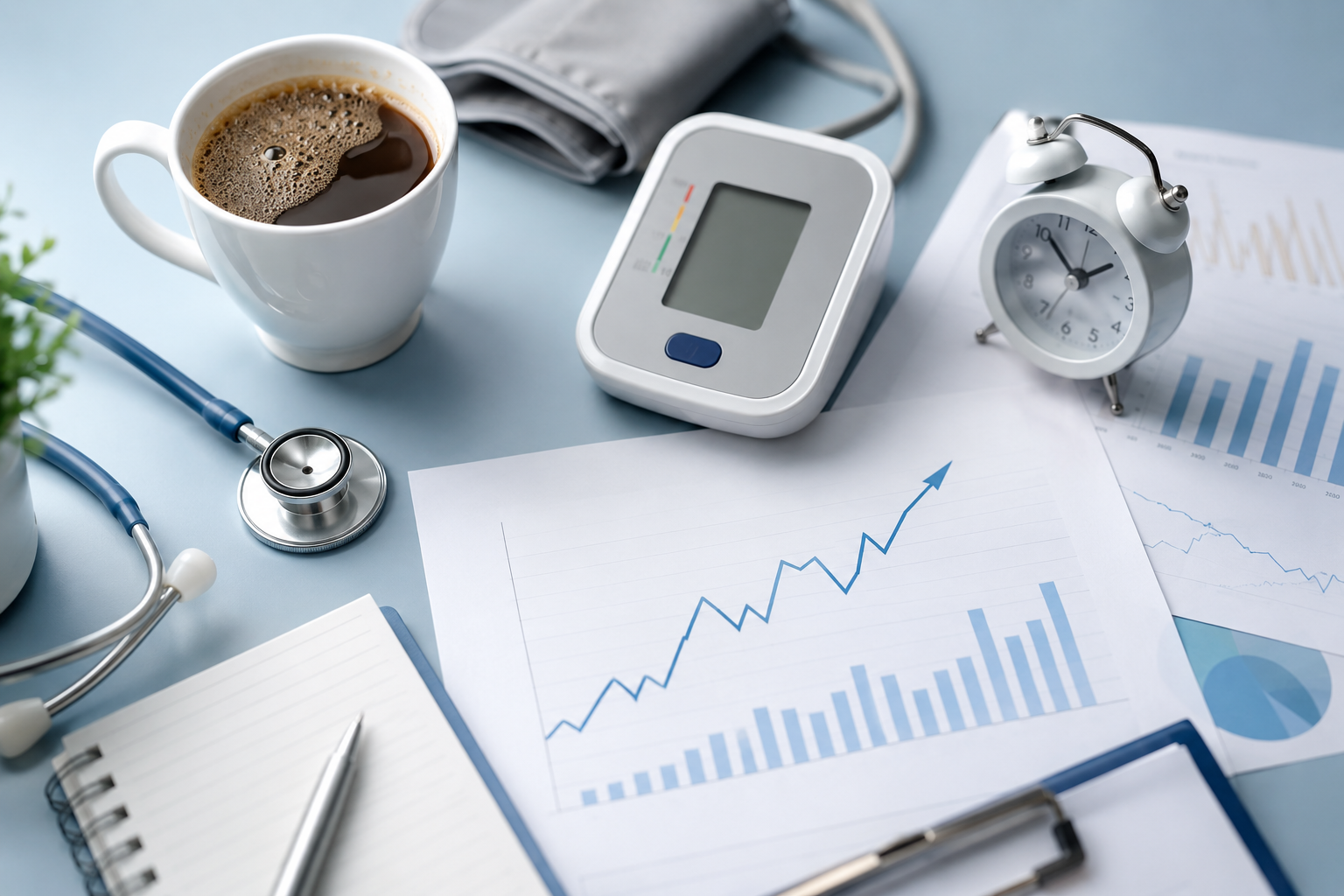
Coffee can cause a short-term spike in blood pressure and heart rate, especially in people who don’t drink it regularly. However, long-term evidence tells a more nuanced story. A 2023 systematic review found that regular coffee drinkers actually had a lower risk of developing high blood pressure over time [1].
The acute spike tends to diminish as tolerance builds. For people with controlled hypertension, moderate coffee intake is generally considered acceptable, but anyone with an uncontrolled cardiovascular condition should check with their doctor.
Is Caffeine Addiction a Real Thing, and What Happens If You Drink Too Much?
Caffeine dependence is real, though it is classified differently from substance addiction. Regular caffeine users can experience withdrawal symptoms including headaches, fatigue, irritability, and difficulty concentrating when they stop abruptly. These symptoms typically peak within 1 to 2 days and resolve within a week.
Signs you may be drinking too much coffee:
- Persistent jitteriness or trembling hands
- Difficulty falling or staying asleep
- Frequent headaches when you skip your morning cup
- Heart palpitations or a racing pulse
- Increased anxiety or irritability [1]
Excessive intake can also worsen acid reflux and cause digestive discomfort in some people. If you’re experiencing these symptoms, reducing intake gradually (rather than stopping cold turkey) minimizes withdrawal effects.
Coffee vs. Tea: Which Is Better for You?
Neither coffee nor tea is universally superior. Both offer distinct health benefits, and the better choice depends on individual health goals and caffeine sensitivity.
- Coffee delivers higher caffeine content, stronger antioxidant load per cup, and more research-backed associations with liver protection and reduced diabetes risk [1]
- Tea (especially green tea) contains L-theanine, an amino acid that moderates caffeine’s stimulant effect and promotes calm alertness
- Both are associated with reduced cardiovascular risk [2]
Choose coffee if you want stronger cognitive stimulation, liver support, or are targeting diabetes risk reduction. Choose tea if you’re sensitive to caffeine, prone to anxiety, or prefer a gentler energy curve.
Best Time of Day to Drink Coffee for Health
The best time to drink coffee is mid-morning, roughly between 9:30 a.m. and 11:30 a.m. Cortisol, the body’s natural alertness hormone, peaks shortly after waking (usually between 8 and 9 a.m.). Drinking coffee during this cortisol peak reduces its effectiveness and can increase tolerance faster.
Waiting 90 minutes after waking before your first cup allows cortisol to peak naturally, so the caffeine hits when your body actually needs it.
Does Coffee Stain Your Teeth, and Is Decaf Coffee Healthier Than Regular Coffee?
Coffee does stain teeth. The tannins in coffee bind to tooth enamel and cause yellowing over time. Drinking through a straw, rinsing with water after coffee, and regular dental cleanings all reduce staining. Whitening toothpaste used a few times per week can also help maintain enamel brightness.
On the decaf question: decaf coffee retains most of the health benefits of regular coffee. A 2021 review specifically noted that decaf, like regular coffee, appears to protect against chronic liver disease [1]. Decaf is a strong option for people who want the antioxidant and liver-protective benefits without the caffeine, including those who are pregnant, anxious, or caffeine-sensitive.
Can Pregnant Women Drink Coffee Safely?
Pregnant women can drink coffee in limited amounts. Most major health organizations, including the American College of Obstetricians and Gynecologists, recommend keeping caffeine intake below 200 mg per day during pregnancy, which is roughly equivalent to one 12-ounce cup of brewed coffee.
Higher caffeine intake during pregnancy has been associated with increased risk of low birth weight and preterm birth. Switching to decaf for the majority of cups is a practical way to stay within safe limits while keeping the habit.
Coffee Myths Debunked: And You Thought Coffee Was Bad For You
Several widely repeated claims about coffee simply do not hold up to scrutiny. And you thought coffee was bad for you, but many of those beliefs trace back to flawed or outdated research.
Common coffee myths vs. the evidence:
| Myth | Reality |
|---|---|
| Coffee causes heart disease | Long-term data shows no increased risk for most adults [2] |
| Coffee dehydrates you | Mild diuretic effect is offset by water content; net hydration is neutral |
| Coffee stunts growth | No credible evidence supports this claim |
| Unfiltered coffee is fine for everyone | French press coffee raises LDL cholesterol due to cafestol [3] |
| Decaf has no benefits | Decaf retains antioxidants and liver-protective properties [1] |
Who Shouldn’t Drink Coffee: Health Conditions That Change the Calculus
Certain groups should limit or avoid coffee regardless of the general population benefits.
- People with severe GERD or acid reflux: Coffee relaxes the lower esophageal sphincter, worsening symptoms
- Those with anxiety disorders: Caffeine amplifies anxiety and panic symptoms
- People with arrhythmias: Caffeine can trigger irregular heartbeats in susceptible individuals
- Pregnant women: Should stay under 200 mg/day
- People on certain medications: Caffeine interacts with stimulants, some antibiotics, and thyroid medications
- Children and adolescents: Developing nervous systems are more sensitive to caffeine’s effects
If you fall into any of these categories, consult a physician before maintaining or increasing coffee intake.
FAQ
Does coffee cause cancer? No. The World Health Organization removed coffee from its possible carcinogen list in 2016 after reviewing over 1,000 studies. Some research actually links coffee to reduced risk of certain cancers, including liver and colorectal cancer.
Is black coffee healthier than coffee with milk and sugar? Black coffee has fewer calories and no added sugar, making it the healthier option for weight management. Adding large amounts of sugar or flavored syrups significantly changes the nutritional profile.
Does coffee break intermittent fasting? Plain black coffee contains essentially no calories and does not trigger an insulin response, so most intermittent fasting protocols allow it during fasting windows.
Can coffee improve athletic performance? Yes. Caffeine is one of the most well-researched ergogenic aids. It improves endurance, reduces perceived effort, and enhances focus. Many athletes use it strategically before training.
Does the brewing method matter for health? Yes. Filtered coffee removes cafestol, a compound that raises LDL cholesterol. French press, espresso, and boiled coffee retain cafestol, which can be a concern for people with elevated cholesterol [3].
Is four cups of coffee per day too much? For most healthy adults, four cups per day falls within the generally accepted safe range and is the intake level associated with several health benefits. Individual tolerance varies, so monitor for side effects.
How long does caffeine stay in your system? Caffeine has a half-life of approximately 5 to 6 hours in most adults. It can take 10 or more hours to clear your system entirely, which is why afternoon coffee affects sleep.
Does coffee help with weight loss? Caffeine modestly increases metabolic rate and fat oxidation in the short term. However, the effect diminishes with regular use as tolerance builds, and it is not a reliable long-term weight loss strategy on its own.
Can you drink coffee on an empty stomach? Some people tolerate it fine; others experience nausea, acid reflux, or jitteriness. If coffee on an empty stomach causes discomfort, eating a small snack first usually resolves it.
Is instant coffee as healthy as brewed coffee? Instant coffee contains slightly lower levels of some antioxidants than freshly brewed coffee, but the difference is modest. It retains most of the health associations seen with regular coffee.
Conclusion
The evidence is clear: and you thought coffee was bad for you, but for most healthy adults, moderate coffee consumption is associated with a range of meaningful health benefits. The key is moderation, timing, and awareness of individual health conditions.
Actionable next steps for 2026:
- Stick to 3 to 4 cups per day to stay within the range most associated with health benefits
- Switch to filtered coffee if you have elevated LDL cholesterol, to avoid cafestol exposure [3]
- Cut off caffeine by early afternoon to protect sleep quality
- Try decaf for evening cups if you want the ritual without the stimulant effects
- Consult your doctor if you have anxiety disorders, arrhythmias, GERD, or are pregnant before maintaining your current intake
- Drink black or lightly modified coffee to avoid turning a healthy habit into a sugar-heavy one
Coffee is not a miracle cure, but it is far from the villain it was once made out to be. Used thoughtfully, it is one of the more evidence-backed dietary habits a person can maintain.
References
[1] Coffee Good Or Bad – https://www.healthline.com/nutrition/coffee-good-or-bad?utm_source=openai
[2] What Is It About Coffee – https://www.health.harvard.edu/healthbeat/what-is-it-about-coffee?utm_source=openai
[3] Is Coffee Really Bad For You – https://www.peoplespharmacy.com/articles/is-coffee-really-bad-for-you?utm_source=openai
