

Last updated: July 22, 2026
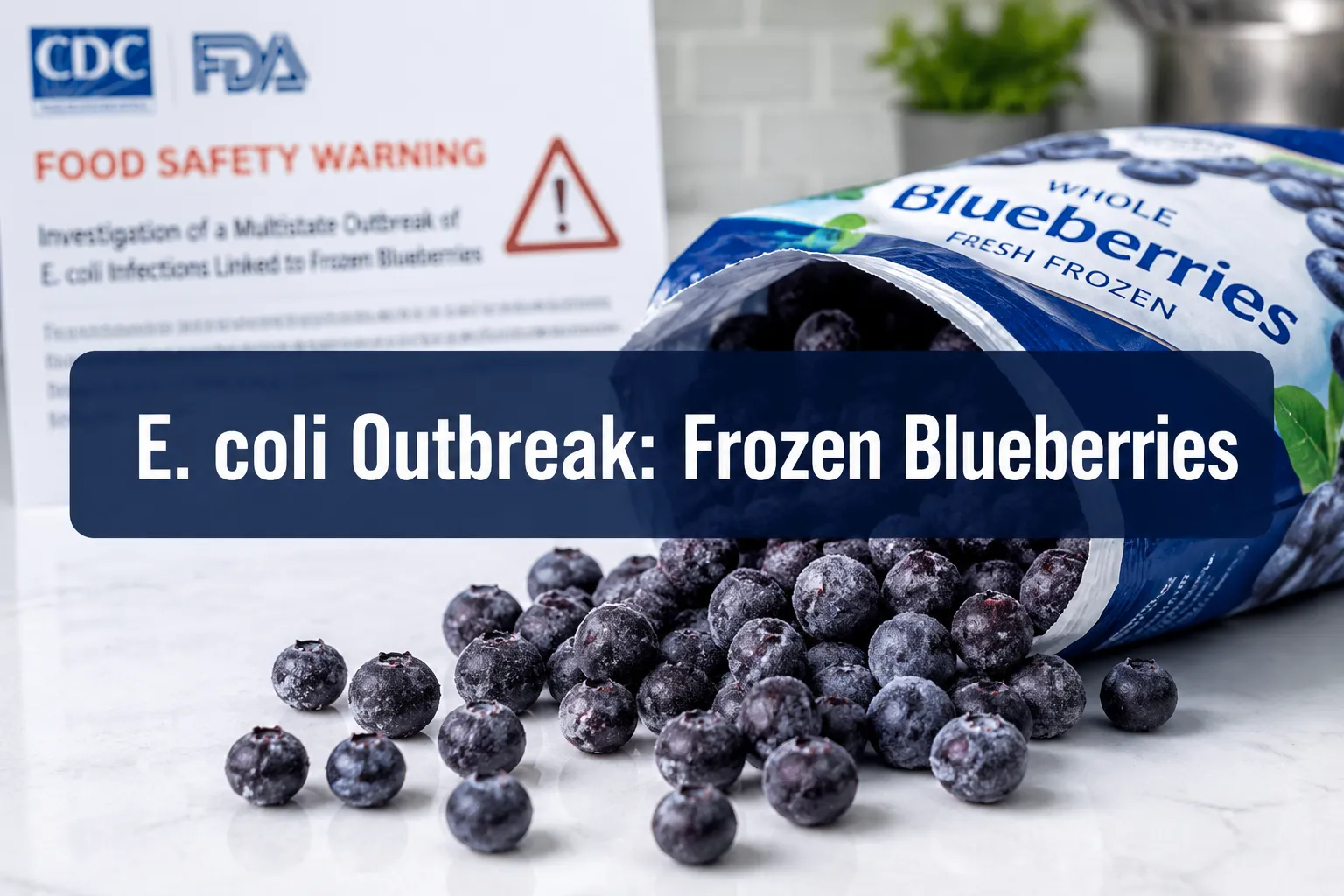
Quick Answer: An active E. coli outbreak linked to frozen blueberries has been traced to a specific lot of GreenWise Organic IQF Blueberries sold at Publix stores across eight southeastern states. Twelve people have been sickened, four have been hospitalized, and the FDA issued a formal recall on July 3, 2026. If you have the affected product in your freezer, do not eat it, discard it or return it to the store immediately.
Key Takeaways
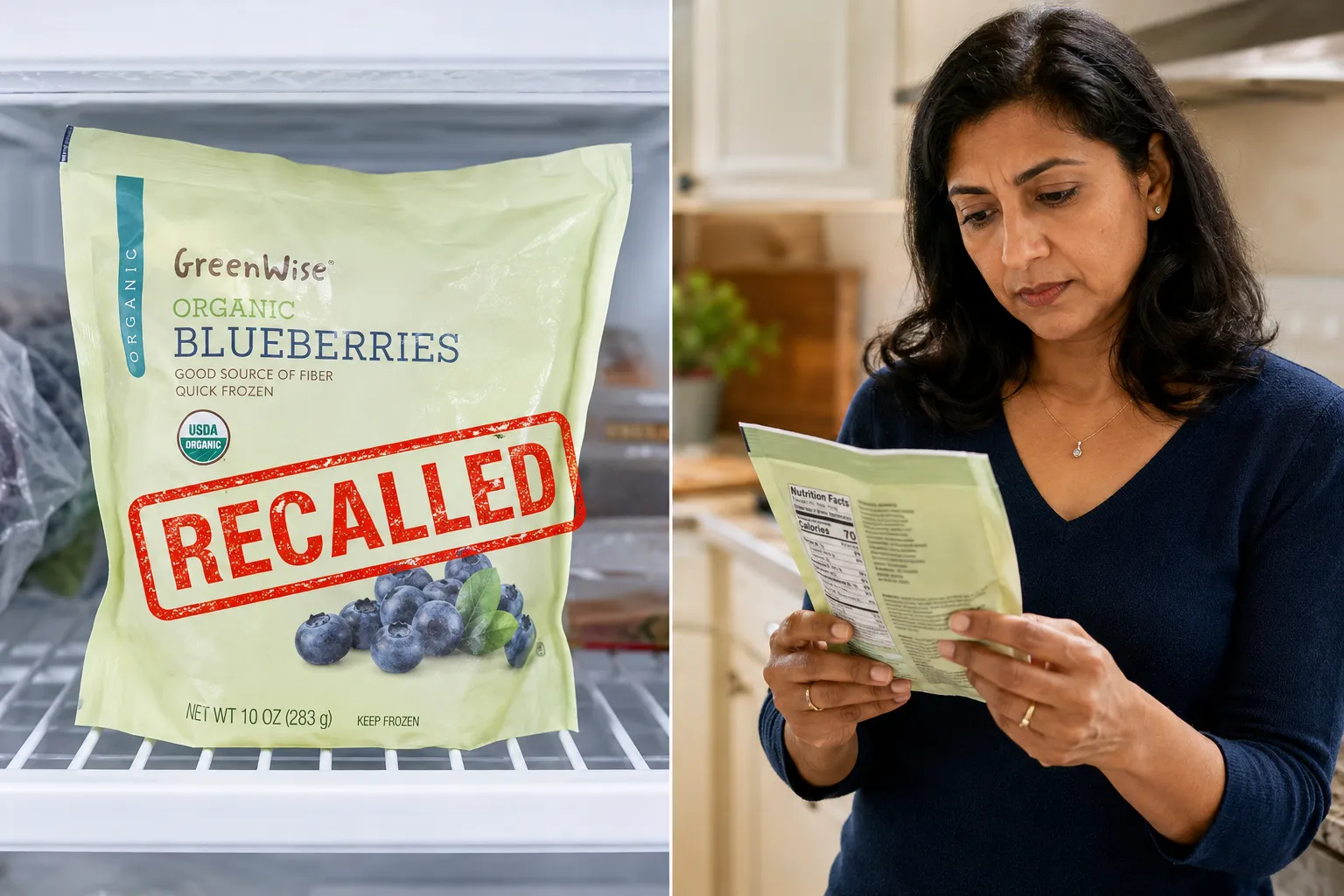
- The outbreak strain is E. coli O145:H28, linked to 10-ounce bags of GreenWise Organic IQF Blueberries with lot code 60401 and a Best By date of February 9, 2028.
- Twelve people in Florida (11) and Georgia (1) have been infected; four required hospitalization and no deaths have been reported as of this writing.
- Illnesses began between May 11 and June 5, 2026; the CDC issued a public alert on July 7, 2026.
- The recalled blueberries were distributed to Publix stores in Alabama, Florida, Georgia, Kentucky, North Carolina, South Carolina, Tennessee, and Virginia.
- Symptoms typically appear 3 to 4 days after eating contaminated food and include severe stomach cramps, bloody diarrhea, and vomiting.
- Cooking frozen blueberries to an internal temperature of 160°F (71°C) can kill E. coli, but the FDA still advises discarding the recalled product rather than attempting to cook it.
- Fresh blueberries are not part of this recall and are considered safe to eat.
- Anyone who ate the recalled product and feels sick should contact a healthcare provider right away.
- Surfaces or containers that touched the recalled product should be sanitized to prevent cross-contamination.
- The FDA and CDC are continuing to investigate and may expand the advisory if additional products are implicated.
What Is E. coli and How Does It Make You Sick
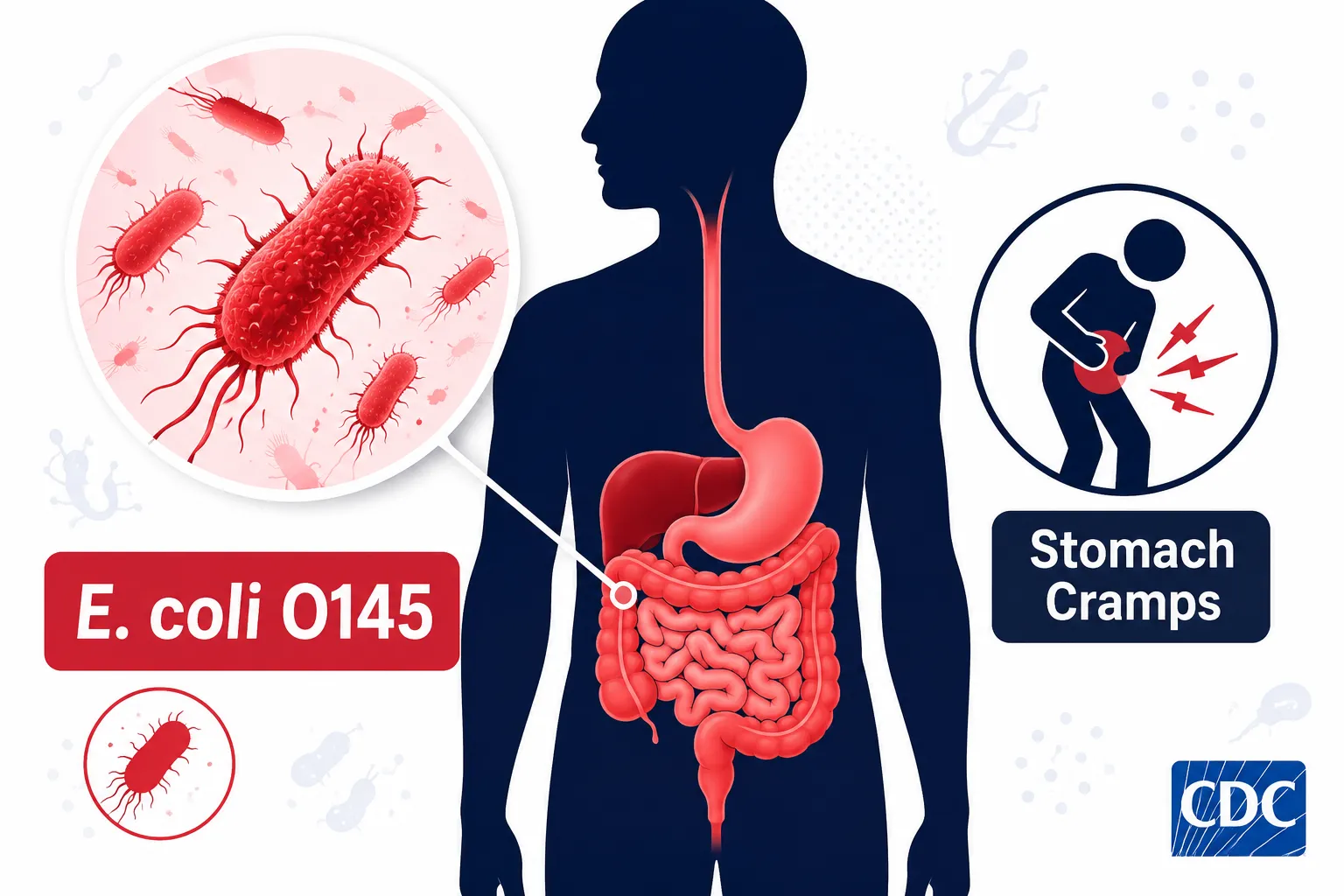
E. coli (Escherichia coli) is a bacterium that normally lives in the intestines of people and animals. Most strains are harmless, but certain types produce toxins that cause serious illness. The strain in this outbreak, E. coli O145:H28, belongs to a group called Shiga toxin-producing E. coli (STEC), which can trigger severe gastrointestinal illness.
When someone swallows even a small number of STEC bacteria, the toxins damage the lining of the intestines. This leads to:
- Severe, cramping abdominal pain
- Diarrhea that often becomes bloody within 1 to 2 days
- Vomiting and nausea
- Low-grade fever in some cases
A small percentage of cases progress to a life-threatening complication called hemolytic uremic syndrome (HUS), which can cause kidney failure. According to the American Academy of Pediatrics Red Book, approximately 6% of individuals with confirmed E. coli O157:H7 diarrhea develop HUS, and children under age 5 face a higher risk of roughly 15% [4]. While the current outbreak involves O145:H28 rather than O157:H7, STEC strains share similar toxin-producing mechanisms and risk profiles.
Who is most at risk: Young children, older adults, pregnant women, and anyone with a weakened immune system face the highest risk of serious complications.
How Many People Got Sick From This Outbreak
Twelve people have been confirmed sick in this outbreak as of the latest FDA update. Eleven cases are in Florida and one is in Georgia. Four of the twelve required hospitalization. No deaths have been reported [1].
Illness onset dates range from May 11 to June 5, 2026, suggesting exposure occurred over several weeks before the source was identified [1]. The CDC issued a formal food safety alert on July 7, 2026, and Publix implemented an internal stop-sale of the product upon notification [3].
The investigation is ongoing, and the FDA has noted that additional products may be added to the advisory as more information becomes available [1].
Which Frozen Blueberry Brands Are Affected by the Outbreak
Only one product has been recalled so far: GreenWise Organic IQF Blueberries, a Publix store brand. The recall was initiated on July 3, 2026, by the manufacturer, Frutas y Hortalizas del Sur S.A., based in San Carlos, Chile [2].
Recall details at a glance:
| Detail | Information |
|---|---|
| Brand | GreenWise Organic IQF Blueberries |
| Package size | 10 ounces |
| Lot code | 60401 |
| Best By date | February 9, 2028 |
| Manufacturer | Frutas y Hortalizas del Sur S.A. (Chile) |
| Recall date | July 3, 2026 |
| Retailer | Publix |
The recalled blueberries were sold at Publix stores in Alabama, Florida, Georgia, Kentucky, North Carolina, South Carolina, Tennessee, and Virginia [2].
No other brands or retailers have been named in the recall as of this writing.
What’s the Recall Number and Where Did These Blueberries Come From
The recalled product was manufactured by Frutas y Hortalizas del Sur S.A. in San Carlos, Chile, and imported for sale under the Publix GreenWise private label [2]. The FDA recall page serves as the official record; consumers can verify details directly at the FDA’s safety alerts database [2].
The origin in Chile is significant because frozen fruit from international sources can be exposed to contaminated irrigation water, animal feces, or unsanitary processing conditions during harvest and freezing. The FDA and CDC are actively investigating the specific point of contamination in the supply chain [1].
How Do Frozen Blueberries Get Contaminated With E. coli
Frozen blueberries can carry E. coli when contamination occurs at any point before or during freezing. Freezing does not kill E. coli, it only slows bacterial activity. Common contamination pathways include:
- Contaminated water: Irrigation or wash water containing animal or human fecal matter
- Soil contact: Berries that fall to the ground during harvest can pick up bacteria from soil
- Animal intrusion: Wildlife or livestock near growing fields can introduce fecal contamination
- Processing environment: Unsanitary equipment, surfaces, or worker hygiene failures during packing and freezing
- Cross-contamination: Contact with other contaminated produce or surfaces
Because blueberries are small, soft, and often eaten raw (even when frozen, such as in smoothies), there is no cooking step to act as a safety barrier in typical consumer use. This makes contamination in the supply chain especially risky.
What’s the Difference Between Regular E. coli and the Strain in This Outbreak
Not all E. coli strains cause illness. The strain in this outbreak, E. coli O145:H28, is a Shiga toxin-producing E. coli (STEC). It differs from harmless gut E. coli in one critical way: it produces Shiga toxins that damage blood vessels in the intestines and, in severe cases, the kidneys [1][3].
E. coli O157:H7 is the most well-known STEC strain and the one most commonly referenced in food safety literature. E. coli O145 is a non-O157 STEC strain that causes clinically similar illness and carries the same risk of HUS, particularly in vulnerable populations [4]. Both strains are treated the same way from a public health standpoint: supportive care, hydration, and close monitoring for kidney complications.
Key distinction: Antibiotics are generally not recommended for STEC infections because they may increase the risk of HUS by triggering a larger toxin release. Always follow a doctor’s guidance.
How Do You Know If You Have E. coli Food Poisoning Symptoms
E. coli O145 infection causes severe stomach cramps, diarrhea (which often becomes bloody), and vomiting. Symptoms typically begin 3 to 4 days after consuming contaminated food and usually resolve within 5 to 7 days [3].
Symptoms to watch for:
- Sudden, severe abdominal cramping
- Watery diarrhea that turns bloody within 24 to 48 hours
- Nausea and vomiting
- Mild fever (usually below 101°F / 38.3°C)
- Fatigue
Seek emergency care immediately if:
- Urine output decreases significantly or stops (possible sign of HUS)
- Skin appears pale or bruised without injury
- Extreme fatigue or confusion develops
- Symptoms worsen after day 3 or do not improve by day 7
These warning signs may indicate hemolytic uremic syndrome, which requires urgent medical attention [4].
How Long Does E. coli Take to Show Symptoms
Symptoms of E. coli O145 infection typically appear 3 to 4 days after eating contaminated food, though the incubation period can range from 1 to 10 days [3]. This delayed onset is one reason outbreaks can be difficult to trace, people often do not connect their illness to something they ate several days earlier.
If you ate the recalled GreenWise frozen blueberries and develop symptoms within 10 days, contact a healthcare provider and mention the possible exposure. Early reporting also helps public health officials track the outbreak more accurately.
What Should I Do If I Ate Contaminated Frozen Blueberries
If you ate GreenWise Organic IQF Blueberries with lot code 60401 (Best By February 9, 2028), take these steps:
- Check for symptoms. Monitor yourself and anyone in your household for stomach cramps, diarrhea, or vomiting for up to 10 days after consumption.
- Contact a healthcare provider if symptoms appear, especially for children under 5, adults over 65, or anyone with a compromised immune system.
- Discard the product immediately. Do not eat, sell, or serve it [1].
- Sanitize surfaces and containers that the blueberries or the bag touched. Use a bleach-based cleaner or an EPA-approved disinfectant [1].
- Wash your hands thoroughly after handling the recalled product or cleaning contaminated surfaces.
- Report your illness to your local health department or through the CDC’s reporting system. This helps investigators understand the full scope of the outbreak.
For more guidance on food safety and how supplements or nutritional choices can support recovery from gastrointestinal illness, see our health resources section.
Can You Cook Frozen Blueberries to Kill E. coli
Yes, cooking frozen blueberries to an internal temperature of 160°F (71°C) will kill E. coli bacteria. However, the FDA and CDC still advise consumers to discard the recalled product rather than attempt to cook it safe [1][3].
The reason: most people use frozen blueberries in applications where thorough cooking is not guaranteed, smoothies, yogurt toppings, or thawed-and-eaten preparations. Unless every berry reaches the required temperature throughout, some bacteria may survive. Given the severity of the strain involved, the safest course is disposal.
If you cook frozen blueberries in a recipe (such as a baked muffin or a cooked sauce), the heat from baking or simmering typically exceeds 160°F, which would destroy E. coli. But this applies to future purchases of safe products, not the recalled lot.
Should I Throw Away Frozen Blueberries I Already Have at Home
If your frozen blueberries are GreenWise Organic IQF Blueberries with lot code 60401 and a Best By date of February 9, 2028, yes, throw them away or return them to Publix for a refund [1][2].
If your frozen blueberries are a different brand, a different lot code, or purchased from a retailer other than Publix, they are not part of this recall. You do not need to discard them based on current information.
Quick decision rule:
- GreenWise brand + lot code 60401 + Best By Feb 9, 2028 = Discard immediately
- Any other brand or lot = No action required based on current recall
Is It Safe to Eat Fresh Blueberries During This Outbreak
Fresh blueberries are not part of this recall and are considered safe to eat. The contamination is specific to one lot of frozen blueberries processed by one manufacturer [1][2]. There is no evidence of a broader contamination affecting fresh blueberry supplies.
Standard food safety practices still apply: rinse fresh blueberries under cold running water before eating, and store them properly in the refrigerator. For general guidance on food safety and maintaining good nutritional habits, explore our health articles.
Can You Get E. coli From Touching the Bag of Frozen Blueberries
Touching the outside of the bag poses a low but non-zero risk. E. coli contamination is primarily a risk when bacteria enter the mouth, so the main concern is hand-to-mouth transfer after handling the product or the bag.
To minimize risk:
- Wash hands thoroughly with soap and water for at least 20 seconds after handling the recalled product or its packaging.
- Do not touch your face, mouth, or food preparation surfaces before washing hands.
- Sanitize any countertops, cutting boards, or containers the bag or blueberries touched [1].
Cross-contamination from the bag to other foods in your freezer is possible if the bag leaked or if you handled it and then touched other items. Wipe down the interior of your freezer with a disinfectant if the bag showed any signs of leakage.
FAQ
Q: What is the lot code for the recalled frozen blueberries? The recalled GreenWise Organic IQF Blueberries have lot code 60401 and a Best By date of February 9, 2028. Only this specific lot is affected [2].
Q: Where were the recalled blueberries sold? They were sold exclusively at Publix stores in Alabama, Florida, Georgia, Kentucky, North Carolina, South Carolina, Tennessee, and Virginia [2].
Q: Has Publix pulled the product from shelves? Yes. Upon notification of the outbreak, Publix conducted an internal stop-sale of the recalled product at all its stores [1].
Q: How do I get a refund for the recalled blueberries? Return the product to any Publix store for a full refund. You do not need a receipt.
Q: Can children eat frozen blueberries from other brands right now? Yes. Other brands are not part of this recall. Children can safely eat frozen blueberries from brands and lots not included in the recall.
Q: What is HUS and should I be worried about it? Hemolytic uremic syndrome (HUS) is a serious kidney complication that can follow STEC infection. It is most common in children under 5. Signs include decreased urination, unusual bruising, and extreme fatigue. Seek emergency care immediately if these symptoms appear [4].
Q: Should I take antibiotics if I think I have E. coli? No. Antibiotics are generally not recommended for STEC infections because they may increase the risk of HUS. Treatment is supportive, rest, fluids, and medical monitoring. Always consult a doctor.
Q: Is the outbreak still active? As of July 22, 2026, the FDA and CDC investigation is ongoing. No new cases have been publicly confirmed beyond the original 12, but the advisory remains active [1][3].
Q: What if I feel fine after eating the recalled blueberries? Some people infected with E. coli experience mild or no symptoms but can still spread the bacteria. Wash hands frequently and monitor for any developing symptoms for up to 10 days after exposure.
Q: Where can I find official updates on this outbreak? Check the FDA’s outbreak investigation page [1] and the CDC’s food safety alerts page [3] for the most current information.
Conclusion
The E. coli outbreak linked to frozen blueberries is a developing public health situation that requires prompt action from anyone who purchased the recalled product. Here is what to do right now:
- Check your freezer for GreenWise Organic IQF Blueberries with lot code 60401 and a Best By date of February 9, 2028.
- If you have the product, do not eat it. Discard it or return it to Publix for a refund.
- Sanitize any surfaces, containers, or freezer areas that came into contact with the product.
- Watch for symptoms, especially in children, older adults, and anyone with health conditions, for up to 10 days after any potential exposure.
- Contact a healthcare provider immediately if symptoms appear, and mention the possible exposure to the recalled product.
- Follow the FDA and CDC for updates, as the investigation may expand.
Fresh blueberries and other frozen blueberry brands remain safe based on current information. The risk is specific to one recalled lot from one manufacturer. Staying informed and acting quickly are the two most effective steps any consumer can take right now.
For broader context on food safety, nutrition, and maintaining health during illness, visit our health category for additional resources. If you are considering nutritional supplements to support recovery, review our guide on using vitamins and supplements as a treatment to understand what the evidence actually supports.
References
[1] Outbreak Investigation E Coli Frozen Blueberries July 2026 – https://www.fda.gov/food/outbreaks-foodborne-illness/outbreak-investigation-e-coli-frozen-blueberries-july-2026?utm_source=openai
[2] Frutas Y Hortalizas Del Sur Sa Initiates Recall Frozen Greenwise Organic Iqf Blueberries Due – https://www.fda.gov/safety/recalls-market-withdrawals-safety-alerts/frutas-y-hortalizas-del-sur-sa-initiates-recall-frozen-greenwise-organic-iqf-blueberries-due?permalink=CF1D6479E0A663C59CD3271B57E4CDA7AA1BB587F93E79DF21AF7C595B08495F&utm_source=openai
[3] Cdc Warns Of E Coli Outbreak Linked To Frozen Blueberries – https://cdc.gov/media/releases/2026/cdc-warns-of-e-coli-outbreak-linked-to-frozen-blueberries.html?utm_source=openai
[4] Red Book Online Outbreaks E Coli Outbreak Linked – https://publications.aap.org/redbook/resources/35526/Red-Book-Online-Outbreaks-E-coli-Outbreak-Linked?utm_source=openai
[5] E Coli Outbreak Prompts Recall Frozen Blueberries Publix – https://www.drugs.com/news/e-coli-outbreak-prompts-recall-frozen-blueberries-publix-130583.html?utm_source=openai
