

Last updated: July 31, 2026
Quick Answer: Mango puree adds natural vitamins, fiber, and antioxidants to a no-bake cheesecake, but the dessert as a whole is still calorie-dense due to cream cheese and added sugar. For most people, it works well as an occasional treat rather than a daily food. Choosing low-sugar puree and lighter cream cheese alternatives can meaningfully reduce the caloric load without sacrificing flavor.
Key Takeaways
- Mango puree retains most of the vitamins A and C found in fresh mango, though it may have slightly less fiber per serving
- A standard slice of no-bake mango cheesecake contains an estimated 300 to 450 calories, depending on portion size and ingredients
- Mango puree made at home from ripe fresh or frozen mango has no added sugar; many commercial brands do add sweeteners
- No-bake cheesecake is not necessarily lower in calories than baked, but it avoids eggs and uses less heat-sensitive nutrients
- Mango is a higher-sugar fruit compared to berries, but its glycemic load is moderate when consumed in reasonable portions
- Frozen mango works well for puree and is nutritionally comparable to fresh mango
- People with latex-fruit syndrome may experience reactions to mango; those with dairy sensitivities should consider cream cheese alternatives
- Practical swaps like Greek yogurt, reduced-fat cream cheese, or coconut cream can make this dessert more diet-friendly
- Proper storage extends mango puree shelf life to 5 to 7 days in the refrigerator or up to 6 months in the freezer
What Is Mango Puree Made From
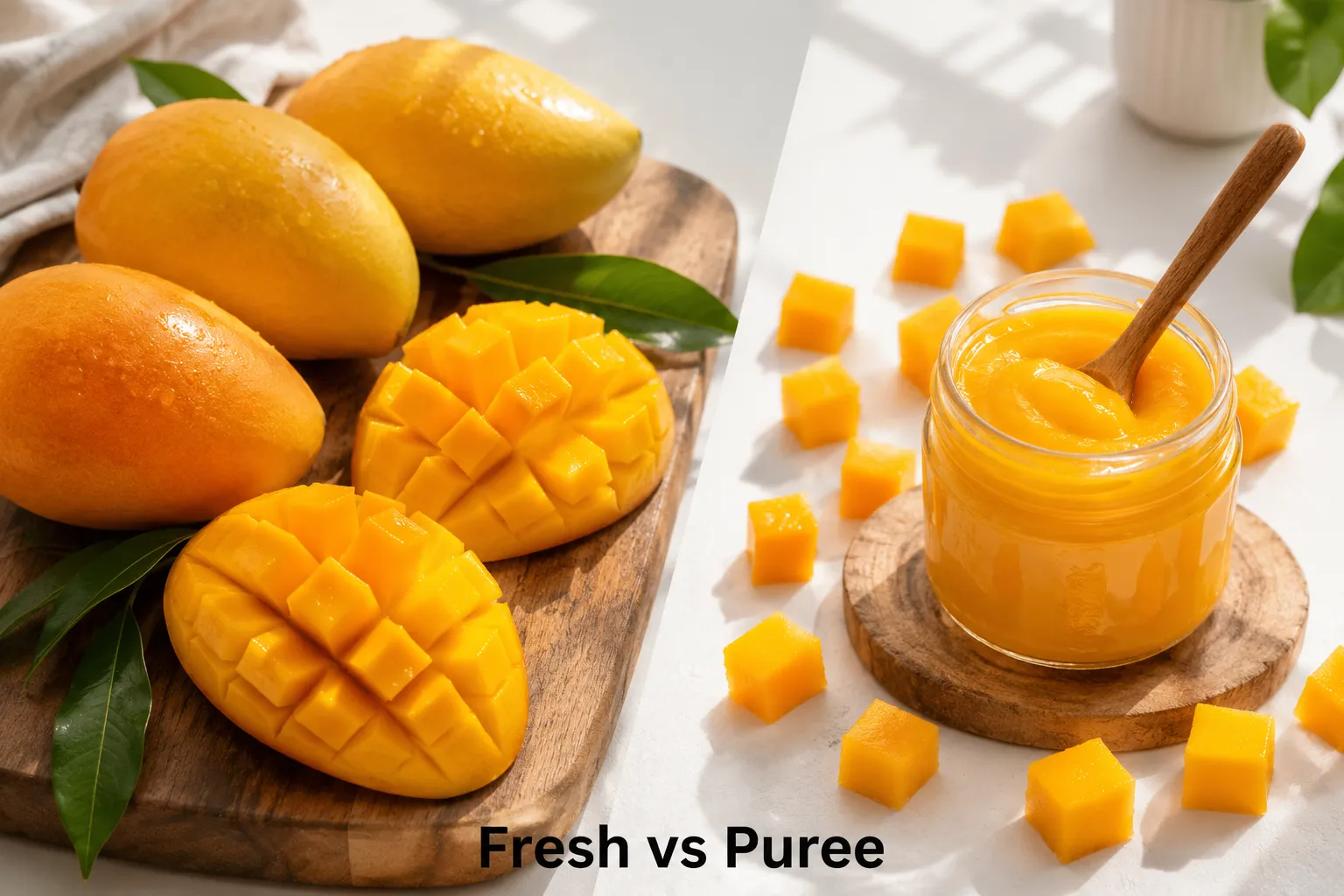
Mango puree is made by blending the flesh of ripe mangoes into a smooth, thick liquid. No additional ingredients are required for a basic homemade version, though commercial products often include citric acid as a preservative and sometimes added sugar or syrup.
The best varieties for puree include Alphonso, Ataulfo (honey mango), and Kent mangoes, all of which have low fiber stringiness and high natural sweetness. The fruit is peeled, pitted, and blended until completely smooth. Some recipes call for a brief strain through a fine mesh sieve to remove any remaining fibrous material.
Key point: Homemade mango puree contains one ingredient: mango. Commercial versions may contain two to five additional ingredients, so reading the label matters.
How Many Calories in Mango Puree vs. Fresh Mango
Mango puree and fresh mango have very similar calorie counts per gram, but portion sizes often differ in practice. Fresh mango contains roughly 60 calories per 100 grams. Mango puree, because it is more concentrated and easier to pour in larger quantities, can deliver more calories per serving without the visual cue of eating a whole fruit.
- Fresh mango (100g): approximately 60 calories, 15g carbohydrates, 1.6g fiber
- Unsweetened mango puree (100g): approximately 65 to 70 calories, 16 to 17g carbohydrates, 1 to 1.3g fiber
- Sweetened commercial mango puree (100g): can reach 80 to 100 calories depending on added sugar content
The slight reduction in fiber in puree is due to the breakdown of cell walls during blending. Vitamins A and C are largely preserved because mango puree is not heat-treated in most home preparations.
No-Bake Cheesecake Nutrition Facts Per Serving
A standard slice of no-bake cheesecake (roughly one-eighth of a 9-inch pan) made with a biscuit crust, full-fat cream cheese, sugar, and mango puree topping contains an estimated:
| Nutrient | Estimated Amount Per Slice |
|---|---|
| Calories | 320 to 450 kcal |
| Total Fat | 20 to 28g |
| Saturated Fat | 12 to 18g |
| Total Carbohydrates | 28 to 38g |
| Added Sugar | 15 to 25g |
| Protein | 4 to 6g |
| Vitamin C (from mango) | 10 to 20% DV (estimate) |
These figures are estimates based on standard recipe compositions. Actual values vary significantly based on crust thickness, cream cheese fat content, and the amount of mango puree used.
Is Mango Puree Healthy for Weight Loss
Mango puree alone is a moderate-calorie, nutrient-dense food that can fit into a weight-loss plan in controlled portions. The challenge arises when it is paired with high-fat, high-sugar dessert bases like traditional cheesecake.
Mango provides vitamin C, vitamin A (as beta-carotene), folate, and dietary fiber. These nutrients support immune function, skin health, and digestive regularity. For those tracking calories, 2 to 3 tablespoons of unsweetened mango puree (about 30 to 45g) adds roughly 20 to 30 calories and a meaningful nutritional contribution.
Choose mango puree for weight loss if: you use it as a topping or flavoring in place of higher-calorie sauces, and you opt for unsweetened versions. Avoid it as a weight-loss food if the recipe surrounds it with large amounts of cream, butter, and refined sugar.
For more context on how individual nutrients and supplements interact with diet goals, see this guide to vitamins and supplements as a treatment.
Mango Puree Sugar Content Compared to Other Fruits
Mango is on the higher end of the sugar spectrum among common fruits. Per 100g, mango contains approximately 13 to 15g of natural sugars. For comparison:
- Strawberries: approximately 5 to 6g per 100g
- Blueberries: approximately 10g per 100g
- Pineapple: approximately 10g per 100g
- Banana: approximately 12 to 14g per 100g
- Mango: approximately 13 to 15g per 100g
Despite the higher sugar content, mango has a moderate glycemic index (estimated at 51 to 56), meaning it does not spike blood sugar as sharply as refined sugars. The fiber content also slows sugar absorption. Still, people managing diabetes or insulin resistance should monitor portion sizes carefully.
Does Mango Puree Have Added Sugar
Pure homemade mango puree contains no added sugar. Commercial mango puree products vary widely. Some brands add cane sugar, high-fructose corn syrup, or glucose syrup to extend shelf life and enhance sweetness, especially in lower-grade products.
How to check: Look for “no added sugar” on the label, and scan the ingredient list. If sugar, syrup, or sweetener appears after mango in the list, the product contains added sugar. For this Mango Puree & No-Bake Cheesecake nutritional review, using unsweetened puree is the single most effective way to reduce the dessert’s total sugar load.
Best Mango Puree Brands for No-Bake Cheesecake
For a no-bake cheesecake, the ideal mango puree is smooth, thick, and free from added sugar. The following types of products are generally well-suited (note: brand availability varies by region):
- Alphonso mango puree (canned or aseptic pack): widely available in South Asian grocery stores; known for rich flavor and thick consistency
- Organic unsweetened mango puree pouches: common in health food stores; check that the only ingredient listed is mango
- Frozen mango puree blocks: sold in some specialty stores; thaw overnight in the refrigerator before use
Practical tip: If a commercial puree is too thin, simmer it gently for 5 to 10 minutes to reduce and thicken before using it as a cheesecake topping. This also concentrates flavor.
How to Make Mango Puree at Home
Homemade mango puree takes under 10 minutes and requires no special equipment beyond a blender or food processor.
Steps:
- Select 2 to 3 ripe mangoes (Ataulfo or Alphonso varieties work best for smoothness)
- Peel and remove the flesh from the pit
- Place the mango flesh in a blender
- Blend on high for 30 to 60 seconds until completely smooth
- Taste and add a small squeeze of lime juice if desired (this also helps preserve color)
- Strain through a fine mesh sieve if a very smooth texture is needed
- Use immediately or store in an airtight container
Yield: Two medium mangoes produce approximately 200 to 250ml of puree.
Can You Use Frozen Mango for Puree
Yes, frozen mango works very well for puree and is nutritionally comparable to fresh. Mangoes are typically frozen at peak ripeness, which preserves most vitamins and flavor compounds. The main difference is texture: frozen mango releases more liquid when thawed, so the resulting puree may be slightly thinner.
Fix for thin puree: After blending thawed frozen mango, simmer the puree in a small saucepan over medium-low heat for 5 to 8 minutes, stirring frequently, until it thickens to a spoonable consistency. This works well for cheesecake toppings.
Frozen mango is also more cost-effective in July when fresh mango prices fluctuate, making it a practical choice for this seasonal no-bake cheesecake recipe.
No-Bake Cheesecake with Mango Puree Recipe Overview
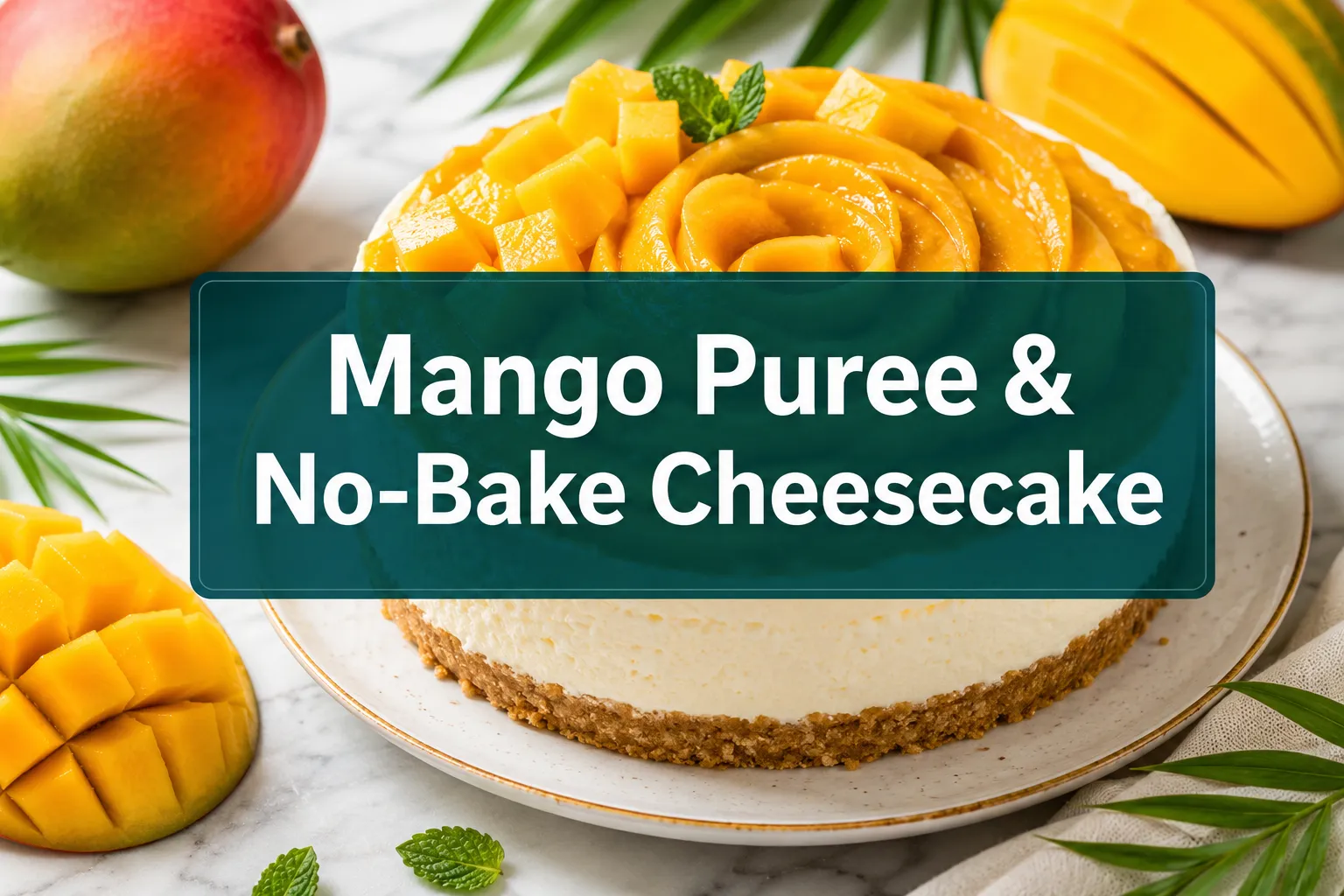
This Mango Puree & No-Bake Cheesecake nutritional review would be incomplete without a practical recipe framework. The basic structure involves three layers: a biscuit crust, a cream cheese filling, and a mango puree topping.
Core components:
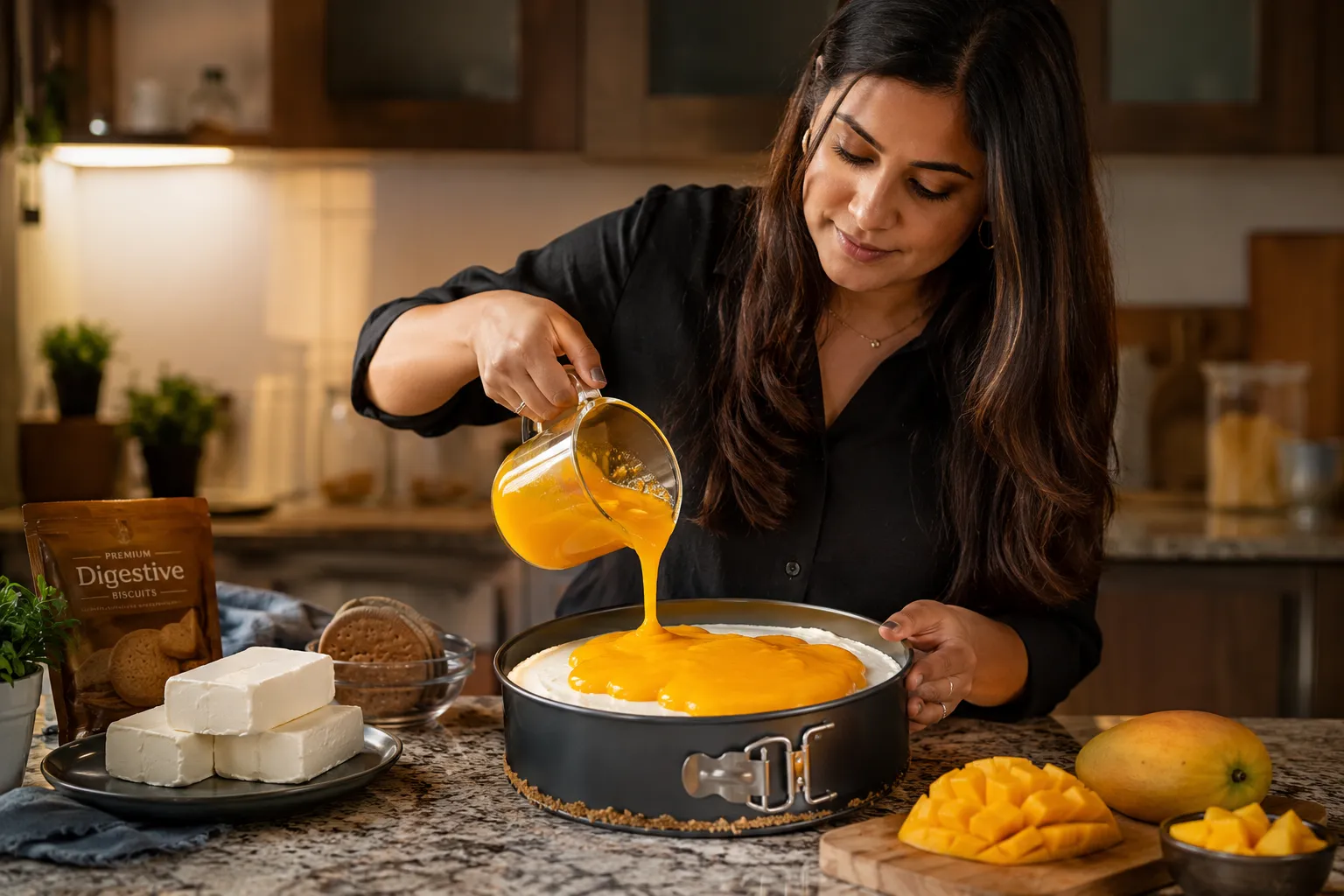
- Crust: 200g digestive biscuits or graham crackers, crushed and mixed with 80g melted butter
- Filling: 500g full-fat cream cheese, 100g powdered sugar, 1 teaspoon vanilla extract, 250ml heavy cream (whipped to soft peaks and folded in)
- Topping: 200ml mango puree (unsweetened, homemade or commercial)
Assembly: Press the crust into a springform pan and chill for 20 minutes. Spread the filling over the crust and refrigerate for at least 4 hours or overnight. Pour the mango puree over the set filling just before serving.
Healthier modifications:
- Replace full-fat cream cheese with reduced-fat cream cheese or a blend of cream cheese and Greek yogurt (50/50)
- Reduce powdered sugar in the filling to 60g and rely on the natural sweetness of the mango topping
- Use a thinner crust layer to reduce butter content
Is No-Bake Cheesecake Healthier Than Baked
No-bake cheesecake is not automatically healthier than baked cheesecake. The calorie and fat content depends almost entirely on the ingredients used, not the baking method. However, there are a few genuine differences worth noting.
No-bake advantages:
- No eggs required, which reduces cholesterol content slightly
- Heat-sensitive nutrients in the mango topping (vitamin C, folate) are fully preserved since the fruit is never cooked
- Often sets with gelatin or whipped cream rather than eggs, which can reduce saturated fat if lighter alternatives are chosen
Baked cheesecake advantages:
- The egg-based structure can sometimes allow for lower cream cheese quantities while still achieving a firm texture
- Some baked recipes use less heavy cream
Bottom line: If health is the priority, the ingredient list matters far more than whether the cheesecake is baked or not. A no-bake version made with full-fat cream cheese and lots of butter in the crust can easily exceed a lighter baked recipe in calories.
For those interested in broader health and wellness topics, the Health section at VirtualArticle covers related nutritional subjects.
No-Bake Cheesecake Without Cream Cheese Alternatives
Several dairy-free and lower-fat alternatives work in place of traditional cream cheese in a no-bake cheesecake:
- Greek yogurt (strained overnight): Produces a tangier, lighter filling with more protein and less fat. Works best when combined with a small amount of gelatin for firmness.
- Coconut cream: A dairy-free option with a distinct tropical flavor that pairs naturally with mango puree. High in saturated fat but suitable for vegan diets.
- Cashew cream: Soaked raw cashews blended with a little lemon juice and maple syrup. Lower in saturated fat than cream cheese, though still calorie-dense.
- Silken tofu: Blended smooth, it creates a neutral-flavored, protein-rich base. Best for those who want a lower-fat, plant-based dessert.
Each alternative changes the texture and flavor profile. Greek yogurt and cashew cream are the closest to traditional cheesecake in terms of taste.
Mango Puree Shelf Life and Storage Tips
Homemade mango puree lasts 5 to 7 days in the refrigerator when stored in an airtight glass or BPA-free plastic container. Commercial opened puree follows similar guidelines.
For longer storage:
- Freezing: Pour puree into ice cube trays, freeze solid, then transfer to a freezer bag. Keeps for up to 6 months. Thaw in the refrigerator overnight before use.
- Canning: Not recommended for home use without proper acid adjustment, as mango’s pH can vary.
Signs of spoilage: Off smell, visible mold, or significant color darkening (beyond normal oxidation) indicate the puree should be discarded.
Adding a teaspoon of fresh lime juice per cup of puree slows oxidation and extends refrigerator life by 1 to 2 days.
Mango Puree Allergies and Side Effects
Mango is generally well-tolerated, but a few groups should be cautious. People with latex-fruit syndrome may experience cross-reactive allergic symptoms when eating mango, including itching, swelling, or hives. This occurs because mango shares proteins with natural rubber latex.
Mango skin and the area near the pit contain urushiol, the same compound found in poison ivy. Most people are not sensitive to trace amounts in puree, but those with known urushiol sensitivity should use commercial puree or wear gloves when peeling.
Other considerations:
- High mango consumption may cause loose stools in sensitive individuals due to its sorbitol content
- Those with kidney disease should monitor potassium intake, as mango is a moderate source
- People with type 2 diabetes should portion mango puree carefully given its natural sugar content
For those exploring nutritional supplements alongside dietary changes, this guide to using vitamins and supplements provides evidence-based context.
FAQ
Q: How much mango puree should I use per cheesecake? A: For a 9-inch no-bake cheesecake, 150 to 200ml of mango puree is sufficient as a topping layer. This provides flavor and color without making the surface too heavy or wet.
Q: Is mango puree the same as mango nectar? A: No. Mango puree is blended mango flesh with no added liquid. Mango nectar is a diluted drink that combines mango puree with water and usually added sugar. They are not interchangeable in recipes.
Q: Can I use mango puree in the cheesecake filling instead of just as a topping? A: Yes, but reduce the heavy cream slightly to compensate for the added liquid. Fold 80 to 100ml of thick mango puree directly into the cream cheese mixture before setting.
Q: How long does a no-bake mango cheesecake last in the fridge? A: Up to 4 to 5 days when covered tightly. The mango topping may darken slightly after day 2 due to oxidation, but it remains safe to eat.
Q: Is mango puree suitable for babies? A: Yes, plain unsweetened mango puree is a common first food for infants from around 6 months. Always check with a pediatrician before introducing new foods.
Q: Does cooking mango puree destroy its vitamins? A: Brief simmering (5 to 10 minutes) to thicken puree causes some loss of vitamin C, which is heat-sensitive. However, most of the vitamin A (beta-carotene) and folate are retained.
Q: What is the glycemic index of mango puree? A: Fresh mango has an estimated glycemic index of 51 to 56, placing it in the low-to-moderate range. Pureed mango may have a slightly higher GI because blending breaks down some fiber structure, but the difference is modest.
Q: Can I make this cheesecake vegan? A: Yes. Use coconut cream or cashew cream in place of cream cheese, a plant-based butter for the crust, and agar-agar instead of gelatin for setting. The mango puree topping is already vegan.
Q: Is no-bake cheesecake safe for pregnant women? A: Traditional no-bake cheesecake uses cream cheese (pasteurized) and whipped cream, which are generally safe. Avoid recipes that call for raw eggs. Always confirm that all dairy ingredients are from pasteurized sources.
Q: How does mango puree compare to strawberry puree nutritionally? A: Mango puree has roughly twice the calories and sugar of strawberry puree per 100g, but it also provides significantly more vitamin A and a richer flavor. Strawberry puree is the lower-calorie option for those strictly managing sugar intake.
Conclusion
This Mango Puree & No-Bake Cheesecake nutritional review for July 2026 confirms that the combination offers real nutritional benefits alongside meaningful caloric considerations. Mango puree contributes vitamins A and C, natural fiber, and antioxidants. The cheesecake base, however, adds substantial saturated fat and sugar that offset those benefits if portions are not managed.
Actionable next steps:
- Make your own puree from fresh or frozen mango to avoid added sugars found in many commercial brands
- Swap full-fat cream cheese for a 50/50 blend with strained Greek yogurt to cut saturated fat without losing texture
- Reduce added sugar in the filling by 30 to 40% and let the natural sweetness of the mango topping carry the flavor
- Limit portions to one standard slice (one-eighth of a 9-inch pan) and pair it with a protein-rich meal to slow sugar absorption
- Store leftovers properly by covering the cheesecake and refrigerating for up to 5 days, or freeze individual slices for up to one month
This dessert can be part of a balanced diet when made with mindful ingredient choices. The mango component genuinely earns its place on the nutritional scorecard. The key is ensuring the rest of the recipe does not cancel out those gains.
For more food and health content, explore the health and wellness articles on VirtualArticle. If you enjoy summer cooking and want tips on outdoor food preparation, the barbeque maintenance and safety guide is also worth reading.
