

Last updated: July 4, 2026
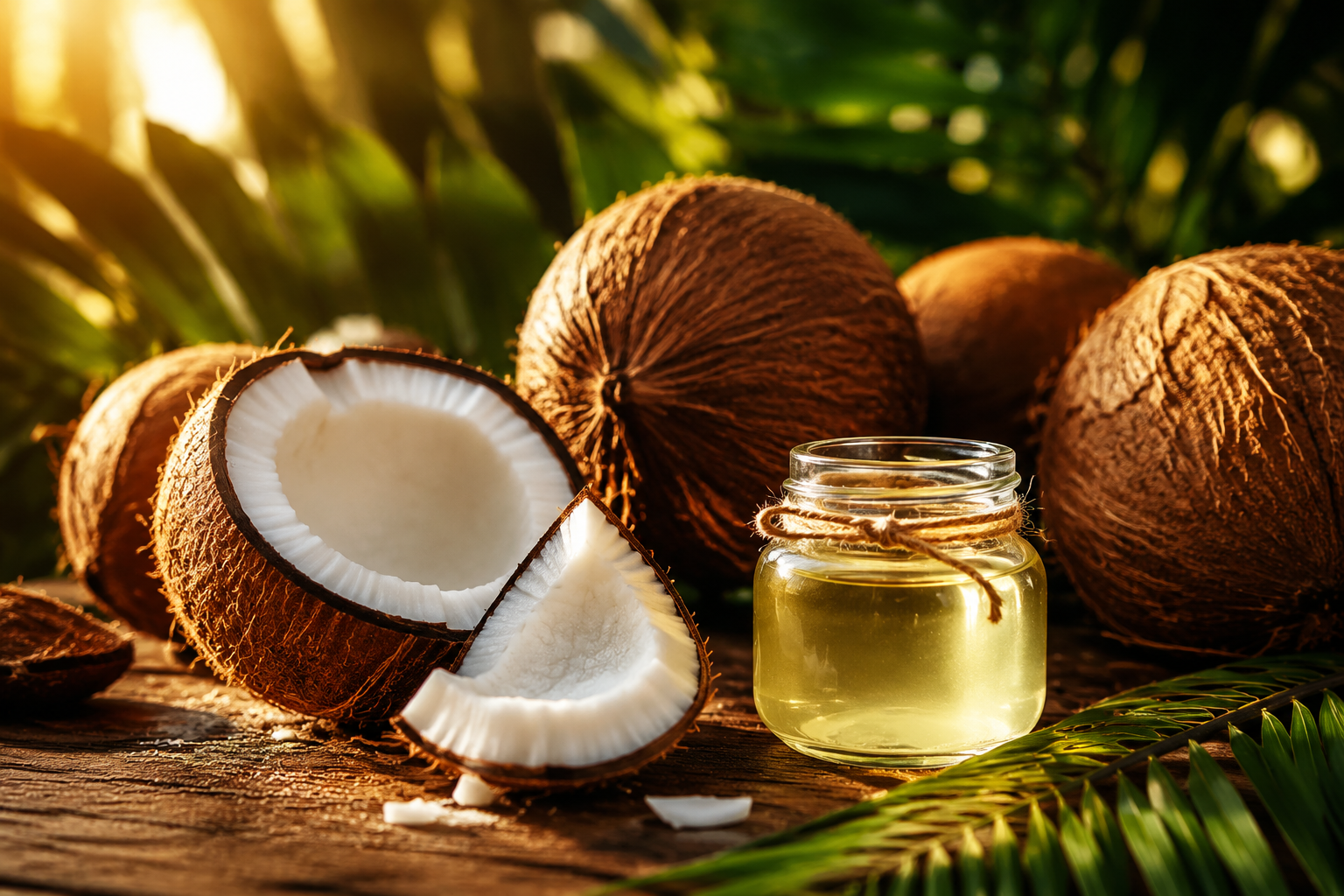
Quick Answer: Coconut oil is a plant-based fat extracted from coconut meat, used widely in cooking, skincare, and haircare. It is high in saturated fat, particularly lauric acid, which gives it unique properties compared to most other vegetable oils. Whether it belongs in your diet depends on your health goals, consumption amount, and the type of coconut oil you choose.
Key Takeaways
- Coconut oil comes in two main forms: virgin (unrefined) and refined, each suited to different uses.
- It is about 90% saturated fat, mostly medium-chain triglycerides (MCTs), which behave differently in the body than long-chain saturated fats.
- The American Heart Association still recommends limiting saturated fat intake, so moderation is key for cardiovascular health.
- Coconut oil has a moderate smoke point (350-400 degrees F depending on type), making it suitable for low-to-medium heat cooking.
- Global coconut oil production is projected at approximately 3.5 million metric tons in 2026, with prices remaining elevated after a peak of $2,841 per metric ton in July 2025. [1][5]
- Virgin coconut oil retains more antioxidants and natural flavor; refined coconut oil is more neutral and tolerates slightly higher heat.
- Coconut oil is broadly safe for most people but should be used in moderation by those managing cholesterol or cardiovascular risk.
- It is a versatile ingredient in skincare and haircare, with evidence supporting its use as a moisturizer and hair conditioner.
What Is Coconut Oil and Where Does It Come From
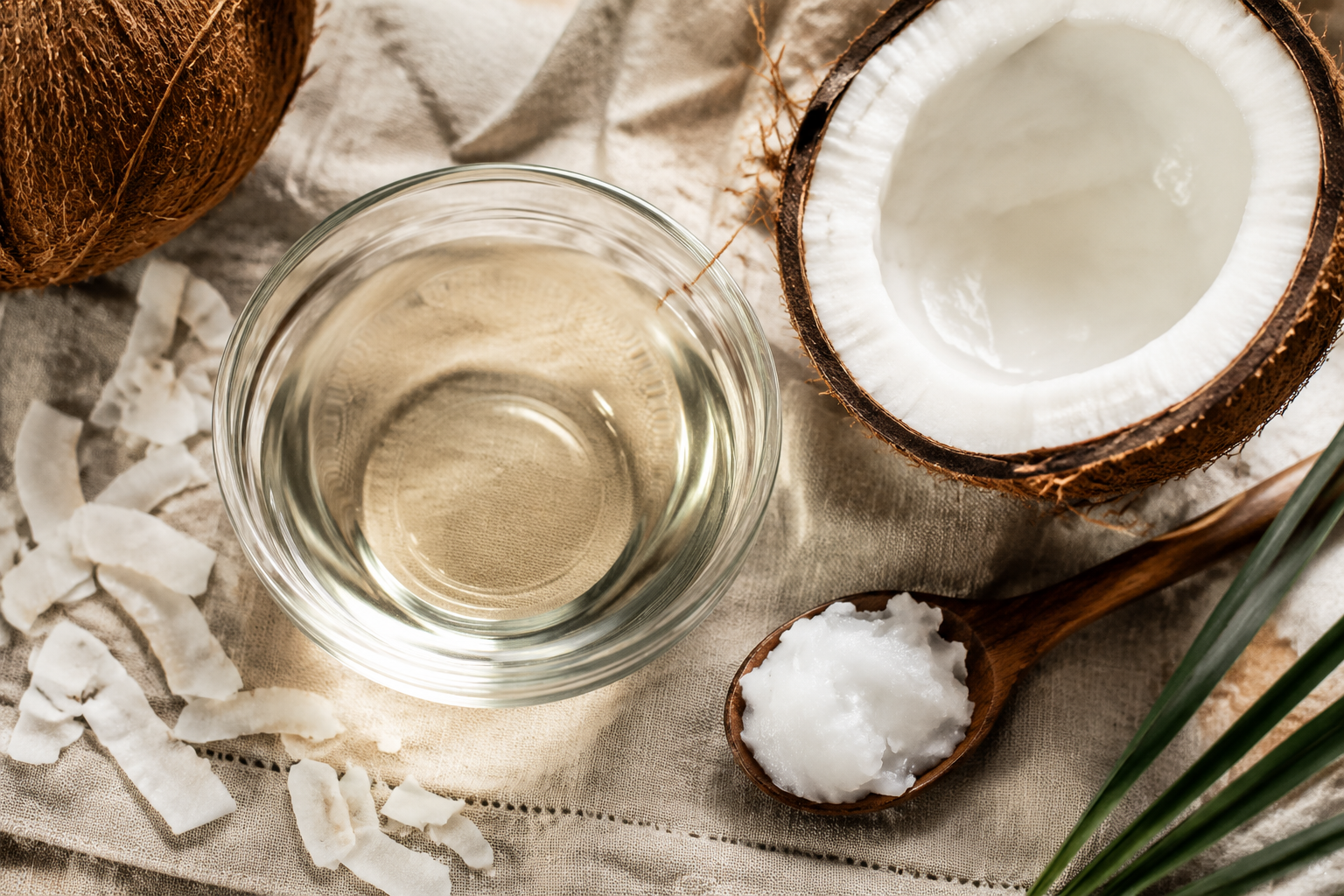
Coconut oil is a fat extracted from the meat (kernel) of mature coconuts harvested from the coconut palm (Cocos nucifera). It is produced primarily in tropical countries, with the Philippines, Indonesia, and India accounting for the majority of global output.
The extraction process determines the type of oil produced. Two main methods exist:
- Cold-pressed or expeller-pressed from fresh coconut meat produces virgin coconut oil, preserving natural flavor, aroma, and antioxidants.
- Extraction from dried coconut meat (copra) followed by refining, bleaching, and deodorizing produces refined coconut oil, which is more neutral in taste and smell.
Global production in 2026 is projected at around 3.5 million metric tons, recovering from an estimated 3.16 million tons in 2025, according to the International Coconut Community. [5] Supply remains tight relative to growing demand, which has kept prices historically elevated. [7]
Virgin vs. Refined Coconut Oil: What’s the Difference
Virgin coconut oil is unrefined, retaining its natural coconut flavor, aroma, and a higher concentration of polyphenols and antioxidants. Refined coconut oil is processed to remove odor and flavor, making it more versatile for recipes where a coconut taste is unwanted.
Choose virgin if: you want more natural nutrients, you’re using it in recipes where coconut flavor complements the dish, or you’re applying it topically to skin or hair.
Choose refined if: you’re cooking at slightly higher temperatures, you want a neutral flavor, or you’re using it in baked goods where coconut taste would clash.
| Feature | Virgin Coconut Oil | Refined Coconut Oil |
|---|---|---|
| Processing | Minimal | Bleached, deodorized |
| Flavor/Aroma | Distinct coconut | Neutral |
| Smoke Point | ~350 degrees F | ~400 degrees F |
| Antioxidants | Higher | Lower |
| Best Use | Raw, low-heat cooking, topical | Baking, medium-heat cooking |
Coconut Oil Smoke Point and How to Use It for Cooking
Coconut oil’s smoke point ranges from approximately 350 degrees F for virgin coconut oil to around 400 degrees F for refined coconut oil. This makes it suitable for sauteing, baking, and light pan-frying, but not ideal for deep frying or very high-heat searing.
Practical cooking uses:
- Sauteing vegetables at medium heat
- Baking cookies, muffins, and bread as a butter substitute
- Making popcorn on the stovetop
- Adding to smoothies or oatmeal for a fat boost
- Using as a dairy-free substitute in vegan recipes
Common mistake: Using virgin coconut oil at high heat. Its lower smoke point means it can degrade and produce off-flavors. For stir-frying at high heat, refined coconut oil or avocado oil are better choices.
Health Benefits of Coconut Oil
Coconut oil offers several evidence-supported benefits, though many popular claims are overstated. The most credible benefits center on its MCT content and topical applications.
- Lauric acid content: Roughly 50% of coconut oil’s fat is lauric acid, a medium-chain fatty acid that may have antimicrobial properties and raises HDL (“good”) cholesterol alongside LDL.
- MCTs and energy: MCTs are metabolized more quickly than long-chain fatty acids, providing a faster energy source. This is why MCT oil (a concentrated extract) is popular among endurance athletes and those following ketogenic diets.
- Antioxidants in virgin oil: Virgin coconut oil contains polyphenols that may help reduce oxidative stress, though research is still developing.
- Skin barrier support: Applied topically, coconut oil has been shown in clinical studies to improve skin hydration and reduce symptoms of mild eczema.
“Coconut oil’s lauric acid raises both HDL and LDL cholesterol, making its net cardiovascular effect more nuanced than either pure benefit or pure harm.”
Is Coconut Oil Actually Healthy, or Is It Hype
This is the most contested question in coconut oil research. The honest answer: coconut oil is not a superfood, but it is not a dietary villain either. Context and quantity matter.
Coconut oil is approximately 90% saturated fat. The American Heart Association recommends limiting saturated fat to reduce cardiovascular risk, and coconut oil raises LDL cholesterol. However, its primary saturated fat, lauric acid, also raises HDL cholesterol, which complicates the picture.
Revised U.S. dietary guidelines have generated discussion about saturated fat classifications, and some researchers argue that not all saturated fats carry equal risk. [8] However, no major health authority currently recommends consuming coconut oil freely.
Bottom line: Used in moderate amounts as part of a varied diet, coconut oil is unlikely to cause harm for most healthy adults. Using it as a primary cooking fat or consuming large daily amounts is not supported by current evidence for heart health.
Coconut Oil vs. Olive Oil: Which Is Better
For general daily cooking and heart health, olive oil is the stronger choice based on current evidence. Coconut oil has specific advantages in certain contexts.
- Olive oil is high in monounsaturated fats and polyphenols, with strong evidence supporting cardiovascular benefit. It is the better default cooking oil for most people.
- Coconut oil has a more neutral flavor (refined) or a distinct tropical taste (virgin), a slightly higher smoke point than extra-virgin olive oil, and unique MCT properties.
Choose coconut oil when: you want a dairy-free fat for baking, you’re following a ketogenic diet, or you need a neutral-flavored oil for certain recipes.
Choose olive oil when: heart health is a priority, you’re cooking Mediterranean-style dishes, or you want the best-documented health profile.
Can You Use Coconut Oil for Weight Loss
Coconut oil alone does not cause weight loss. Some research suggests MCTs may slightly increase satiety and metabolic rate compared to long-chain fats, but the effect is modest and does not offset the caloric density of coconut oil (approximately 120 calories per tablespoon).
Replacing other fats with coconut oil in a calorie-controlled diet is unlikely to produce meaningful weight loss on its own. MCT oil supplements, which are a concentrated form, have more research behind them for ketogenic and endurance contexts, but coconut oil is not the same product.
Coconut Oil for Skin and Hair Care
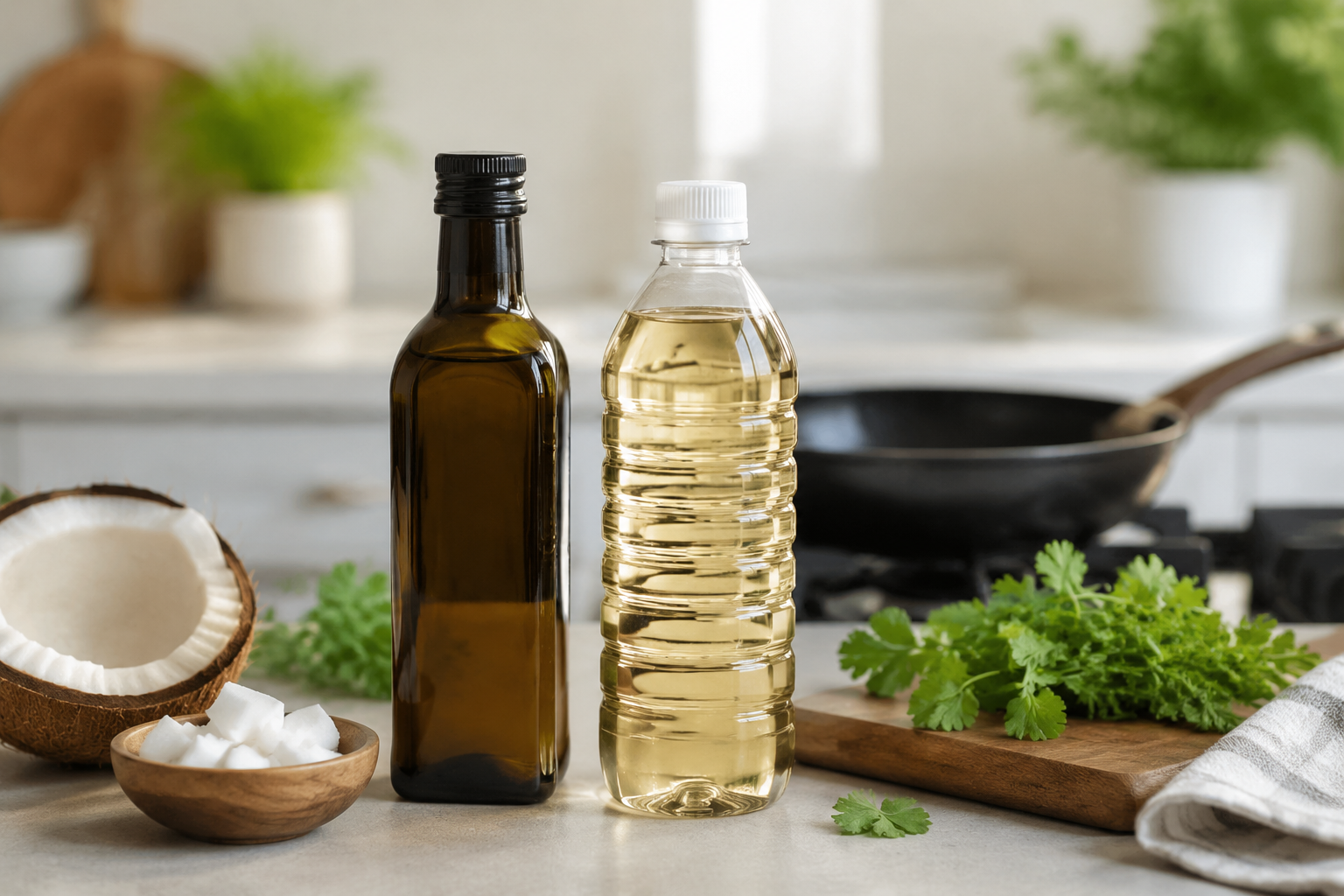
Coconut oil is one of the most widely used natural ingredients in personal care, and here the evidence is more consistently positive than for dietary use.
Skin uses:
- Moisturizer for dry skin and mild eczema (clinical studies support improved hydration and skin barrier function)
- Makeup remover
- Lip balm base
- Massage oil
Hair uses:
- Pre-wash conditioning treatment to reduce protein loss
- Scalp moisturizer for dry or flaky scalp
- Frizz control for coarse or dry hair types
Who should be cautious: People with acne-prone or oily facial skin. Coconut oil is comedogenic (pore-blocking) for some skin types and may worsen breakouts when applied to the face.
Coconut Oil Side Effects and Who Should Avoid It

Coconut oil is generally safe for most people in moderate amounts, but several groups should exercise caution.
- People with high LDL cholesterol or cardiovascular disease: The saturated fat content can raise LDL levels. Consult a doctor before making coconut oil a dietary staple.
- Those with tree nut or coconut allergies: Coconut is classified as a tree nut by the FDA. Allergic reactions, though uncommon, are possible.
- People with acne-prone skin: Topical use on the face may clog pores.
- Anyone on a high-calorie diet: At 120 calories per tablespoon, adding coconut oil without reducing other fats can contribute to caloric excess.
Common side effects from excessive consumption include digestive discomfort, loose stools, and nausea, particularly when introduced quickly in large amounts.
Does Coconut Oil Go Bad and How to Store It
Coconut oil has a relatively long shelf life due to its high saturated fat content, which resists oxidation. An unopened jar of virgin coconut oil typically lasts two years or more from the production date. Refined coconut oil may last slightly longer.
Signs of spoilage: Yellow discoloration, sour or rancid smell, or mold growth.
Storage tips:
- Store in a cool, dark place away from direct sunlight.
- Keep the lid tightly closed to prevent moisture contamination.
- No refrigeration is required, though it will solidify below 76 degrees F.
Why Does Coconut Oil Solidify and How to Store It
Coconut oil solidifies at room temperature because its high saturated fat content gives it a melting point of approximately 76 degrees F (24 degrees C). Below this temperature, it becomes a white solid; above it, a clear liquid. This is normal and does not affect quality.
To liquefy solid coconut oil quickly, place the jar in warm water for a few minutes or scoop the needed amount and melt it gently in a pan. Repeated melting and solidifying does not degrade the oil as long as no water is introduced.
Coconut Oil Price and Where to Buy
Coconut oil prices have been elevated through 2025 and into 2026. Global prices peaked at $2,841 per metric ton in July 2025, driven by tight supply and growing demand. [1] Philippine biofuel policy uncertainty has added further pressure on prices. [2]
For consumers, retail prices vary by type and brand:
- Refined coconut oil is generally the most affordable and widely available.
- Virgin or organic coconut oil commands a premium at retail.
- Bulk purchasing from warehouse retailers or online suppliers offers better value for regular users.
Coconut oil is available at most grocery stores, health food retailers, pharmacies, and online marketplaces. [3] When comparing brands, check for certifications such as USDA Organic, non-GMO, and cold-pressed labeling for virgin varieties.
Best Coconut Oil Brands to Buy
No single brand is universally best, but several criteria help identify quality products:
- Cold-pressed or expeller-pressed labeling for virgin oil
- Certified organic to minimize pesticide exposure
- Minimal ingredients (100% coconut oil, nothing added)
- Dark glass or BPA-free packaging to protect against light degradation
- Transparent sourcing with country of origin listed
Well-regarded brands in the market include Nutiva, Garden of Life, Viva Naturals, and Spectrum Organics, among others. For refined oil, look for non-hydrogenated versions to avoid trans fats.
FAQ
Is coconut oil good for you every day? Moderate daily use (1-2 tablespoons as part of a balanced diet) is unlikely to cause harm for most healthy adults, but it should not replace heart-healthy fats like olive oil as the primary cooking fat.
What is the best way to use coconut oil in cooking? Use virgin coconut oil for low-heat cooking, baking, or adding to smoothies. Use refined coconut oil for medium-heat sauteing or when a neutral flavor is needed.
Can coconut oil clog arteries? Coconut oil raises both LDL and HDL cholesterol. People with existing cardiovascular disease or high LDL should limit intake and consult a healthcare provider.
Is coconut oil safe to put on your face? It works well for dry skin types but can clog pores for oily or acne-prone skin. Patch-test before applying to the full face.
Does coconut oil help with hair growth? There is no strong evidence that coconut oil stimulates hair growth. It does reduce protein loss and improve hair texture when used as a pre-wash treatment.
How much coconut oil should you use per day? Most nutrition guidelines suggest limiting total saturated fat intake. One tablespoon of coconut oil contains about 12 grams of saturated fat, which is close to the daily recommended limit for many adults.
Why is coconut oil so expensive right now? Supply constraints from major producing countries and rising global demand pushed prices to record highs in mid-2025, and prices remain elevated into 2026. [1][7]
Is refined coconut oil less healthy than virgin? Refined coconut oil has fewer antioxidants but the same fatty acid profile. For cooking, the difference is minor. For topical use, virgin oil is generally preferred.
Can coconut oil go in the fridge? Refrigeration is not necessary but will not harm the oil. It will simply become very firm and harder to scoop.
Does coconut oil expire? Yes. Most coconut oil has a shelf life of 1.5 to 2 years. Check the best-by date and watch for rancid smell or discoloration as signs of spoilage.
Conclusion
A look at coconut oil reveals a product with genuine versatility, a complex nutritional profile, and a market shaped by tight global supply and rising demand. It is not a miracle food, but it is a useful ingredient when chosen thoughtfully and used in appropriate amounts.
Actionable next steps:
- For cooking: Start with refined coconut oil for medium-heat applications and virgin coconut oil for baking or raw uses. Limit daily intake to 1 tablespoon if cardiovascular health is a concern.
- For skin and hair: Try virgin coconut oil as a body moisturizer or pre-wash hair treatment. Avoid applying to acne-prone facial skin until you’ve patch-tested.
- For buying: Compare labels for cold-pressed, organic, and non-hydrogenated certifications. Buy in larger quantities to offset elevated retail prices.
- For health decisions: If you have high cholesterol or heart disease, discuss coconut oil use with your doctor before making it a dietary staple.
The bottom line is that coconut oil earns a place in a balanced lifestyle when used with intention, not as a cure-all, but as one useful tool among many.
References
[1] Stat Of The Week In July 2025 Global Coconut Oil Prices Peaked At 2841 – https://www.spc.int/fr/actualite/actus-web/2026/02/stat-of-the-week-in-july-2025-global-coconut-oil-prices-peaked-at-2841
[2] Philippine Biofuel Policy Uncertainty Weighs On Coconut Oil Prices – https://vespertool.com/news/philippine-biofuel-policy-uncertainty-weighs-on-coconut-oil-prices/
[3] Branded Coconut Oil – https://economictimes.indiatimes.com/topic/branded-coconut-oil
[5] Outlook – https://coconutcommunity.org/page-statistics/outlook
[7] Humble Coconut Oil Turns Into Luxury Rising Demand Shrinking Output 2025 08 20 – https://www.reuters.com/world/china/humble-coconut-oil-turns-into-luxury-rising-demand-shrinking-output-2025-08-20/
[8] Change Us Dietary Guidelines Boost Demand Coconut Oil – https://www.philstar.com/business/2026/03/03/2511566/change-us-dietary-guidelines-boost-demand-coconut-oil
