

Last updated: July 18, 2026
Quick Answer: A July 2026 E. coli outbreak linked to frozen GreenWise Organic blueberries sold at Publix has sickened at least 12 people across eight states, prompted a formal product recall, and led to the first lawsuit filed on July 13, 2026, in Palm Beach, Florida. Consumers who purchased 10-ounce bags of the affected product (Lot Code: 60401, Best By: February 9, 2028) should discard them immediately and seek medical care if they have symptoms.
Key Takeaways
- The CDC confirmed 12 E. coli O145:H28 infections linked to frozen GreenWise Organic IQF Blueberries, with four hospitalizations as of July 2026. [1]
- Frutas y Hortalizas del Sur S.A. recalled the product on July 3, 2026; it was sold exclusively at Publix stores in eight states. [2]
- The specific lot to check: Lot Code 60401, Best By Date February 9, 2028 on 10-ounce packages.
- Ron Simon & Associates filed the first lawsuit against Publix on July 13, 2026, seeking $100,000 in damages on behalf of Oscar and Roberta Cash, who suffered severe illness. [3]
- E. coli symptoms typically appear 3 to 4 days after exposure and can include bloody diarrhea, severe cramps, and vomiting. [1]
- Freezing does not kill E. coli, frozen fruit carries the same contamination risk as fresh fruit if pathogens are present. [7]
- Publix issued an internal stop sale and is cooperating with health authorities. [5]
- Consumers can return recalled packages to Publix for a refund, regardless of whether they have a receipt.
- High-risk groups, including young children, older adults, pregnant women, and immunocompromised individuals, face the greatest danger from E. coli O145:H28.
- The FDA and CDC investigation into the contamination source is ongoing as of July 2026. [2]
What Is the E. Coli Blueberries Outbreak in July 2026?
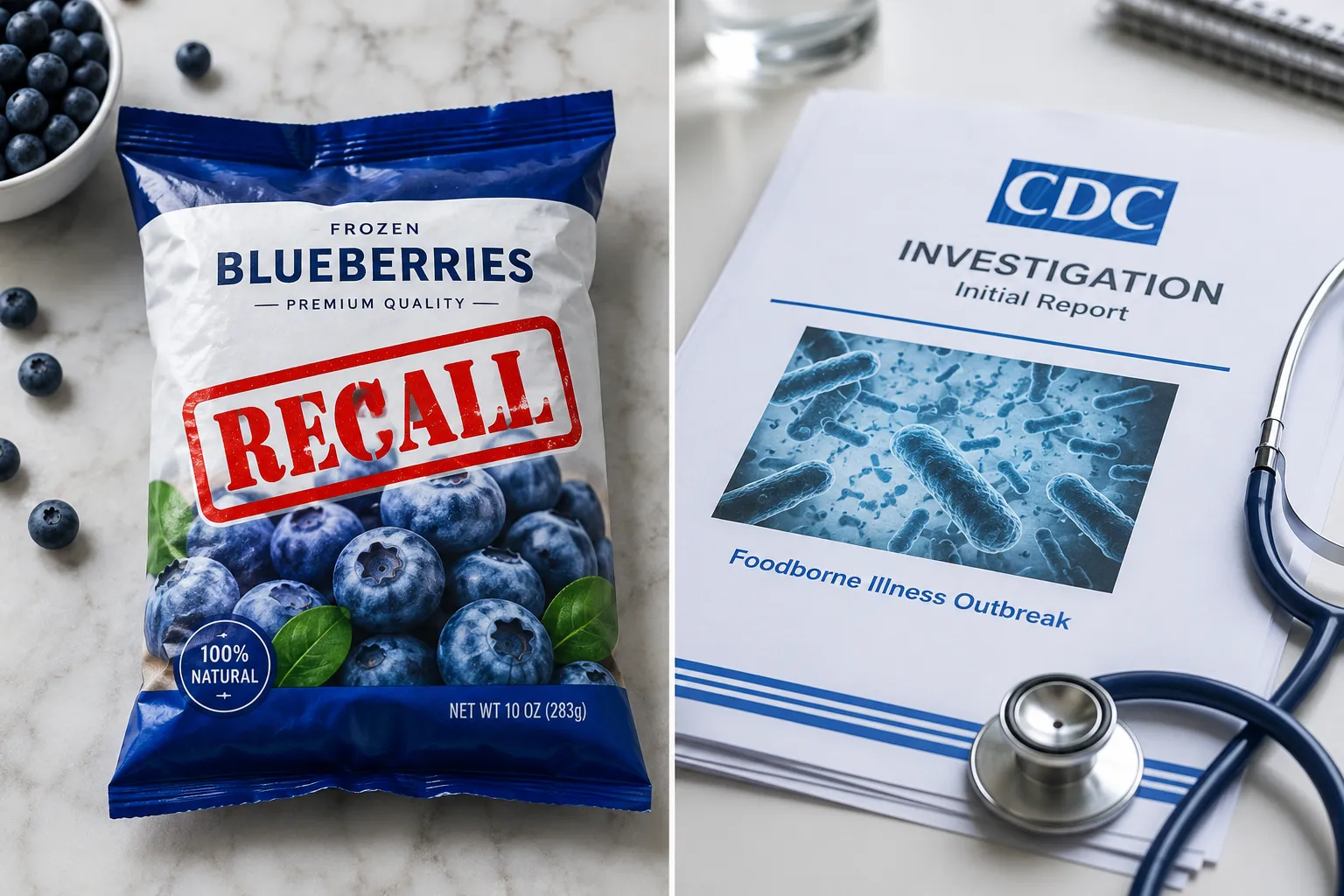
The E. coli blueberries outbreak in July 2026 is a confirmed multistate foodborne illness event tied to frozen GreenWise Organic IQF Blueberries distributed through Publix supermarkets. The CDC identified the pathogen as E. coli O145:H28, a strain capable of causing serious gastrointestinal illness and, in severe cases, life-threatening kidney complications. [1]
As of mid-July 2026, 12 people in Florida and Georgia have been infected, and four required hospitalization. Health officials in affected states are actively monitoring for additional cases, given how widely the product was distributed. [6]
The contamination source has not been publicly confirmed yet. The FDA and CDC are jointly investigating the supply chain of Frutas y Hortalizas del Sur S.A., the manufacturer behind the recalled product. [2]
Which Blueberry Brands Are Affected by the E. Coli Recall?
Only one product is currently under recall: GreenWise Organic IQF Blueberries, a Publix store brand. The recall is limited to a specific lot.
Check your freezer for all of the following:
- Brand: GreenWise Organic IQF Blueberries
- Package size: 10 ounces (frozen)
- Lot Code: 60401
- Best By Date: February 9, 2028
- Sold at: Publix stores only
No other blueberry brands or lot codes are part of this recall. If your package has a different lot code or best-by date, it is not part of the current recall, though the FDA advises consumers to stay updated as the investigation continues. [2]
Where Were the Contaminated Blueberries Sold?
The recalled GreenWise Organic blueberries were distributed exclusively through Publix Super Markets in eight southeastern and mid-Atlantic states. [2]
Affected states include:
- Alabama
- Florida
- Georgia
- Kentucky
- North Carolina
- South Carolina
- Tennessee
- Virginia
Publix issued an internal stop sale upon notification and is cooperating fully with health authorities. [5] If you live in any of these states and purchased frozen GreenWise Organic blueberries between early 2026 and the recall date of July 3, 2026, check your freezer immediately.
What Are the Symptoms of E. Coli from Blueberries?
E. coli infection from contaminated blueberries produces the same symptoms as other foodborne E. coli illnesses. Symptoms typically appear 3 to 4 days after eating the contaminated product, though onset can range from 1 to 10 days. [1]
Common symptoms include:
- Severe stomach cramps
- Diarrhea, often bloody
- Nausea and vomiting
- Low-grade fever in some cases
In serious cases, E. coli O145:H28 can cause hemolytic uremic syndrome (HUS), a form of kidney failure that is especially dangerous for young children and older adults. Signs of HUS include decreased urination, extreme fatigue, and pale skin, these require emergency medical attention. [1]
How Long Does E. Coli Take to Show Symptoms?
Symptoms of E. coli infection typically appear 3 to 4 days after exposure, according to the CDC. [1] However, the incubation window spans roughly 1 to 10 days, so some people may feel ill sooner or later than average.
If you ate the recalled blueberries and develop symptoms within 10 days, contact a healthcare provider promptly. Mention that you may have consumed recalled GreenWise Organic frozen blueberries, this helps clinicians test for the correct strain and report cases to public health authorities.
Who Is Most at Risk from E. Coli Blueberries?
Anyone who ate the recalled product is potentially at risk, but certain groups face a significantly higher chance of severe illness or complications.
High-risk groups:
- Children under 5 years old
- Adults aged 65 and older
- Pregnant women
- People with weakened immune systems (e.g., those undergoing chemotherapy, organ transplant recipients, or individuals with HIV)
For these groups, even mild E. coli symptoms warrant immediate medical evaluation. The Cash family lawsuit illustrates the severity possible: Mrs. Roberta Cash required nearly a month of medical care after consuming the contaminated blueberries. [3]
What Should You Do If You Ate Contaminated Blueberries?
If you ate GreenWise Organic frozen blueberries with Lot Code 60401, take the following steps right away.
Step-by-step action plan:
- Stop eating the product. Discard any remaining blueberries from the recalled lot, or seal them in a bag for return to Publix.
- Monitor for symptoms for up to 10 days after your last consumption.
- Contact a doctor if you develop diarrhea (especially bloody), severe cramps, or vomiting.
- Sanitize surfaces. Wash and disinfect any containers, cutting boards, colanders, or freezer shelves that may have touched the recalled product. [2]
- Report your illness. Contact your local or state health department so officials can track the outbreak accurately.
- Keep documentation. Save your receipt, the product packaging, and any medical records, these are essential if you pursue a legal claim.
Do not attempt to “cook off” the contamination by thawing and reheating the recalled product. The FDA advises consumers not to eat, sell, or serve it under any circumstances. [2]
Can You Get E. Coli from Frozen Blueberries?
Yes, frozen blueberries can carry E. coli. Freezing slows bacterial activity but does not kill pathogens like E. coli O145:H28. [7] If contamination occurred before or during the freezing process, at the farm, processing facility, or packaging stage, the bacteria survive in the frozen state and become active again once the fruit thaws.
This outbreak is a direct example of that risk. The recalled product is a frozen IQF (individually quick frozen) item, and the confirmed infections demonstrate that freezing provided no protection against the E. coli present in this lot.
Food safety experts recommend treating frozen fruit with the same caution as fresh produce, particularly for high-risk individuals. [7]
How to Safely Wash Blueberries to Reduce Contamination Risk
Washing blueberries reduces surface contamination but cannot eliminate E. coli that has penetrated the fruit tissue. For non-recalled blueberries, proper washing still meaningfully lowers risk.
Safe washing steps:
- Rinse blueberries under cool running water for at least 30 seconds just before eating, not before storing.
- Use a clean colander; avoid soaking, which can spread bacteria.
- Pat dry with a clean paper towel.
- Wash your hands for at least 20 seconds before and after handling.
- Clean and sanitize the colander and any surfaces afterward.
For the recalled lot specifically, washing is not sufficient. The FDA advises discarding or returning the product rather than attempting to make it safe through washing or cooking. [2]
For more on food safety practices and how nutrition intersects with health, see our health resources section.
Are Organic Blueberries Safer from E. Coli?
No. Organic certification does not reduce E. coli risk. Organic farming standards govern pesticide use and soil practices, not pathogen control. E. coli contamination typically enters the supply chain through irrigation water, animal contact, or unsanitary handling during harvest and processing, all of which can affect organic and conventional crops equally.
The current outbreak involves a certified organic product, which underscores this point. Choosing organic blueberries offers no additional protection against foodborne bacteria like E. coli O145:H28.
What Is the E. Coli Blueberries Lawsuit and Who Filed It?
The E. coli blueberries lawsuit is the first legal action arising from the July 2026 outbreak. On July 13, 2026, Ron Simon & Associates, working with Elizabeth Zwibel Law, filed suit against Publix Super Markets in Palm Beach, Florida, on behalf of Oscar and Roberta Cash. [3]
The lawsuit alleges that the couple consumed GreenWise Organic frozen blueberries purchased at Publix and subsequently suffered severe E. coli infections. Mrs. Cash required nearly a month of medical treatment. The suit seeks $100,000 in damages from Publix. [4]
The filing names Publix as the defendant because the retailer distributed the contaminated product. Supplier Frutas y Hortalizas del Sur S.A. may also face legal scrutiny as the investigation develops.
Key lawsuit details at a glance:
| Detail | Information |
|---|---|
| Filing date | July 13, 2026 |
| Filed by | Ron Simon & Associates / Elizabeth Zwibel Law |
| Plaintiffs | Oscar and Roberta Cash |
| Defendant | Publix Super Markets |
| Location | Palm Beach, Florida |
| Damages sought | $100,000 |
Can I Get a Refund for Recalled Blueberries?
Yes. Publix is accepting returns of the recalled GreenWise Organic IQF Blueberries (Lot Code 60401) for a full refund. Consumers do not need a receipt to return the product. [5]
To get your refund:
- Bring the unopened or partially used package to any Publix store.
- If the package has been discarded, contact Publix customer service directly with proof of purchase if available.
- Publix’s customer service line is listed on their website and on most store receipts.
Beyond a refund, consumers who suffered illness may have grounds for a legal claim. Retaining medical records, the product packaging, and purchase documentation strengthens any potential case. Consulting a food safety attorney is advisable if you or a family member required medical treatment.
When Will the Blueberry E. Coli Lawsuit Settlement Happen?
No settlement timeline has been announced as of July 18, 2026. The lawsuit filed by the Cash family was only filed on July 13, 2026, and is in its earliest stages. [3]
Food safety lawsuits of this type typically follow a predictable path: initial filing, discovery, potential class certification if more plaintiffs join, and then either settlement negotiations or trial. Cases involving clear product liability and documented medical harm often settle before trial, but timelines vary widely, from several months to several years depending on the complexity of the case and the number of plaintiffs involved.
Additional lawsuits are likely as more affected consumers come forward. Anyone who believes they were sickened by the recalled product should consult a food safety attorney promptly, as statutes of limitations apply.
What Is the Difference Between E. Coli Strains in This Outbreak?
The strain identified in this outbreak is E. coli O145:H28, a Shiga toxin-producing E. coli (STEC). Not all E. coli strains cause illness, many are harmless and naturally present in the human gut. STEC strains, however, produce toxins that damage the intestinal lining and, in serious cases, the kidneys. [1]
E. coli O157:H7 is the most well-known STEC strain, responsible for many high-profile outbreaks. O145:H28 is less common in the news but equally capable of causing severe illness, including hemolytic uremic syndrome (HUS). The CDC tracks both strains through its outbreak surveillance systems. [1]
The strain identification matters for treatment decisions and for epidemiological tracking, it allows health officials to definitively link cases to a common source.

Frequently Asked Questions
Q: What is the exact product I should look for in my freezer? A: GreenWise Organic IQF Blueberries, 10-ounce frozen package, Lot Code 60401, Best By Date February 9, 2028, sold at Publix. Discard or return it immediately. [2]
Q: Are Publix blueberries still safe to buy? A: Only the specific recalled lot (60401) is affected. Other Publix blueberry products with different lot codes are not part of this recall, but consumers should stay updated via the FDA’s recall page. [2]
Q: Can I cook the recalled blueberries to make them safe? A: No. The FDA advises against eating the recalled product in any form. Discard or return it. [2]
Q: How do I know if I have E. coli and not a regular stomach bug? A: Bloody diarrhea is a key distinguishing symptom of STEC infections. If you have bloody diarrhea after eating the recalled product, seek medical care immediately and inform your doctor of the potential exposure. [1]
Q: Does washing frozen blueberries remove E. coli? A: Washing reduces surface bacteria but cannot eliminate E. coli that has penetrated the fruit. For the recalled lot, washing is not a safe alternative to discarding the product. [2]
Q: Can children eat blueberries from other brands right now? A: Yes, blueberries from brands and lots not covered by this recall are not affected. However, always wash fresh blueberries thoroughly before serving them to children.
Q: Is there a class action lawsuit forming? A: As of July 18, 2026, only the Cash family’s individual lawsuit has been filed. Additional plaintiffs may join or file separately, which could lead to consolidation. Consult a food safety attorney if you were affected. [3]
Q: What if I already ate the recalled blueberries and feel fine? A: Monitor yourself for symptoms for up to 10 days. If you remain symptom-free, you were likely not affected. Still discard any remaining product and sanitize surfaces that contacted it. [2]
Q: Who manufactured the recalled blueberries? A: Frutas y Hortalizas del Sur S.A. manufactured the product. Publix distributed it under the GreenWise store brand. [2]
Q: Where can I get the most current recall information? A: The FDA’s outbreak investigation page is the most authoritative source. Check fda.gov directly for updates.
Conclusion
The E. coli blueberries lawsuit and the outbreak behind it serve as a clear reminder that foodborne pathogens can reach consumers through products that appear entirely safe, including certified organic frozen fruit. Here is what to do right now:
- Check your freezer for GreenWise Organic IQF Blueberries, Lot Code 60401, Best By February 9, 2028.
- Discard or return the product to any Publix location for a full refund.
- Sanitize any surfaces, containers, or colanders that touched the recalled product.
- See a doctor if you develop stomach cramps, bloody diarrhea, or vomiting within 10 days of consumption.
- Document everything, receipts, packaging, and medical records, if you plan to pursue a legal claim.
- Stay informed by monitoring the FDA and CDC outbreak pages, as the investigation is ongoing and additional recalls or case counts may be announced.
For broader guidance on food safety, nutrition, and health decisions, explore our health articles. If you are evaluating supplements or other health products as part of your recovery or wellness routine, our guide on using vitamins and supplements as a treatment offers evidence-based context. And if summer grilling is on your agenda, our barbeque maintenance and food safety tips cover safe food handling practices that apply beyond the grill.
The legal process is just beginning. As more plaintiffs potentially come forward and the FDA investigation concludes, the full scope of this outbreak and its consequences for Publix and its supplier will become clearer. Consumers who were harmed have legal options, and those options are best pursued sooner rather than later.
References
[1] CDC Warns of E. Coli Outbreak Linked to Frozen Blueberries – https://cdc.gov/media/releases/2026/cdc-warns-of-e-coli-outbreak-linked-to-frozen-blueberries.html?utm_source=openai
[2] Outbreak Investigation: E. Coli Frozen Blueberries July 2026 – https://www.fda.gov/food/outbreaks-foodborne-illness/outbreak-investigation-e-coli-frozen-blueberries-july-2026?utm_source=openai
[3] First Blueberry E. Coli Lawsuit Filed by Ron Simon & Associates Against Publix on Behalf of Hospitalized E. Coli Victim – https://www.prnewswire.com/news-releases/first-blueberry-e-coli-lawsuit-filed-by-ron-simon–associates-against-publix-on-behalf-of-hospitalized-e-coli-victim-302824210.html?utm_source=openai
[4] Publix Faces $100K Lawsuit After Couple Claims Recalled Blueberries Caused E. Coli Illness – https://www.wftv.com/news/local/publix-faces-100k-lawsuit-after-couple-claims-recalled-blueberries-caused-e-coli-illness/JA33VLOWB5FO5JPEG5ALVWIK4Q/?utm_source=openai
[5] Outbreak of E. Coli Linked to Frozen Organic Blueberries Sold via Publix Being Investigated – https://www.wgcu.org/top-story/2026-07-06/outbreak-of-e-coli-linked-to-frozen-organic-blueberries-sold-via-publix-being-investigated?utm_source=openai
[6] E. Coli Outbreak Prompts Recall of Frozen Blueberries at Publix – https://www.drugs.com/news/e-coli-outbreak-prompts-recall-frozen-blueberries-publix-130583.html?utm_source=openai
[7] Frozen Blueberries E. Coli Outbreak July 2026 – https://www.aarp.org/health/conditions-treatments/frozen-blueberries-e-coli-outbreak-july-2026/?utm_source=openai
