

Last updated: July 21, 2026
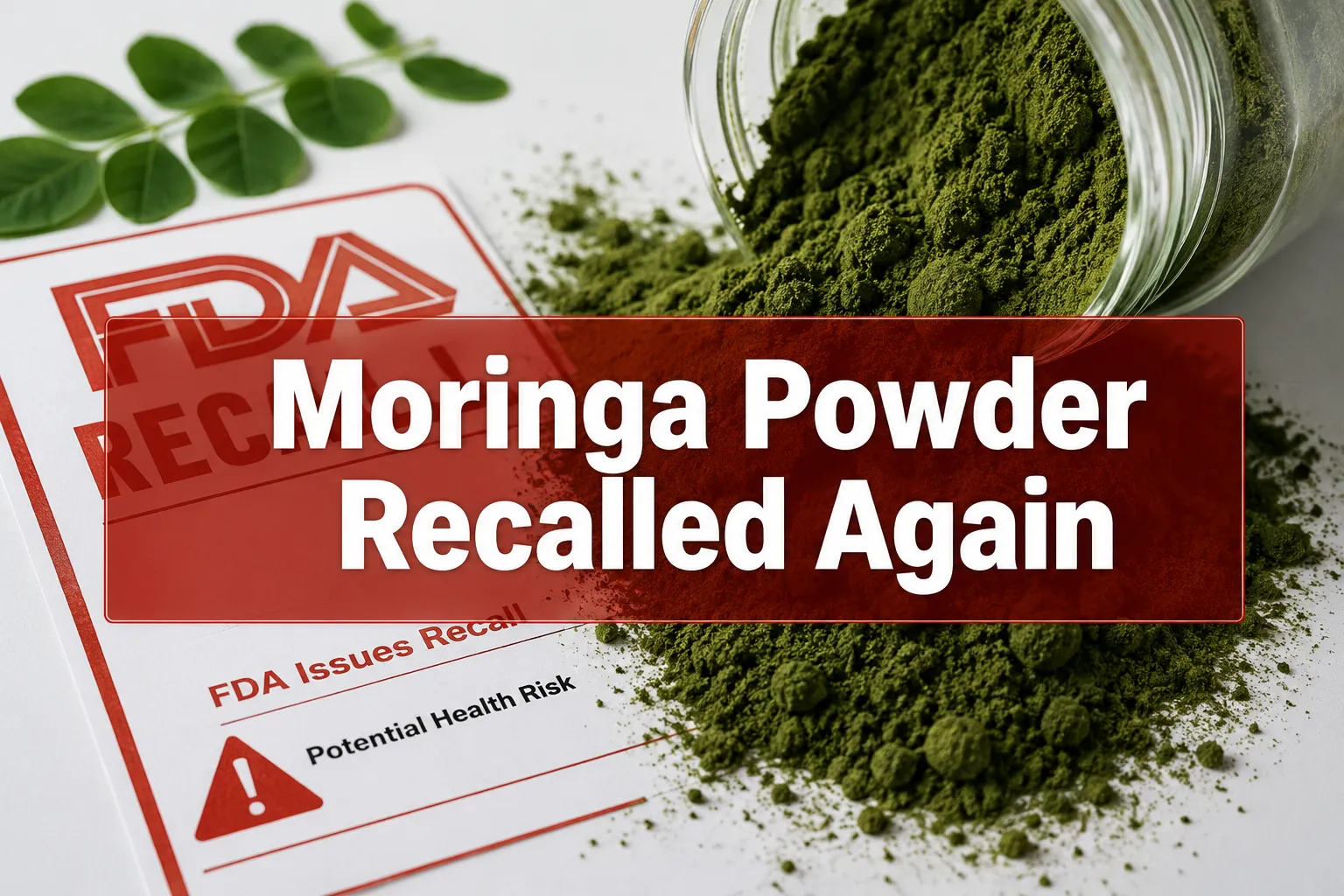
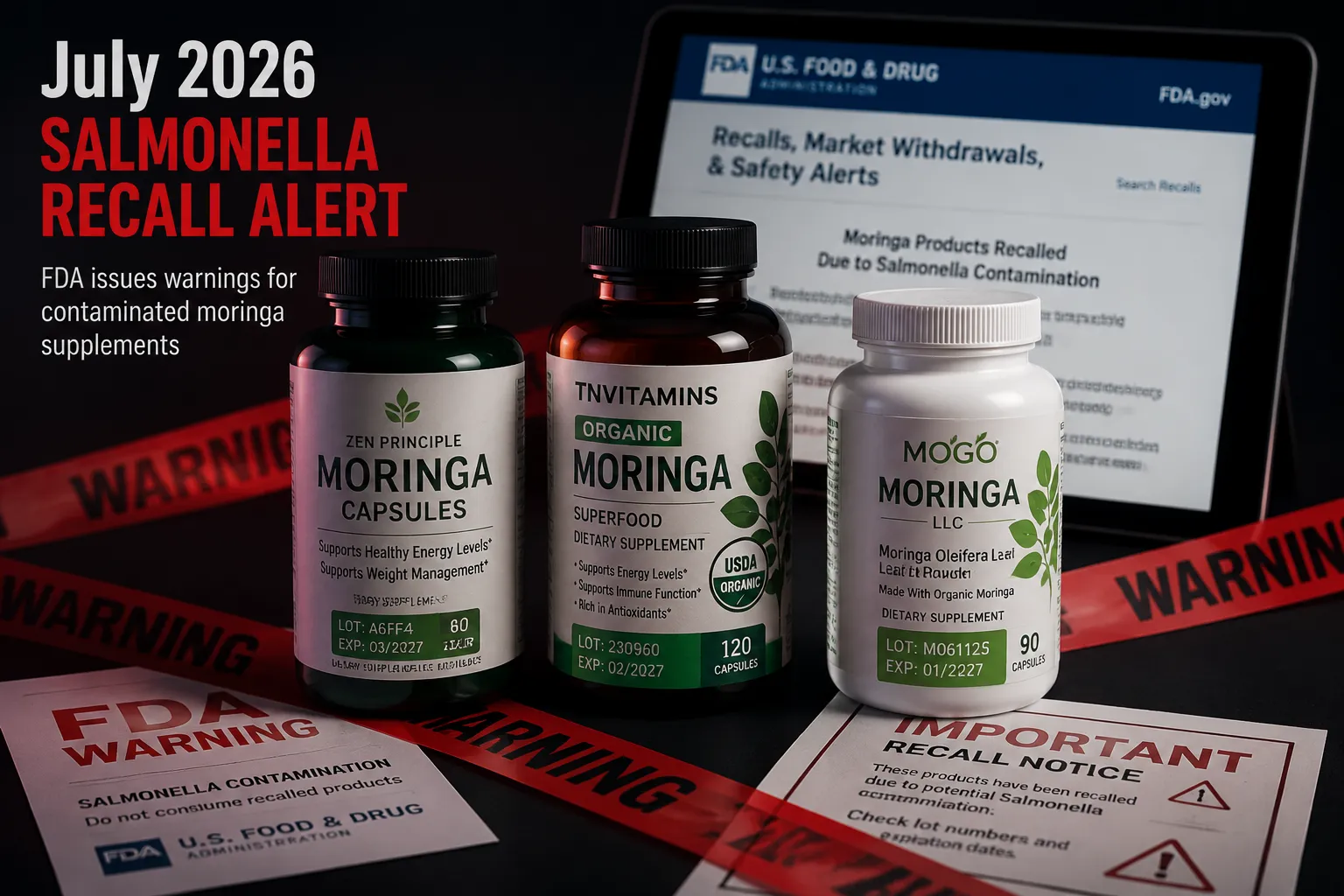
Quick Answer: Multiple moringa powder and capsule brands have been recalled in 2026 due to Salmonella contamination, with the most recent recall issued on July 19, 2026, by Relay Peak Research LLC for its Zen Principle Moringa Capsules. Consumers should stop using any recalled products immediately, check lot numbers against FDA notices, and seek medical attention if they develop symptoms of Salmonella infection.
Key Takeaways
- Relay Peak Research LLC recalled Zen Principle Moringa Capsules (Lot A6FF4) on July 19, 2026, due to possible Salmonella contamination [1]
- Total Nutrition Inc. recalled TNVitamins Organic Moringa products on June 26, 2026, following a supplier-initiated recall [2]
- MOGO Moringa LLC recalled two lots of Pure Moringa Oleifera capsules in May 2026 after 18 confirmed Salmonella infections across 14 states and 7 hospitalizations [3]
- In February 2026, Ambrosia Brands LLC recalled Rosabella-brand moringa capsules linked to extensively drug-resistant Salmonella Newport in 7 states [4]
- Salmonella symptoms include diarrhea, fever, vomiting, and abdominal cramps, typically appearing 6 hours to 6 days after exposure
- Anyone who consumed a recalled product and feels ill should contact a healthcare provider immediately
- The FDA and CDC are actively monitoring these outbreaks and updating recall information in real time [3]
- Moringa powder is not inherently unsafe, but recurring contamination at the supplier level raises serious quality control concerns
- Safe alternatives include spirulina, chlorella, and wheatgrass powder from brands with verified third-party testing
What Is Moringa Powder and Why Is It Popular
Moringa powder is a dried, ground supplement made from the leaves of the Moringa oleifera tree, native to South Asia and parts of Africa. It has become widely used because it contains protein, iron, calcium, and antioxidants in concentrated form.
Consumers add it to smoothies, teas, and capsules as a general wellness supplement. Its reputation as a “nutrient-dense superfood” drove rapid growth in the U.S. supplement market over the past decade. That popularity also means millions of people may be affected when a safety issue arises, which is exactly the situation with the current wave of recalls. For a broader look at how supplements are used and evaluated, see this guide on using vitamins and supplements as a treatment.
Moringa Powder Recalled Again Due to Salmonella: Which Brands Are Affected in 2026
Several brands have been recalled in 2026. Here is a summary of confirmed recalls:
| Brand / Product | Recall Date | Lot / Details | Illnesses |
|---|---|---|---|
| Zen Principle Moringa Capsules (Relay Peak Research LLC) | July 19, 2026 | Lot A6FF4, Best By 11/2028 | None reported [1] |
| TNVitamins Organic Moringa (Total Nutrition Inc.) | June 26, 2026 | Capsules and powder; supplier recall | Not specified [2] |
| MOGO Pure Moringa Oleifera Capsules | May 25, 2026 | Lots #15525AA and #00926AA | 18 ill, 7 hospitalized [3] |
| Rosabella Moringa Capsules (Ambrosia Brands LLC) | February 2026 | Specific lots; drug-resistant strain | 7 ill in 7 states [4] |
All four recalls were announced through the FDA’s official recall portal. Products were sold nationally, including through Amazon and brand websites [1][2][3][4].
How Do You Know If Your Moringa Powder Is Recalled
Check the lot number and expiration date printed on your product label against the FDA’s current recall list. The fastest way to do this is to visit FDA.gov’s recalls page and search for “moringa.”
Steps to verify your product:
- Find the lot number on the bottom or side of your bottle or package
- Check the best-by or expiration date
- Compare both against the specific lot numbers in each recall notice
- If your product matches, stop using it immediately
- Do not open or consume any remaining product while checking
For the July 2026 Zen Principle recall, the specific lot to check is Lot A6FF4 with a best-by date of November 2028 [1]. For MOGO capsules, the affected lots are #15525AA (EXP 6/2027) and #00926AA (EXP 1/2028) [3].
Key rule: If you cannot confirm your lot number is safe, treat the product as potentially recalled until you verify with the manufacturer or the FDA.
Can You Get Sick From Moringa Powder Salmonella, What Are the Symptoms
Yes, consuming Salmonella-contaminated moringa powder can cause a serious gastrointestinal illness. Salmonella bacteria cause an infection called salmonellosis, which can be severe enough to require hospitalization.
Common symptoms include:
- Diarrhea (sometimes bloody)
- Fever, often above 101°F (38.3°C)
- Abdominal cramps
- Nausea and vomiting
- Headache and muscle aches
Symptoms typically begin 6 hours to 6 days after consuming contaminated food and last 4 to 7 days. Most healthy adults recover without treatment, but children under 5, adults over 65, pregnant women, and people with weakened immune systems face higher risk of severe illness or hospitalization.
The MOGO recall resulted in 7 hospitalizations among 18 confirmed cases [3]. The Ambrosia Brands outbreak involved extensively drug-resistant Salmonella Newport, which is harder to treat with standard antibiotics [4]. That distinction matters: drug-resistant strains may require specific medical intervention, so prompt medical evaluation is critical if you have consumed a recalled product and feel ill.
Moringa Powder Recall History: How Many Times Has This Happened
This is not the first time moringa powder has been recalled due to Salmonella, and the pattern in 2026 alone shows at least four separate recall events in the U.S. The problem extends beyond U.S. borders as well.
Documented recall events (2025-2026):
- November 2025: Member’s Mark Super Greens Powder (sold at Sam’s Club) linked to Salmonella in 11 people across 7 states, with 3 hospitalizations [6]
- December 2025: Live it Up Super Greens powder linked to Salmonella in at least 45 people across 21 states, with 12 hospitalizations [5]
- February 2026: Rosabella moringa capsules recalled after drug-resistant Salmonella Newport outbreak [4]
- April 2026: Spain’s food safety agency (AESAN) issued an alert for Salmonella in two batches of organic moringa from the brand “El Granero,” imported from Germany [7]
- May 2026: MOGO Moringa capsules recalled after 18 illnesses and 7 hospitalizations [3]
- June 2026: TNVitamins Organic Moringa recalled following supplier-initiated recall [2]
- July 2026: Zen Principle Moringa Capsules recalled by Relay Peak Research LLC [1]
The frequency of these events points to a systemic issue at the raw material supply level, not isolated manufacturing failures.
Why Does Moringa Powder Keep Getting Contaminated With Salmonella
Moringa powder keeps getting contaminated primarily because of how and where the raw leaves are grown, dried, and processed. Most commercial moringa is sourced from tropical regions where open-air drying on the ground is common, creating direct exposure to animal feces, contaminated soil, and irrigation water carrying Salmonella.
Additional contributing factors include:
- Minimal heat treatment: Unlike canned or cooked foods, dried powders often skip the heat-kill step that destroys pathogens
- Supplier-level contamination: Several 2026 recalls were triggered by supplier-initiated recalls, meaning the contamination entered the supply chain before the final brand received the product [2]
- Inconsistent third-party testing: The dietary supplement industry in the U.S. is not required to test finished products for pathogens before sale, unlike pharmaceutical drugs
- Cross-contamination in shared facilities: Processing facilities that handle multiple botanicals can spread contamination across product lines
The FDA and CDC have been actively investigating these outbreaks and pushing for enhanced safety protocols across the supplement industry [3].
Is Moringa Powder Safe to Consume Right Now
Moringa powder from brands not currently under recall may still be safe, but consumers should exercise caution and verify their specific product. The ingredient itself is not inherently dangerous, but the recurring contamination pattern means the risk is not trivial.
Choose moringa products if:
- The brand has current third-party pathogen testing certificates (e.g., NSF, USP, or Informed Sport certification)
- The product is not on any active FDA recall list
- The manufacturer sources from facilities with documented Good Manufacturing Practices (GMP)
Pause or avoid moringa products if:
- You cannot confirm third-party testing
- The brand or lot matches any active recall
- You are pregnant, immunocompromised, elderly, or caring for a young child
For a broader perspective on evaluating supplement safety and evidence, the guide on using vitamins and supplements as a treatment provides useful context on how to assess supplement claims and quality markers.
What Should You Do If You Already Consumed Recalled Moringa
Stop consuming the product immediately and monitor yourself for symptoms for at least one week. If you develop diarrhea, fever, vomiting, or abdominal cramps, contact a healthcare provider and mention that you may have consumed a recalled moringa product.
Action checklist:
- Stop using the product right away
- Do not throw the product away yet, keep it in a sealed bag in case your doctor or the FDA needs it for testing
- Note the lot number and purchase date for your records
- Monitor for symptoms for 7 days
- If symptoms appear, call your doctor and mention the recall
- Report your illness to the FDA at 1-800-FDA-1088 or via MedWatch online
- Return the product to the place of purchase for a refund, or dispose of it per local guidelines if no return is possible
If you consumed the MOGO or Rosabella products and develop symptoms, seek medical attention promptly given the severity of those outbreaks, including the drug-resistant strain involved in the Ambrosia Brands recall [3][4].
Moringa Powder Benefits vs. Risks After the Recall
Moringa does contain real nutritional value, including protein, vitamins A, C, and E, calcium, and potassium. However, those benefits only apply when the product is safe to consume.
Benefits (when product is verified safe):
- High nutrient density relative to serving size
- Plant-based protein source useful for vegetarian and vegan diets
- Contains antioxidants that may support general wellness
- Widely available and relatively affordable
Risks (given current recall pattern):
- Repeated Salmonella contamination across multiple brands and suppliers
- At least one outbreak involved a drug-resistant bacterial strain [4]
- No mandatory pre-market pathogen testing for dietary supplements in the U.S.
- Consumers cannot visually identify contamination, the powder looks and smells normal
The honest assessment: the nutritional benefits of moringa are real but not unique. Several alternatives deliver comparable nutrients without the current safety concerns tied to moringa’s supply chain.
Best Alternatives to Moringa Powder for Health
Several green powder supplements offer comparable nutritional profiles with fewer recent safety incidents. When choosing an alternative, look for brands with third-party testing certifications.
Top alternatives to consider:
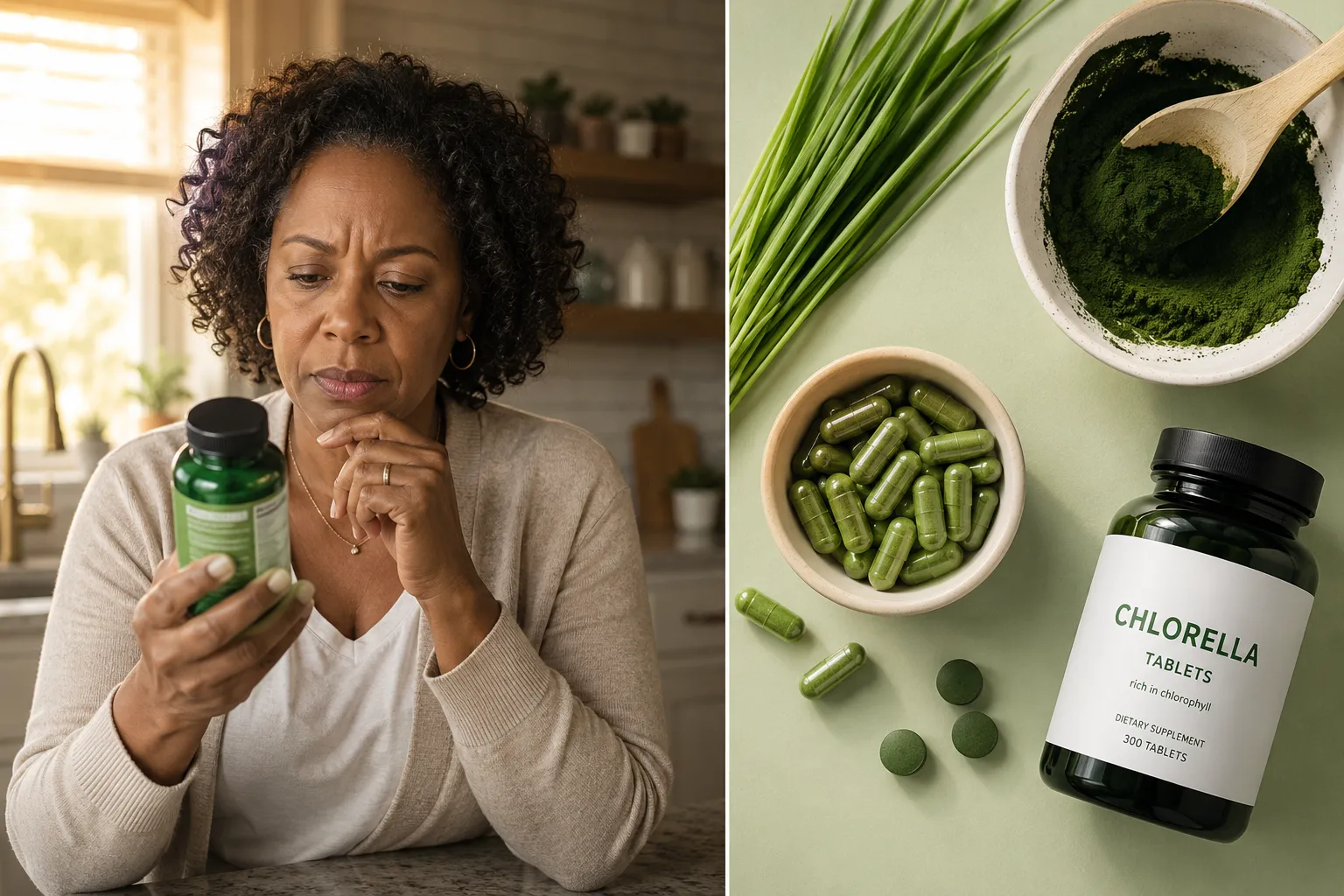
- Spirulina powder: High in protein, B vitamins, and iron; widely studied and generally well-tolerated
- Chlorella powder: Rich in chlorophyll, protein, and B12; often used for detox support
- Wheatgrass powder: Good source of vitamins A, C, and K; widely available from certified organic sources
- Barley grass powder: Similar nutrient profile to wheatgrass with a milder flavor
- Matcha green tea powder: High in antioxidants; produced in Japan under strict agricultural standards
When evaluating any supplement, third-party certification from NSF International, USP, or Informed Sport is the most reliable indicator that a product has been tested for contaminants. You can also explore our broader health resources for guidance on supplement safety and wellness decisions.
How Is Moringa Powder Tested for Salmonella, and How to Check If Your Batch Is Safe
Moringa powder is tested for Salmonella using microbiological culture methods or PCR-based pathogen detection, which can identify bacterial DNA even at very low concentrations. Reputable manufacturers test both raw ingredients and finished products before distribution.
How to verify your batch:
- Look for a Certificate of Analysis (COA) on the brand’s website, which lists pathogen test results by lot number
- Check whether the brand holds NSF, USP, or Informed Sport certification, which requires regular third-party audits
- Search the FDA’s recall database at FDA.gov using your brand name and lot number
- Contact the manufacturer directly and ask for the COA for your specific lot
The problem with many recalled moringa products is that supplier-level contamination was not caught before distribution [2]. This means the brand may have believed its product was safe while the raw material was already contaminated. That gap in the supply chain is the core safety challenge the industry has not yet resolved.
FAQ
Q: Which moringa brand was recalled most recently? Relay Peak Research LLC recalled its Zen Principle Moringa Capsules (Lot A6FF4, Best By 11/2028) on July 19, 2026, due to potential Salmonella contamination. No illnesses had been reported at the time of the recall [1].
Q: How do I find out if my moringa powder is recalled? Check the lot number on your product label against the FDA’s recall notices at FDA.gov. For the most recent July 2026 recall, the affected lot is A6FF4. For MOGO capsules recalled in May 2026, check for lots #15525AA and #00926AA [1][3].
Q: What does Salmonella poisoning feel like? Symptoms include diarrhea, fever, stomach cramps, nausea, and vomiting. They typically start within 6 hours to 6 days of exposure and last about 4 to 7 days. Bloody diarrhea or a fever above 102°F warrants immediate medical attention.
Q: Can I still buy moringa powder safely? Yes, but only from brands with current third-party pathogen testing certifications and no active FDA recalls. Avoid products that cannot provide a Certificate of Analysis for your specific lot number.
Q: Is the Salmonella in moringa dangerous enough to go to the hospital? It can be. The MOGO recall resulted in 7 hospitalizations out of 18 confirmed cases [3]. The Ambrosia Brands recall involved a drug-resistant strain of Salmonella Newport, which is harder to treat [4]. High-risk individuals, including the elderly, pregnant women, and the immunocompromised, should seek care promptly.
Q: Why does moringa keep getting recalled for Salmonella? The root cause is contamination at the raw material level, often linked to open-air drying practices in tropical growing regions and inconsistent testing at the supplier stage. Several 2026 recalls were triggered by supplier-initiated recalls, not brand-level failures [2].
Q: Are moringa capsules safer than moringa powder? No. Both capsules and loose powder can be contaminated if the underlying moringa leaf material is contaminated. Multiple 2026 recalls covered both formats from the same suppliers [1][2][3].
Q: What should I do with recalled moringa I already bought? Stop using it, keep it sealed for potential testing, note the lot number, and return it to the retailer for a refund. Report any illness to the FDA at 1-800-FDA-1088 or through the MedWatch portal.
Q: Has moringa been recalled outside the U.S.? Yes. In April 2026, Spain’s food safety agency (AESAN) issued an alert for Salmonella in two batches of El Granero organic moringa imported from Germany [7].
Q: What is the safest green powder supplement right now? Spirulina, chlorella, and matcha from brands with NSF or USP certification are generally considered lower-risk alternatives to moringa given the current recall pattern.
Conclusion
The moringa powder recalled again due to Salmonella situation in July 2026 is not a one-off event. It is the latest in a series of recalls stretching back through 2025 and into early 2026, involving multiple brands, multiple states, drug-resistant bacterial strains, and dozens of hospitalizations. That pattern demands a clear-eyed response from consumers.
Actionable next steps:
- Check your moringa products against the FDA recall list today, using the lot numbers listed in this article
- Stop using any product that matches a recalled lot, and do not resume use until you receive a refund or verified safe replacement
- If you feel ill after consuming moringa recently, contact a healthcare provider and mention the recall
- Before buying any new moringa or green powder supplement, verify third-party certification (NSF, USP, or Informed Sport)
- Consider switching to a well-certified alternative such as spirulina or chlorella while the moringa supply chain undergoes increased scrutiny
The FDA and CDC continue to monitor these outbreaks [3]. Bookmark the FDA’s recall page and check it periodically if you use moringa or other botanical supplements regularly. For more guidance on evaluating supplements and health products, visit our health resources section.
References
[1] Relay Peak Research LLC Recalls Zen Principle Moringa Capsules Because Possible Health Risk – https://www.fda.gov/safety/recalls-market-withdrawals-safety-alerts/relay-peak-research-llc-recalls-zen-principler-moringa-capsules-because-possible-health-risk?utm_source=openai
[2] Total Nutrition Inc Recalls Organic Moringa Products Following Supplier Initiated Recall Due – https://www.fda.gov/safety/recalls-market-withdrawals-safety-alerts/total-nutrition-inc-recalls-organic-moringa-products-following-supplier-initiated-recall-due?permalink=31047D25C97AB497B8E4074603E9B3F81FC399343BDD75F726D855F18FAF9C2D&utm_source=openai
[3] Outbreak Investigation Salmonella Moringa Leaf Powder May 2026 – https://www.fda.gov/food/outbreaks-foodborne-illness/outbreak-investigation-salmonella-moringa-leaf-powder-may-2026?utm_source=openai
[4] Outbreak Investigation Extensively Drug Resistant Salmonella Moringa Powder February 2026 – https://www.fda.gov/food/outbreaks-foodborne-illness/outbreak-investigation-extensively-drug-resistant-salmonella-moringa-powder-february-2026?utm_source=openai
[5] AP News – Super Greens Salmonella Outbreak – https://apnews.com/article/cb96e8adac970607754952cc9fa86860?utm_source=openai
[6] AP News – Member’s Mark Super Greens Salmonella Outbreak – https://apnews.com/article/34d51388137c12dc264d78c19a2a284a?utm_source=openai
[7] Sanidad Alerta De La Presencia De Salmonella En Dos Lotes De Este Superalimento – Cadena SER – https://cadenaser.com/nacional/hype/2026/04/28/sanidad-alerta-de-la-presencia-de-salmonella-en-dos-lotes-de-este-superalimento-cadena-ser/?utm_source=openai
