

Last updated: July 20, 2026
Quick Answer: Missouri is reporting a fast-moving surge in Cyclospora infections in July 2026, with confirmed laboratory cases more than doubling in a single week. The outbreak has been linked to contaminated shredded iceberg lettuce from a supplier also connected to a 2024 St. Louis E. coli cluster. Residents across multiple Missouri counties should avoid recalled produce, watch for prolonged watery diarrhea, and contact a doctor if symptoms persist beyond a few days.
Key Takeaways
- Missouri’s Department of Health and Senior Services (DHSS) received more than 80 confirmed Cyclospora lab reports between July 7-14, 2026, up from 43 cases reported just days earlier. [2][6]
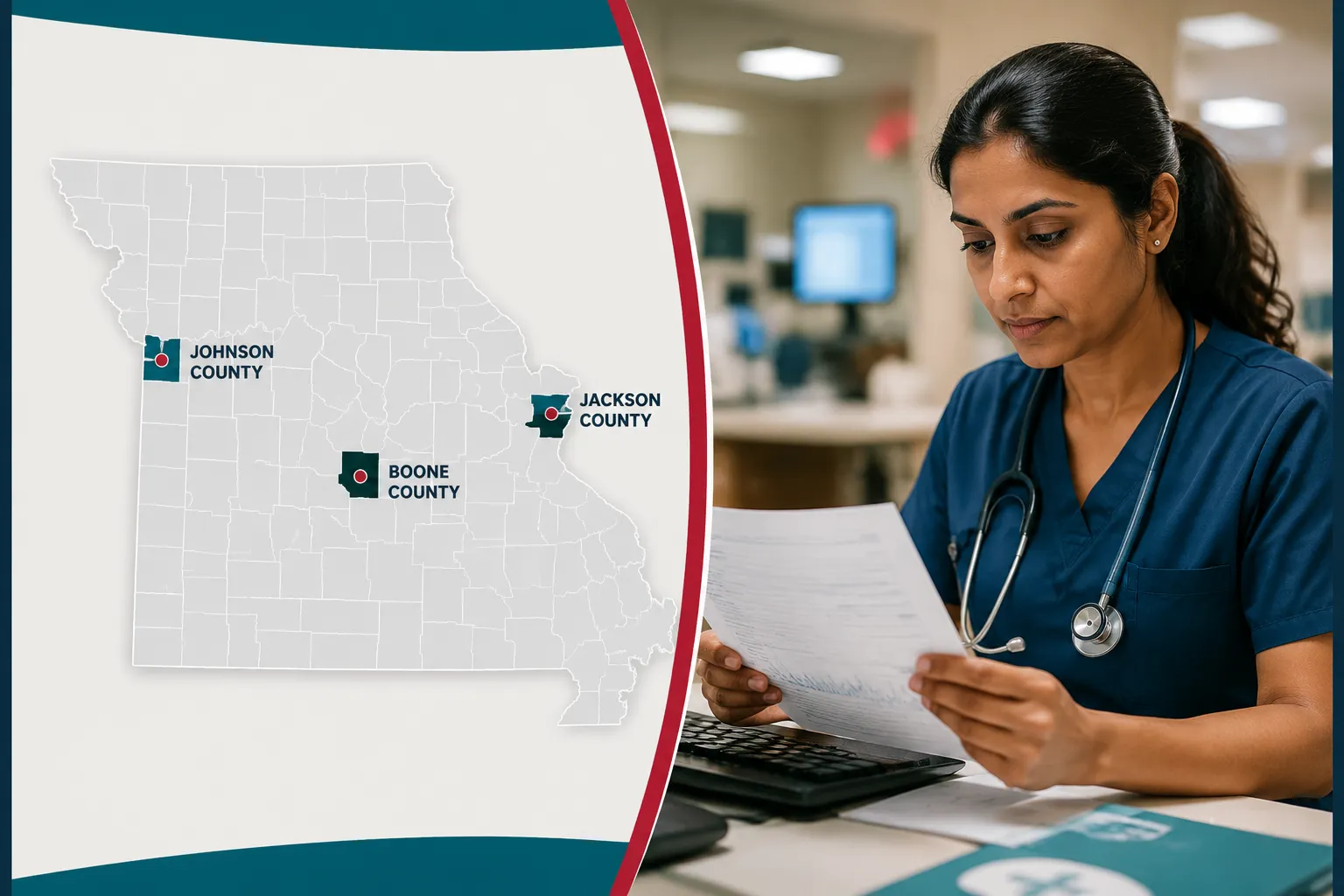
- Johnson County accounts for 25 cases, eastern Jackson County 14, and Boone County has seen cases jump from 9 to 13 in a single day. [3][5]
- Nationally, the CDC has logged 1,645 confirmed domestically acquired cases since May 1, 2026, with 141 hospitalizations and no deaths reported. [2][8]
- The outbreak is linked to shredded iceberg lettuce supplied by Taylor Farms; the company has pulled all iceberg lettuce sourced from Central Mexico from the U.S. market. [1]
- Cyclospora is not spread person to person. Infection requires consuming food or water contaminated with the parasite’s oocysts. [8]
- Symptoms include prolonged watery diarrhea, cramping, bloating, nausea, and fatigue. Untreated infections can last weeks to months.
- The antibiotic combination trimethoprim-sulfamethoxazole (TMP-SMX) is the standard treatment for cyclosporiasis.
- Washing produce thoroughly reduces risk, but does not fully eliminate Cyclospora oocysts from contaminated food.
What Is Cyclospora and How Do You Get It
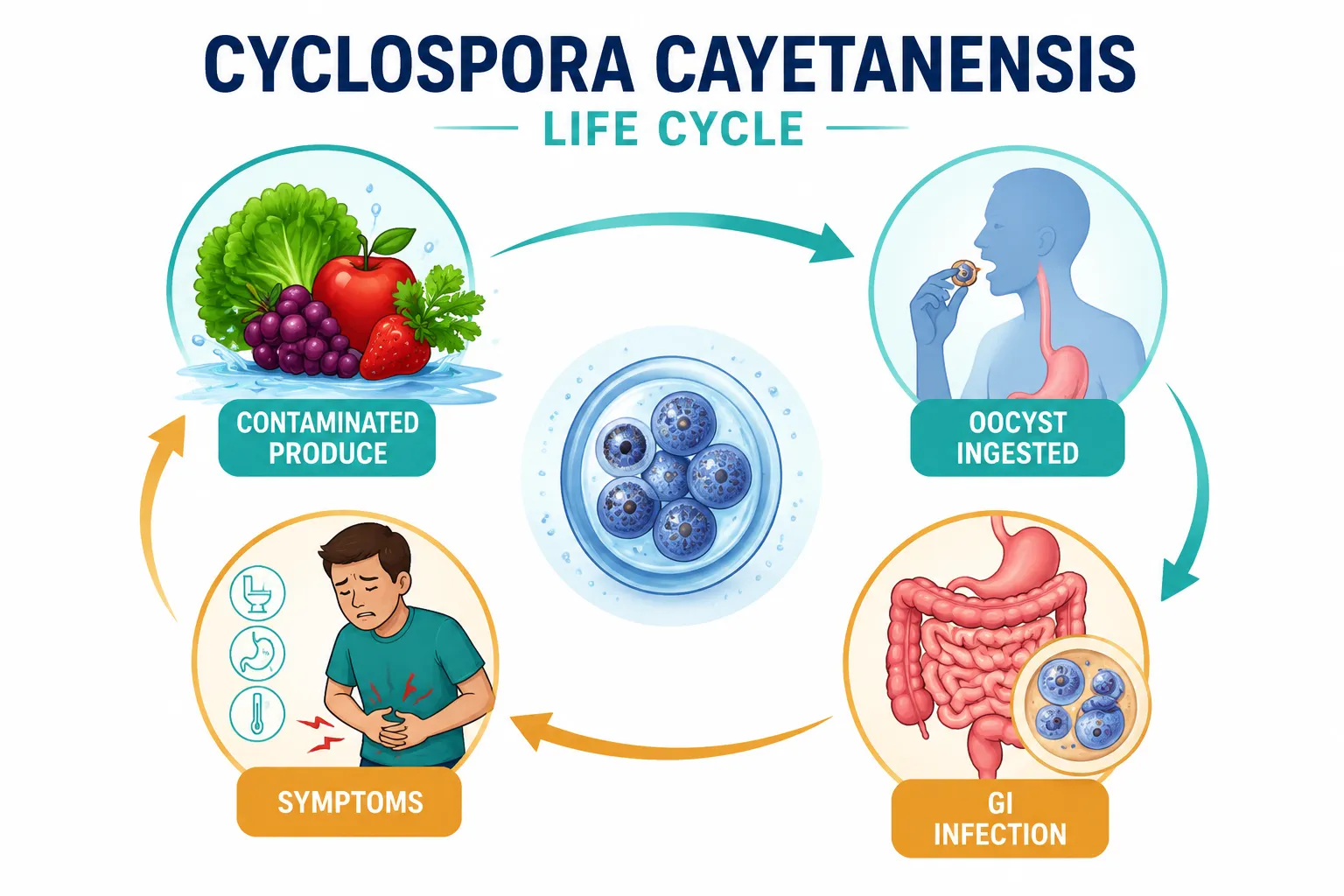
Cyclospora cayetanensis is a microscopic parasite that infects the small intestine and causes an illness called cyclosporiasis. People get it by consuming food or water contaminated with the parasite’s oocysts, which are tiny, hardy eggs shed in the feces of infected individuals. [8]
Unlike bacteria such as Salmonella, Cyclospora oocysts need time outside a host body to become infectious. This is why direct person-to-person spread does not occur. The parasite is most commonly associated with fresh produce, particularly leafy greens, herbs, and berries, that have been irrigated or washed with contaminated water.
Key facts about transmission:
- Contamination typically happens at the farm level, through irrigation water, soil, or handling.
- Oocysts are resistant to standard chlorine disinfection at levels used in drinking water treatment.
- The parasite is more prevalent in tropical and subtropical regions, which is why imported produce is a common source.
Cyclospora Outbreak Missouri July 2026 Latest Updates
Missouri is at the center of the most significant domestic Cyclospora surge reported in 2026. As of July 14-16, 2026, the DHSS confirmed more than 80 laboratory-positive cases, nearly double the 43 cases reported just one week prior. [2][6]
What investigators know so far:
- Early in July, Missouri health officials believed most state cases were travel-related and not part of the nationally publicized outbreak. [7]
- More recent DHSS statements indicate many July cases appear to have been acquired locally, pointing to in-state transmission linked to contaminated produce. [2][5]
- The CDC issued Health Alert Network advisory HAN 531 on July 14, 2026, urging clinicians to test symptomatic patients and report cases promptly. [2][10]
- Taylor Farms, the implicated supplier, has pulled all iceberg lettuce sourced from Central Mexico from the U.S. market as a precaution, even though trace-back points to a single independent farm representing less than 1% of U.S. iceberg lettuce supply. [1]
- The same supplier was previously associated with a 2024 E. coli cluster in St. Louis, raising broader concerns about produce safety at that supply chain level. [1]
“Missouri health officials say more than 80 positive cases of cyclosporiasis have been identified in the last week.” [9]
Nationally, the CDC has reviewed more than 5,100 additional reports to determine if they represent domestic infections. About 9% of confirmed patients (141 people) have been hospitalized; no deaths have been reported. [2][8]
Which Counties in Missouri Are Affected
The Missouri Cyclospora outbreak in July 2026 is concentrated in specific counties, though cases have been reported more broadly across the state. [3][5][6]
Confirmed case concentrations:
| County / Area | Reported Cases (as of July 16-17, 2026) |
|---|---|
| Johnson County | 25 confirmed |
| Eastern Jackson County | 14 confirmed |
| Boone County | 13 confirmed (up from 9 in one day) |
| Saint Luke’s Hospital (KC area) | 13 lab-positive in ~2.5 weeks |
| HCA Midwest Health patients | 120+ treated with compatible illness |
Boone Health reported at least five hospitalizations linked to the illness in Boone County alone, underscoring that some cases are severe enough to require inpatient care. [5]
Which Foods Are Linked to the Missouri Cyclospora Outbreak
The primary food vehicle identified in the broader multistate outbreak is shredded iceberg lettuce supplied by Taylor Farms to Taco Bell locations in Indiana, Kentucky, Michigan, Ohio, and West Virginia. [1][3]
Missouri’s connection to this specific supply chain is still being confirmed, but local health officials now believe in-state transmission is occurring through contaminated produce. [2][5] Taylor Farms’ decision to pull all Central Mexico-sourced iceberg lettuce from the U.S. market reflects the precautionary stance investigators are taking while trace-back work continues. [1]
Practical guidance on food:
- Avoid shredded iceberg lettuce from sources that cannot confirm their supply chain is clear.
- Check the FDA’s outbreak advisory page for the most current recall information.
- Wash all fresh produce under running water, even pre-washed or packaged items.
- For immunocompromised individuals, consider cooking leafy greens until the investigation concludes.
For more on safe food handling and supplement-based immune support during illness recovery, see our health resources section.
Symptoms of Cyclospora Infection: What to Watch For
Cyclospora infection causes prolonged, watery diarrhea that can be severe enough to be described in local Missouri media coverage as “explosive.” [4][6] Other common symptoms include:
- Frequent, watery diarrhea (sometimes alternating with constipation)
- Stomach cramping and bloating
- Nausea, sometimes vomiting
- Loss of appetite and weight loss
- Fatigue and muscle aches
- Low-grade fever in some cases
The illness tends to feel like a persistent stomach bug that does not resolve on its own. Many patients report feeling better briefly, then relapsing, which is a hallmark of cyclosporiasis.
Cyclospora Incubation Period: How Long Before Symptoms Appear
Symptoms typically begin about 7 days after consuming contaminated food or water, though the incubation period can range from 2 to 14 days. [8] This delay is one reason outbreaks are difficult to trace back to a specific meal or event.
What this means practically: If someone ate at a Taco Bell or consumed shredded iceberg lettuce in late June or early July 2026 and develops diarrhea now, Cyclospora should be on the list of possible causes.
How Long Does Cyclospora Last and When Should You See a Doctor
Without treatment, cyclosporiasis can last anywhere from a few weeks to several months, with symptoms that wax and wane. [8] Treated patients typically improve within a few days of starting antibiotics.
See a doctor promptly if:
- Diarrhea has lasted more than 3 days
- You have signs of dehydration (dark urine, dizziness, dry mouth)
- You have a fever above 101.5 F
- You are pregnant, elderly, or immunocompromised
- You recently ate shredded iceberg lettuce and develop GI symptoms
Boone County and Kansas City area hospitals have already confirmed multiple hospitalizations, so do not delay seeking care if symptoms are severe. [5][6]
Cyclospora vs. Food Poisoning: How to Tell the Difference
Cyclospora infection is technically a form of foodborne illness, but it differs from typical bacterial food poisoning in important ways.
| Feature | Cyclospora | Typical Bacterial Food Poisoning |
|---|---|---|
| Cause | Parasite (oocysts) | Bacteria (Salmonella, E. coli, etc.) |
| Onset after exposure | 7 days (range: 2-14 days) | Hours to 3 days |
| Duration untreated | Weeks to months | Days to 1 week |
| Person-to-person spread | No | Sometimes (e.g., norovirus) |
| Treatment | TMP-SMX antibiotic | Varies; often supportive |
The longer duration and relapsing nature of Cyclospora symptoms are the clearest distinguishing features. If diarrhea persists beyond a week without improvement, a Cyclospora test is warranted.
Cyclospora Testing: How Do Doctors Diagnose It
Cyclospora is diagnosed through stool testing, but it requires a specific laboratory request. Standard stool ova-and-parasite tests do not reliably detect Cyclospora. Clinicians must specifically request modified acid-fast staining or PCR-based testing. [8]
The CDC’s HAN 531 advisory, issued July 14, 2026, explicitly urges clinicians to order Cyclospora-specific tests for patients with prolonged watery diarrhea during the summer months, and to report confirmed cases to state health authorities promptly. [2][10]
For patients: When visiting a doctor, specifically mention that you may have been exposed to contaminated produce and ask whether a Cyclospora-specific stool test is appropriate.
Cyclospora Treatment Options and Antibiotics
The standard treatment for cyclosporiasis is trimethoprim-sulfamethoxazole (TMP-SMX), commonly sold under brand names such as Bactrim or Septra. [8] A typical course lasts 7 to 10 days, and most patients see significant improvement within a few days of starting the medication.
Important considerations:
- Patients with a sulfa allergy cannot take TMP-SMX. No equally effective alternative has been established, though ciprofloxacin has been used in some cases with partial effectiveness.
- Supportive care, including oral rehydration, is important for all patients.
- Do not self-medicate with over-the-counter anti-diarrheal medications without medical guidance, as these may mask symptoms and delay diagnosis.
For general information on how supplements and vitamins can support recovery from illness, see this guide on using vitamins and supplements as a treatment. Note that supplements do not replace antibiotic treatment for Cyclospora.
Is Cyclospora Contagious Person to Person
No. Cyclospora is not spread directly from person to person. [8] The parasite’s oocysts must spend time outside a human host in the environment before they become infectious, a process that takes days to weeks under the right conditions.
This means caring for a sick family member does not put others at risk of infection through casual contact, provided basic hygiene is maintained. The risk comes exclusively from consuming contaminated food or water.
Can You Get Cyclospora from Tap Water or Just Produce
Cyclospora can theoretically contaminate drinking water, but in the United States, most confirmed outbreaks have been linked to fresh produce, not municipal tap water. [8] The parasite’s oocysts are resistant to standard chlorine levels used in U.S. water treatment, which is why contaminated irrigation water at the farm level is a more common pathway.
In the current Missouri outbreak: The link is to shredded iceberg lettuce, not tap water. Missouri residents do not need to avoid tap water based on current outbreak data.
How to Prevent Cyclospora Infection During an Outbreak
Prevention focuses on food safety, since there is no vaccine and person-to-person spread is not a concern. [8]
Step-by-step prevention checklist:
- Avoid shredded iceberg lettuce until the current recall and investigation are resolved.
- Wash all fresh produce under cold running water for at least 20 seconds, even pre-washed bags.
- Use a clean produce brush on firm fruits and vegetables.
- Keep raw produce separate from raw meats in your refrigerator and on cutting boards.
- Refrigerate cut produce within two hours.
- Follow FDA and DHSS recall notices and discard any implicated products.
- Wash hands thoroughly before and after handling food.
Note: Washing produce reduces but does not fully eliminate Cyclospora oocysts if contamination is heavy. Cooking leafy greens to 160 F kills the parasite, which is worth considering for high-risk individuals during an active outbreak.
For tips on keeping food preparation surfaces and equipment clean, our barbeque maintenance and grill safety guide covers cross-contamination principles that apply broadly to outdoor food prep.
How Common Is Cyclospora Compared to Other Foodborne Illnesses
Cyclospora is relatively rare compared to Salmonella or Campylobacter, which together cause tens of millions of U.S. illnesses annually. However, the 2026 outbreak is one of the larger domestic Cyclospora surges on record.
As of mid-July 2026, the CDC has confirmed 1,645 domestically acquired cases nationally since May 1, 2026, with more than 5,100 additional reports under review. [2][8] By comparison, the CDC estimates roughly 1.35 million Salmonella infections occur in the U.S. each year (CDC estimate, pre-2026 baseline).
Cyclospora outbreaks tend to be underreported because the illness is often mistaken for a persistent stomach bug and because the specific lab test must be ordered deliberately. This means the true case count in Missouri and nationally is likely higher than confirmed figures suggest.
FAQ
Q: Should I avoid Taco Bell in Missouri right now? A: The confirmed multistate outbreak link is to Taco Bell locations in Indiana, Kentucky, Michigan, Ohio, and West Virginia, not Missouri specifically. However, Missouri cases appear linked to the same produce supply chain. Avoiding shredded iceberg lettuce at any fast-food location is a reasonable precaution until the investigation concludes. [1][3]
Q: How do I know if my diarrhea is Cyclospora and not a regular stomach bug? A: Duration is the key clue. Cyclospora symptoms typically last weeks without treatment and may relapse. If diarrhea persists beyond 3 to 5 days, especially after eating fresh produce, ask your doctor to order a Cyclospora-specific stool test.
Q: Can children get Cyclospora? A: Yes. Children can be infected and may become dehydrated more quickly than adults. Parents should seek medical attention promptly if a child has diarrhea lasting more than 2 to 3 days.
Q: Is the Missouri Cyclospora outbreak the same as the 2024 E. coli scare? A: No. They are different pathogens. Cyclospora is a parasite; E. coli is a bacterium. The connection is that Taylor Farms, the produce supplier linked to the current Cyclospora outbreak, was also associated with a 2024 E. coli cluster in St. Louis, raising questions about supply chain safety practices. [1]
Q: Does cooking lettuce kill Cyclospora? A: Yes. Heat above 160 F kills Cyclospora oocysts. However, most people eat lettuce raw, so cooking is not always practical. Thorough washing is the primary preventive step for raw consumption.
Q: Is Missouri under a public health emergency declaration? A: As of July 20, 2026, no formal emergency declaration has been issued, but the DHSS has issued a health alert and the CDC has issued HAN 531 urging clinician action. [2][10]
Q: Can I get Cyclospora more than once? A: Yes. Prior infection does not appear to confer lasting immunity. Repeated exposures to contaminated food or water can lead to repeated infections.
Q: What should I do if I think I ate recalled lettuce? A: Monitor yourself for symptoms for up to 14 days. If you develop watery diarrhea, cramping, or fatigue, contact your doctor and mention the potential exposure. Early treatment shortens the illness significantly.
Q: Are there any deaths from this outbreak? A: No deaths have been reported in the current 2026 outbreak as of mid-July. [2]
Q: Is bottled water safer than tap water during this outbreak? A: The current outbreak is linked to produce, not tap water. Bottled water is not necessary based on current outbreak data.
Conclusion
The Missouri Cyclospora Outbreak: What You Need to Know This July 2026 comes down to a few clear action points. Cases have more than doubled in a week, hospitalizations are occurring in multiple counties, and the likely source is contaminated shredded iceberg lettuce from a supplier with a prior food safety record. [1][2][5]
Actionable next steps for Missouri residents:
- Discard or avoid shredded iceberg lettuce, particularly from fast-food sources, until the FDA and DHSS confirm the supply chain is clear.
- Watch for symptoms for up to 14 days after any potential exposure, especially prolonged watery diarrhea.
- See a doctor if symptoms last more than 3 days or are severe. Ask specifically for a Cyclospora stool test.
- Follow DHSS and CDC updates at health.mo.gov and cdc.gov/cyclosporiasis for the latest case counts and food safety advisories.
- Practice thorough produce hygiene year-round, not just during active outbreaks.
The good news: Cyclospora responds well to antibiotics when diagnosed correctly, it does not spread person to person, and the implicated supplier has already taken steps to remove potentially contaminated product from the market. Staying informed and acting quickly if symptoms develop are the most effective tools available right now.
For additional health guidance and wellness resources, visit our health articles section.
References
[1] Missouri Cyclospora Cases Double Outbreak Linked Supplier 2024 St Louis E Coli Scare – https://www.stlpr.org/health-science-environment/2026-07-17/missouri-cyclospora-cases-double-outbreak-linked-supplier-2024-st-louis-e-coli-scare
[2] Missouri DHSS Health Alert – https://content.govdelivery.com/accounts/MODHSS/bulletins/420880f
[3] Cyclospora Outbreak Continues Missouri Cases Nearly Double – https://www.kctv5.com/2026/07/17/cyclospora-outbreak-continues-missouri-cases-nearly-double/
[4] Missouri Cyclospora Cases Diarrhea Parasite – https://www.kcur.org/health/2026-07-15/missouri-cyclospora-cases-diarrhea-parasite
[5] Cyclosporiasis Cases Nearly Double In Missouri Boone County Up To 13 Cases – https://abc17news.com/news/columbia/2026/07/16/cyclosporiasis-cases-nearly-double-in-missouri-boone-county-up-to-13-cases/
[6] Missouri Health Officials Report 80 Current Cases Cyclosporiasis – https://www.kctv5.com/2026/07/16/missouri-health-officials-report-80-current-cases-cyclosporiasis/
[7] Missouri Cases Of Diarrhea Causing Illness Are Connected To Travel DHSS Official Says – https://abc17news.com/news/missouri/2026/07/13/missouri-cases-of-diarrhea-causing-illness-are-connected-to-travel-dhss-official-says/
[8] CDC Cyclosporiasis Surveillance – https://www.cdc.gov/cyclosporiasis/php/surveillance/index.html
[9] Missouri Health Officials Say More Than 80 Positive Cases Of Cyclosporiasis Identified In Last Week – https://www.1049thecat.net/2026/07/16/missouri-health-officials-say-more-than-80-positive-cases-of-cyclosporiasis-identified-in-last-week/
[10] Missouri DHSS Alerts and Advisories – https://health.mo.gov/emergencies/ert/alertsadvisories/
