


Last updated: June 15, 2026
Quick Answer
California cherries typically peak in June, but the 2026 season has been dramatically shortened by an early heat wave and spring storms that cut statewide production to below 5 million 18-pound boxes, well under the five-year average of roughly 8 million boxes. Retailers across the U.S. are still running fresh cherry promotions, so knowing how to select, store, and use these fruits well is more valuable than ever this year.
Key Takeaways
- California cherry season normally runs late April through mid-June, but in 2026 the harvest ended as early as late May in many growing regions
- Statewide production is projected below 5 million 18-pound boxes in 2026, down sharply from an average of about 8 million boxes in recent years
- San Joaquin County, the state’s top cherry-producing region, suffered an estimated 63% crop loss and is seeking a disaster declaration
- Estimated industry losses for 2026 range from $250 million to $300 million due to reduced yields and quality problems
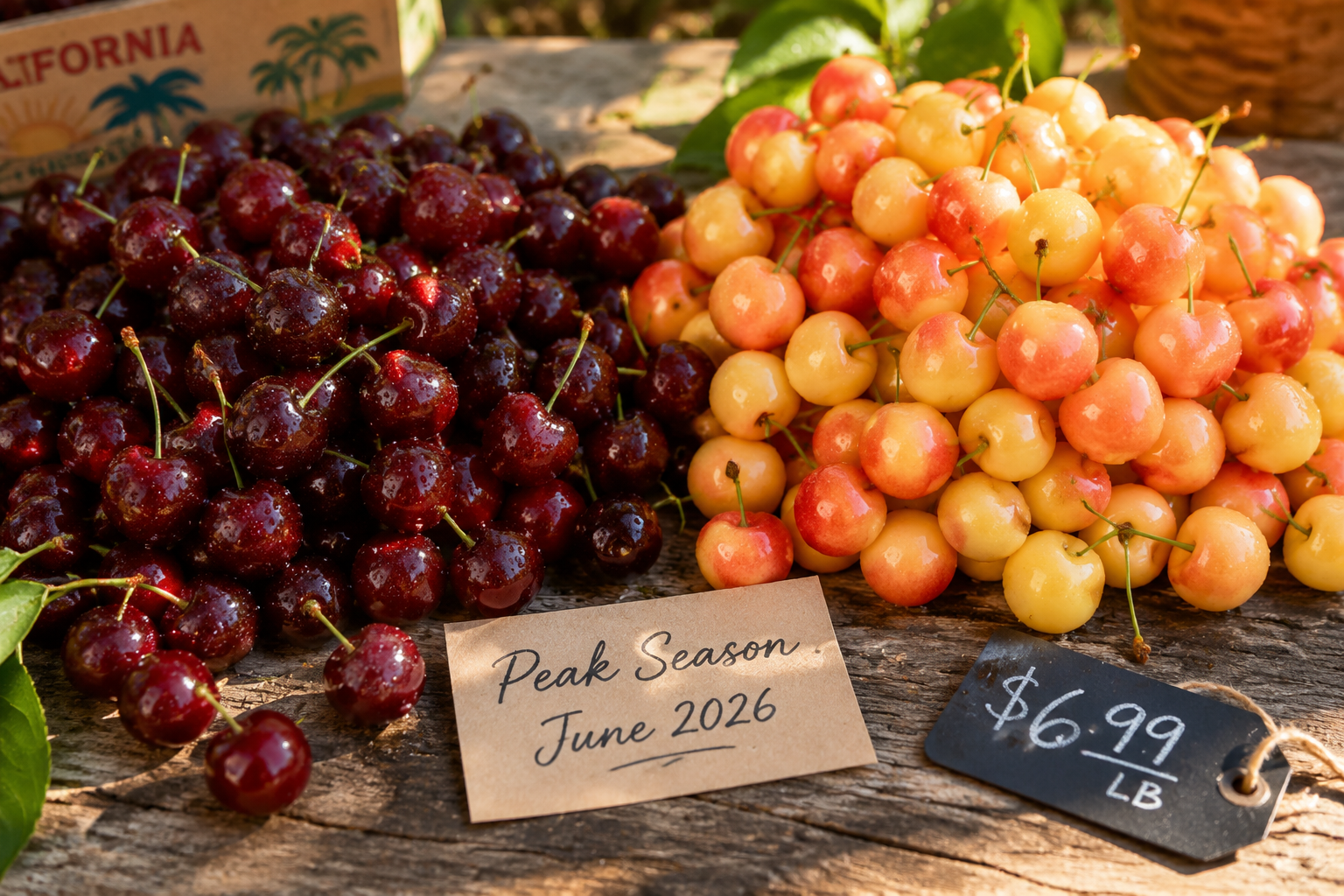
- Bing cherries are the dark, sweet standard; Rainier cherries are golden-yellow, milder, and typically more expensive
- Ripe cherries are firm, plump, and deeply colored with green, flexible stems — avoid soft, wrinkled, or stemless fruit
- Fresh cherries last 3 to 5 days at room temperature and up to 2 weeks refrigerated in a sealed container
- People with diabetes can eat cherries in moderate portions; cherries have a low glycemic index of approximately 22
- California cherries are not automatically organic — always check labeling if pesticide use is a concern
- Beyond snacking, California cherries work well in compotes, roasted savory dishes, jams, and baked goods
When Exactly Are California Cherries in Season?
California cherries are in season from late April through mid-June in a typical year, with peak availability and flavor concentrated in May and June. In 2026, however, an unusually warm March accelerated crop development and compressed the harvest window significantly, with many orchards finishing by late May — a record-early end to the season. [3][4]
- Typical season: Late April to third week of June
- 2026 season: Largely concluded by late May in major growing regions
- Peak flavor window: Mid-May through early June under normal conditions
- Primary growing region: San Joaquin Valley, especially San Joaquin County
Edge case: Southern California’s Leona Valley, known for U-pick cherry farms, reported zero fruit in 2026 for the first time in 23 years. An exceptionally warm winter failed to deliver the chill hours cherry trees need to set fruit properly. [5]
How Much Do Fresh California Cherries Cost Per Pound?
Cherry prices in 2026 are higher than recent years due to the supply shortfall. In a normal season, fresh California cherries retail between $3 and $6 per pound at mainstream grocery stores, with premium varieties like Rainier reaching $7 to $10 per pound. With statewide production well below the historical average and estimated industry losses between $250 million and $300 million, consumers should expect prices at the higher end of those ranges or above. [4][6]
Factors that drive price higher:
- Reduced supply from weather-related crop damage
- Increased production costs facing growers
- Greater competition for shelf space (produce sections now carry roughly 500 items, up from about 100 in earlier decades) [6]
- Export-quality fruit being diverted to domestic markets after rain caused splitting and decay
Choose organic if: Budget allows and pesticide residue is a concern. Organic cherries typically cost $2 to $4 more per pound than conventional.
What Is the Difference Between Bing and Rainier Cherries?
Bing cherries are the large, dark-red to near-black sweet cherries most people picture. Rainier cherries are yellow with a pink blush, softer in flavor, and generally considered more delicate. Both are grown extensively in California.
| Feature | Bing Cherry | Rainier Cherry |
|---|---|---|
| Color | Deep red to mahogany | Yellow-gold with pink blush |
| Flavor | Rich, sweet, slightly tangy | Mild, honey-sweet, low acid |
| Texture | Firm | Slightly softer |
| Typical price | Lower | Higher (more fragile, lower yield) |
| Best use | Eating fresh, baking, compotes | Eating fresh, light salads |
| Season overlap | Mid-May to mid-June | Late May to mid-June |
Why Rainier cherries cost more: They bruise easily, have a shorter shelf life, and require more careful handling throughout the supply chain.
Why Are Some Cherries More Expensive Than Others?
Price differences come down to variety, size, growing method, and supply conditions. Larger cherries (graded by row size, with “10-row” being among the biggest) command premium prices because they require more growing time and careful thinning. Organic certification adds cost. And in a supply-constrained year like 2026, even standard Bing cherries carry a premium. [6]
How Do I Know If a Cherry Is Ripe and Sweet?
A ripe, sweet California cherry has four clear signs: deep, uniform color; a firm but not rock-hard texture when gently squeezed; a fresh green stem that bends rather than snaps; and a slight sheen on the skin. Avoid cherries that are soft, shriveled, or have brown, dried-out stems.
Quick checklist at the store:
- Color: Dark red (Bing) or golden-yellow with pink blush (Rainier) — no pale or uneven patches
- Stem: Green and pliable, not brown or missing
- Texture: Firm, not mushy
- Surface: Smooth and glossy, not wrinkled or split
- Smell: Faintly sweet aroma near the stem end
Common mistake: Buying cherries without stems. Once the stem is removed, the fruit deteriorates much faster and is more vulnerable to bacteria.
What Health Benefits Do California Cherries Have?
Fresh California cherries are a nutrient-dense fruit. They contain anthocyanins (the pigments that give Bing cherries their dark color), which are associated with antioxidant activity. Cherries also provide vitamin C, potassium, and fiber. Research published in peer-reviewed journals has linked cherry consumption to reduced markers of inflammation and improved sleep quality due to natural melatonin content, though most studies use tart cherries rather than sweet varieties.
Key nutrients per 1-cup serving (about 21 cherries, approximately 138g):
- Calories: roughly 87
- Vitamin C: about 10 mg (11% of daily value)
- Potassium: about 306 mg
- Fiber: about 2.9 g
- Anthocyanins: present in meaningful amounts in dark-skinned varieties
Can People With Diabetes Eat California Cherries?
Yes, people with diabetes can eat California cherries in moderate portions. Sweet cherries have a glycemic index of approximately 22, which is considered low, meaning they cause a relatively gradual rise in blood sugar compared to many other fruits. A standard serving of about 1 cup (roughly 21 cherries) contains approximately 22 grams of carbohydrates.
Practical guidance:
- Stick to a 1-cup serving to manage carbohydrate intake
- Pair cherries with a protein or healthy fat to slow glucose absorption further
- Avoid cherry products with added sugar (jams, canned cherries in syrup, juice)
- Consult a registered dietitian for personalized portion recommendations
Are California Cherries Organic or Pesticide-Free?
Not automatically. Most California cherries sold at retail are conventionally grown, meaning pesticides may be used within legal limits set by the EPA and California Department of Pesticide Regulation. Certified organic cherries are available but represent a smaller share of production and carry a higher price.
- Look for the USDA Organic seal if pesticide-free production is a priority
- “Locally grown” does not mean organic
- Washing cherries thoroughly under cold running water before eating reduces surface residue, though it does not eliminate systemic pesticides
Common Mistakes When Buying or Storing Cherries
Buying mistakes:
- Choosing pale or unevenly colored fruit (underripe, less sweet)
- Ignoring split or cracked skin (sign of rain damage or overripe fruit — a major issue in 2026) [2]
- Buying more than you can use in 5 to 7 days
Storage mistakes:
- Washing cherries before storing (moisture accelerates mold — wash only just before eating)
- Leaving cherries at room temperature for more than 2 days
- Storing in an unsealed bag (cherries absorb odors and dry out)
Best storage method: Place unwashed cherries in a sealed container or zip-lock bag and refrigerate. They will keep well for 5 to 7 days, and up to 2 weeks if very fresh when purchased. For longer storage, pit and freeze them in a single layer on a baking sheet, then transfer to a freezer bag.
Are California Cherries Good for Baking or Just Eating Fresh?
California sweet cherries work well both fresh and cooked. Their high sugar content and firm flesh hold up in baked goods, compotes, and savory sauces. Tart cherries (like Montmorency) are the traditional baking variety, but sweet California cherries produce excellent results when a less acidic, richer flavor is acceptable.
Best uses by application:
- Eating fresh: Any variety at peak ripeness
- Cherry compote: Bing cherries, halved and pitted, cooked down with sugar and lemon juice
- Baking (pies, clafoutis, muffins): Bing or a mix of varieties; reduce added sugar slightly since sweet cherries are less tart
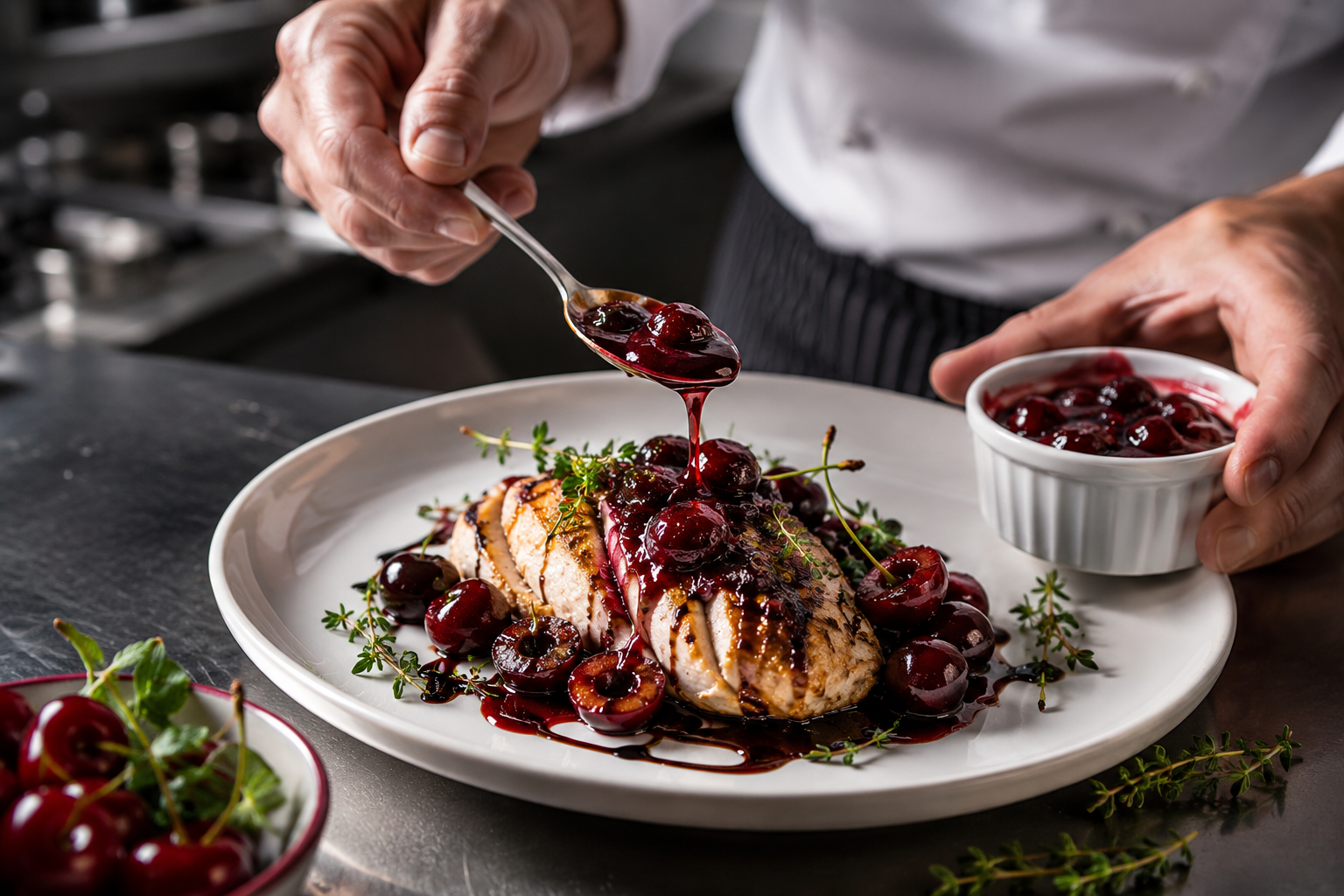
- Savory dishes: Roasted cherry balsamic chicken, cherry gastrique for duck or pork
- Freezing: Pit first; frozen cherries work well in smoothies and cooked applications
How Do Professional Chefs Use California Cherries?
Professional chefs treat peak-season California cherries as a short-window ingredient worth featuring prominently. Common techniques include quick pan sauces (cherries deglazed with balsamic vinegar and stock), cold preparations like cherry salsa or cherry vinaigrette, and dessert applications from simple compotes to elaborate tarts.
Simple Cherry Compote (serves 4):
- Pit and halve 2 cups of fresh Bing cherries
- Combine with 2 tablespoons sugar and 1 tablespoon lemon juice in a small saucepan
- Cook over medium heat, stirring occasionally, for 8 to 10 minutes until the cherries soften and the liquid thickens
- Add a pinch of cinnamon or a splash of vanilla extract if desired
- Serve warm over yogurt, ice cream, pancakes, or pound cake
Roasted Cherry Balsamic Chicken (serves 4):
- Season 4 bone-in chicken thighs with salt, pepper, and fresh thyme
- Sear skin-side down in an oven-safe skillet for 5 minutes until golden
- Flip, add 1.5 cups pitted Bing cherries and 3 tablespoons balsamic vinegar to the pan
- Roast at 400°F (204°C) for 25 minutes until chicken reaches 165°F internal temperature
- Rest 5 minutes; spoon pan juices and cherries over the chicken before serving
Can I Grow Cherry Trees in My Backyard?
Sweet cherry trees can be grown in many California backyard settings, but they have specific requirements. The biggest challenge in 2026 has been chill hours — cherry trees need 700 to 1,200 hours below 45°F during winter to set fruit properly. Warmer winters, like the one California experienced in 2025-2026, can result in little to no fruit, as U-pick farms in Leona Valley discovered firsthand. [5]
Conditions needed for backyard cherry trees:
- Full sun (at least 6 to 8 hours daily)
- Well-drained soil with a pH of 6.0 to 6.5
- Sufficient winter chill hours (check your local climate zone)
- A pollinator variety nearby (most sweet cherries are not self-fertile)
- Protection from birds, which are the primary pest for home growers
Choose X if: You live in a cooler California foothill or mountain community (zones 5-7) — standard Bing trees will perform well. If you’re in a warmer coastal or valley location, look for low-chill varieties such as Minnie Royal or Royal Lee.
What Recipes Work Best With Fresh California Cherries?
Fresh California cherries are most versatile when used within 3 to 5 days of purchase. Beyond the compote and roasted chicken above, they work well in these applications:
- Cherry clafoutis: A French baked custard that showcases whole cherries with minimal effort
- Cherry salsa: Pitted cherries, red onion, jalapeño, cilantro, and lime juice — pairs well with grilled fish or pork
- Cherry smoothie: Frozen pitted cherries, Greek yogurt, almond milk, and a small banana
- Cherry jam: A straightforward preserve that extends the season by months
- Cherry vinaigrette: Blended fresh cherries, olive oil, red wine vinegar, and Dijon mustard
Tip for baking: If substituting sweet California cherries for tart cherries in a pie recipe, reduce the sugar by 25% and add an extra teaspoon of lemon juice to balance the flavor.
The 2026 Season in Context: What Happened and What It Means for Shoppers
The 2026 California cherry season is one of the most difficult on record for growers. San Joaquin County, which produces the majority of the state’s cherries, suffered a 63% crop loss and has sought a disaster declaration. [1] Statewide production is projected to fall below 5 million 18-pound boxes, compared to a five-year average of about 8 million boxes. [2]
The cause was a two-stage weather event: an unusually warm March accelerated crop development and compressed the harvest window [3], then April and May rain caused widespread fruit splitting and decay, eliminating much of the export-quality supply. [2] Industry losses are estimated at $250 million to $300 million. [4]
For shoppers, this means:
- Shorter availability window at retail (many stores received their supply in May rather than June)
- Higher prices than recent years
- Potentially more variation in fruit quality — inspect carefully before buying
- Frozen or preserved California cherries may be a practical alternative if fresh supply is limited in your area
Crop insurance programs and potential disaster declarations may help growers recover some losses [7], but the 2026 season serves as a clear reminder of how quickly climate-related disruptions can reshape a regional crop.
Conclusion
California cherries are one of the most rewarding seasonal fruits to buy, cook with, and enjoy — but the 2026 season demands a more informed approach than usual. Supply is tight, prices are elevated, and the window for finding truly fresh fruit at retail is narrower than in most years. The practical steps are straightforward: buy firm, deeply colored cherries with green stems; store them unwashed in a sealed container in the refrigerator; use them within a week; and consider freezing any surplus immediately.
For anyone who finds fresh supply limited, frozen California cherries are a sound alternative for compotes, baked goods, and savory sauces. If you want to support growers directly, check whether local farmers markets in your area still have late-season fruit from higher-elevation orchards, which sometimes extend availability by a week or two beyond valley harvests.
The recipes in this guide — the cherry compote and roasted cherry balsamic chicken — require no special equipment and work well with both fresh and thawed frozen cherries. Start there, and this short, unusual season will still deliver genuine peak-season sweetness.
FAQ
What months are California cherries available? In a typical year, California cherries are available from late April through the third week of June. In 2026, the season ended as early as late May in most growing regions due to weather disruptions.
How do I tell if a cherry is sweet without tasting it? Look for deep, uniform color (dark red for Bing, golden-yellow with a pink blush for Rainier), firm texture, and a green flexible stem. Pale, soft, or wrinkled cherries will be less sweet.
How long do fresh cherries last in the refrigerator? Unwashed fresh cherries stored in a sealed container in the refrigerator will last 5 to 7 days, and up to 2 weeks if they were very fresh at purchase. Wash only just before eating.
Can I freeze California cherries? Yes. Pit the cherries first, spread them in a single layer on a baking sheet, freeze until solid (about 2 hours), then transfer to a freezer bag. Frozen cherries keep well for up to 12 months.
Are Rainier cherries healthier than Bing cherries? Both are nutritious. Bing cherries contain more anthocyanins due to their darker pigment, which is associated with antioxidant activity. Rainier cherries are slightly lower in sugar. Neither is significantly “healthier” — the difference is minor.
Why did California cherry prices go up in 2026? A combination of a 63% crop loss in San Joaquin County, statewide production dropping well below the five-year average, and rain-induced quality problems reduced supply significantly, pushing retail prices higher.
Do cherries need to be refrigerated? Cherries can sit at room temperature for 1 to 2 days, but they deteriorate quickly. Refrigeration is strongly recommended for anything beyond same-day use.
What is the glycemic index of sweet cherries? Sweet cherries have a glycemic index of approximately 22, which is considered low. A 1-cup serving contains roughly 22 grams of carbohydrates.
Are California cherries safe to eat without washing? Washing is always recommended before eating any fresh produce. Rinse cherries under cold running water just before eating to reduce surface residue and bacteria.
What is the best cherry variety for baking? Bing cherries are the most practical choice for baking with California sweet cherries. Reduce added sugar in recipes designed for tart cherries and add a small amount of extra lemon juice to compensate for the lower acidity.
References
[1] Cherry Crop Damage Disaster Declaration San Joaquin County – https://stocktonia.org/news/business/2026/05/15/cherry-crop-damage-disaster-declaration-san-joaquin-county/?utm_source=openai
[2] agronews – https://agronews.com/us/en/news/agrosphere/2026-05-30/93740?utm_source=openai
[4] California Cherry Season – https://www.freshfruitportal.com/news/2026/06/04/california-cherry-season/?utm_source=openai
[5] Cherry Season Record Warmth – https://www.latimes.com/environment/story/2026-05-19/cherry-season-record-warmth?utm_source=openai
[6] Cherry Industry Faces Rising Costs Market Pressure And Earlier Harvest Window In 2026 – https://agnetwest.podbean.com/e/cherry-industry-faces-rising-costs-market-pressure-and-earlier-harvest-window-in-2026/?utm_source=openai
[7] Storms Slash California Cherry Crop And Export Quality – https://www.rfdtv.com/storms-slash-california-cherry-crop-and-export-quality?utm_source=openai
