

Last updated: June 14, 2026
Quick Answer
Frozen Mango Float is a no-bake Filipino layered dessert made from ripe mangoes, graham crackers, heavy cream, and sweetened condensed milk, then chilled or frozen until set. It requires no oven, takes about 20 minutes to assemble, and delivers a creamy, tropical flavor that makes it one of the most popular summer desserts in the Philippines and beyond. [1]
Key Takeaways
- Frozen Mango Float is a Filipino icebox dessert also known as Mango Royale or Mango Graham Cake, built from layers of graham crackers, whipped cream, condensed milk, and fresh mango slices.
- The dessert requires zero baking and can be assembled in under 30 minutes, then chilled for at least 4 hours or frozen overnight.
- Philippine carabao mangoes are the gold standard for this recipe due to their sweetness and low fiber content, but Ataulfo (champagne) mangoes are the best widely available substitute.
- A typical 150-gram serving contains approximately 250 calories, 10 grams of fat, and 35 grams of carbohydrates. [3]
- Lactose-intolerant individuals can substitute coconut cream and dairy-free condensed milk with good results.
- The dessert keeps well in the refrigerator for up to 3 days and in the freezer for up to 2 weeks.
- Common mistakes include using underripe mangoes, over-whipping the cream, and skipping the minimum chilling time.
- Variations using peaches, strawberries, or mixed tropical fruits work well in place of mango.
- Mango float traces its roots to crema de fruta, a Spanish-colonial-era Filipino dessert, simplified over generations by home cooks. [6]
- The recipe is suitable for all ages and can be scaled up easily for parties and large gatherings.
What Exactly Is a Mango Float?
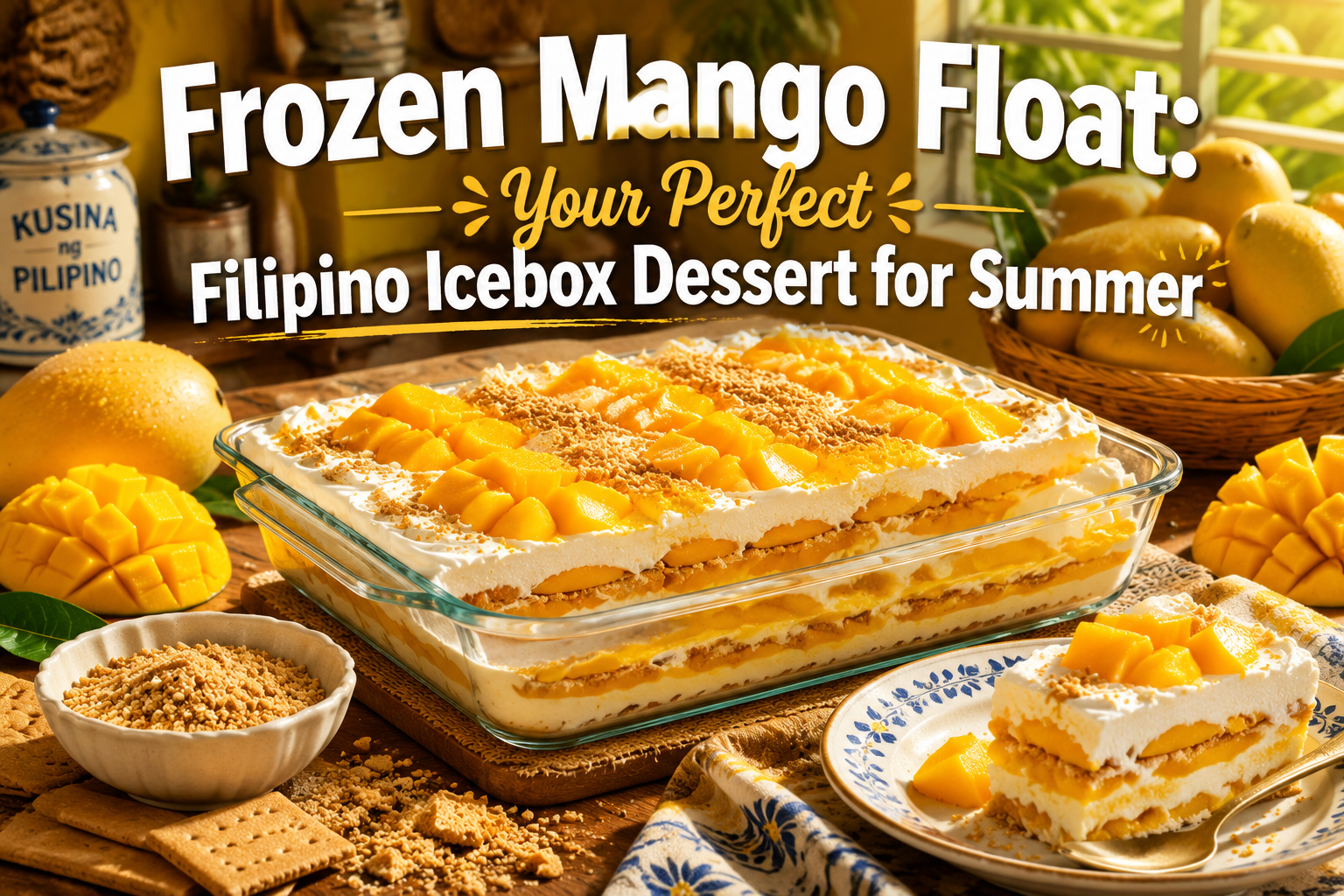
Mango float is a chilled Filipino layered dessert made by stacking graham crackers, a sweetened whipped cream mixture, and fresh mango slices in a dish, then refrigerating or freezing until firm. It belongs to the icebox cake family, meaning the crackers soften as they absorb moisture from the cream, creating a cake-like texture without any baking. [1]
The dessert goes by several names: Mango Royale, Mango Graham Cake, and crema de mangga. All refer to the same basic construction. It is a staple at Filipino birthday parties, fiestas, and family reunions, prized for its balance of sweetness, creaminess, and bright tropical fruit flavor. [7]
Historically, mango float evolved from crema de fruta, a more elaborate dessert introduced during Spanish colonization that used sponge cake, custard, canned fruit, and gelatin. Over time, Filipino home cooks stripped it down to its most accessible form, replacing sponge cake with affordable graham crackers and canned fruit with fresh local mangoes. [6]
How to Make Mango Float at Home: Step-by-Step
Mango float comes together in five straightforward steps and needs no special equipment beyond a hand mixer or stand mixer and a rectangular dish.
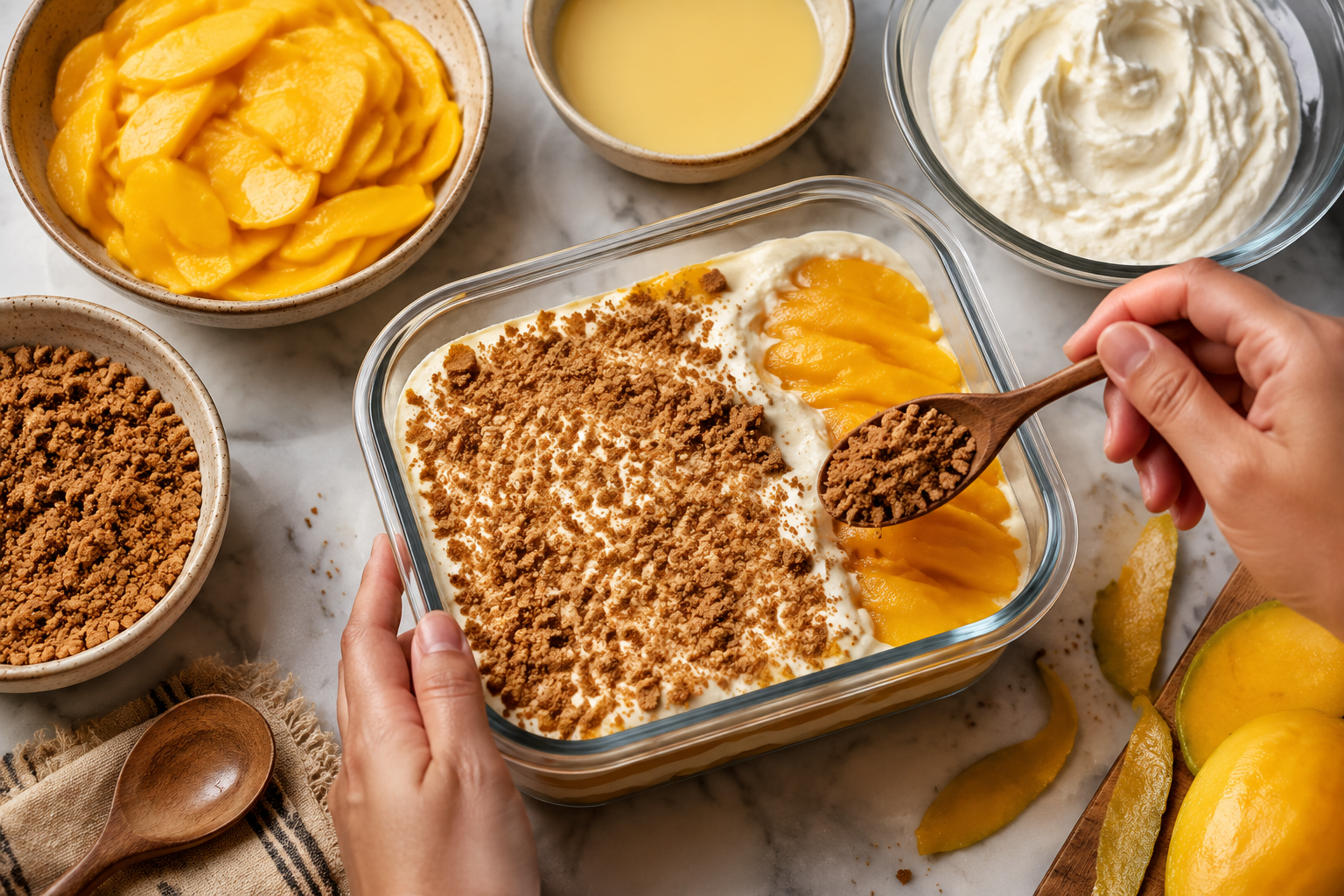
Ingredients (serves 8-10):
| Ingredient | Quantity |
|---|---|
| Ripe mangoes (peeled, sliced) | 4 to 5 large |
| Graham crackers (honey or plain) | 2 packs (about 400g) |
| Heavy whipping cream (cold) | 2 cups (480ml) |
| Sweetened condensed milk | 1 can (300ml) |
Steps:
- Whip the cream. Beat cold heavy cream with a mixer until soft peaks form. Do not over-whip or it will turn grainy.
- Fold in condensed milk. Gently fold the condensed milk into the whipped cream until fully combined. Taste and adjust sweetness if needed.
- Layer the base. Arrange a single layer of graham crackers in the bottom of a 9×13-inch dish, breaking pieces to fill gaps.
- Add cream and mango. Spread a generous layer of the cream mixture over the crackers, then lay mango slices evenly on top.
- Repeat and chill. Repeat the layers (crackers, cream, mango) two to three times, finishing with a cream layer topped with mango. Cover and refrigerate for at least 4 hours, or freeze overnight for a firmer, ice cream-like texture. [8]
Pro tip: Slice mangoes thinly and uniformly so each layer stays even and cuts cleanly when served.
Difference Between Mango Float and Mango Graham Cake
Mango float and mango graham cake are the same dessert referred to by different names. Both use identical ingredients and the same layering method. The name “mango float” is more common in casual conversation and online recipes, while “mango graham cake” emphasizes the graham cracker component and is often used when the dessert is presented as a gift or sold commercially. [1]
The only meaningful variation is texture: a refrigerated version is softer and more mousse-like, while a frozen version firms up into sliceable squares closer to an ice cream cake. Some cooks call the frozen version specifically a “frozen mango float” to distinguish it from the chilled-only preparation. [8]
How Much Does It Cost to Make a Mango Float Dessert?
Making mango float at home is significantly cheaper than buying it ready-made. Based on average 2026 grocery prices in the United States, a full batch serving 8 to 10 people costs roughly $12 to $18 in ingredients, depending on mango prices and cream brand.
| Ingredient | Estimated Cost (USD) |
|---|---|
| 4-5 ripe mangoes | $5 to $8 |
| Graham crackers (400g) | $3 to $4 |
| Heavy whipping cream (2 cups) | $3 to $4 |
| Condensed milk (1 can) | $2 to $3 |
| Total | $13 to $19 |
For comparison, Costco introduced a packaged frozen mango treat in April 2026 at $12.89 for 14 sticks, reflecting the premium consumers pay for convenience over homemade versions. [5]
Why Is My Mango Float Not Setting Properly?
A mango float that stays runny or collapses when sliced is almost always caused by one of three problems: under-whipped cream, insufficient chilling time, or too much liquid from the mangoes.
Common causes and fixes:
- Under-whipped cream: Cream must reach stiff peaks (not just soft peaks) to hold its structure between layers. If the cream is too loose, it will not support the crackers above it.
- Too little chill time: Four hours is the minimum; overnight is better. Pulling the dessert out too early means the crackers have not softened and the cream has not firmed.
- Wet mango slices: Pat mango slices dry with a paper towel before layering. Excess juice thins the cream and prevents setting.
- Warm dish or ingredients: Start with cold cream and a chilled dish. Room-temperature cream whips poorly and takes longer to set.
Can I Make Mango Float Without Heavy Cream?
Yes, mango float can be made without heavy cream, though the texture will differ slightly. The most common substitutes are:
- All-purpose cream (table cream): Widely used in the Philippines, it produces a slightly denser, richer layer. Chill the can before whipping.
- Coconut cream: Refrigerate overnight, scoop the solid fat, and whip as you would dairy cream. This works well and adds a subtle coconut flavor that complements mango.
- Evaporated milk (chilled) + cream cheese: Blend together for a tangy, stable cream layer.
Heavy cream produces the lightest, most airy texture, but any of the above alternatives will yield a delicious result. [2]
What Are Common Mistakes People Make When Making Mango Float?
The most frequent errors are using underripe mangoes, skipping the chill time, and over-sweetening the cream. Each mistake is easy to avoid with a small adjustment.
Mistakes to avoid:
- Using underripe or fibrous mangoes: The dessert relies on the mango’s natural sweetness. Underripe fruit tastes sour and ruins the balance.
- Over-whipping the cream: Stop at stiff peaks. Over-whipped cream turns buttery and grainy.
- Adding too much condensed milk: Start with three-quarters of a can and taste before adding more. Overly sweet cream masks the mango flavor.
- Skipping the top mango layer: The final mango layer is both decorative and functional; it signals freshness and keeps the top cream from drying out.
- Cutting before fully set: Slicing too early produces messy, collapsing portions. Always allow the full chilling or freezing time.
Best Mangoes to Use for Mango Float
Philippine carabao mangoes are the best choice for mango float because of their intense sweetness, smooth flesh, and minimal fiber. [7] Outside the Philippines, the closest widely available substitute is the Ataulfo (champagne) mango, sold at most Latin grocery stores and many mainstream supermarkets in the United States from spring through summer.
Mango variety guide:
| Variety | Flavor | Availability | Suitability |
|---|---|---|---|
| Carabao (Philippine) | Very sweet, floral | Philippines, Asian markets | Best |
| Ataulfo (Champagne) | Sweet, buttery | US, Latin markets | Excellent |
| Honey/Manila | Sweet, mild | Asian grocery stores | Very good |
| Tommy Atkins | Mild, fibrous | Most US supermarkets | Acceptable |
| Haden | Tart-sweet | US supermarkets | Fair |
Avoid Tommy Atkins mangoes when possible; their fibrous texture disrupts the smooth layering that defines a well-made mango float.
Is Mango Float a Healthy Dessert or High in Calories?
Mango float is a moderately calorie-dense dessert. A typical 150-gram serving contains approximately 250 calories, 3 grams of protein, 10 grams of fat, and 35 grams of carbohydrates. [3] This places it in the same calorie range as a slice of cheesecake or a small bowl of ice cream.
The dessert does offer some nutritional value: fresh mangoes contribute vitamin C, vitamin A, and dietary fiber. However, the condensed milk and whipped cream add significant sugar and saturated fat, so mango float is best enjoyed as an occasional treat rather than a daily snack.
To reduce calories:
- Use light whipped topping in place of heavy cream.
- Reduce condensed milk by 25 to 30 percent and add a small amount of vanilla extract to maintain flavor depth.
- Increase the mango-to-cream ratio for more fruit per serving.
Is Mango Float Good for Kids or Adults?
Mango float is suitable for both children and adults. Its mild sweetness, soft texture, and fruity flavor make it particularly popular with younger eaters, while adults appreciate the dessert’s balance of cream and tropical brightness. [7]

For children under two, consider reducing the condensed milk significantly to lower the sugar content. For adults watching sugar intake, the modifications listed in the calorie section above apply equally.
Can Lactose-Intolerant People Eat Mango Float?
Standard mango float contains dairy (heavy cream and condensed milk), so it is not suitable for people with lactose intolerance in its traditional form. However, a fully dairy-free version is straightforward to make.
Dairy-free substitutions:
- Replace heavy cream with full-fat coconut cream (refrigerated overnight, then whipped).
- Replace condensed milk with sweetened condensed coconut milk, available at most health food stores and online.
- Use dairy-free graham crackers (most standard brands are already dairy-free, but check the label).
The coconut-based version has a slightly different flavor profile, with a pleasant tropical undertone that pairs naturally with mango. Texture and setting time are comparable to the dairy version when the coconut cream is properly chilled before whipping.
Can I Use Different Fruits Instead of Mango?
Yes, mango float works well with several other fruits. The key requirement is that the fruit be sweet, not too watery, and sliceable into thin, even pieces.
Fruit alternatives that work well:
- Peaches: The Peach Mango Float is a popular variation that combines both fruits or uses peaches alone for a milder, floral sweetness. [4]
- Strawberries: Adds a tart contrast to the sweet cream; slice thinly.
- Lychee: Drain canned lychee well and halve before layering.
- Mixed tropical fruit: Pineapple, papaya, and kiwi all work, though pineapple should be patted dry to prevent excess juice.
- Blueberries or raspberries: Best used as a topping rather than a middle layer due to their small size.
Avoid fruits with very high water content (like watermelon) or strong bitterness that would clash with the sweet cream base.
How Long Does Mango Float Last in the Refrigerator?
Mango float stored in an airtight container or tightly covered with plastic wrap keeps well in the refrigerator for up to 3 days. After that, the graham crackers become overly soggy and the mango slices begin to oxidize and release excess liquid.
For longer storage, freeze the dessert. A frozen mango float stays in good condition for up to 2 weeks in the freezer. Allow it to thaw in the refrigerator for 20 to 30 minutes before serving so it softens slightly without becoming runny. [8]
Storage tips:
- Press plastic wrap directly onto the surface of the cream to prevent a skin from forming.
- Store in the dish it was made in rather than transferring to a new container, which risks breaking the layers.
- Do not refreeze a thawed mango float; the texture deteriorates significantly.
Frequently Asked Questions
What is the difference between mango float and crema de fruta? Crema de fruta is the older, more elaborate Filipino dessert made with sponge cake, custard, canned fruit cocktail, and gelatin. Mango float is a simplified modern descendant that replaces sponge cake with graham crackers and custard with whipped cream, making it faster and easier to prepare. [6]
Do I need a mixer to make mango float? A hand mixer or stand mixer is strongly recommended for whipping the cream to stiff peaks. Whipping by hand with a balloon whisk is possible but takes significantly longer and produces less consistent results.
Can I make mango float the night before a party? Yes, and in fact making it the night before is ideal. An overnight chill (or freeze) gives the layers time to fully set, making the dessert easier to slice and serve cleanly.
How do I know when my mangoes are ripe enough? Ripe mangoes yield slightly to gentle pressure, smell sweet at the stem end, and show yellow or golden skin with no green patches. A mango that is still firm and green will taste sour in the dessert.
Can I use canned mango instead of fresh? Canned mango slices work as a substitute when fresh mangoes are unavailable, but drain and pat them dry thoroughly before using. Fresh mango produces a noticeably better flavor and texture.
Is mango float the same as an icebox cake? Structurally, yes. Mango float belongs to the icebox cake category, a style of no-bake dessert where layers of cookies or crackers soften in the refrigerator to create a cake-like texture. The Filipino version simply uses graham crackers and mango as its defining components. [7]
Can I add gelatin to help the mango float set faster? Some recipes add a small amount of dissolved unflavored gelatin to the cream mixture to speed up setting and create a firmer texture. This is optional and not traditional, but it works well if serving time is limited.
What size dish should I use? A standard 9×13-inch (23×33 cm) rectangular baking dish is the most common choice and fits three full layers comfortably. A smaller 8×8-inch dish works for a thicker, taller dessert with fewer servings.
Can mango float be made vegan? Yes. Use coconut cream in place of heavy cream, sweetened condensed coconut milk in place of dairy condensed milk, and verify that the graham crackers contain no honey or dairy. The result is fully plant-based and still delicious.
Does mango float need to be frozen, or is refrigerating enough? Refrigerating for at least 4 hours is sufficient for a soft, mousse-like dessert. Freezing overnight produces a firmer, ice cream-like texture. Both methods are correct; the choice depends on personal preference and serving context.
Conclusion
Frozen Mango Float: Your Perfect Filipino Icebox Dessert for Summer is one of the most accessible and crowd-pleasing desserts a home cook can make. It requires no baking, minimal equipment, and about 20 minutes of active preparation. The result is a layered, creamy, fruit-forward dessert that holds up beautifully at gatherings and keeps well for days.
Actionable next steps:
- Source ripe Ataulfo or carabao mangoes from a local Asian or Latin grocery store.
- Assemble the dessert the evening before serving for the best set and cleanest slices.
- Try the coconut cream variation if serving guests with dairy restrictions.
- Experiment with the peach mango float variation once comfortable with the base recipe.
- Store leftovers in the freezer (covered tightly) for up to two weeks and thaw briefly before serving.
The recipe scales easily: double the ingredients for a larger crowd or halve them for a smaller household batch. Once the basic technique is mastered, the layering method opens the door to countless fruit and flavor combinations that keep the dessert fresh and interesting all summer long.
References
[1] What Is Mango Float Famous Filipino Dessert – https://www.chowhound.com/1933029/what-is-mango-float-famous-filipino-dessert/?utm_source=openai
[2] Mango Float Recipe Filipino No Bake Dessert – https://emmascakestudio.com/no-bake-desserts/mango-float-recipe-filipino-no-bake-dessert/?utm_source=openai
[3] Mango Float Nutrition – https://www.snapcalorie.com/nutrition/es/mango_float_nutrition.html?utm_source=openai
[4] Peach Mango Float Recipe – https://www.pinoyrecipe.net/peach-mango-float-recipe/?utm_source=openai
[5] Costcos Latest Dessert Is The Perfect Treat For Hot Summer Days I Just Know That Tastes So Refreshing – https://parade.com/news/costcos-latest-dessert-is-the-perfect-treat-for-hot-summer-days-i-just-know-that-tastes-so-refreshing?utm_source=openai
[6] Mango Float The Cool Filipino Classic That Requires Zero Baking – https://bakingheritage.com/history/mango-float-the-cool-filipino-classic-that-requires-zero-baking?utm_source=openai
[7] Mango Float Filipino Icebox Dessert Recipe – https://www.chowhound.com/1758920/mango-float-filipino-icebox-dessert-recipe/?utm_source=openai
[8] Mango Float Frozen – https://www.karenskitchenstories.com/2024/06/mango-float-frozen.html?utm_source=openai
[9] Mango Float 5119486 – https://www.foodnetwork.com/recipes/food-network-kitchen/mango-float-5119486?utm_source=openai
[10] Philippines Mango Float – https://www.panasonic.com/ph/consumer/kitchen-appliances-learn/healthy-everyday/concept/recipes/philippines-mango-float.html?utm_source=openai
