


Last updated: June 16, 2026
Quick Answer: June 16 Fudge Day, officially recognized as National Fudge Day in the United States, is an annual food holiday dedicated to celebrating one of America’s most beloved confections. The day encourages people to make fudge at home, visit local candy shops, or share fudge with friends and family. It falls every year on June 16 and has roots in a confectionery tradition stretching back to the 1880s.
Key Takeaways
- June 16 Fudge Day is observed annually on June 16 in the United States as National Fudge Day.
- Fudge’s documented history dates to 1886, when a Vassar College student mentioned buying it for 40 cents per pound.
- The word “fudge” likely derives from the 17th-century verb “fadge,” meaning to clumsily fit something together, reflecting its accidental origins.
- Mackinac Island, Michigan, remains the most famous fudge destination in North America, with shops operating since the late 19th century.
- Classic fudge requires heating sugar, butter, and cream to the soft-ball stage (235-240°F), then cooling and beating until set.
- Grainy fudge is almost always caused by premature stirring or sugar crystallization during cooking.
- Dairy-free and vegan fudge options are widely available using coconut cream and plant-based butter.
- Homemade fudge stored properly in an airtight container lasts up to two weeks at room temperature or three months in the freezer.
- Artisan fudge from specialty shops typically costs between $12 and $30 per pound, depending on ingredients and location.
- People with diabetes should treat fudge as an occasional indulgence and consult a healthcare provider about portion sizes.
What Exactly Is National Fudge Day and Why June 16?
National Fudge Day, celebrated on June 16 each year, is an unofficial but widely observed American food holiday honoring fudge as a cultural and culinary tradition. No single legislative body created the holiday; it grew organically through food calendars, confectionery associations, and popular culture over several decades. [1]
The timing in mid-June aligns well with summer tourism season, when fudge shops at destinations like Mackinac Island see their highest foot traffic. Celebrating on June 16 Fudge Day gives both home cooks and professional confectioners a shared moment to highlight the craft.
Why fudge specifically deserves a holiday:
- It has a documented American history spanning nearly 150 years.
- It connects generations through shared recipes and memories.
- Its versatility means there is a fudge flavor for nearly every preference.
- It supports small-batch artisan candy makers across the country.
The History Behind June 16 Fudge Day
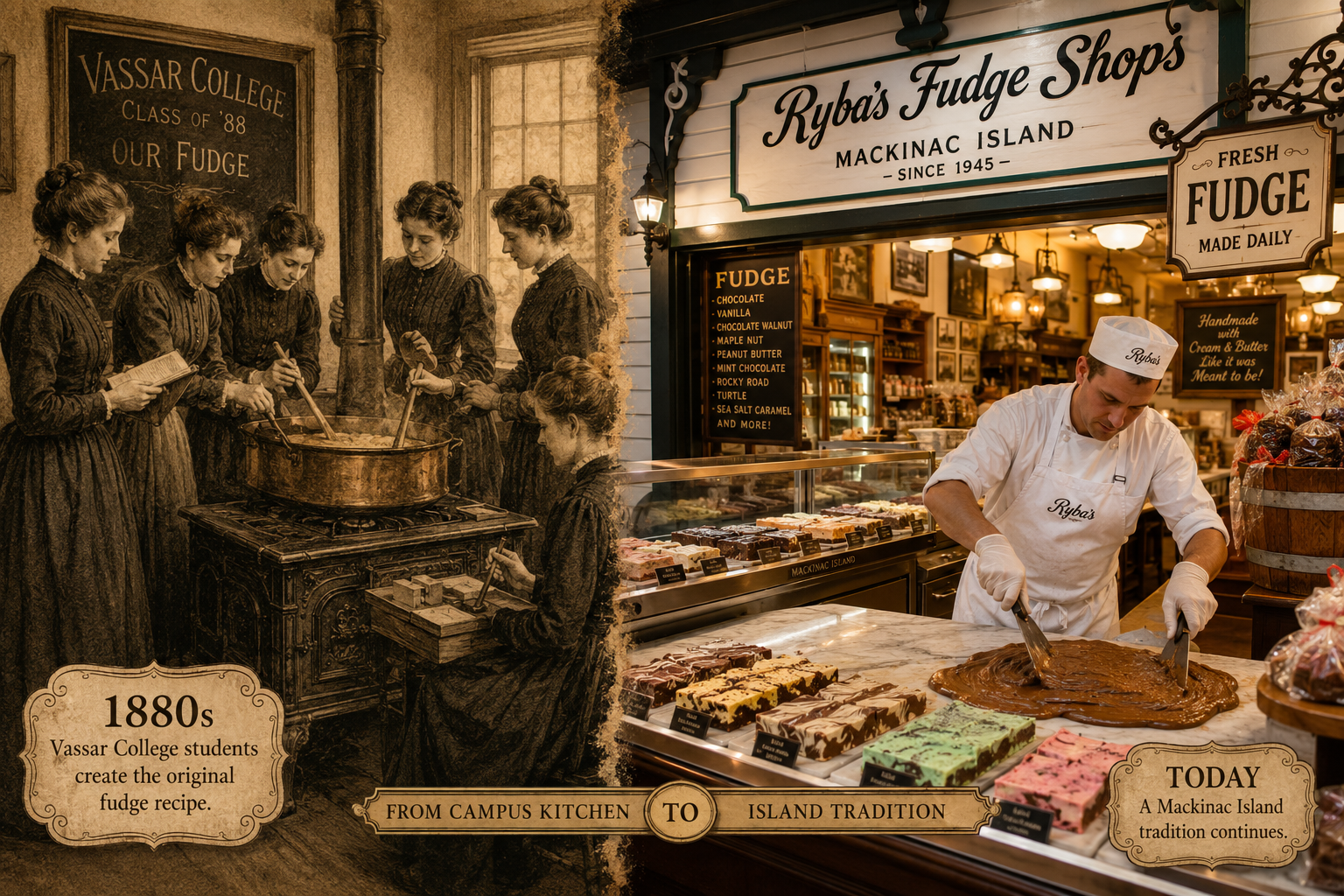
Fudge has a surprisingly well-documented origin for a candy. The earliest confirmed reference comes from 1886, when Emelyn Battersby Hartridge, a student at Vassar College in New York, wrote about purchasing fudge for 40 cents per pound. [1] [4] The treat quickly spread through women’s colleges including Wellesley and Smith, where students made and sold it as a small enterprise. [4]
The word itself carries an interesting etymology. “Fudge” is believed to derive from the 17th-century verb “fadge,” meaning to clumsily fit together or adjust, which fits the candy’s legendary accidental creation. [5] According to popular accounts, a confectioner botched a batch of caramel, and the result was something entirely new and delicious. [4]
By the late 19th century, Mackinac Island in Michigan had become synonymous with fudge production. Shops there began making and selling fudge to summer vacationers, and some of those original establishments still operate today. [1] The island’s fudge culture became so prominent that Mackinac Island now hosts an annual Fudge Festival featuring tastings, demonstrations, and competitions. [3]
A notable record: The Guinness World Record for the largest slab of fudge stands at 2.61 metric tons (5,760 pounds), set by the Northwest Fudge Factory in Levack, Ontario, Canada. [3]
How to Make Classic Chocolate Fudge at Home
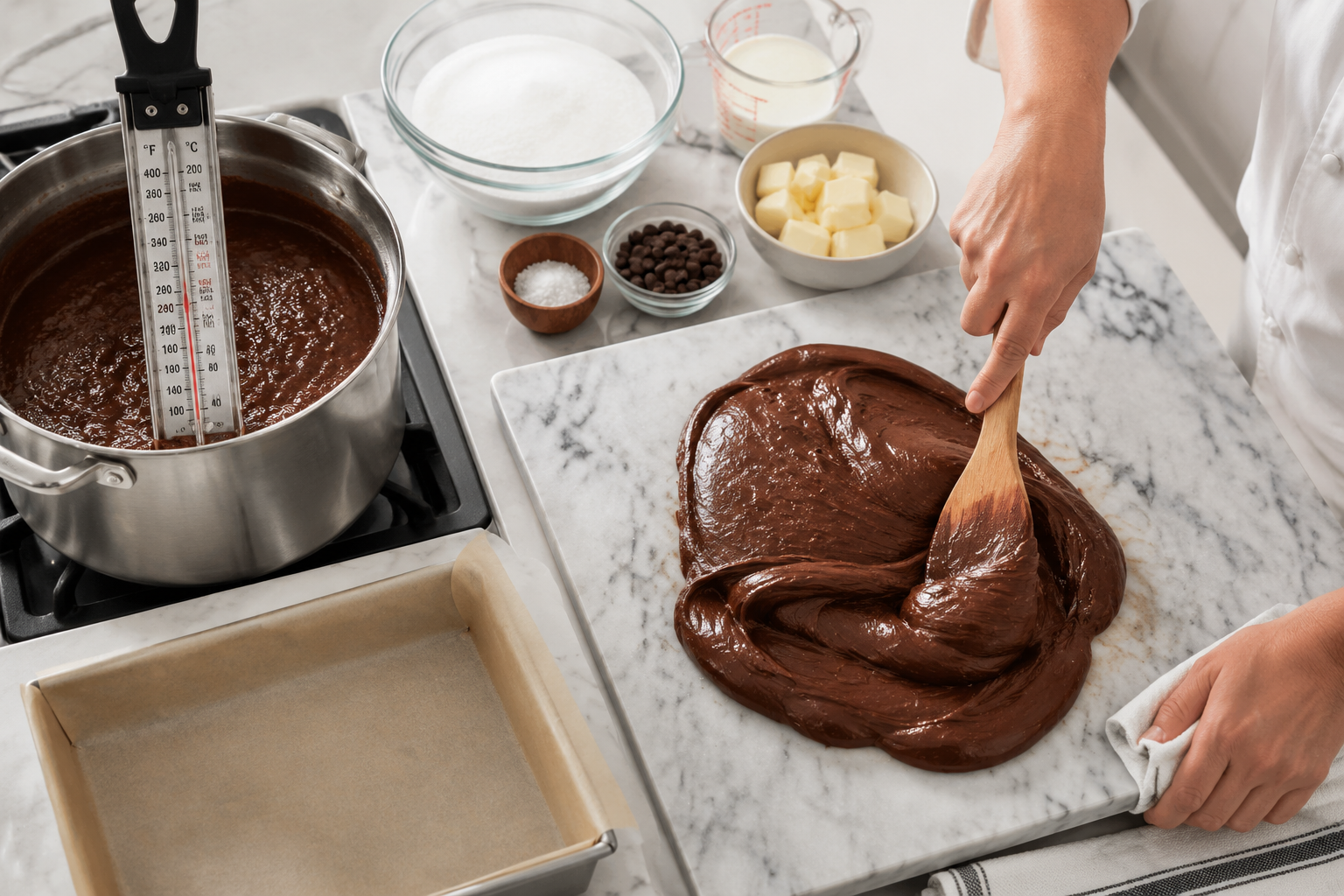
Classic chocolate fudge requires only a few ingredients but demands attention to temperature. The process involves heating sugar, butter, and cream to the soft-ball stage (235-240°F), then cooling and beating the mixture until it loses its gloss and firms up. [2]
Basic Classic Chocolate Fudge Recipe
| Ingredient | Amount |
|---|---|
| Granulated sugar | 2 cups |
| Unsalted butter | 3/4 cup |
| Heavy cream | 2/3 cup |
| Semi-sweet chocolate chips | 2 cups |
| Marshmallow cream | 1 jar (7 oz) |
| Vanilla extract | 1 tsp |
Step-by-step process:
- Line an 8×8-inch pan with parchment paper and set aside.
- Combine sugar, butter, and heavy cream in a heavy-bottomed saucepan over medium heat.
- Stir constantly until the mixture reaches a full rolling boil.
- Stop stirring and let it cook until a candy thermometer reads 235-240°F (soft-ball stage).
- Remove from heat immediately and stir in chocolate chips and marshmallow cream until smooth.
- Add vanilla extract and pour into the prepared pan.
- Let cool at room temperature for at least two hours before cutting.
“The single most important tool for making fudge is a reliable candy thermometer. Guessing the temperature is the leading cause of fudge that never sets.”
Best Fudge Recipes for Beginners and Kids
For beginners and children, no-cook or microwave fudge recipes are the best starting point. These methods skip the candy thermometer entirely and rely on sweetened condensed milk or marshmallow cream to achieve the right texture without the risk of overheating.
Three beginner-friendly fudge styles:
- Microwave chocolate fudge: Melt chocolate chips with sweetened condensed milk in 30-second intervals, stir in vanilla, pour into a pan, and refrigerate. Ready in under two hours.
- Peanut butter fudge: Combine peanut butter, powdered sugar, butter, and vanilla. No heat required beyond melting the butter.
- Rocky road fudge: Use the microwave method above and fold in mini marshmallows and chopped nuts before the mixture sets.
Kids can safely participate in no-cook versions by measuring ingredients, stirring the mixture, and pressing toppings into the pan. Always supervise children around any hot stovetop method.
Fudge vs. Regular Chocolate Candy: What Is the Difference?
Fudge and chocolate candy are distinct products with different textures, ingredients, and manufacturing processes. Fudge is a sugar-based confection that uses controlled crystallization to achieve its characteristic dense, smooth, slightly grainy texture. Regular chocolate candy, by contrast, is primarily cocoa butter and cocoa solids tempered to create a hard, snappy finish.
| Feature | Fudge | Chocolate Candy |
|---|---|---|
| Primary ingredient | Sugar + dairy | Cocoa solids + cocoa butter |
| Texture | Dense, creamy, slightly grainy | Hard, smooth, snappy |
| Cooking method | Boiled to soft-ball stage | Tempered at specific temperatures |
| Shelf life | 1-2 weeks at room temp | Several months |
| Dairy content | High | Low to none (dark chocolate) |
Fudge contains chocolate as a flavoring in most classic recipes, but the base structure is sugar and dairy rather than cocoa butter.
Common Mistakes When Making Homemade Fudge
The most common reason homemade fudge fails is improper temperature control or stirring at the wrong time. Both issues are preventable with the right technique.
Mistakes to avoid:
- Stirring after the boil begins: Once the mixture reaches a boil, stop stirring. Agitation introduces sugar crystals that cause a grainy texture.
- Skipping the candy thermometer: Visual cues like color are unreliable. Always use a thermometer.
- Beating too early: The mixture must cool to around 110°F before beating. Beating while still hot prevents proper crystallization.
- Beating too long: Over-beating makes fudge crumbly and dry.
- Using a wet spoon or pan: Any moisture can trigger unwanted crystallization.
Why Does My Fudge Always Turn Out Grainy?
Grainy fudge is almost always caused by premature sugar crystallization. This happens when sugar crystals form too early in the cooking process, usually from stirring during boiling or from undissolved sugar on the sides of the pan.
How to fix grainy fudge:
- Brush the sides of the saucepan with a wet pastry brush during cooking to dissolve stray sugar crystals.
- Do not stir once the mixture reaches a full boil.
- Let the mixture cool undisturbed to 110°F before beating.
- If fudge is already grainy, add 1-2 tablespoons of cream, reheat gently, and start the cooling and beating process again.
Dairy-Free and Vegan Fudge Options
Dairy-free and vegan fudge is entirely achievable and produces results nearly identical to traditional recipes. The key substitution is replacing heavy cream with full-fat coconut cream and swapping dairy butter for a high-quality plant-based alternative.
Reliable substitutions:
- Heavy cream: full-fat coconut cream (same volume)
- Butter: vegan butter sticks (not spread, which contains too much water)
- Milk chocolate: dairy-free dark chocolate chips
- Marshmallow cream: vegan marshmallow fluff (available at most health food stores)
Coconut cream adds a subtle flavor that pairs especially well with dark chocolate, sea salt, and tropical add-ins like toasted macadamia nuts.
Is Fudge Safe for People with Diabetes?
Fudge is high in sugar and saturated fat, making it a food that people with diabetes should approach with caution. A standard one-inch square of chocolate fudge contains roughly 15-20 grams of carbohydrates, which will affect blood glucose levels. Anyone managing diabetes should consult their healthcare provider or a registered dietitian before including fudge in their diet.
Practical considerations for diabetics:
- Choose smaller portion sizes and account for fudge within a daily carbohydrate budget.
- Sugar-free fudge recipes using sugar alcohols (like erythritol or xylitol) are available, but some sugar alcohols can cause digestive discomfort in larger amounts.
- Pairing fudge with protein or fat can slow the absorption of sugar and reduce blood glucose spikes.
- Frequency matters more than occasional indulgence; fudge as a rare treat differs significantly from regular consumption.
How Much Does Artisan Fudge Typically Cost?
Artisan fudge from specialty candy shops and fudge destinations like Mackinac Island typically costs between $12 and $30 per pound, depending on the ingredients, location, and maker. Premium flavors with high-end inclusions such as imported chocolate, fresh cream, or specialty nuts sit at the higher end of that range.
Cost breakdown by channel:
| Source | Typical Price Range |
|---|---|
| Local candy shop | $12-$20 per pound |
| Tourist destination (e.g., Mackinac Island) | $18-$30 per pound |
| Online artisan retailers | $15-$28 per pound (plus shipping) |
| Homemade (ingredients only) | $3-$6 per pound |
Making fudge at home is by far the most cost-effective option, especially for large batches intended as gifts.
Where to Buy Gourmet Fudge and Fudge Gift Ideas
Gourmet fudge is available through local candy shops, specialty food stores, and online retailers. For June 16 Fudge Day, fudge makes an excellent gift because it ships well when properly packaged and appeals to a wide range of tastes.
Where to find quality fudge:
- Local confectionery shops and chocolatiers
- Farmers markets and artisan food fairs
- Mackinac Island fudge shops (several ship nationally)
- Online marketplaces featuring small-batch candy makers
Fudge gift ideas for special occasions:
- Assorted fudge sampler boxes with 6-8 flavors
- Personalized fudge tins with custom labels for weddings or corporate events
- Fudge-making kits paired with a candy thermometer and recipe card
- Seasonal fudge flavors (peppermint for winter, pumpkin spice for fall) packaged in gift-ready boxes
How Long Does Homemade Fudge Last?
Homemade fudge stored in an airtight container at room temperature stays fresh for up to two weeks. Refrigerating fudge extends its life to about three to four weeks, though it may absorb odors from other foods if not well-sealed. Frozen fudge lasts up to three months and thaws well when left at room temperature for 30-60 minutes.
Storage tips:
- Separate layers with parchment or wax paper to prevent sticking.
- Keep away from heat and direct sunlight, which can cause the fudge to sweat or soften.
- Do not store near strong-smelling foods in the refrigerator.
- Label frozen fudge with the date to track freshness.
How to Celebrate June 16 Fudge Day
June 16 Fudge Day is best celebrated by doing something active with fudge rather than simply buying a piece. The holiday offers a genuine reason to try a new recipe, support a local candy maker, or share something homemade with people who matter. [1]
Practical ways to observe the day:
- Make a batch of classic or experimental fudge at home.
- Visit a local confectionery or artisan chocolate shop.
- Host a fudge tasting with friends, featuring three to five different flavors.
- Share photos and recipes on social media using the hashtag #NationalFudgeDay. [1]
- Send a fudge gift box to someone who would appreciate the gesture.
- Introduce a child to a no-cook fudge recipe as a kitchen activity.
Popular fudge flavors beyond classic chocolate include chocolate nut, peanut butter, maple, maple nut, vanilla, and rocky road. [1] The holiday is also a good time to experiment with less common flavors like lavender honey, salted caramel, or espresso.
FAQ
What date is National Fudge Day? National Fudge Day falls on June 16 every year. It is observed in the United States as an unofficial food holiday.
Who invented fudge? No single inventor is confirmed. The most widely cited origin story involves a confectioner’s mistake while making caramel in the late 19th century. The first documented reference to fudge appears in an 1886 letter from a Vassar College student. [1] [4]
What is the soft-ball stage in candy making? The soft-ball stage refers to a sugar syrup temperature of 235-240°F (113-116°C). At this temperature, a small amount of syrup dropped into cold water forms a soft, pliable ball. It is the target temperature for making traditional fudge.
Can fudge be made without a candy thermometer? Technically yes, using the cold-water test, but a thermometer is far more reliable. Without one, the risk of under- or over-cooking the sugar is significantly higher, leading to fudge that either never sets or becomes too hard.
What is the most popular fudge flavor? Chocolate is the most popular fudge flavor, followed by chocolate nut, peanut butter, maple, and maple nut. [1]
Is fudge gluten-free? Traditional fudge made from sugar, butter, cream, and chocolate is naturally gluten-free. However, some commercial fudge products may contain gluten through added ingredients or cross-contamination during manufacturing. Always check labels if gluten sensitivity is a concern.
How is fudge different from toffee? Fudge is cooked to the soft-ball stage and beaten to create a creamy, dense texture. Toffee is cooked to a higher temperature (hard-crack stage, around 300-310°F), producing a hard, brittle candy.
Can you freeze fudge? Yes. Wrap fudge tightly in plastic wrap, then place it in an airtight freezer bag or container. Frozen fudge keeps well for up to three months and thaws at room temperature in under an hour.
What makes Mackinac Island famous for fudge? Mackinac Island fudge shops have operated since the late 19th century, when they began selling fudge to summer tourists. The tradition has continued uninterrupted, and the island now hosts an annual Fudge Festival. [1] [3]
What is the world record for the largest fudge? The Guinness World Record for the largest fudge slab is 2.61 metric tons (5,760 pounds), created by Northwest Fudge Factory in Levack, Ontario, Canada. [3]
How do I know when fudge is ready to cut? Fudge is ready to cut when it has fully set at room temperature, feels firm to the touch, and no longer looks glossy on the surface. This typically takes two to four hours after pouring.
What is the best way to cut fudge cleanly? Use a sharp chef’s knife warmed under hot water and dried before each cut. Score the fudge into rows first, then cut through completely. Wiping the blade between cuts prevents dragging.
Conclusion
June 16 Fudge Day is more than a novelty calendar entry. It is a genuine opportunity to connect with a confectionery tradition that has shaped American food culture for nearly 150 years, from Vassar College dormitories to the fudge shops of Mackinac Island.
Actionable next steps for June 16 Fudge Day:
- Choose a recipe that matches your skill level. Beginners should start with a microwave or no-cook method. Experienced cooks can tackle the classic stovetop version with a candy thermometer.
- Stock up on ingredients ahead of June 16. Sugar, butter, heavy cream, and chocolate chips are all you need for a basic batch.
- Plan to share. Fudge is best enjoyed with others. Make a double batch and package half as a gift.
- Explore a new flavor. If chocolate is your default, try peanut butter, maple, or a sea salt caramel variation this year.
- Support a local candy maker. If home cooking is not an option, buying from an artisan shop on June 16 puts the holiday spirit into practice.
Whether the goal is a perfect pan of homemade fudge or simply a square from a favorite shop, June 16 Fudge Day is a low-stakes, high-reward celebration worth marking on the calendar.
References
[1] National Fudge Day June 16 – https://nationaldaycalendar.com/celebrations/national-fudge-day-june-16?utm_source=openai
[2] National Fudge Day – https://www.awarenessdays.com/awareness-days-calendar/national-fudge-day/?utm_source=openai
[3] National Fudge Day – https://www.calendarr.com/canada/national-fudge-day/?utm_source=openai
[4] National Fudge Day – https://nationaltoday.com/national-fudge-day/?utm_source=openai
[5] National Fudge Day – https://www.holidayinsights.com/moreholidays/june/national-fudge-day.htm?utm_source=openai
