

Last updated: June 19, 2026
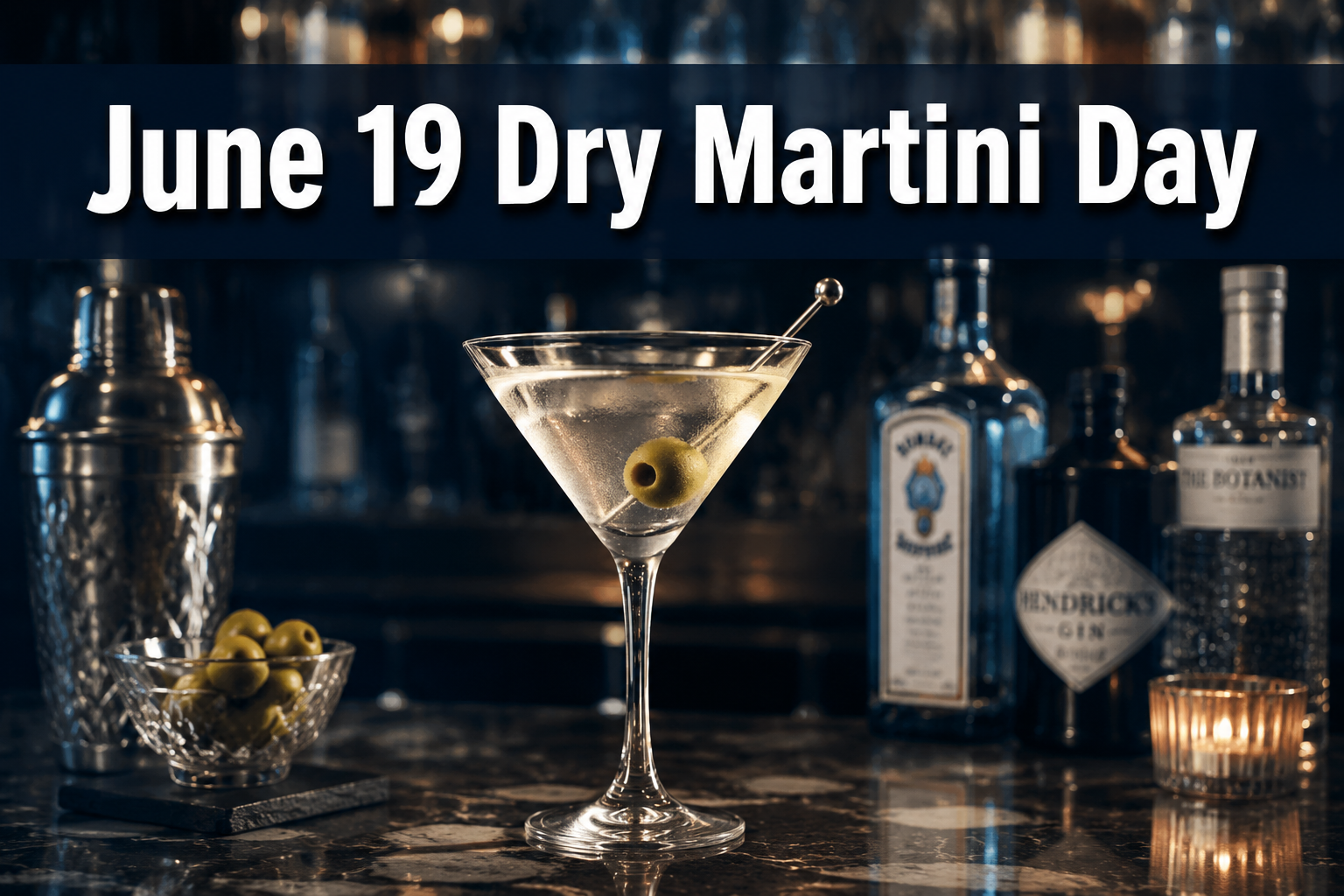
Quick Answer: June 19 Dry Martini Day is an annual observance celebrated every June 19 that honors the dry martini, one of the most enduring cocktails in bartending history. The day encourages cocktail enthusiasts, home bartenders, and bar professionals to mix, sip, and appreciate the classic combination of gin (or vodka) and dry vermouth. It is recognized internationally and marked by special events, promotions, and cocktail education across bars and restaurants worldwide. [3][4]
Key Takeaways
- June 19 Dry Martini Day falls annually on June 19 and is also known as National Martini Day in the United States.
- A dry martini contains gin or vodka with a very small amount of dry vermouth, typically garnished with an olive or lemon twist.
- “Dry” refers to the vermouth ratio: the less vermouth used, the drier the martini.
- The martini’s origins trace back to the late 19th century, with multiple competing origin stories still debated by historians.
- Professional bartenders recommend stirring (not shaking) a classic dry martini for optimal clarity and texture.
- Top gin brands for a dry martini include Tanqueray, Hendrick’s, and No.3 London Dry Gin, which runs dedicated Martini Month promotions around June 19.
- A classic dry martini at a high-end bar typically costs between $18 and $28 in major U.S. cities as of 2026 (estimate based on reported bar menu ranges).
- Non-alcoholic versions are available using spirit-free gin alternatives and alcohol-free vermouth substitutes.
- The dry martini pairs well with oysters, smoked salmon, salted nuts, and aged cheeses.
- Responsible consumption is advised; a standard dry martini contains roughly 2 to 2.5 standard drinks worth of alcohol.
Why Do We Celebrate June 19 as Dry Martini Day?
June 19 was designated as National Dry Martini Day (also called National Martini Day) to give the cocktail its own dedicated moment of cultural recognition. The exact origin of the date itself is not officially documented by a single governing body, but the observance has been tracked and promoted by food and drink calendars for many years. [3][4]
The day serves a practical purpose beyond celebration: it prompts bars, distilleries, and cocktail educators to run promotions, host tastings, and publish recipes that introduce new drinkers to the martini’s nuances. In 2026, No.3 Gin extended the concept into a full “Martini Month” campaign centered on June 19, with events in New York City designed to showcase proper martini technique and premium botanicals. [4]
Why it matters: The martini is one of the few cocktails with a dedicated global following and a rich debate culture around preparation. A dedicated day keeps that conversation alive and draws new enthusiasts into the tradition.
History of How the Dry Martini Was Invented
The dry martini does not have a single, undisputed inventor. Two origin stories dominate the historical record. [9]
- The Martinez theory: Some historians argue the martini evolved from a cocktail called the “Martinez,” served in Martinez, California, during the Gold Rush era of the 1860s. That drink combined sweet gin, sweet vermouth, and bitters.
- The New York theory: Others credit the Knickerbocker Hotel in New York City, where bartender Martini di Arma di Taggia reportedly mixed a drier version using London Dry Gin and dry vermouth around 1911. [9]
What is clear is that by the early 20th century, the cocktail had shifted decisively toward drier formulations as London Dry Gin became the dominant spirit style. Prohibition in the United States (1920-1933) paradoxically boosted the martini’s cultural status, as it became a symbol of sophisticated defiance. By the mid-20th century, figures like Winston Churchill and Ernest Hemingway had made their personal martini preferences part of their public personas. [9]
The martini has been “shaken and stirred” for well over 150 years, making June 19 Dry Martini Day a celebration of one of the longest-running cocktail traditions in the world. [9]
What Exactly Is a Dry Martini?
A dry martini is a cocktail made primarily from gin or vodka, with a small measure of dry (French-style) vermouth, served chilled in a martini or coupe glass. “Dry” describes the vermouth quantity: the less vermouth in the drink, the drier it is. [1][2]
Standard components:
- Base spirit: gin (traditional) or vodka
- Dry vermouth: anywhere from a rinse to a 5:1 ratio with the spirit
- Garnish: green olive or lemon twist
- Serving vessel: chilled V-shaped martini glass or coupe
A “bone dry” or “extra dry” martini may contain only a whisper of vermouth, sometimes just a rinse of the glass. A “perfect martini” splits the vermouth equally between dry and sweet vermouth. These distinctions matter when ordering at a bar.
What Is the Difference Between a Wet and Dry Martini?
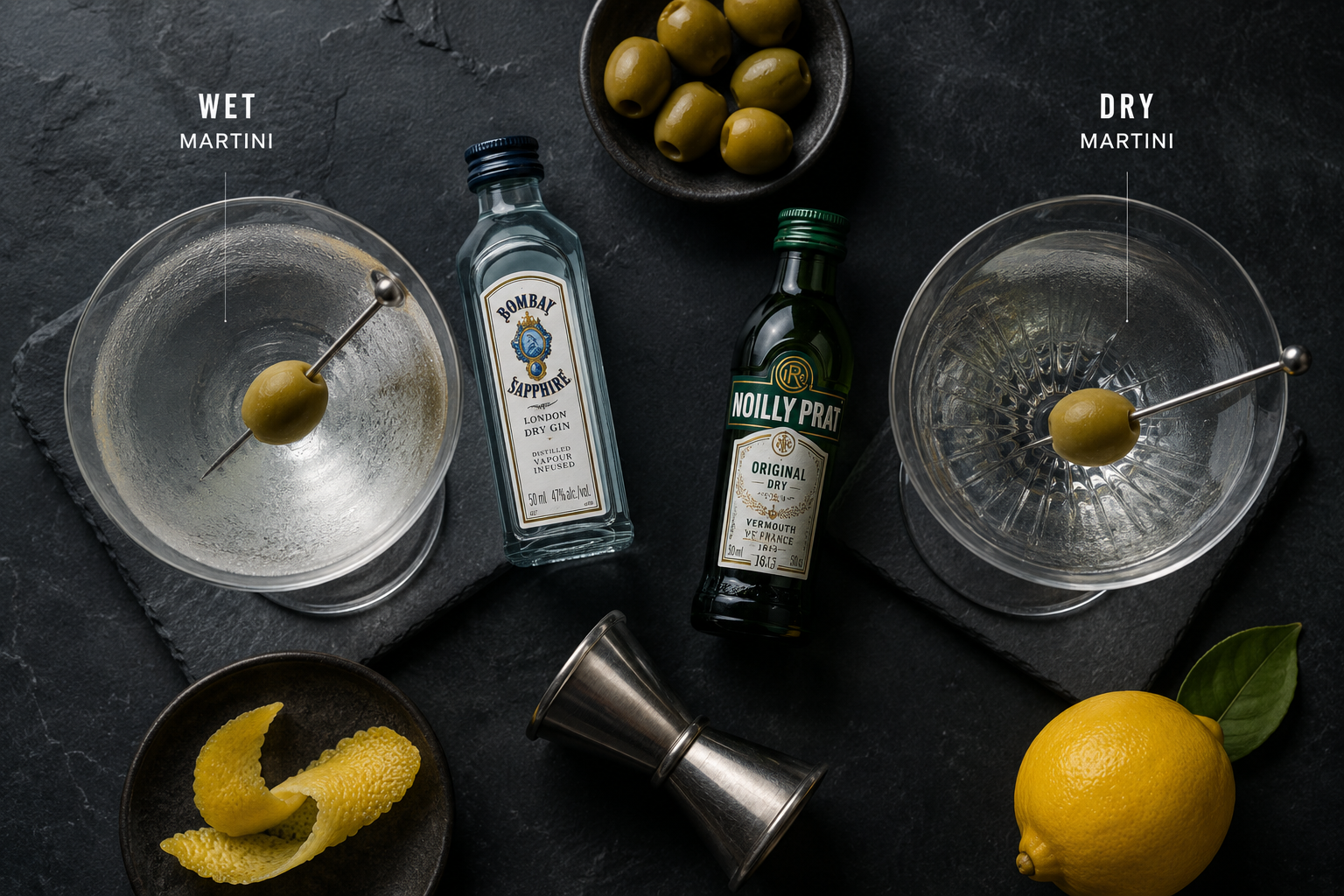
The wet vs. dry distinction is purely about vermouth volume. A wet martini uses a higher proportion of vermouth relative to the base spirit, producing a softer, more aromatic drink. A dry martini uses very little vermouth, letting the gin or vodka dominate. [1][7]
| Style | Vermouth Ratio | Flavor Profile |
|---|---|---|
| Wet Martini | 3:1 or 2:1 (spirit to vermouth) | Softer, more herbal, lower ABV |
| Standard Dry | 5:1 or 6:1 | Crisp, spirit-forward, classic |
| Extra Dry | 10:1 or vermouth rinse only | Very spirit-forward, minimal vermouth |
| Bone Dry | No vermouth | Pure spirit, chilled and diluted |
Choose wet if you want a more approachable, lower-alcohol martini with herbal complexity. Choose dry if you want the full character of your gin or vodka to lead.
How Do Professional Bartenders Make the Perfect Dry Martini?
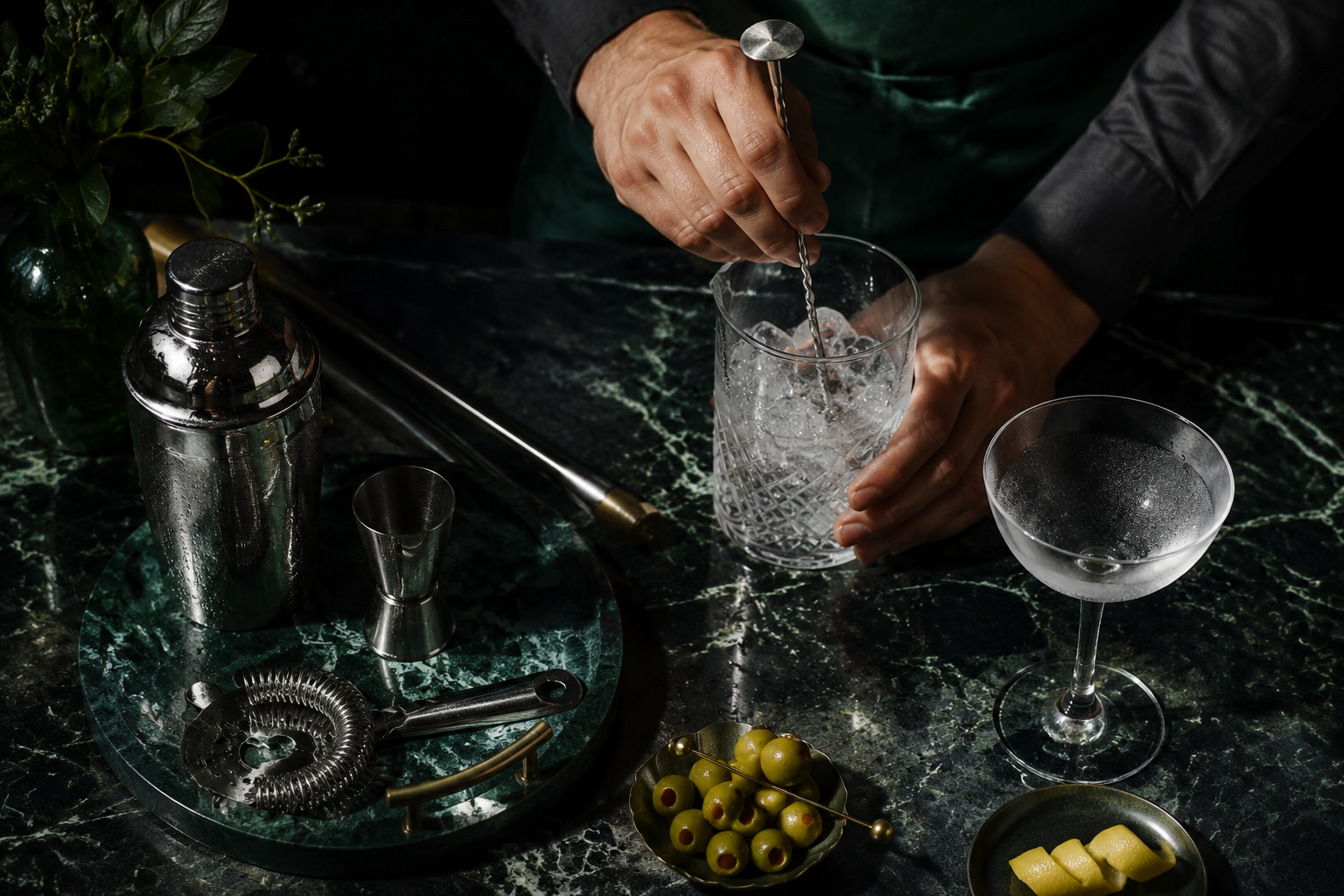
Professional bartenders make a dry martini by stirring (not shaking) the spirit and vermouth with ice until properly diluted and chilled, then straining into a pre-chilled glass. Stirring preserves the drink’s clarity and silky texture. [2][5]
Step-by-step method:
- Chill your martini glass in the freezer for at least 10 minutes before serving.
- Add ice to a mixing glass until it is three-quarters full.
- Pour 2.5 oz (75 ml) of gin or vodka over the ice.
- Add 0.5 oz (15 ml) of dry vermouth (adjust to taste).
- Stir steadily for 30 to 40 seconds until the outside of the mixing glass feels cold.
- Strain into the chilled glass using a Hawthorne or julep strainer.
- Garnish with a green olive on a pick or a lemon twist expressed over the glass.
Common mistake: Shaking a martini introduces air bubbles and tiny ice shards that cloud the drink and alter its texture. James Bond’s preference aside, most bartenders consider shaking a martini a technical error for the classic recipe. [5]
Pro tip from Nick Kosevich (Earl Giles, Minneapolis): Use fresh, high-quality vermouth stored in the refrigerator. Vermouth is a fortified wine and goes stale within weeks of opening, which is the single most common reason home martinis taste flat. [5]
Best Gin and Vodka Brands for a Dry Martini
The best gin for a dry martini is one with a clean, juniper-forward profile that holds up against minimal vermouth. For vodka martinis, neutral character and smoothness are the priorities. [5][6]
Top gin picks:
- Tanqueray London Dry – classic juniper backbone, widely available
- Hendrick’s – floral and cucumber notes, suits a twist garnish
- No.3 London Dry Gin – citrus and spice forward, the brand behind 2026 Martini Month events
- Beefeater – affordable, reliably clean, bartender-friendly
Top vodka picks:
- Grey Goose – smooth, minimal burn, popular for vodka martinis
- Ketel One – slightly grainy texture that adds character
- Belvedere – Polish rye base, creamy mouthfeel
Choose gin if you want the traditional, herbaceous martini experience. Choose vodka if you prefer a cleaner, more neutral drink that lets the vermouth and garnish speak.
How Much Does a Classic Dry Martini Cost at a High-End Bar?
At a high-end bar in a major U.S. city in 2026, a classic dry martini typically costs between $18 and $28, based on reported bar menu ranges in cities like New York, Chicago, and Los Angeles (estimate; prices vary by venue and location). [10]
Factors that affect price:
- Spirit brand selected (well vs. premium vs. ultra-premium)
- Bar tier (neighborhood bar vs. hotel bar vs. Michelin-recognized venue)
- City and neighborhood
- Whether the price includes a garnish upgrade or tableside preparation
At a casual bar or restaurant, expect $12 to $18. Making a dry martini at home costs roughly $2 to $4 per drink when using a mid-range gin and a quality vermouth.
Are Dry Martinis Good for Beginners or More for Experienced Drinkers?
Dry martinis are spirit-forward and high in alcohol, which makes them better suited to drinkers who already enjoy gin or vodka neat or on the rocks. They are not the most beginner-friendly cocktail. [7]
For someone new to cocktails, a wet martini or a martini with a flavored liqueur addition (sometimes called a “dirty martini” with olive brine, or a flavored variation) offers more approachable complexity. June 19 Dry Martini Day is actually a good opportunity for beginners to try a small sip in a guided setting, such as a bar tasting event, before committing to a full pour.
Beginner tip: Order a “slightly wet” martini with a 4:1 ratio on your first try. The extra vermouth softens the alcohol intensity and adds herbal notes that ease the palate in.
What Food Pairs Well With a Dry Martini?
A dry martini pairs best with salty, briny, or umami-rich foods that complement its crisp, spirit-forward character. [6][7]
Best pairings:
- Oysters on the half shell
- Smoked salmon or gravlax
- Salted Marcona almonds or mixed nuts
- Aged hard cheeses (Parmesan, aged Gouda)
- Charcuterie (prosciutto, salami)
- Blinis with crème fraîche and caviar
Avoid: Sweet or heavily spiced foods, which clash with the dry, clean profile of the cocktail. Desserts in particular are a poor match.
Can I Make a Non-Alcoholic Dry Martini?
Yes, a non-alcoholic dry martini is achievable using spirit-free gin alternatives and alcohol-free vermouth substitutes. The category has grown significantly since 2022, with several credible products now available. [7]
Suggested products (as of 2026):
- Spirit-free gin: Seedlip Spice 94, Lyre’s Dry London Spirit, Monday Gin
- Alcohol-free vermouth alternative: Lyre’s Aperitif Dry
Method: Follow the same stirring technique as a classic martini. Use a 5:1 ratio of spirit-free gin to alcohol-free vermouth. Serve in a chilled glass with an olive or lemon twist. The result lacks the ethanol warmth of the original but delivers a convincing botanical, herbal flavor.
Edge case: Some non-alcoholic gins are lower in botanical intensity than their alcoholic counterparts, so you may need to adjust the vermouth ratio to avoid a flat-tasting drink.
Common Mistakes People Make When Mixing a Dry Martini
Even experienced home bartenders make avoidable errors with this deceptively simple cocktail. [2][5]
- Using warm glassware: A room-temperature glass kills the chilled, refreshing quality instantly. Always pre-chill.
- Shaking instead of stirring: Creates a cloudy, aerated drink with a different texture than intended.
- Using stale vermouth: Vermouth oxidizes after opening. Refrigerate it and replace within 4 to 6 weeks.
- Over-diluting: Stirring too long melts too much ice and weakens the drink. Thirty to forty seconds is the target.
- Skipping the garnish: The olive or lemon twist is not decorative. It contributes aroma and flavor to the first sip.
- Using low-quality ice: Cloudy, soft ice dilutes faster and can introduce off-flavors. Use filtered water ice when possible.
Health Considerations for Drinking Dry Martinis
A standard dry martini (2.5 oz gin at 40% ABV plus a small vermouth measure) contains approximately 175 to 210 calories and roughly 2 to 2.5 standard drink equivalents of alcohol, depending on preparation. [4]
Key points for responsible consumption:
- Dry martinis have no added sugar or mixers, making them lower in sugar than most cocktails.
- The high alcohol content means one martini can equal two standard drinks for blood alcohol purposes.
- Drinking on an empty stomach accelerates alcohol absorption; food pairings (see above) help moderate this.
- The U.S. Dietary Guidelines define moderate drinking as up to one drink per day for women and up to two for men.
June 19 Dry Martini Day is best enjoyed with awareness of these factors, particularly at events where multiple cocktails may be served.
Cocktail Alternatives if You Do Not Like Dry Martinis
If a dry martini is too spirit-forward or too simple for your palate, several related cocktails offer a gentler entry point. [7][8]
| Alternative | Key Difference | Best For |
|---|---|---|
| Gibson | Martini with a cocktail onion garnish | Those who want a slightly savory twist |
| Gimlet | Gin with lime juice and simple syrup | Those who prefer citrus and sweetness |
| Negroni | Gin, sweet vermouth, Campari | Those who enjoy bittersweet complexity |
| Vesper | Gin, vodka, Lillet Blanc | Bond fans; slightly sweeter than a dry martini |
| French 75 | Gin, lemon, sugar, Champagne | Those who prefer lighter, sparkling drinks |
| Tom Collins | Gin, lemon, soda | Beginners; refreshing and low-intensity |
Frequently Asked Questions About June 19 Dry Martini Day
What date is June 19 Dry Martini Day celebrated? June 19 Dry Martini Day is celebrated every year on June 19. It is also recognized as National Martini Day in the United States. [3][4]
Is June 19 Dry Martini Day an official public holiday? No. It is an informal food and drink observance, not a government-recognized public holiday. Bars, restaurants, and spirits brands use it as a promotional occasion. [3]
What is the difference between a dry martini and a dirty martini? A dry martini uses only gin or vodka and dry vermouth. A dirty martini adds a splash of olive brine, giving it a saltier, more savory flavor and a slightly cloudy appearance.
Should a dry martini be shaken or stirred? Bartending convention holds that a dry martini should be stirred, not shaken. Stirring preserves the drink’s clarity and smooth, silky texture. Shaking introduces air and ice chips that alter both appearance and mouthfeel. [5]
How much vermouth goes in a dry martini? A standard dry martini uses a 5:1 or 6:1 ratio of gin to dry vermouth. An extra dry martini may use a 10:1 ratio or just a vermouth rinse of the glass. [1][2]
Can I use vodka instead of gin for a dry martini? Yes. A vodka martini (sometimes called a “Kangaroo” in classic cocktail literature) follows the same preparation method but substitutes vodka for gin. The result is a cleaner, more neutral drink.
What glass is used for a dry martini? A dry martini is traditionally served in a V-shaped cocktail glass (often called a martini glass) or a coupe glass. Both should be chilled before use.
How long does it take to make a dry martini at home? With pre-chilled glassware and ice ready, a dry martini takes about 2 to 3 minutes to prepare from start to finish.
What events happen on June 19 Dry Martini Day in 2026? In 2026, No.3 Gin’s Martini Month campaign includes events in New York City centered on June 19, featuring tastings and bartender demonstrations. Many bars and restaurants also offer martini specials and reduced-price pours on the day. [4]
Is a dry martini gluten-free? Most gin and vodka products are distilled to a point where gluten proteins are removed, making them suitable for most people with gluten sensitivities. However, individuals with celiac disease should verify with specific brand guidance, as production methods vary.
Conclusion
June 19 Dry Martini Day is more than a reason to order a cocktail. It is an annual checkpoint for appreciating one of the most technically precise and culturally loaded drinks ever created. Whether you are a seasoned gin enthusiast or someone curious about classic cocktails for the first time, the day offers a structured occasion to learn, taste, and celebrate responsibly.
Actionable next steps for June 19:
- Book a table at a bar running Martini Day specials and ask the bartender to walk you through their preparation method.
- If mixing at home, buy a fresh bottle of dry vermouth (refrigerated), choose a quality London Dry Gin, and practice the stirring technique described above.
- Try the wet-to-dry spectrum: order or make one wet martini and one extra dry to understand how vermouth ratio changes the drink.
- If you do not drink alcohol, source a spirit-free gin alternative and experiment with the non-alcoholic version.
- Share what you learn with others. The martini’s culture thrives on conversation, debate, and personal preference.
The dry martini has outlasted every cocktail trend of the past century. June 19 Dry Martini Day is the one day a year the entire drinks world agrees to pause and acknowledge that fact.
References
[1] National Dry Martini Day: Der Comeback Des Cocktail-Klassikers – https://www.watson.ch/leben/food/981754771-national-dry-martini-day-der-comeback-des-cocktail-klassikers
[2] Video: Heute Ist Dry Martini Day – So Geht Der Cocktail-Klassiker – https://www.watson.ch/spass/leben/524490566-video-heute-ist-dry-martini-day-so-geht-der-cocktail-klassiker
[3] National Martini Day – https://www.checkiday.com/62e8b8a368c0ee3d2bfbb4af999f0a5d/national-martini-day
[4] National Martini Day – https://nationaltoday.com/national-martini-day/
[5] National Martini Day Tips and Recipe – Star Tribune – https://www.startribune.com/national-martini-day-tips-recipe-gin-earl-giles-nick-kosevich/601374683
[6] Dia Internacional Del Martini – https://enoticias.com.ar/contenido/13937/dia-internacional-del-martini-por-que-es-un-clasico-cada-vez-mas-vigente-y-como-
[7] Happy World Martini Day – https://njam.tv/blog/happy-world-martini-day
[8] Martini Day – https://www.wincalendar.com/uk/Martini-Day
[9] The Origin and History of the Martini – Daily Telegraph – https://www.dailytelegraph.com.au/news/the-origin-and-history-of-the-martini-martinis-have-been-shaken-and-stirred-for-150-years/news-story/e30ffba83d0072c3743051e66bef4258?nk=ac4fb92551cee31070d14be79a3c807c-1713272099
[10] National Martini Day Hoboken – https://madisonbarandgrill.com/national-martini-day-hoboken/
