

Last updated: July 20, 2026
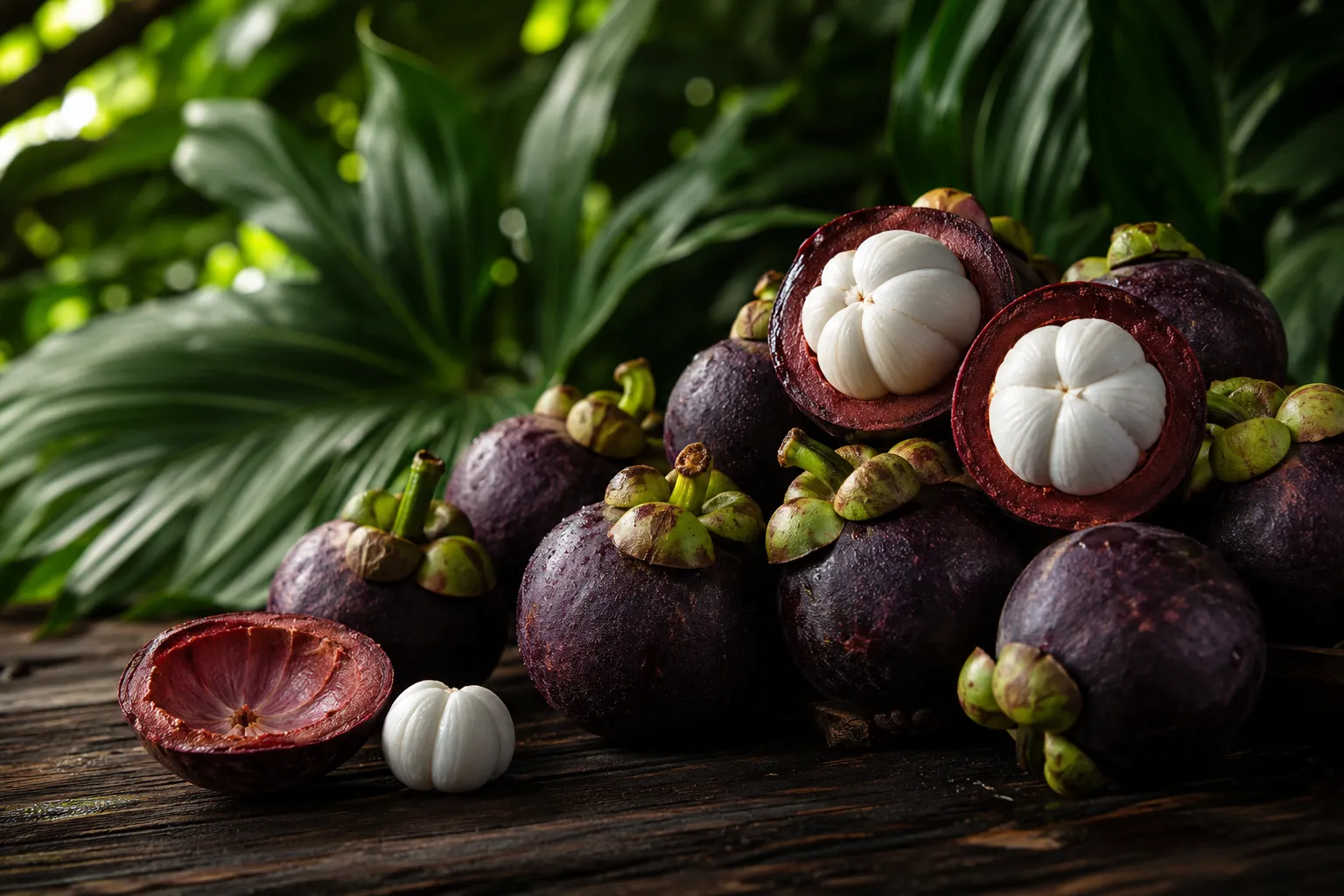
Quick Answer: Mangosteen (Garcinia mangostana) is a tropical fruit native to Southeast Asia, prized for its sweet, tangy white flesh and a thick purple rind rich in antioxidants called xanthones. It is one of the most nutritionally dense tropical fruits available, widely sold fresh, frozen, or as mangosteen extract, though high price and limited supply make it a specialty item in Western markets.
Key Takeaways
- Mangosteen (Garcinia mangostana) originated in Southeast Asia and is known as the “Queen of Fruits” for its exceptional flavor and health profile.
- The fruit contains xanthones, a class of polyphenols linked to anti-inflammatory and antioxidant activity.
- A 100-gram serving provides roughly 63 calories, 1 gram of fat, 0.6 grams of protein, and 15.6 grams of carbohydrates, plus Vitamin C and B vitamins.
- Fresh mangosteen typically sells for $5,$12 per pound in the United States, making it one of the pricier tropical fruits on the market.
- Mangosteen trees take 10-20 years to bear fruit, which explains the high price and limited supply.
- The fruit was banned from import into the USA until 2007 over concerns about the Asian fruit fly; irradiated fresh mangosteen is now legal.
- Mangosteen is not recommended for people on blood-thinning medications without medical supervision.
- The purple rind (pericarp) is edible in small amounts but is very astringent; most people eat only the white flesh inside.
What Is Mangosteen and Where Does It Come From?
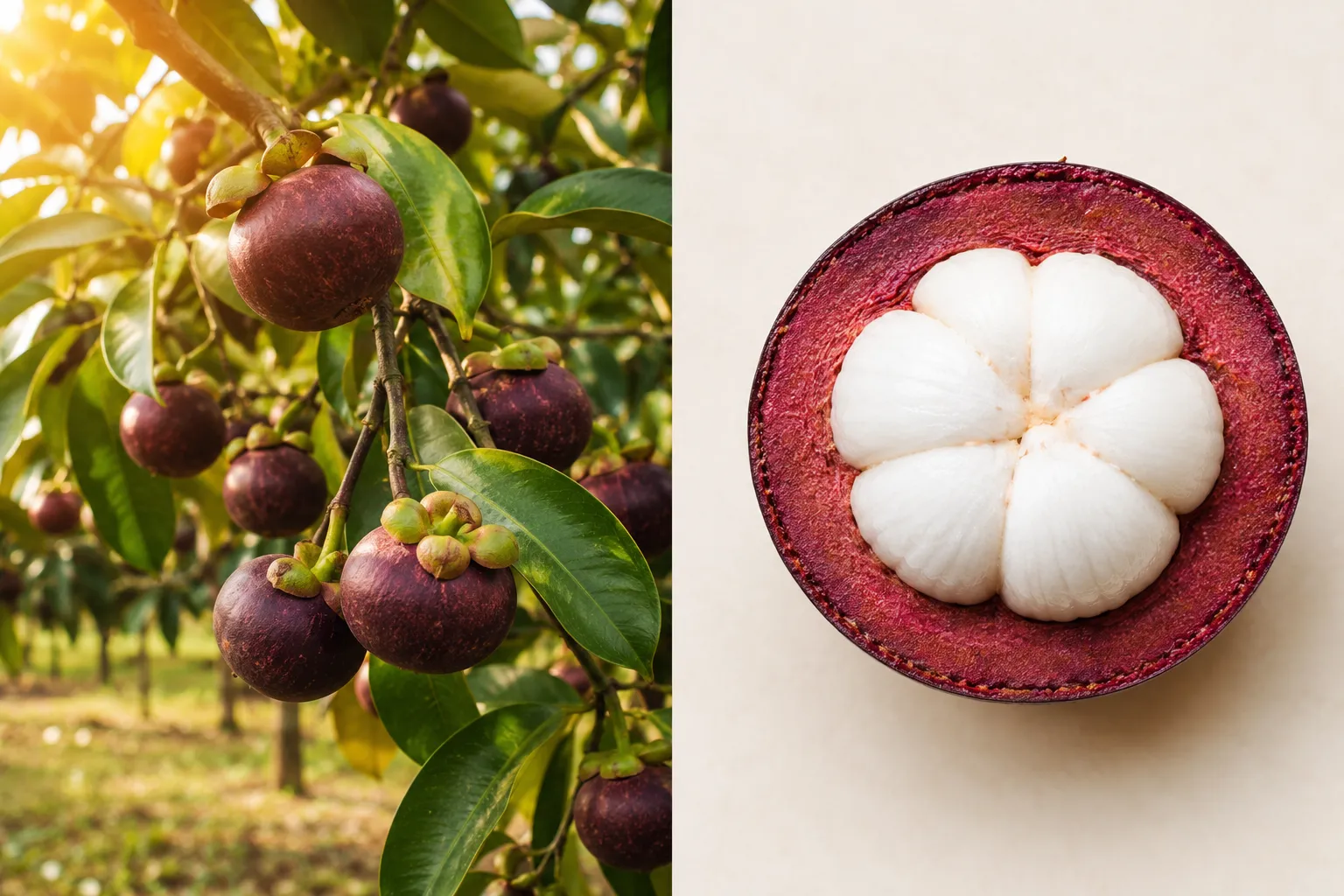
Mangosteen is a slow-growing tropical fruit tree (Garcinia mangostana, family Clusiaceae) native to the islands of Southeast Asia, particularly the Malay Archipelago. The fruit, a deep purple, round drupe about the size of a tangerine, produces ivory-white, segmented flesh that is sweet, slightly tart, and widely regarded as one of the finest-tasting fruits in the world.
Origins and History of Mangosteen
The exact wild origin of Garcinia mangostana var. remains uncertain, though most botanists trace it to the Malay Peninsula and the Sunda Islands of Indonesia. According to the Royal Botanic Gardens, Kew, the species has been cultivated for so long, possibly over 1,000 years, that no truly wild population has been confirmed.
The fruit spread gradually from Southeast Asia across Asia, reaching India, Sri Lanka, and eventually the Caribbean and Central America through colonial trade routes. Queen Victoria of Britain reportedly offered a reward of 100 pounds to anyone who could deliver her a fresh mangosteen, a story that cemented the fruit’s legendary status. Whether or not the tale is historically verified, the “Queen of Fruits” title stuck, and mangosteen mangosteen references appear in botanical records as far back as the 18th century.
By the 20th century, mangosteen cultivation had expanded across tropical Asia, Thailand, Indonesia, Malaysia, and the Philippines, with smaller production in India, Vietnam, and parts of Central America. Today, Thailand remains the world’s largest exporter of fresh mangosteen, shipping tens of thousands of metric tons annually.
Mangosteen Tree: Description, Propagation, Cultivation, and Harvest
The mangosteen tree is an evergreen that grows slowly in humid, tropical climates. It typically reaches 6-25 meters in height, with dark green, leathery leaves and small pink-white flowers. Mangosteen trees are notoriously slow to mature, most trees take between 10 and 20 years from seed to first fruit, which is a primary reason for the fruit’s high price.
Propagation, Cultivation, and Harvest
Mangosteen is propagated almost exclusively from seed because vegetative propagation is difficult; the plant produces seeds apomictically (without fertilization), meaning seedlings are genetic clones of the parent tree. Research from Purdue University’s Center for New Crops notes that grafting and air-layering have been attempted but rarely succeed commercially.
The tree demands specific conditions: deep, well-drained acidic soil, high humidity, annual rainfall of at least 1,270 mm, and temperatures that never drop below 4°C. Because of these strict requirements, mangosteen trees cannot be grown commercially outside a narrow tropical band. Attempts to cultivate them in Florida or California have largely failed.
Harvest occurs once or twice per year depending on the region. Ripe fruits are hand-picked, they do not continue ripening after removal from the tree, and must reach markets quickly. The harvested fruit has a shelf life of only 2-4 weeks under refrigeration, adding further logistical cost to the price consumers pay.
Breeding and Yield
Breeding programs for mangosteen are limited because of the tree’s slow growth cycle and apomictic reproduction. Regional production is concentrated in Thailand, Indonesia, and Malaysia, with smaller yields from Vietnam, India, and the Philippines. Diseases and pests, including algal leaf spot, thread blight, and fruit borers, can reduce yield significantly. Controlling these diseases and pests requires careful orchard management, as chemical controls can damage the sensitive plant.
Nutritional Content and Health Benefits of Mangosteen
Mangosteen is highly nutritious for a fruit of its caloric density. A 100-gram serving of raw mangosteen flesh delivers approximately 63 kcal, 15.6 g carbohydrates, 1.8 g dietary fiber, 0.6 g protein, and meaningful amounts of Vitamin C (2.9 mg), folate, and B vitamins according to the USDA FoodData Central database. Fat content is negligible at under 1 gram per serving.
Phytochemicals: Xanthones and Antioxidants
The most studied compounds in mangosteen are xanthones, a class of polyphenolic phytochemicals found primarily in the purple rind. Alpha-mangostin and gamma-mangostin are the most abundant. A 2011 review published in Nutrients found that these xanthones demonstrate antioxidant, anti-inflammatory, and potential anticancer properties in laboratory and animal studies.
Key potential health benefits of mangosteen, based on current research:
- Antioxidant activity: Xanthones in the rind and flesh neutralize free radicals, which are linked to aging and chronic disease.
- Anti-inflammatory properties: Alpha-mangostin has shown inhibition of COX-1 and COX-2 enzymes in vitro, similar to the mechanism of common anti-inflammatory drugs, per a 2016 study in Food & Function.
- Anticancer effects: Laboratory studies suggest xanthones may inhibit cancer cell growth, though no human clinical trials have confirmed this effect at normal dietary doses.
- Blood sugar control: A small 2018 randomized trial in Nutrition Journal found mangosteen supplementation improved insulin sensitivity markers in obese adults.
- Weight loss support: The same trial noted modest reductions in body fat percentage among participants taking mangosteen extract, though researchers cautioned that larger studies are needed.
- Immune system support: Vitamin C and the anti-inflammatory xanthones together may support immune function, though the evidence is preliminary.
- Skin health: Topical and oral mangosteen extract has been studied for its effect on skin inflammation and acne, with some positive results in small trials.
Important caveat: Most benefits mangosteen research comes from cell studies or small human trials. The National Center for Complementary and Integrative Health (NCCIH) states that evidence is insufficient to recommend mangosteen supplements for any specific health condition as of 2026.
How Much Does Mangosteen Cost and Where Can You Buy Fresh Mangosteen?
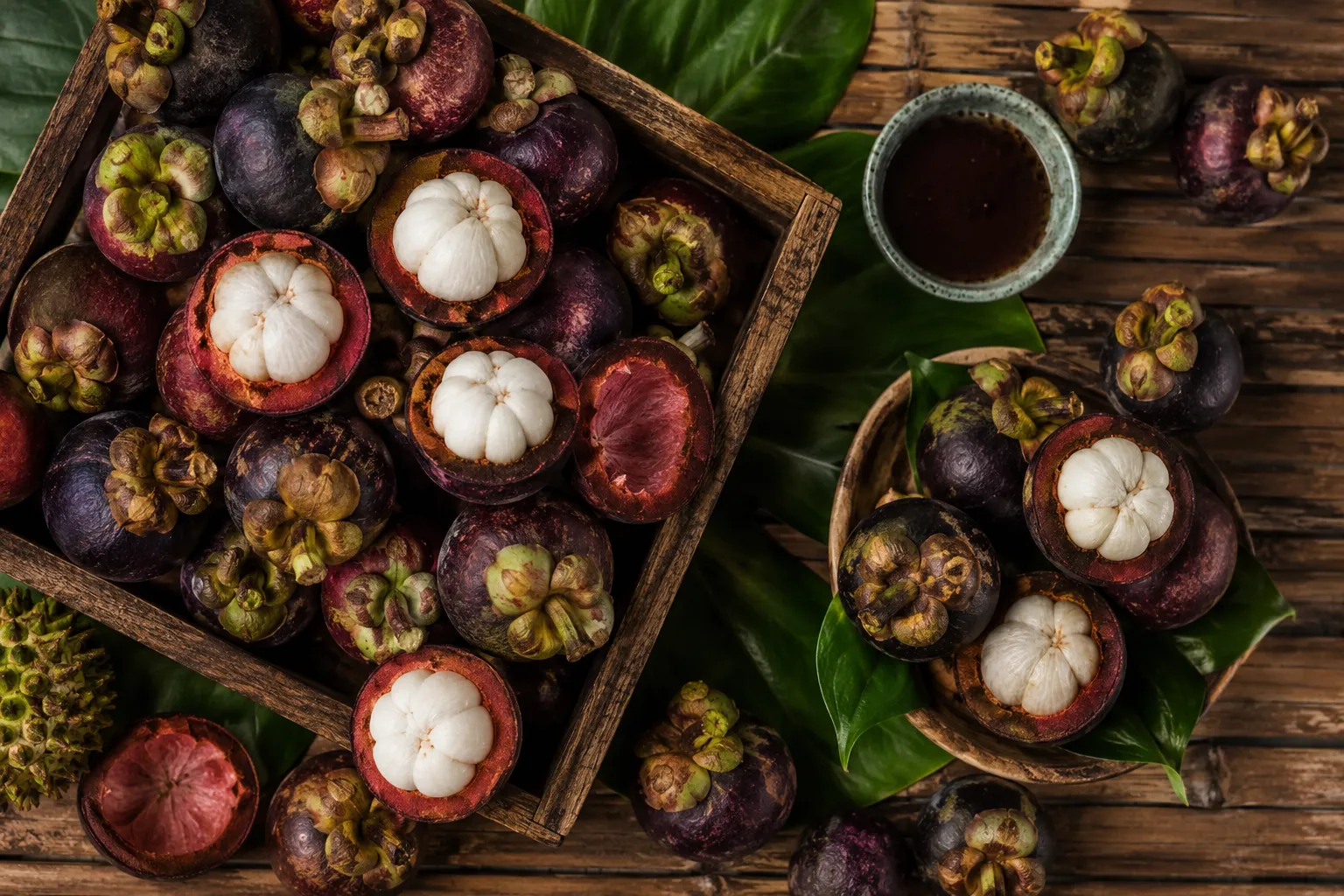
Fresh mangosteen typically costs $5,$12 per pound in the United States, though price varies by season, location, and source. Specialty Asian grocery stores in major cities are the most reliable source for fresh fruit. Online retailers ship frozen or freeze-dried mangosteen year-round, and mangosteen extract is widely available as a supplement.
Where to Buy Mangosteen
- Asian supermarkets: Stores such as H Mart, 99 Ranch Market, and independent Malay or Thai grocers in cities with large Asian populations stock fresh mangosteen during peak season (typically May through September for Thai imports).
- Online specialty retailers: Sites like Tropical Roots Box, Root Wellness Boxes, and similar tropical fruit box services ship fresh or frozen mangosteen directly to consumers. A tropical fruit box containing mangosteen alongside fruits banana, plantain, and other tropical items is a popular format. Some services let customers build own box or create own box from a selection of single fruit boxes.
- Farmers markets in Florida and Hawaii: Small domestic producers occasionally sell fresh mangosteen at local markets.
- Supplement retailers: Mangosteen extract capsules and juice blends are sold at health food stores and online.
A standard box of fresh mangosteen from an online retailer typically contains 3-5 pounds and costs $25,$50 including shipping. Boxes tropical fruit assortments that include mangosteen are often more economical per pound than single fruit boxes.
How to Tell If a Mangosteen Is Ripe, How to Cut It, and How to Eat It
A ripe mangosteen has a deep purple, uniformly colored skin with no soft spots or mold. The green sepals at the top should still look fresh and green, not dried out. The number of segments inside corresponds to the number of “petals” visible on the flat bottom of the fruit, typically 4 to 8.
How to Cut and Eat a Mangosteen
- Hold the fruit with the flat bottom facing up.
- Score the rind around the equator with a sharp knife, cutting about halfway through. Avoid cutting too deep or you will pierce the flesh.
- Twist the top half off like a cap. The white lobes of flesh will be visible inside the bottom half.
- Lift out each segment with a spoon or your fingers.
- Eat the white flesh directly. Discard the purple rind unless using it for tea or extract.
The flesh is delicate and perishable. Eat it within 24 hours of opening. Any segment containing a large seed (usually the largest lobe) will have a slightly bitter seed inside, the seed itself is not typically eaten.
Can You Eat Mangosteen Skin?
The purple skin (pericarp or rind) is technically edible but extremely astringent due to its high tannin content. In traditional medicine across Southeast Asia and Asia broadly, the dried rind is brewed as a tea or used in decoctions. The rind is also the primary source of mangosteen extract used in supplements. However, eating large amounts of raw rind is not recommended, as the tannins can cause digestive discomfort.
Mangosteen vs. Other Tropical Fruits: How Does It Compare?
Mangosteen stands out among tropical fruits for its xanthone content, which is not found in significant amounts in rambutan, dragon fruit, or lychee. However, other tropical fruits often surpass it in specific nutrients.
| Fruit | Calories/100g | Vitamin C | Unique Compound | Price (USD/lb) |
|---|---|---|---|---|
| Mangosteen | 63 | 2.9 mg | Xanthones | $5,$12 |
| Rambutan | 68 | 4.9 mg | Ellagic acid | $3,$8 |
| Dragon Fruit | 60 | 20.5 mg | Betacyanins | $2,$6 |
| Lychee | 66 | 71.5 mg | Oligonol | $3,$7 |
Sources: USDA FoodData Central, Healthline Nutrition.
Mangosteen’s xanthone profile is genuinely unique among commonly eaten fruits. Dragon fruit and lychee deliver far more Vitamin C per serving, and rambutan has a comparable caloric and fiber profile at a lower price. Choose mangosteen specifically if you are seeking xanthone-rich foods or the flavor experience, not as a general Vitamin C source.
Mangosteen Allergies, Side Effects, and Who Should Avoid It
Mangosteen is safe for most people when eaten as a whole fruit in normal dietary amounts. However, several groups should exercise caution.
Who should not take mangosteen (or mangosteen extract) without medical advice:
- People on blood thinners (warfarin, aspirin therapy): Xanthones may have mild anticoagulant properties. A 2020 case report in the Journal of Pharmacy Practice documented elevated INR in a patient consuming large amounts of mangosteen juice alongside warfarin.
- People with kidney disease: High-dose mangosteen extract supplements may affect kidney function; consult a physician before use.
- Pregnant and breastfeeding women: Insufficient safety data exists for high-dose supplement use during pregnancy.
- People with known Garcinia allergies: Rare cross-reactivity with other Garcinia species has been reported.
Eating one to three fresh mangosteen fruits per day is generally considered safe for healthy adults. Adverse effects from whole fruit consumption are uncommon and typically limited to mild gastrointestinal discomfort from the rind’s tannins.
Can You Grow Mangosteen at Home?
Growing mangosteen at home is possible in USDA hardiness zones 11-12 (parts of South Florida and Hawaii), but it is extremely challenging. The tree demands consistent tropical heat, high humidity, acidic soil, and protection from temperatures below 40°F. Mangosteen trees grown from seed take 10-20 years to produce fruit, and even then, yield is modest.
For most home gardeners outside the tropics, growing mangosteen trees is impractical. Container growing in a heated greenhouse is theoretically possible but rarely produces fruiting trees. If you live in Southeast Asia, southern Thailand, or coastal Malaysia, planting mangosteen trees in a well-prepared garden bed is feasible with patience.
Mangosteen Storage: How Long Does It Last?
Fresh mangosteen lasts 2-4 weeks when stored at 10-13°C (50-55°F) with high humidity, according to postharvest handling guidelines from UC Davis. At room temperature, ripe fruit deteriorates within 3-7 days. Freezing whole or peeled mangosteen extends shelf life to 3-6 months but softens the flesh texture.
Storage tips:
- Do not refrigerate below 10°C, chilling injury causes the rind to harden and the flesh to deteriorate faster.
- Store in a breathable container or mesh bag, not sealed plastic.
- Freeze peeled segments on a tray before transferring to a sealed bag for best texture retention.
Traditional Medicine, Culinary Uses, and Marketing
Mangosteen has been used in traditional medicine across Southeast Asia for centuries. The rind, leaves, and bark of the tree have been applied to treat skin infections, wounds, dysentery, and urinary tract diseases in Malay, Thai, and Indonesian folk medicine. The WHO’s review of selected medicinal plants documents several of these traditional uses, though clinical evidence for most remains limited.
Culinary Uses
Fresh mangosteen is eaten out of hand or added to fruit salads, sorbets, and desserts. In Thailand and Indonesia, the flesh is used in jams, juices, and cocktails. The rind is brewed into herbal teas and used to produce mangosteen extract for the supplement industry. In art and culture, the fruit appears frequently in Thai and Malay botanical illustrations and has been depicted in royal court paintings for centuries.
Marketing and the Supplement Industry
The early 2000s saw aggressive marketing of mangosteen juice products, most notably the multi-level marketing brand Xango, with claims about the fruit’s ability to cure diseases ranging from cancer to arthritis. The U.S. Federal Trade Commission (FTC) took action against several marketers in 2013 for deceptive health claims. The benefits mangosteen research that exists is promising but preliminary, the fruit is nutritious, not a cure.
FAQ
Is mangosteen legal in the USA?
Yes, fresh mangosteen is legal in the USA as of 2007. Before that year, imports were banned by the USDA APHIS due to concerns about the Asian fruit fly hitchhiking on imported fruit. Fresh mangosteen must now be irradiated before entry. Frozen, canned, and processed mangosteen products have been available in the US for much longer without restriction.
Why do hotels not allow mangosteen?
Some hotels in Southeast Asia restrict or ban mangosteen alongside durian because the purple rind produces a deep, stubborn stain that is nearly impossible to remove from white linens, towels, and carpets. The dye from the rind is so potent it has historically been used as a natural fabric dye. Hotels protect their property by prohibiting the fruit in rooms, not because of any health or safety concern.
Why is mangosteen so expensive?
Mangosteen is expensive for three compounding reasons: the tree takes 10-20 years to bear fruit, it grows only in a narrow tropical climate band in Southeast Asia, and the fresh fruit has a very short shelf life of 2-4 weeks, making international shipping costly. These factors, slow propagation, limited regional production, and rapid perishability, combine to keep supply tight and price high, typically $5,$12 per pound in US markets.
Who should not take mangosteen?
People taking blood-thinning medications such as warfarin should avoid high-dose mangosteen extract or juice without consulting a doctor, as xanthones may amplify anticoagulant effects. Those with kidney disease, pregnant or breastfeeding women, and anyone with a known allergy to Garcinia species should also exercise caution. Eating one or two fresh mangosteen fruits occasionally is generally safe for healthy adults, but supplement-dose extracts carry greater risk.
Conclusion
Mangosteen is one of the most nutritionally interesting tropical fruits available, combining a genuinely exceptional flavor with a unique phytochemical profile centered on xanthones. The fruit’s slow-growing tree, strict climate requirements, and short shelf life explain both its high price and its relative scarcity outside Southeast Asia.
Actionable next steps:
- If you want to try fresh mangosteen, check Asian supermarkets or order a tropical fruit box online during peak season (May through September for Thai imports).
- If you are interested in the health benefits, eat the whole fruit rather than relying on mangosteen extract supplements, where dosing and quality vary widely.
- If you are on any medication, particularly blood thinners, consult your doctor before adding mangosteen supplements to your routine.
- Store fresh fruit at 10-13°C and eat within two weeks for the best flavor and texture.
The “Queen of Fruits” title is well-earned, but approach the supplement marketing with appropriate skepticism and let the fruit speak for itself.
References
- USDA FoodData Central, Mangosteen, raw. Retrieved December 2012, updated 2024.
- Pedraza-Chaverri, J. et al. “Medicinal properties of mangosteen (Garcinia mangostana).” Food and Chemical Toxicology, 2008.
- Obolskiy, D. et al. “Garcinia mangostana L.: A Phytochemical and Pharmacological Review.” Phytotherapy Research, 2009.
- Xanthones review. Nutrients, 2011.
- Royal Botanic Gardens, Kew, Garcinia mangostana. Retrieved 2024.
- Purdue University Center for New Crops, Mangosteen. Original archived resource.
- UC Davis Postharvest Technology, Mangosteen fact sheet. Retrieved 2023.
- NCCIH, Mangosteen. Retrieved 2025.
- FTC press release on mangosteen juice deceptive claims, 2013.
- FAO FAOSTAT, Crop production data. Retrieved 2024.
- Nutrition Journal, Mangosteen supplementation and insulin sensitivity, 2018.
- Food & Function, Anti-inflammatory activity of alpha-mangostin, 2016.
- Healthline, Mangosteen nutrition and benefits. Retrieved 2025.
- Journal of Pharmacy Practice, Mangosteen-warfarin interaction case report, 2020.
- WHO, Selected medicinal plants review. Original publication archived.
- USDA APHIS, Mangosteen import regulations. Retrieved 2024.
