


Last updated: July 26, 2026
Quick Answer: July sits at the heart of peak mango season in the United States, when the widest selection of domestic and imported varieties hits markets simultaneously. Mangoes are rich in Vitamin C, fiber, and antioxidants, making them one of the most nutritious summer fruits available. This guide covers everything from ripeness cues and variety differences to storage tips, recipes, and health considerations.
Key Takeaways
- July offers maximum mango variety and supply in the US, with imports from Mexico, Peru, and Ecuador overlapping with domestic Florida harvests [1][4]
- One cup of sliced mango provides roughly 100% of the daily recommended Vitamin C for adults, plus significant fiber and folate (USDA FoodData Central)
- The “squeeze test” is the most reliable way to check ripeness — a ripe mango yields gently to pressure without feeling mushy
- Most healthy adults can safely eat one to two mangoes per day; more than that adds significant natural sugar to the diet
- Six major mango varieties dominate US markets in July: Ataulfo, Kent, Keitt, Tommy Atkins, Haden, and Francis — each with distinct flavor and texture
- Mangoes can be frozen for up to six months with minimal nutrient loss when stored correctly
- People with latex allergies or oral allergy syndrome may react to mango skin or sap
- Compared to many summer fruits, mangoes rank higher in Vitamin A and folate but lower in water content than watermelon
What Months Are Peak Mango Season
July is the single best month to buy mangoes in the United States. Global mango supply peaks between May and August, and July is when the most varieties from the most origins are available at the same time [1][8].
In the US, Florida’s domestic harvest runs from June through August, while imports from Mexico (peaking May through July), Peru, and Ecuador fill shelves through late summer [4]. India’s most prized varieties — Alphonso, Kesar, and Dasheri — peak in June and July before the monsoon arrives [2][6].
Regional peak windows at a glance:
| Region | Peak Months |
|---|---|
| Florida, USA | June — August |
| Mexico | May — July |
| Peru / Ecuador | May — August |
| India | June — July |
| Thailand / Southeast Asia | April — June |
For US shoppers, July 2026 offers the broadest selection of the year, with both budget-friendly Tommy Atkins and premium Ataulfo varieties widely available [4][8].
Nutritional Benefits of Eating Mangoes
Mangoes are one of the most nutrient-dense tropical fruits available during summer. A single cup (165g) of sliced raw mango delivers approximately 100% of the daily recommended Vitamin C for adults, along with meaningful amounts of Vitamin A (as beta-carotene), folate, and dietary fiber, according to the USDA FoodData Central database.
Key nutrients per 1-cup serving of raw mango (approx.):
- Vitamin C: ~60mg (about 67% DV)
- Vitamin A:
89mcg RAE (10% DV) - Folate:
71mcg (18% DV) - Dietary fiber: ~2.6g
- Potassium: ~277mg
- Calories: ~99
Mangoes also contain polyphenol antioxidants, including mangiferin, which has been studied for anti-inflammatory properties. For readers interested in how whole-food nutrients compare to supplementation, the guide to using vitamins and supplements as a treatment offers useful context on when food sources are sufficient.
The fiber content supports digestive health, and the combination of Vitamin C and folate makes mangoes particularly valuable for immune function and cell repair during the summer months.
Are Mangoes Good for Weight Loss
Mangoes can fit into a weight-conscious diet, but portion size matters. One cup of mango contains roughly 99 calories and 22 grams of natural sugar, which is higher than many other summer fruits. That does not make mangoes a poor choice — it means they work best as a replacement for processed sweets rather than an add-on snack.
The fiber in mangoes slows digestion and promotes satiety, which can reduce overall calorie intake when mangoes replace higher-calorie desserts. Choose fresh mango over dried mango or mango juice, both of which concentrate sugar significantly.
Choose fresh mango if: you want the full fiber benefit and lower calorie density. Limit intake if: you are managing blood sugar or following a strict low-carb plan.
How to Tell if a Mango Is Ripe
Color alone is unreliable for judging mango ripeness — the best indicator is feel. A ripe mango yields gently to light pressure from your thumb, similar to a ripe peach or avocado. It should not feel rock-hard or completely soft and mushy.
Secondary cues:
- A fruity, sweet aroma near the stem end
- Slight wrinkling of the skin on some varieties (especially Ataulfo)
- Color shift toward yellow or orange (variety-dependent — Tommy Atkins stays red-green even when ripe)
Common mistake: Buying mangoes based on red color. Red skin on a Tommy Atkins or Haden indicates sun exposure, not ripeness. Always use the squeeze test.
Difference Between Mango Varieties
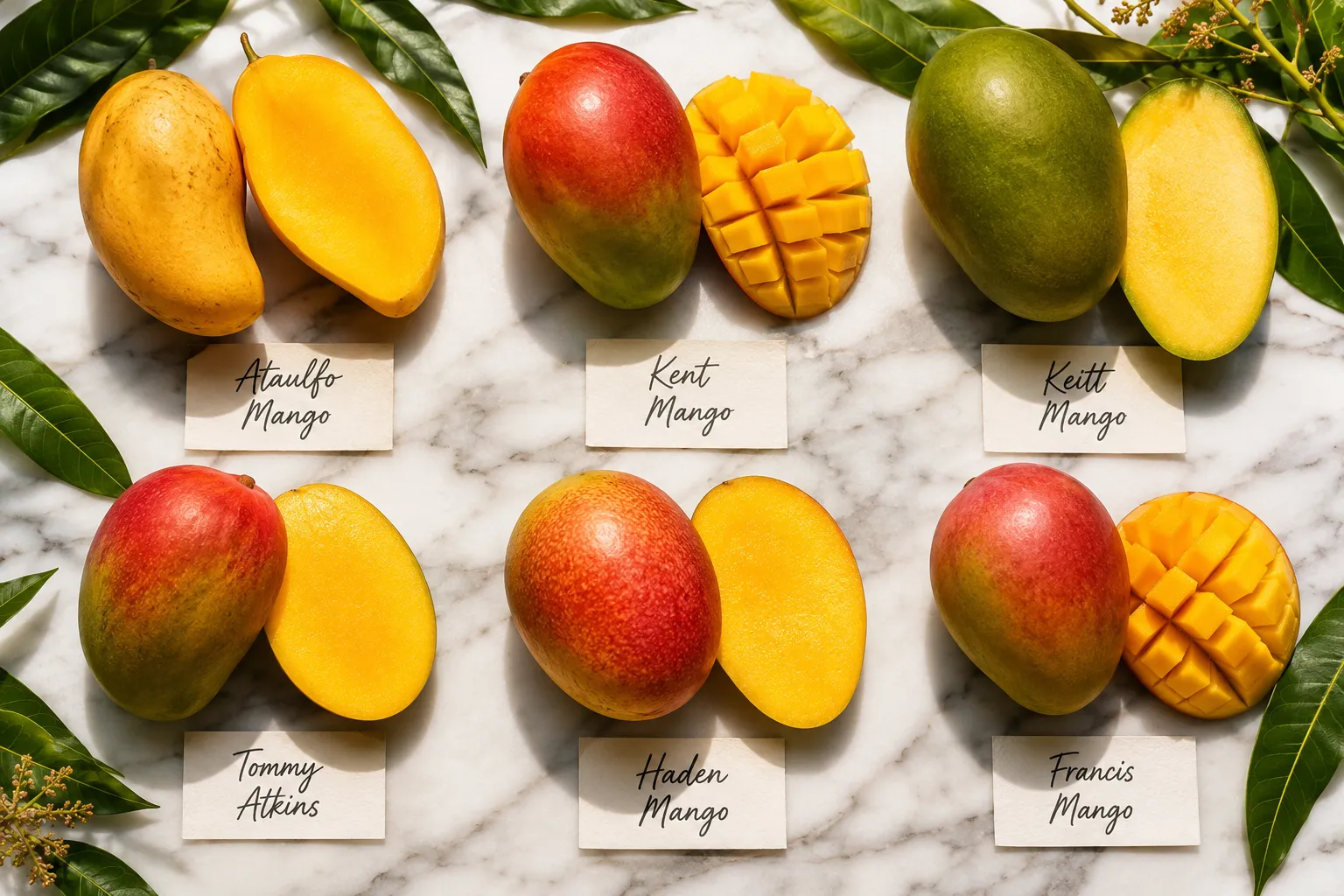
Six varieties dominate US markets during peak mango season in July, each suited to different uses [3][7].
- Ataulfo (Honey/Champagne): Small, yellow, creamy texture, minimal fiber. Best for eating fresh or blending. Very low in stringiness.
- Kent: Large, dark green to yellow, sweet and juicy with little fiber. Excellent for slicing.
- Keitt: Large, stays green when ripe, mild sweetness, firm flesh. Good for grilling or salsas.
- Tommy Atkins: Most common in US supermarkets. Red-green skin, firm, mild flavor, slightly fibrous. Best value for budget shoppers.
- Haden: Red-yellow skin, rich flavor, moderate fiber. One of the original Florida varieties.
- Francis: Yellow-green, S-shaped, very sweet and aromatic. Popular in Caribbean cuisine.
Choose Ataulfo or Kent for the smoothest eating experience. Choose Tommy Atkins if price is the priority — it’s typically the cheapest option in July [4].
Cheapest Place to Buy Mangoes in July
July is the best month for mango prices in the US because supply is at its highest. The most affordable sources, in general order of price:
- Asian and Latin grocery stores — consistently lowest prices year-round, often selling cases of Tommy Atkins or Ataulfo at significant discounts
- Warehouse clubs (Costco, Sam’s Club) — bulk trays of Ataulfo or Kent at competitive per-unit prices
- Farmers markets in Florida — fresh local Haden and Keitt varieties, often cheaper than supermarkets during peak harvest
- Mainstream supermarkets — convenient but typically 20-40% more expensive per mango than specialty grocers
Buying a full case (typically 8-12 mangoes) from an ethnic grocery store and ripening them at home is the most cost-effective approach for families [4][8].
How to Cut a Mango Without the Mess
The cheek method is the cleanest and fastest way to cut a mango. Stand the mango upright and slice down on each side of the flat pit, creating two large “cheeks.” Score the flesh in a crosshatch pattern without cutting through the skin, then push the skin side up to fan out the cubes. Scoop them off with a spoon or slice them away from the skin.

Tips to minimize mess:
- Chill the mango for 30 minutes before cutting — cold flesh is firmer and cuts more cleanly
- Use a sharp, thin-bladed knife
- Work over a rimmed cutting board to catch juice
- Peel the remaining strip around the pit and cut off any extra flesh
Best Ways to Eat Fresh Mangoes and Mango Recipes for Summer
Fresh mangoes during peak season need very little preparation. The simplest approach is slicing and eating them as-is, but they also work well in a wide range of summer dishes.
Quick serving ideas:
- Mango salsa: Diced mango, red onion, cilantro, jalapeño, and lime juice. Pairs with grilled fish or chicken. If you’re grilling this summer, see these barbeque maintenance tips to keep your setup clean and safe.
- Mango smoothie: Blend frozen mango chunks with Greek yogurt and a splash of orange juice for a high-protein breakfast.
- Mango avocado salad: Sliced mango, avocado, arugula, and a lime-honey dressing.
- Chilled mango lassi: Blend mango pulp with plain yogurt, a pinch of cardamom, and ice.
- Grilled mango: Brush Keitt mango slices with a little coconut oil and grill for 2-3 minutes per side for a caramelized dessert.
For peak flavor, use fully ripe mangoes in fresh preparations and slightly underripe ones for salsas and grilled dishes where firmness is an advantage.
How Many Mangoes Can You Eat Per Day
Most healthy adults can eat one to two mangoes per day without concern. One mango contains roughly 45-50 grams of natural sugar, so eating two in a day adds approximately 90-100 grams of sugar from fruit alone — which approaches or exceeds recommended daily limits for added sugars, though fruit sugar comes packaged with fiber and micronutrients.
Limit to one mango per day if:
- You have type 2 diabetes or insulin resistance
- You are following a low-carbohydrate diet
- You are also consuming other high-sugar fruits the same day
There is no established upper limit for mango consumption in healthy individuals, but digestive discomfort (loose stools or bloating) can occur with very large quantities due to fiber and natural sorbitol content.
Mango Allergies and Side Effects
Mango allergies are uncommon but real. The skin and sap of mangoes contain urushiol, the same compound found in poison ivy. Skin contact with mango peel can cause contact dermatitis in sensitive individuals, particularly those with latex allergies.
Who is most at risk:
- People with known latex-fruit syndrome
- Those with oral allergy syndrome (OAS) related to birch pollen may experience mild mouth tingling
- Individuals with a history of poison ivy reactions
Eating the flesh of a peeled mango is generally safe even for people with mild mango skin sensitivity. If you experience throat tightening, hives, or difficulty breathing after eating mango, seek medical attention — this indicates a true IgE-mediated allergy, which is rare but serious.
For broader context on how the body processes nutrients and supplements, the health category covers related topics in depth.
How to Store Mangoes and Can You Freeze Mangoes
Unripe mangoes should be stored at room temperature until they ripen — refrigerating them before they’re ripe halts the process and can cause chilling injury, resulting in gray, flavorless flesh.
Ripe mangoes can be refrigerated for up to five days. Place them in the crisper drawer, ideally in a loose bag.
Freezing mangoes works well and preserves most nutritional value. To freeze:
- Peel and dice the mango into cubes
- Spread cubes in a single layer on a parchment-lined baking sheet
- Freeze for 2-3 hours until solid
- Transfer to an airtight freezer bag, removing as much air as possible
- Store for up to six months
Frozen mango is ideal for smoothies, lassis, and sorbets. Texture softens after thawing, so it is not ideal for fresh salads once frozen.
Mango vs Other Summer Fruits: Nutrition Comparison
Mangoes hold their own nutritionally against other popular summer fruits, with standout levels of Vitamin C, Vitamin A, and folate.
| Fruit (1 cup) | Calories | Vitamin C | Fiber (g) | Folate (mcg) |
|---|---|---|---|---|
| Mango | 99 | 60mg | 2.6 | 71 |
| Watermelon | 46 | 12mg | 0.6 | 5 |
| Blueberries | 84 | 14mg | 3.6 | 9 |
| Peach | 60 | 10mg | 2.3 | 7 |
| Pineapple | 82 | 79mg | 2.3 | 30 |
Source: USDA FoodData Central. Values are approximate.
Mango leads in folate and Vitamin A among common summer fruits. Pineapple edges it out on Vitamin C, and blueberries offer more fiber per cup. Watermelon wins on hydration and low calorie density. Each fruit has a distinct nutritional profile, so eating a variety across the summer is the most practical approach.
For readers who supplement their diet with micronutrients, the guide to using vitamins and supplements as a treatment explains when whole-food sources are sufficient versus when supplementation adds value.
FAQ
Q: When exactly is mango season in the US? Mango season in the US runs roughly from May through September, with July being the peak month for variety and supply. Florida’s domestic harvest peaks June through August, while imports from Mexico and South America fill shelves from May onward [1][4].
Q: What is the best mango variety for eating fresh? Ataulfo (also called Honey or Champagne mango) is widely considered the best for fresh eating due to its creamy, fiber-free flesh and rich sweetness. Kent is a close second for those who prefer a larger fruit [3][7].
Q: How do you ripen a mango faster? Place an unripe mango in a paper bag at room temperature. Adding an apple or banana to the bag speeds up ripening because those fruits emit ethylene gas. Most mangoes ripen within one to three days using this method.
Q: Can diabetics eat mangoes? Yes, in moderation. Mangoes have a moderate glycemic index (around 51), and the fiber content slows sugar absorption. Most diabetes dietitians suggest limiting to half a cup to one cup per serving and pairing mango with protein or healthy fat to further moderate blood sugar response. Individual responses vary, so monitoring is advisable.
Q: Is frozen mango as nutritious as fresh? Largely yes. Freezing preserves most vitamins and antioxidants. Some Vitamin C is lost during blanching if the mango was commercially processed, but home-frozen mango retains close to its original nutritional profile for up to six months.
Q: Why does my mouth itch after eating mango? Mouth itching after eating mango is often oral allergy syndrome (OAS), a cross-reaction between mango proteins and pollen allergens (commonly birch or mugwort). It typically causes mild tingling or itching in the mouth and lips. Peeling the mango carefully and avoiding contact with the skin reduces the reaction for most people.
Q: What is the difference between Ataulfo and Tommy Atkins mangoes? Ataulfo mangoes are small, yellow, creamy, and nearly fiber-free with a rich, sweet flavor. Tommy Atkins are larger, red-green, firmer, milder in flavor, and slightly fibrous. Tommy Atkins are the most common and affordable variety in US supermarkets; Ataulfo is considered a premium eating mango [3].
Q: How long do mangoes last at room temperature? Unripe mangoes last three to seven days at room temperature before fully ripening. Once ripe, they should be eaten within one to two days at room temperature or moved to the refrigerator for up to five days.
Q: Can you eat mango skin? Mango skin is technically edible and contains fiber and antioxidants, but it also contains urushiol, which can cause skin and digestive irritation in sensitive individuals. Most people peel mangoes before eating, and that is the safer approach for anyone with latex sensitivity.
Q: Where is the best place to find cheap mangoes in July? Asian and Latin grocery stores consistently offer the lowest mango prices, often selling Ataulfo trays or Tommy Atkins cases at significantly lower prices than mainstream supermarkets. Warehouse clubs are also a strong option for bulk buying during peak season [4][8].
Conclusion
Peak mango season in July 2026 is the best window of the year to buy, eat, and experiment with mangoes. Supply is at its highest, prices are at their most competitive, and the variety selection spans everything from budget Tommy Atkins to premium Ataulfo and Kent. Nutritionally, mangoes deliver a strong combination of Vitamin C, folate, fiber, and antioxidants that few other summer fruits match.
Actionable next steps for this July:
- Visit an Asian or Latin grocery store this week and compare mango prices and varieties
- Use the squeeze test — not color — to select ripe mangoes
- Try at least one variety you have not eaten before (Ataulfo if you usually buy Tommy Atkins)
- Freeze a batch of diced mango now to extend peak-season flavor into fall
- Incorporate one cup of fresh mango daily as a natural source of Vitamin C and folate
- Try mango salsa alongside grilled proteins — a simple, high-impact recipe that takes under 10 minutes
The window for peak mango season is roughly eight weeks. Taking advantage of it now means better flavor, better nutrition, and better value than any other time of year.
References
[1] When Are Mangos In Season – https://www.mango.org/blog/when-are-mangos-in-season/ [2] Mango Season Calendar India 2026 – https://vanamrit.in/mango-season-calendar-india-2026/ [3] Mango Season Calendar – https://mmafarms.com/blog/mango-season-calendar/ [4] Mango Season Usa – https://mmafarms.com/guides/mango-season-usa/ [6] Mango Season India – https://mmafarms.com/guides/mango-season-india/ [7] Best Mango Seasons – https://frutplanet.com/best-mango-seasons/ [8] Mango Season 2026 – https://mmafarms.com/mango-season-2026/

