

Last updated: July 8, 2026
Quick Answer
The Volkswagen Smog Scandal, widely known as “Dieselgate,” was a deliberate scheme in which Volkswagen Group installed hidden software in roughly 11 million diesel vehicles worldwide to cheat on government emissions tests. During real-world driving, those vehicles emitted nitrogen oxides (NOx) at up to 40 times the legal U.S. limit. The fraud was uncovered in 2015, triggering criminal charges, billions in fines, and a decade of ongoing legal fallout.
Key Takeaways
- Approximately 11 million vehicles worldwide were fitted with illegal “defeat device” software, including around 590,000 in the United States [3]
- The software detected when a car was being tested and activated full emissions controls only during the test, not during normal driving [3]
- Volkswagen AG pleaded guilty to three felony counts in March 2017 and agreed to pay a $2.8 billion criminal penalty [4]
- Total U.S. consumer compensation exceeded $9.5 billion, with more than 86% of affected U.S. owners choosing vehicle buybacks or early lease terminations [2]
- German authorities separately fined Volkswagen €1 billion in 2018 for organizational failures that allowed the scheme [6]
- In May 2025, a German court convicted four former Volkswagen executives, with the most senior receiving a four-and-a-half-year prison sentence [1]
- The affected engines were primarily 2.0-liter and 3.0-liter TDI diesel units sold under Volkswagen, Audi, Porsche, Skoda, and SEAT brands [7]
- Legal proceedings continue in multiple countries as of 2026, including a UK class-action representing over 91,000 owners [7]
What Is the Volkswagen Emissions Scandal Explained
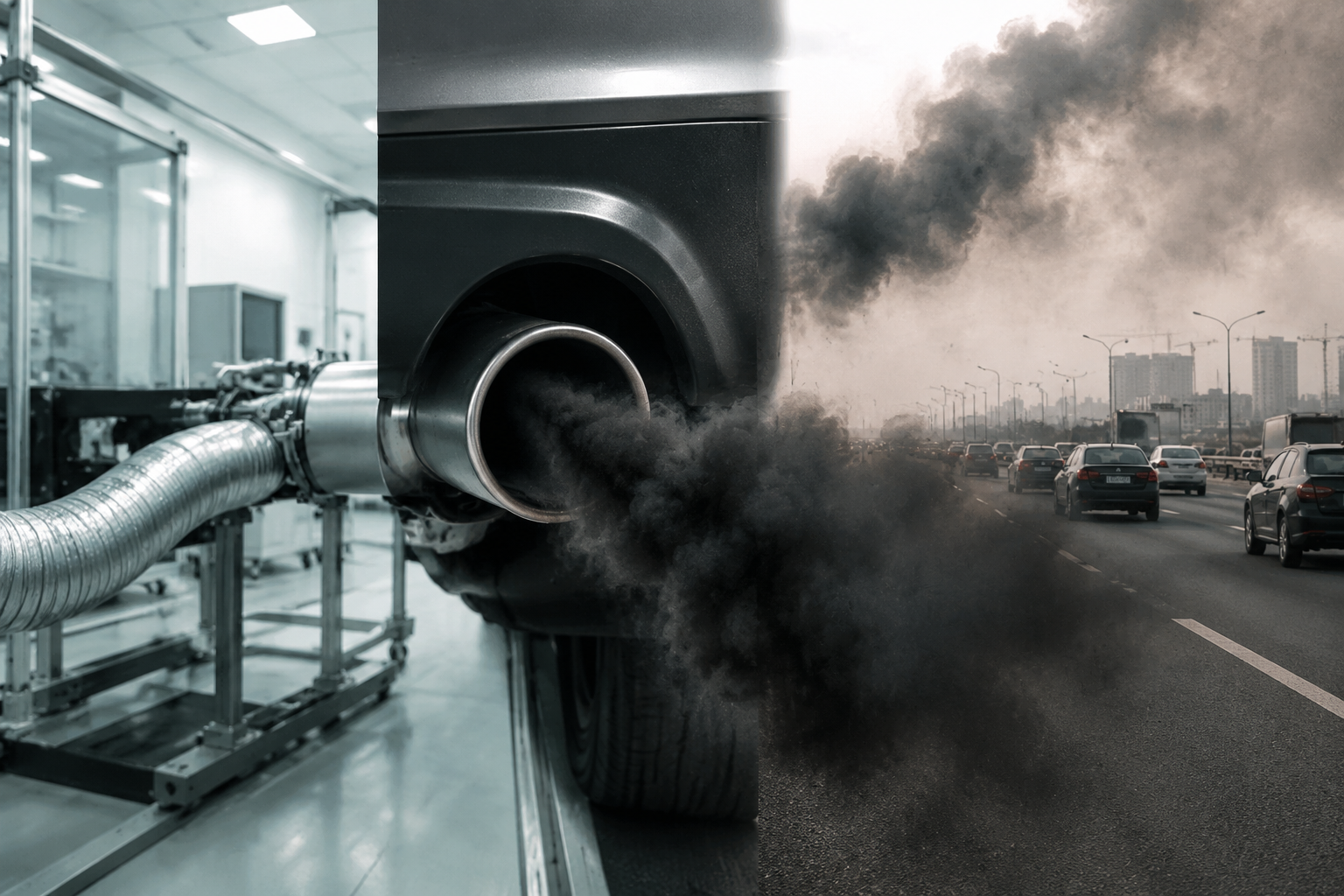
The Volkswagen Smog Scandal refers to the company’s decade-long use of software that manipulated emissions readings during regulatory testing. In normal driving conditions, the vehicles produced far higher levels of NOx than permitted under the U.S. Clean Air Act and European equivalents.
Volkswagen marketed these vehicles under a “Clean Diesel” campaign, positioning them as both high-performance and environmentally responsible. That claim was false. The defeat device software recognized the specific conditions of an emissions test (such as steering wheel position, speed patterns, and duration) and switched the engine into a low-emission mode only for the test. Once back on the road, the engine reverted to a mode that prioritized fuel efficiency and performance over emissions compliance [3].
Why it mattered: NOx gases contribute directly to smog, respiratory illness, and premature death. Independent researchers estimated that the excess emissions from U.S. vehicles alone contributed to dozens of premature deaths annually, though exact figures vary by study methodology.
When Did the VW Dieselgate Scandal Happen
The scandal became public in September 2015, when the U.S. Environmental Protection Agency (EPA) issued a Notice of Violation to Volkswagen. However, the cheating itself had been ongoing since at least 2009, when the first affected vehicles reached U.S. dealerships [7].
Key timeline milestones:
- 2009-2015: Affected TDI diesel vehicles sold in the U.S. and globally
- 2014: West Virginia University researchers first flagged emissions discrepancies in a study funded by the International Council on Clean Transportation
- September 2015: EPA issues formal Notice of Violation; Volkswagen publicly admits to the defeat device
- June 2016: $14.7 billion settlement reached for 2.0-liter diesel vehicles in the U.S. [5]
- March 2017: Volkswagen AG pleads guilty to three felony counts; $2.8 billion criminal penalty agreed [4]
- June 2018: German authorities impose €1 billion fine [6]
- July 2020: FTC reports consumer repayments exceed $9.5 billion [2]
- May 2025: German court convicts four former executives [1]
How Many Cars Were Affected by Volkswagen Emissions Cheating
Approximately 11 million vehicles worldwide were equipped with the defeat device software, with around 590,000 located in the United States [3][7]. The affected vehicles were produced between 2009 and 2015 and sold under multiple brands within the Volkswagen Group.
Affected brands included:
- Volkswagen (VW)
- Audi
- Porsche
- Skoda
- SEAT
The scale made this one of the largest automotive fraud cases in history. Europe bore the largest share of affected vehicles, given the continent’s historically higher adoption of diesel passenger cars.
What Engines Did Volkswagen Cheat On Emissions Tests
The defeat device was installed primarily in two engine families: the 2.0-liter TDI four-cylinder diesel and the 3.0-liter TDI V6 diesel. Both engine types were used across multiple Volkswagen Group brands and vehicle models [7].
The 2.0-liter engines were the subject of the initial $14.7 billion U.S. settlement [5], while the 3.0-liter engines (found in Audi, Porsche Cayenne, and VW Touareg models) were addressed in a separate legal process. Both engine families emitted NOx at levels dramatically exceeding legal limits during real-world driving [3].
How Volkswagen Got Caught Cheating Emissions Tests
Volkswagen was caught because independent researchers noticed a gap between laboratory results and on-road performance. In 2014, researchers at West Virginia University, working with the International Council on Clean Transportation, conducted real-world driving tests on several diesel vehicles. They found that certain VW models emitted NOx at levels far above the EPA standard during normal driving, even though the same vehicles passed laboratory tests [7].
The researchers reported their findings to the California Air Resources Board (CARB) and the EPA. After Volkswagen failed to provide a satisfactory explanation and issued a limited recall that did not fix the problem, the EPA escalated the matter. Facing regulatory pressure, Volkswagen admitted in September 2015 that the discrepancy was caused by intentional defeat device software.
“The defeat device software recognized the specific conditions of an emissions test and switched the engine into a low-emission mode only for the test.”
How Much Did Volkswagen Pay in Fines for the Volkswagen Smog Scandal
Volkswagen’s total financial penalties across all jurisdictions ran into the tens of billions of dollars. The major figures are:
| Settlement / Fine | Amount | Year |
|---|---|---|
| U.S. 2.0L consumer settlement | Up to $14.7 billion | 2016 [5] |
| U.S. criminal penalty (guilty plea) | $2.8 billion | 2017 [4] |
| Total U.S. consumer repayments | Over $9.5 billion | 2020 [2] |
| German regulatory fine | €1 billion | 2018 [6] |
Beyond these headline figures, Volkswagen also paid civil penalties to the EPA and Department of Justice, funded environmental remediation programs, and faced separate settlements in Canada, Australia, and European markets.
Did Volkswagen Owners Get Compensation for Dieselgate
Yes. U.S. owners of affected 2.0-liter diesel vehicles received substantial compensation. The FTC reported that by July 2020, Volkswagen and Porsche had repaid more than $9.5 billion to consumers who were deceived by the “Clean Diesel” advertising campaign [2].
What compensation looked like for U.S. owners:
- Vehicle buyback: VW purchased the car back at pre-scandal market value plus additional compensation
- Early lease termination: Lessees could exit contracts without penalty and receive compensation
- Emissions modification: Some owners chose a software fix (where approved) plus a smaller cash payment
More than 86% of eligible U.S. claimants chose buybacks or early lease terminations rather than keeping their vehicles [2].
Outside the U.S., compensation varied significantly. European owners generally received less, and many had to pursue claims through litigation. In the UK, a class-action lawsuit representing over 91,000 owners was still active as of 2026 [7].
Is My Volkswagen Diesel Affected and How Do I Check the Recall
The affected vehicles are primarily TDI diesel models sold between 2009 and 2015 under VW, Audi, Porsche, Skoda, and SEAT brands. If you own a diesel vehicle from any of these brands manufactured during that period, it is worth checking.
Steps to check if your vehicle is affected:
- Locate your 17-character Vehicle Identification Number (VIN), found on the dashboard or door jamb
- Visit the official VW recall lookup tool at www.vw.com or the NHTSA recall database at www.nhtsa.gov
- Enter your VIN to see if any open recalls or settlement eligibility applies
- Contact your local dealership for confirmation and to schedule any required software updates
Note: For U.S. owners, the window to participate in the original buyback program has closed. However, some residual legal options and ongoing proceedings in other countries may still be relevant depending on your jurisdiction.
What Happened to Volkswagen Executives After Dieselgate
Criminal accountability for individual executives took years but did eventually result in convictions. In May 2025, a German court convicted four former Volkswagen managers for their roles in the Volkswagen Smog Scandal [1].
Sentences handed down:
- Former head of diesel development: Four and a half years in prison
- Head of drive train electronics: Two years and seven months in prison
- Two other defendants: Suspended sentences of 15 months and 10 months respectively
In the United States, former VW executive Oliver Schmidt was sentenced to seven years in federal prison in 2017 after pleading guilty to conspiracy and violating the Clean Air Act. Former CEO Martin Winterkorn was charged in the U.S. but remained in Germany, where separate proceedings continued for years.
The slow pace of executive accountability drew criticism from consumer advocates, but the 2025 German convictions marked a significant escalation in personal legal consequences [1].
Did Other Car Companies Do the Same Emissions Cheating
Volkswagen was the most prominent case, but it was not entirely alone. Following the Dieselgate revelations, regulators worldwide scrutinized other manufacturers and found varying degrees of emissions irregularities.
- Fiat Chrysler (now Stellantis): The U.S. Department of Justice charged Fiat Chrysler in 2019 with using defeat devices in Ram 1500 and Jeep Grand Cherokee diesel models. The company reached a settlement.
- Renault, Peugeot, and others: French and European regulators investigated several manufacturers for emissions discrepancies, though the legal outcomes differed from the VW case.
- Daimler (Mercedes-Benz): Faced investigations in both Germany and the U.S. for alleged defeat device use and reached settlements in multiple jurisdictions.
The key distinction is scale and intent. Volkswagen’s scheme was deliberate, systematic, and spanned a decade across 11 million vehicles. Other cases involved varying degrees of regulatory ambiguity versus outright fraud.
Can You Still Drive a Volkswagen Diesel After the Scandal
Yes, affected VW diesel vehicles that received the approved emissions software update are legal to drive. In the U.S., vehicles that were not bought back were required to undergo an EPA-approved emissions fix before they could be re-registered or resold [3].
Practical considerations for current owners:
- Vehicles with the software fix applied meet legal emissions standards and can be driven normally
- Some owners reported minor changes in fuel economy or performance after the fix, though VW disputed significant impacts
- Resale values for affected models were generally lower following the scandal, even after fixes
- In jurisdictions with stricter low-emission zone rules (common in European cities), owners should verify their vehicle’s compliance status locally
Long-Term Effects of the Volkswagen Smog Scandal on the Auto Industry
The Volkswagen Smog Scandal permanently changed how regulators, consumers, and investors view automotive emissions claims. Several lasting effects are clear as of 2026.
Regulatory changes:
- The EU introduced Real Driving Emissions (RDE) testing, requiring vehicles to meet standards during actual road use, not just in labs
- The U.S. EPA increased on-road emissions surveillance and spot-checking programs
- Multiple countries tightened penalties for emissions fraud
Industry shifts:
- Volkswagen itself accelerated its pivot to electric vehicles, committing billions to EV development partly as a reputational response
- Consumer trust in diesel technology declined sharply across Europe, accelerating the broader shift away from diesel passenger cars
- Corporate governance reforms became more common, with automakers adding emissions compliance oversight to board-level responsibilities
Financial legacy: Volkswagen’s total global costs from the scandal are estimated to have exceeded $30 billion when all settlements, fines, legal fees, and remediation costs are combined, though the final figure across all jurisdictions is difficult to pin down precisely.
Conclusion
The Volkswagen Smog Scandal remains one of the most consequential cases of corporate fraud in automotive history. From the initial EPA notice in 2015 through criminal convictions of executives in 2025, the case demonstrated both the scale of damage that deliberate regulatory cheating can cause and the slow but real reach of legal accountability.
Actionable steps for anyone affected or interested:
- Current VW diesel owners: Check your VIN against official recall databases and confirm your vehicle has received the approved emissions update
- Potential used-car buyers: Run a full VIN check on any used VW, Audi, or Porsche diesel from the 2009-2015 model years before purchasing
- Investors and analysts: Use Dieselgate as a benchmark case when evaluating ESG disclosures and emissions compliance claims from any automaker
- Policy researchers: The scandal’s regulatory aftermath, particularly the EU’s shift to real-world driving tests, offers a concrete model for strengthening emissions oversight globally
The broader lesson is straightforward: when financial incentives conflict with regulatory compliance, robust independent testing and whistleblower protections are the most reliable safeguards. The Volkswagen case proved that laboratory-only testing is not sufficient and that reform, while slow, does follow.
Frequently Asked Questions
What exactly is a defeat device? A defeat device is software or hardware that detects when a vehicle is undergoing an official emissions test and alters engine performance to reduce emissions only during that test. In normal driving, the vehicle operates differently and emits far more pollutants. The U.S. Clean Air Act explicitly prohibits defeat devices [3].
How did VW’s defeat device software work technically? The software monitored inputs such as steering angle, vehicle speed, duration of operation, and barometric pressure to identify the pattern of a laboratory emissions test. When those conditions were met, it activated full emissions controls. On the road, those controls were partially disabled to improve performance and fuel economy [3].
Which VW models were specifically affected? Affected U.S. models included the VW Jetta, Golf, Beetle, Passat, and Audi A3 (2.0-liter TDI), as well as VW Touareg, Audi A6, A7, A8, Q5, and Porsche Cayenne (3.0-liter TDI). Model years ranged from 2009 to 2015 [7].
Did VW face consequences in Europe as well as the U.S.? Yes. German authorities fined VW €1 billion in 2018 [6], and legal proceedings continued across multiple European countries. A UK class-action representing over 91,000 owners was still active as of 2026 [7]. European compensation was generally lower than U.S. payouts.
Is the U.S. buyback program still open? No. The original U.S. buyback and compensation program closed years ago. Owners who did not participate are no longer eligible for the original settlement terms. Owners in other countries should check local consumer protection agencies for any remaining options.
What happened to VW’s CEO at the time? Martin Winterkorn resigned as CEO in September 2015, days after the scandal became public. He was subsequently charged with fraud and market manipulation in Germany. U.S. federal prosecutors also indicted him, but he remained in Germany and was not extradited.
How much did individual U.S. owners receive in compensation? Compensation amounts varied by vehicle model, model year, and mileage. Buyback values were calculated based on the vehicle’s pre-scandal retail value, so amounts differed widely. Some owners received several thousand dollars above market value, while others received less depending on their vehicle’s condition and the specific settlement tier.
Did the scandal affect VW’s sales long-term? VW’s global sales dipped in the immediate aftermath but recovered within a few years. However, the scandal accelerated the company’s strategic shift toward electric vehicles and damaged the broader diesel passenger car market in Europe more than VW’s overall brand permanently.
What is the ICCT and why does it matter to this case? The International Council on Clean Transportation (ICCT) is a nonprofit research organization that funded the West Virginia University study that first detected the emissions discrepancies. Without that independent research, the defeat device might have remained hidden for years longer.
Are there still ongoing lawsuits related to Dieselgate? As of 2026, yes. Legal proceedings continue in the UK and several other jurisdictions. Shareholder lawsuits in Germany have also been active, with investors seeking compensation for losses caused by the scandal’s impact on VW’s stock price [7].
References
[1] German Court Convicts Four Ex Volkswagen Managers Of Fraud In Emissions Scandal – https://www.euronews.com/my-europe/2025/05/26/german-court-convicts-four-ex-volkswagen-managers-of-fraud-in-emissions-scandal
[2] Final Court Summary FTC Reports Volkswagen Repaid More $9.5 Billion Car Buyers Who Were Deceived Clean – https://www.ftc.gov/news-events/news/press-releases/2020/07/final-court-summary-ftc-reports-volkswagen-repaid-more-95-billion-car-buyers-who-were-deceived-clean
[3] Learn About Volkswagen Violations – https://www.epa.gov/vw/learn-about-volkswagen-violations
[4] Volkswagen AG Pleads Guilty Connection Conspiracy Cheat US Emissions Tests – https://www.justice.gov/archives/opa/pr/volkswagen-ag-pleads-guilty-connection-conspiracy-cheat-us-emissions-tests
[5] Volkswagen Spend $14.7 Billion Settle Allegations Cheating Emissions Tests Deceiving Customers – https://www.ftc.gov/news-events/news/press-releases/2016/06/volkswagen-spend-147-billion-settle-allegations-cheating-emissions-tests-deceiving-customers-20
[6] Volkswagen Fined €880m Over Diesel Emissions Scandal – https://www.itv.com/news/2018-06-13/volkswagen-fined-880m-over-diesel-emissions-scandal
[7] Volkswagen Emissions Scandal – https://en.wikipedia.org/wiki/Volkswagen_emissions_scandal
