

Last updated: June 12, 2026
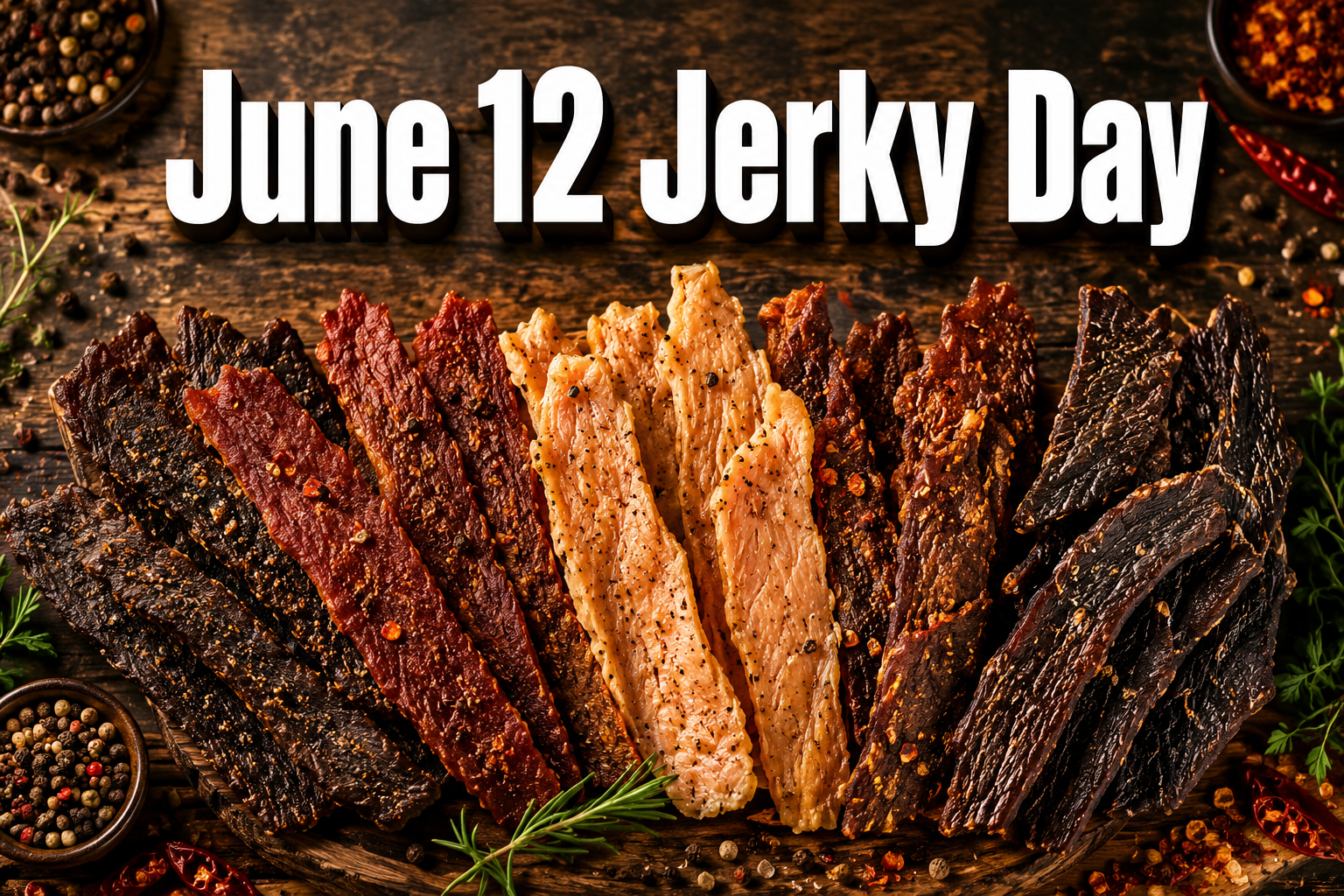
Quick Answer: June 12 Jerky Day, officially known as National Jerky Day, is an annual food observance celebrated every June 12 in the United States. It was established in 2012 by Jack Link’s Beef Jerky and the Wisconsin Beef Council to honor jerky’s long history as a portable, protein-rich snack. In 2026, the holiday falls on a Friday, making it a prime day for tastings, deals, and homemade jerky projects.
Key Takeaways
- June 12 Jerky Day is celebrated annually on June 12 and was founded in 2012 by Jack Link’s Beef Jerky and the Wisconsin Beef Council.
- The word “jerky” comes from the Quechua word “ch’arki,” meaning “to burn meat,” reflecting centuries of use as a preservation method.
- Jerky is high in protein and low in fat, but some commercial varieties are high in sodium, so label-reading matters.
- Beef jerky is the most popular variety, but turkey, salmon, pork, and plant-based options are widely available.
- Artisan jerky typically costs between $8 and $20 per 3-4 oz bag, depending on the protein source and production method.
- Jerky fits well into keto, paleo, and high-protein athletic diets when low-sugar, low-carb options are chosen.
- Making jerky at home requires only a few ingredients, a marinade, and either a dehydrator or a low-temperature oven.
- NASA has included jerky in astronaut food supplies since 1996 due to its light weight and long shelf life.
- A related observance, National Craft Jerky Day, is celebrated on November 27 each year.
What Exactly Is National Jerky Day
National Jerky Day is a food holiday dedicated to celebrating dried, cured meat as a snack with deep cultural and nutritional roots. It is observed every year on June 12 across the United States, with participation from consumers, brands, and specialty producers. [1]
The day encourages people to try new jerky flavors, learn about the snack’s global history, and even make their own at home. Major retailers and jerky brands often run promotions, giveaways, and limited-edition flavors around the date. [2]
What counts as jerky? Jerky is any lean meat that has been trimmed of fat, cut into strips, marinated, and dried or smoked at low temperatures to remove moisture. The result is a shelf-stable, concentrated protein snack.
How Did June 12 Become Jerky Day
Jack Link’s Beef Jerky and the Wisconsin Beef Council established National Jerky Day in 2012 to give the snack a dedicated annual celebration. June 12 was chosen as the official date, and the holiday has grown in recognition each year since. [1]
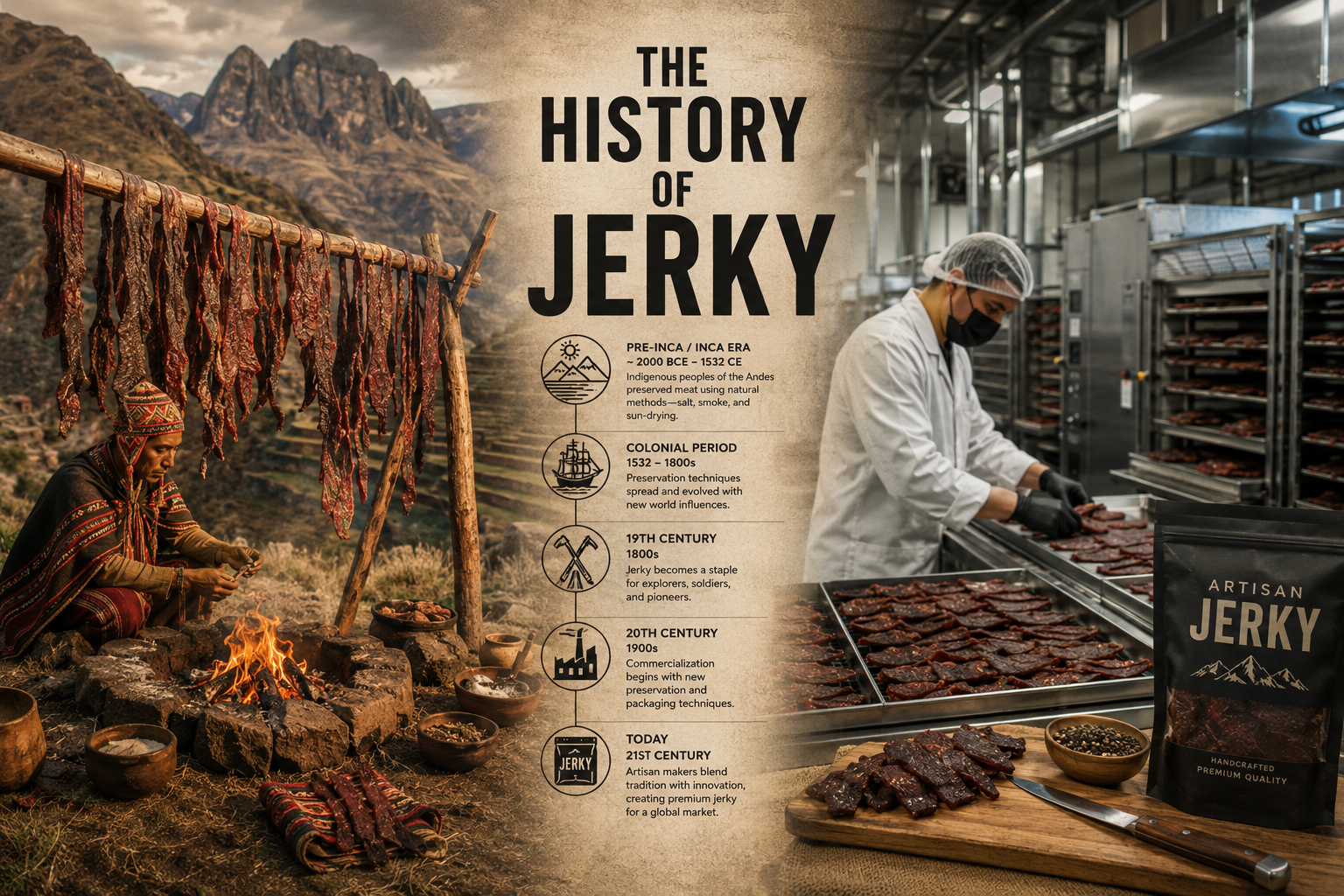
The cultural roots of jerky go much deeper than 2012. The word “jerky” derives from the Quechua word “ch’arki,” which translates roughly to “to burn meat.” Indigenous peoples in South America used this technique for centuries to preserve protein during long journeys and harsh winters. [2]
Key milestones in jerky’s history:
- Pre-colonial Americas: Quechua-speaking peoples in the Andes dried llama and alpaca meat as a preservation staple.
- Colonial expansion: European settlers adopted and adapted drying techniques using beef and venison.
- 20th century: Commercial jerky production scaled up, with brands like Jack Link’s making the snack widely accessible.
- 1996: NASA added jerky to astronaut food supplies for space missions, citing its lightweight design and long shelf life. [3]
- 2012: National Jerky Day officially established.
- Present: The artisan jerky market has expanded significantly, with hundreds of small-batch producers operating across the country.
Other cultures developed their own versions independently. South Africa has biltong, Ethiopia has quant’a, and Southeast Asia has a dried meat product called dendeng. Each reflects local spices and drying methods, but the core concept is identical. [1]
Best Types of Jerky to Try This Year
Beef jerky remains the dominant variety, but 2026 offers a broader range than ever. The best type depends on dietary goals, flavor preferences, and budget.
| Jerky Type | Protein per oz | Typical Flavor Profile | Best For |
|---|---|---|---|
| Beef (top round) | 9-11g | Savory, smoky, peppery | General snacking, keto |
| Turkey | 10-12g | Milder, slightly sweet | Lower fat diets |
| Salmon | 8-10g | Smoky, briny, rich | Omega-3 seekers |
| Pork | 8-10g | Sweet, spiced, teriyaki | Flavor variety |
| Mushroom (vegan) | 2-4g | Umami, earthy | Plant-based diets |
| Soy/seitan (vegan) | 6-9g | Bold, marinated | Vegan protein needs |
Choose beef if maximum protein density and classic flavor are priorities. Choose turkey if fat content is a concern. Choose plant-based options if animal products are off the table.
Is Jerky Healthy or Bad for You
Jerky is a nutrient-dense snack that is high in protein and low in fat, making it a solid option for health-conscious consumers when chosen carefully. [1] However, many commercial varieties contain high sodium levels and added sugars, which can be a concern for people managing blood pressure or blood sugar.
What to look for on the label:
- Sodium under 400mg per serving is a reasonable target
- Sugar under 5g per serving for low-carb diets
- Short ingredient lists with recognizable items
- No nitrates or nitrites if avoiding preservatives
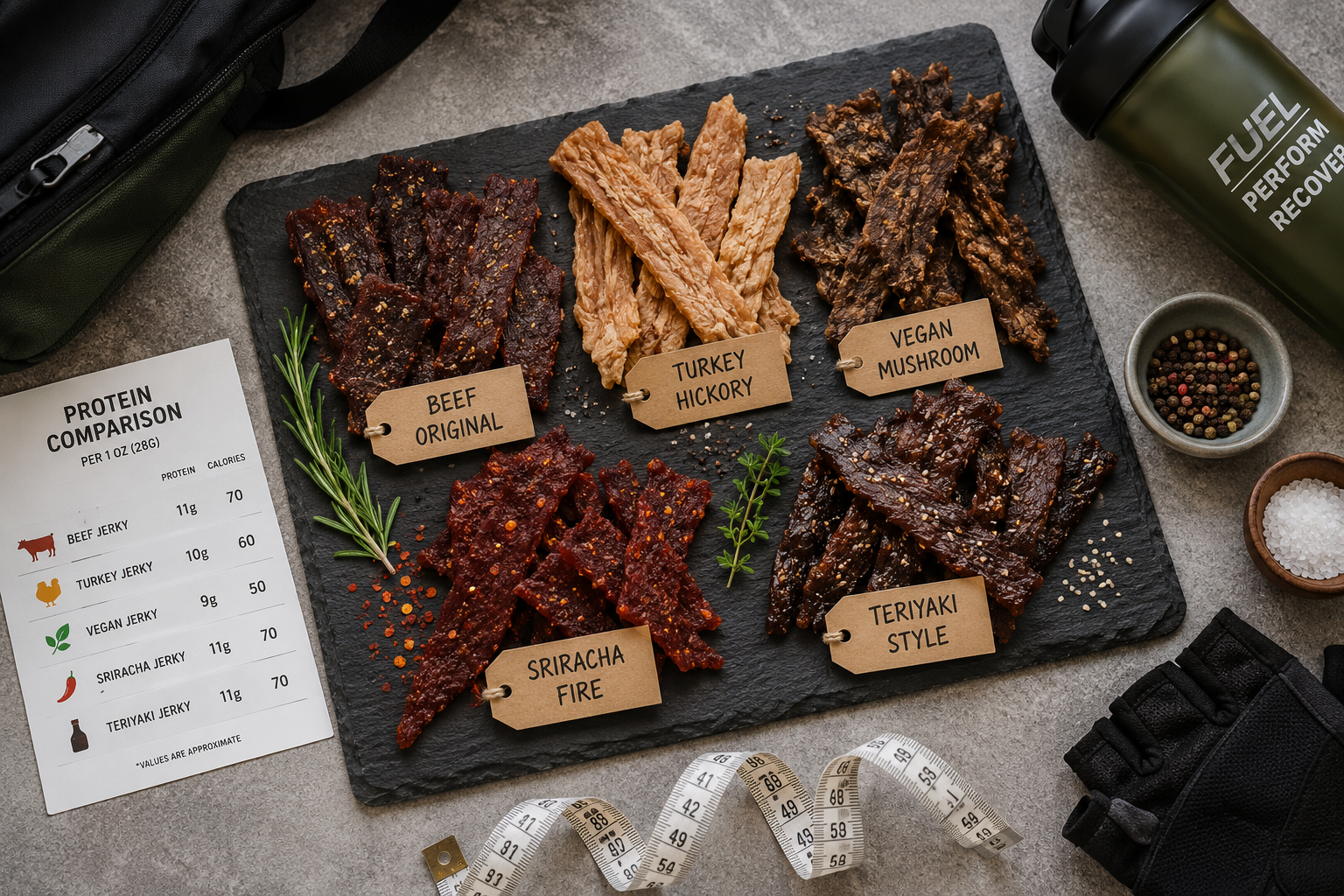
Jerky is not a complete meal replacement, but it works well as a between-meal protein source. A typical 1 oz serving delivers roughly 9 to 11 grams of protein with fewer than 100 calories, depending on the brand and cut.
Jerky for Keto Diet and Athletes
Jerky fits naturally into both ketogenic and high-protein athletic diets, provided the right product is selected. For keto, the key is choosing jerky with zero or near-zero added sugar and minimal carbohydrates per serving. Many beef and turkey jerkies meet this standard, but teriyaki and honey-glazed varieties often do not.
For athletes, jerky offers a portable, shelf-stable protein hit that requires no refrigeration. It is particularly useful during travel, outdoor training, or as a post-workout snack when a full meal is not available.
Athlete-friendly criteria:
- At least 9g of protein per 1 oz serving
- Low sugar (under 3g per serving for keto)
- No artificial fillers or excessive additives
- Compact packaging for gym bags or trail packs
Vegan Jerky Alternatives
Vegan jerky is a real and growing product category, not just a niche curiosity. Plant-based versions use mushrooms, soy protein, seitan, jackfruit, or coconut as the base, then apply similar marinades and drying processes to replicate the chewy, savory experience of traditional jerky.
Mushroom jerky, particularly made from king oyster or shiitake varieties, delivers a strong umami flavor and a satisfying texture. Soy-based and seitan jerkies come closest to matching the protein content of beef or turkey options.
Vegan jerky works well for people who want the snacking convenience of jerky without animal products. The protein content is generally lower than meat-based options, so portion planning matters for those using it as a primary protein source.
How to Make Homemade Beef Jerky
Making beef jerky at home is straightforward and requires no specialized equipment beyond a dehydrator or a standard oven. The process takes roughly 6 to 8 hours of drying time.
Basic homemade beef jerky method:
- Choose the cut: Top round, bottom round, or flank steak work best. Trim all visible fat.
- Slice thin: Cut against the grain into strips about 1/4 inch thick. Partially freezing the meat for 30 minutes makes slicing easier.
- Marinate: Combine soy sauce, Worcestershire sauce, black pepper, garlic powder, and a small amount of brown sugar. Marinate strips for 6 to 24 hours in the refrigerator.
- Dry: Arrange strips on dehydrator trays or oven racks. Dehydrate at 160°F (71°C) for 4 to 6 hours, or bake in an oven at 170°F for 6 to 8 hours with the door slightly ajar.
- Test for doneness: Properly dried jerky bends without breaking and shows no moist spots in the center.
- Store: Keep in an airtight container at room temperature for up to 2 weeks, or refrigerate for up to 2 months.
Common mistakes when making jerky:
- Slicing too thick, which leads to uneven drying and spoilage risk
- Skipping the fat trim, which causes rancidity during storage
- Drying at too low a temperature, which can leave unsafe moisture levels
- Over-marinating in high-acid mixtures, which breaks down texture
How Much Does Artisan Jerky Cost
Artisan jerky typically costs between $8 and $20 for a 3 to 4 oz bag, compared to $4 to $8 for mass-market brands at the same size. The price difference reflects higher-quality meat cuts, small-batch production, premium spices, and often cleaner ingredient lists.
Factors that drive up artisan jerky prices:
- Grass-fed or pasture-raised meat sourcing
- Exotic proteins (elk, bison, wagyu, salmon)
- Handcrafted small-batch production
- Specialty flavors requiring premium ingredients
For budget-conscious buyers, mass-market brands like Jack Link’s or Oberto offer consistent quality at lower price points. For gifting or special occasions like June 12 Jerky Day, artisan options from local producers or specialty online retailers make a stronger impression.
Which Jerky Brands Are Most Popular
The most recognized jerky brands in the U.S. market include Jack Link’s, Oberto, Old Wisconsin, Krave, and Country Archer. Jack Link’s holds the largest market share and was one of the founders of National Jerky Day itself. [1]
Krave and Country Archer are well-regarded in the premium segment, offering cleaner labels and more adventurous flavors. For plant-based options, brands like Louisville Vegan Jerky Co. and Primal Spirit Foods have built strong followings.
Weird Jerky Flavors People Actually Like
Beyond classic peppered beef, the jerky market has expanded into genuinely unusual territory. Several unconventional flavors have developed real consumer followings.
Popular unexpected jerky flavors:
- Sriracha honey: Sweet heat combination that balances well with beef
- Maple bourbon: Works particularly well with pork and turkey bases
- Dill pickle: Tangy and briny, a cult favorite among snack enthusiasts
- Pineapple habanero: Tropical sweetness with a sharp finish
- Coffee rub: Dark, earthy, and savory on beef or bison
- Bacon jalapeño: Layered smokiness with moderate heat
These flavors are especially popular as limited-edition releases around June 12 Jerky Day, when brands use the holiday to launch new products and generate social media attention.
Is Turkey Jerky Better Than Beef Jerky
Turkey jerky is not objectively better than beef jerky, but it has specific advantages that make it the right choice for certain people. Turkey is naturally leaner than beef, so turkey jerky typically contains less saturated fat per serving. It also tends to be milder in flavor, which some consumers prefer.
Beef jerky generally wins on flavor depth, protein density per calorie, and market variety. Turkey jerky wins for lower fat content and a lighter taste profile.
Choose turkey jerky if: Fat intake is a priority concern, or a milder flavor is preferred. Choose beef jerky if: Maximum flavor, protein variety, or keto-friendly options are the goal.
How to Celebrate June 12 Jerky Day
June 12 Jerky Day is best celebrated with a combination of tasting, learning, and sharing. The holiday does not require elaborate planning to be meaningful.
Practical ways to mark the day:
- Visit a local butcher or specialty food shop and pick up a variety of jerky types to compare
- Order from an artisan producer online and try a flavor outside your usual rotation
- Make a batch of homemade jerky using the method outlined above
- Share jerky with coworkers, friends, or family as a simple food gift
- Look for brand promotions and discounts, which are common on June 12 each year
- Explore global jerky equivalents like biltong or quant’a to understand the snack’s worldwide reach [1]
For those interested in the artisan side, National Craft Jerky Day on November 27 provides a second annual opportunity to support small-batch producers specifically. [5]
FAQ
What date is National Jerky Day? National Jerky Day is celebrated every year on June 12. In 2026, it falls on a Friday.
Who created National Jerky Day? Jack Link’s Beef Jerky and the Wisconsin Beef Council established National Jerky Day in 2012. [1]
Where does the word “jerky” come from? The word comes from the Quechua word “ch’arki,” meaning “to burn meat.” It reflects an ancient South American meat preservation technique. [2]
Is jerky good for weight loss? Jerky can support weight management as a high-protein, low-calorie snack, but high-sodium varieties may cause water retention. Choosing low-sugar, low-sodium options is advisable.
How long does homemade jerky last? Properly dried homemade jerky lasts up to 2 weeks at room temperature in an airtight container, or up to 2 months when refrigerated.
Can vegans eat jerky? Yes. Vegan jerky made from mushrooms, soy, seitan, or jackfruit is widely available and provides a similar snacking experience without animal products.
Is jerky allowed on a keto diet? Most plain or peppered beef and turkey jerkies are keto-friendly. Avoid teriyaki, honey, or sweet-glazed varieties, which typically contain significant added sugars.
Why did NASA include jerky in astronaut meals? NASA added jerky to astronaut food supplies in 1996 because it is lightweight, shelf-stable, and nutrient-dense, making it practical for space missions. [3]
What is the difference between jerky and biltong? Both are dried meats, but biltong (from South Africa) is typically air-dried rather than heat-dried, uses vinegar in the curing process, and is cut thicker. Jerky is usually smoked or oven-dried and sliced thinner.
Is there a National Craft Jerky Day? Yes. National Craft Jerky Day is celebrated on November 27 each year, with a focus on artisanal and small-batch jerky producers. [5]
How much protein is in one serving of jerky? A standard 1 oz serving of beef or turkey jerky typically contains 9 to 12 grams of protein, depending on the brand and cut used.
What is the best cut of beef for homemade jerky? Top round is the most commonly recommended cut for homemade jerky because it is lean, affordable, and easy to slice uniformly.
Conclusion
June 12 Jerky Day is more than a novelty food holiday. It connects a simple snack to thousands of years of human ingenuity around food preservation, from Andean mountain communities to modern astronauts in orbit. Whether the goal is to explore artisan varieties, start a homemade batch, or simply grab a bag of a new flavor at the store, the day offers a concrete reason to engage with one of the world’s oldest portable foods.
Actionable next steps for June 12, 2026:
- Pick up at least two jerky varieties you have never tried before and compare them side by side.
- Check brand websites on June 12 for limited-edition flavors and promotional discounts.
- If homemade jerky is on the agenda, start the marinade the night before so it is ready to dry on the morning of the 12th.
- Consider ordering from an artisan producer to support small-batch makers who drive the most interesting flavor innovation in the category.
- Mark November 27 on the calendar for National Craft Jerky Day as a follow-up celebration focused on handcrafted production. [5]
References
[1] National Jerky Day – https://nationaltoday.com/national-jerky-day/?utm_source=openai
[2] National Jerky Day June 12 – https://nationaldaycalendar.com/national-day/national-jerky-day-june-12?utm_source=openai
[3] National Jerky Day – https://www.holidayinsights.com/moreholidays/june/national-jerky-day.htm?utm_source=openai
[4] National Jerky Day 1935 – https://www.wikidates.org/daystill/national-jerky-day_1935.html?utm_source=openai
[5] National Craft Jerky Day November 27 – https://nationaldaycalendar.com/national-day/national-craft-jerky-day-november-27?utm_source=openai
