

Last updated: June 5, 2026
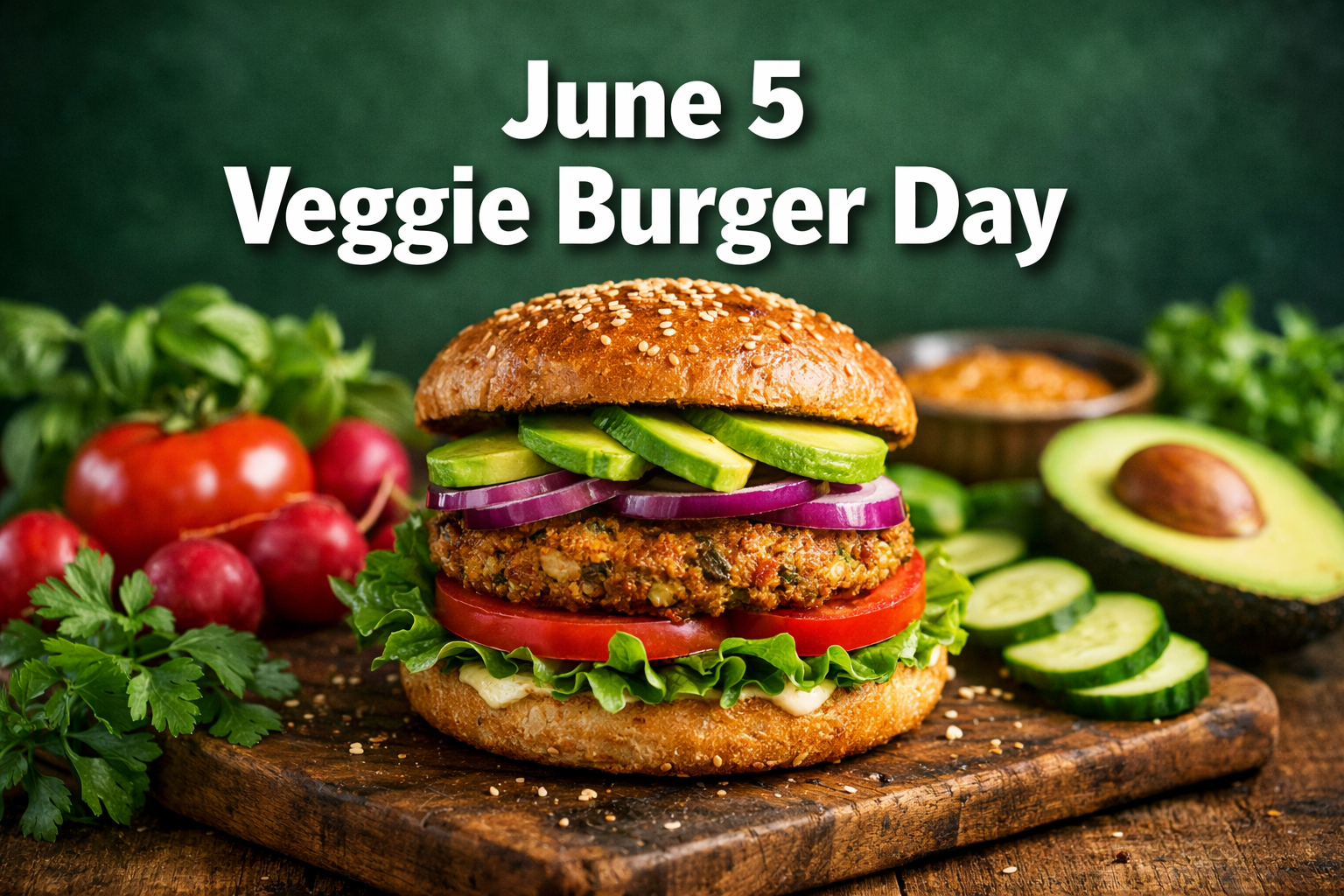
Quick Answer: June 5 Veggie Burger Day is an annual food observance held every June 5 that celebrates the plant-based burger as a healthier and more environmentally friendly alternative to traditional meat burgers. Founded in 2017 by Amy’s Kitchen, the day encourages people to try, cook, and share veggie burgers while raising awareness about the environmental and health benefits of plant-based eating. It also coincides with World Environment Day, making its green message doubly relevant.
Key Takeaways
- June 5 Veggie Burger Day was established in 2017 by Amy’s Kitchen, a vegetarian food company [1]
- The day falls on June 5 and aligns with World Environment Day [4]
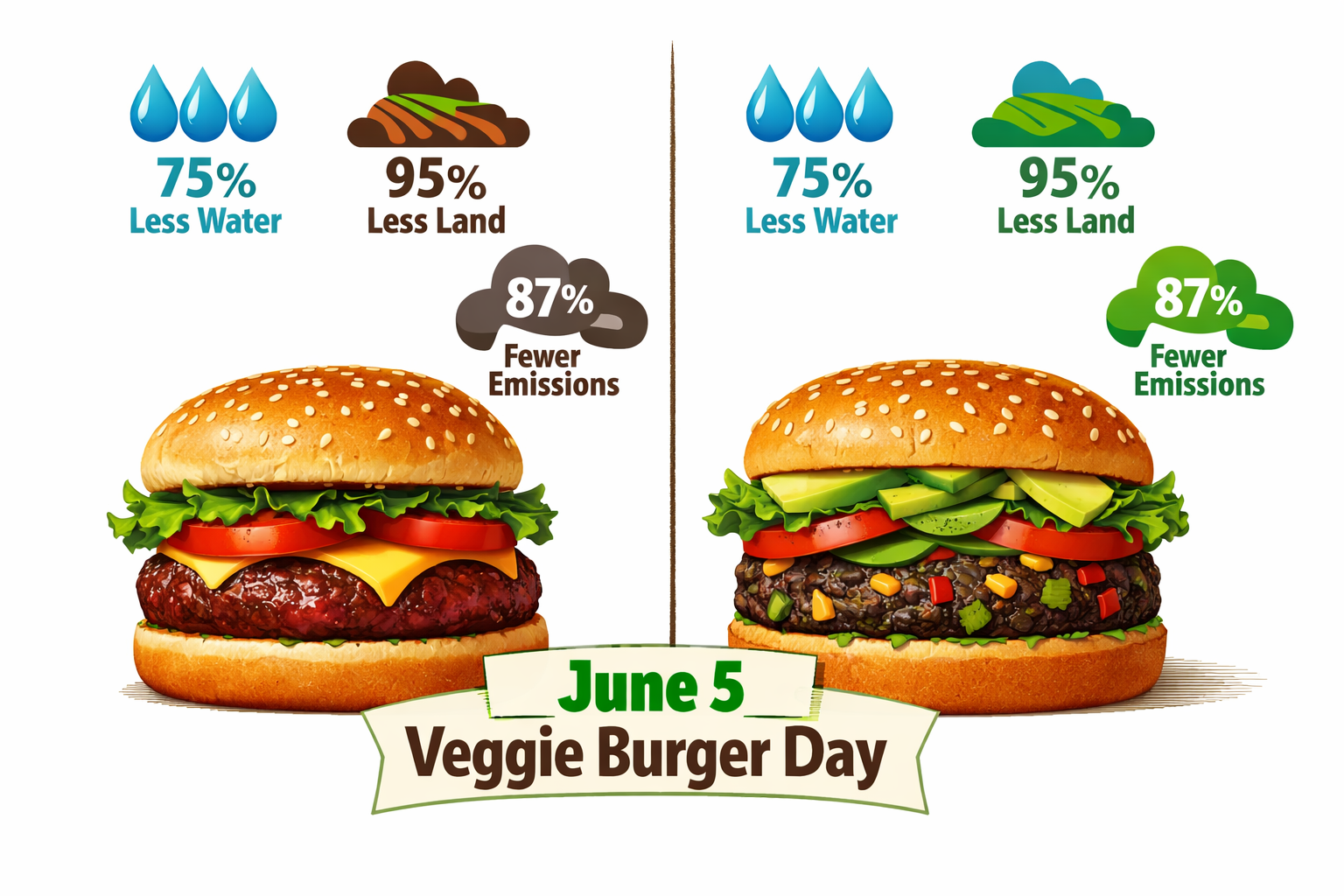
- Plant-based burger production uses 75% less water, 95% less land, and generates 87% fewer greenhouse gas emissions than beef burgers [2]
- The first commercial veggie burger, the “VegeBurger,” was sold in London in 1982 [3]
- Veggie burgers are made from ingredients like beans, lentils, mushrooms, tofu, grains, and nuts [2]
- A pound of beans costs roughly $1.49 compared to about $4.05 for a pound of beef, making plant-based options more affordable [3]
- In 2019, 228 million veggie burgers were sold at quick-service restaurants in the U.S. [3]
- Veggie burgers suit a wide range of dietary needs, including vegan, vegetarian, and gluten-free diets
- Many restaurants and fast-food chains offer deals and promotions on June 5 to mark the occasion
- Kids and meat lovers alike can enjoy veggie burgers with the right preparation and toppings
What Exactly Is National Veggie Burger Day?
National Veggie Burger Day is an annual food observance celebrated on June 5 each year. It was founded in 2017 by Amy’s Kitchen, a well-known vegetarian food brand, to encourage people to explore plant-based burgers and recognize their positive impact on personal health and the environment [1].
The day carries extra significance because it coincides with World Environment Day, a United Nations-recognized global event also held on June 5. That overlap is intentional: plant-based diets are directly linked to lower carbon footprints and reduced strain on natural resources [4].
A brief timeline of the veggie burger:
- 1982: Gregory Sams introduces the first commercial veggie burger, the “VegeBurger,” in London [3]
- 1990s: Frozen veggie burger brands begin appearing in U.S. grocery stores
- 2019: 228 million veggie burgers sold at U.S. quick-service restaurants in a single year [3]
- 2017: Amy’s Kitchen officially establishes June 5 Veggie Burger Day [1]
- 2026: The observance continues to grow as plant-based eating becomes mainstream
How Is a Veggie Burger Different from a Regular Burger?
A veggie burger replaces the meat patty with a patty made from plant-based ingredients such as beans, lentils, grains, mushrooms, tofu, or nuts. Unlike beef burgers, veggie burgers contain no animal flesh, which changes their nutritional profile, environmental footprint, and cooking behavior.
Key differences at a glance:
| Feature | Beef Burger | Veggie Burger |
|---|---|---|
| Main protein source | Animal muscle | Beans, legumes, grains, tofu |
| Saturated fat | Higher | Generally lower |
| Fiber content | None | Moderate to high |
| Cholesterol | Present | None (in most) |
| Water used in production | High | 75% less [2] |
| Land used in production | High | 95% less [2] |
| Greenhouse gas emissions | High | 87% less [2] |
| Average cost per pound | ~$4.05 | ~$1.49 (bean-based) [3] |
Veggie burgers are also free from hormones, carcinogens, and trans fats commonly associated with processed meat, while being rich in fiber and micronutrients [2].
Where Can You Get Free or Discounted Veggie Burgers on June 5?
Many restaurants and fast-food chains run promotions on June 5 Veggie Burger Day to mark the occasion. Deals vary by year and location, so checking directly with restaurants is the best approach.
Where to look for June 5 deals:
- Fast-food chains with plant-based menu items (such as those offering Impossible or Beyond Burger patties) often run limited-time discounts
- Local vegetarian and vegan restaurants frequently host special menus or prix-fixe deals
- Grocery stores sometimes discount veggie burger products, especially from brands like Amy’s, MorningStar Farms, Gardein, and Dr. Praeger’s
- Social media is a reliable source: search #VeggieBurgerDay on Instagram and X (formerly Twitter) on June 5 to find real-time promotions [1]
Tip: Sign up for email lists from plant-based brands before June 5. Brands that founded or actively support the day often send coupon codes to subscribers.
Are Veggie Burgers Actually Healthy?
For most people, veggie burgers are a healthy choice, but the answer depends on the specific product and how it is prepared. Whole-food veggie burgers made from beans, vegetables, and grains tend to be the most nutritious. Highly processed plant-based burgers that mimic meat closely can be high in sodium and additives.
Health benefits of veggie burgers:
- High in dietary fiber, which supports digestive health
- Free from hormones and carcinogens associated with processed red meat [2]
- Contain no dietary cholesterol (in plant-only versions)
- Rich in vitamins and minerals from vegetables, legumes, and grains
- Lower in saturated fat than most beef burgers
Watch out for:
- High sodium content in some commercial brands (check the label)
- Highly processed ingredients in “bleeding” plant-based patties designed to mimic beef
- Added oils and fillers that can raise calorie counts
Choose a whole-food veggie burger if the goal is maximum nutrition. Choose a processed plant-based burger if the goal is transitioning away from meat while keeping a familiar taste experience.
Are Veggie Burgers Good for Weight Loss?
Veggie burgers can support weight loss as part of a balanced diet, primarily because they tend to be lower in calories and saturated fat than beef burgers, while being higher in fiber, which promotes fullness. However, not all veggie burgers are low-calorie, so reading labels matters.
A black bean or lentil burger on a whole-grain bun with vegetables is a genuinely filling, lower-calorie meal. Pairing it with fries and a sugary sauce eliminates most of the calorie advantage.
What Protein Sources Are in Most Veggie Burgers?
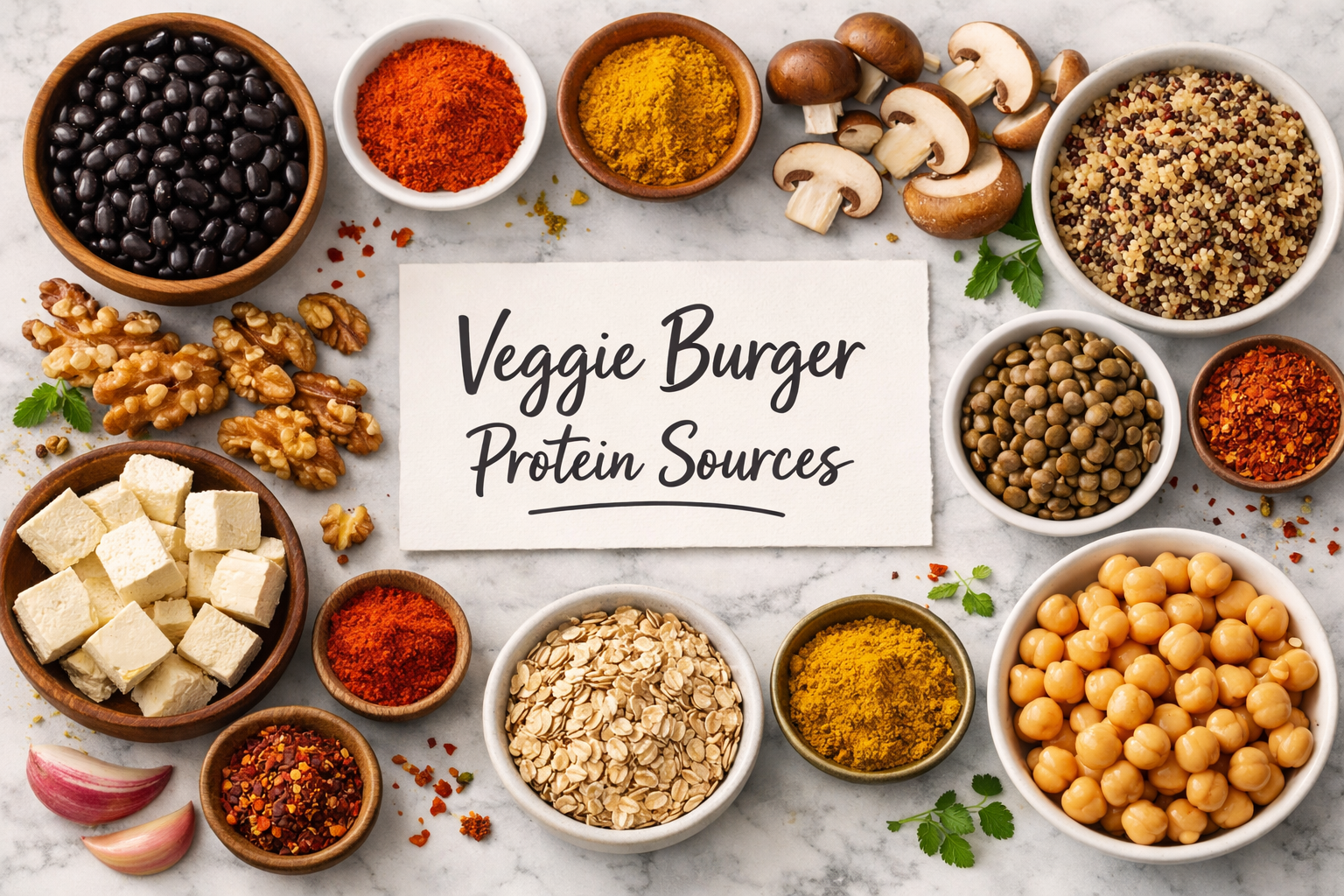
Most veggie burgers get their protein from one or more plant-based sources. The specific ingredients determine the flavor, texture, and nutritional profile of the patty [2].
Common protein sources in veggie burgers:
- Black beans and kidney beans — hearty texture, earthy flavor
- Chickpeas (garbanzo beans) — mild, versatile
- Lentils — soft texture, high iron content
- Tofu and tempeh — soy-based, complete protein
- Quinoa — complete protein, slightly nutty
- Mushrooms — umami-rich, meaty texture (often combined with other proteins)
- Walnuts and other nuts — added texture and healthy fats
- Pea protein isolate — used in many commercial “bleeding” plant-based burgers
Which Brands Make the Best Veggie Burgers?
Several well-established brands dominate the veggie burger market, each with a different approach to flavor and texture.
Top veggie burger brands in 2026:
- Amy’s Kitchen — the founder of June 5 Veggie Burger Day; known for organic, whole-food patties [1]
- MorningStar Farms — widely available, broad product range
- Gardein — popular for meat-like texture
- Dr. Praeger’s — vegetable-forward, whole-food ingredients
- Beyond Burger — designed to closely mimic beef; higher protein
- Impossible Burger — uses heme protein for a meat-like experience; widely available in restaurants
Choose Amy’s or Dr. Praeger’s if the priority is clean, whole-food ingredients. Choose Beyond or Impossible if the goal is convincing a skeptical meat eater to make the switch.
Are Veggie Burgers Good for People with Dietary Restrictions?
Veggie burgers are naturally suitable for vegetarians and vegans, but people with other dietary restrictions need to check labels carefully. Most bean- and vegetable-based burgers are dairy-free and egg-free, but some commercial brands add egg as a binder.
Dietary compatibility overview:
- Vegan: Most whole-food veggie burgers qualify; check for egg or dairy binders
- Gluten-free: Many brands offer certified gluten-free options; avoid wheat-based patties
- Nut allergies: Some patties contain walnuts or cashews; always read labels
- Soy-free: Avoid tofu- or tempeh-based burgers; bean and grain patties are usually soy-free
- Low-sodium: Look for brands with under 400mg sodium per serving
Community food organizations also recognize veggie burgers as a nutritious option for families with limited food budgets, given their low cost and high nutrient density [5].
Do Veggie Burgers Taste Good for Meat Lovers?
Many meat lovers enjoy veggie burgers when they are prepared well and paired with bold toppings. The key is managing expectations: a black bean burger does not taste exactly like beef, but it can be deeply satisfying in its own right.
What helps meat lovers enjoy veggie burgers:
- Use umami-rich ingredients like mushrooms, soy sauce, or smoked paprika in the patty
- Toast the bun for added texture
- Load up on toppings: sharp cheddar (or vegan cheese), caramelized onions, avocado, pickles
- Try Beyond or Impossible patties first if the goal is a beef-like experience
- Avoid overcooking, which makes plant-based patties dry and crumbly
Common Mistakes When Cooking Veggie Burgers
Veggie burgers require different handling than beef patties. The most common mistake is treating them exactly like meat.
Mistakes to avoid:
- Cooking on too-high heat — plant-based patties burn on the outside before warming through
- Skipping the binder — homemade patties need an egg, flax egg, or mashed potato to hold together
- Making patties too thick — thinner patties cook more evenly and hold together better
- Not chilling the patty before cooking — refrigerating formed patties for 30 minutes helps them stay intact
- Overcrowding the pan — reduces heat and causes steaming instead of searing
- Forgetting to season — plant proteins need more seasoning than beef to taste bold
How Do Restaurants Celebrate Veggie Burger Day?
Restaurants mark June 5 Veggie Burger Day in several ways, from limited-time menu additions to community events. Plant-based restaurants often host cook-offs or tasting events. Mainstream chains use the day to promote their existing plant-based options with discounts or social media campaigns [1].
Food banks and community organizations also use the occasion to highlight nutritious, affordable plant-based meals for families in need [5].
Can Kids Enjoy Veggie Burgers?
Yes, most children enjoy veggie burgers, especially when introduced with familiar toppings and presented in a fun way. Bean-based and grain-based patties are mild in flavor and easy to customize. For picky eaters, starting with a mild patty (like a chickpea or sweet potato burger) and adding familiar condiments works well.
Veggie burgers are also a practical way to introduce more fiber and plant protein into a child’s diet without a dramatic change to meal structure.
How to Celebrate June 5 Veggie Burger Day
June 5 Veggie Burger Day is easy to participate in, whether cooking at home or dining out.
Actionable ways to celebrate:
- Cook a homemade veggie burger using black beans, oats, garlic, and smoked paprika
- Host a veggie burger cook-off with friends or family and vote on the best recipe
- Visit a local restaurant that offers plant-based options and try something new
- Share your meal on social media using #VeggieBurgerDay to join the global conversation [1]
- Donate to a local food bank in the spirit of community nutrition [5]
- Try a brand you have never purchased before from the grocery store
FAQ
Q: When is June 5 Veggie Burger Day? A: June 5 Veggie Burger Day is observed annually on June 5. It coincides with World Environment Day.
Q: Who started National Veggie Burger Day? A: Amy’s Kitchen, a vegetarian food company, founded the observance in 2017 to promote plant-based eating and environmental awareness [1].
Q: What was the first commercial veggie burger? A: The “VegeBurger,” created by Gregory Sams, was introduced in London in 1982 and is widely recognized as the first commercial veggie burger [3].
Q: Are veggie burgers vegan? A: Most are, but not all. Some commercial brands use egg or dairy as binders. Always check the label if following a strict vegan diet.
Q: How many veggie burgers are sold in the U.S. each year? A: In 2019, 228 million veggie burgers were sold at quick-service restaurants in the U.S. alone, reflecting strong and growing demand [3].
Q: Are veggie burgers cheaper than beef burgers? A: Generally yes. A pound of beans costs approximately $1.49 compared to roughly $4.05 for a pound of beef, making bean-based veggie burgers significantly more affordable [3].
Q: Can veggie burgers be grilled? A: Yes, but they require care. Firmer patties (black bean, lentil, or commercial frozen patties) grill best. Chilling the patty before grilling and using a well-oiled grate prevents sticking and breaking.
Q: How much less water does a veggie burger use to produce? A: Producing plant-based burgers uses approximately 75% less water than producing traditional beef burgers [2].
Q: Are veggie burgers good for the environment? A: Yes. Compared to beef burgers, plant-based burgers generate 87% fewer greenhouse gas emissions, use 95% less land, and require 75% less water to produce [2].
Q: What is the hashtag for Veggie Burger Day? A: The official hashtag is #VeggieBurgerDay, used across social media platforms to share meals and promotions [1].
Conclusion
June 5 Veggie Burger Day is more than a novelty food holiday. It sits at the intersection of personal health, environmental responsibility, and culinary creativity. Whether someone is a lifelong vegetarian, a curious omnivore, or a committed meat lover willing to try something new for one meal, the day offers a low-stakes, high-reward opportunity to explore plant-based eating.
Actionable next steps for June 5, 2026:
- Pick one veggie burger recipe or brand to try on June 5
- Check local restaurant apps and social media for promotions using #VeggieBurgerDay
- If cooking at home, chill the patty before cooking and season generously
- Share the experience online to contribute to the broader conversation about plant-based food
- Consider making one plant-based meal per week a regular habit beyond June 5
The environmental case is clear, the health benefits are well-documented, and the cost savings are real. June 5 is simply the best day to start.
References
[1] National Veggie Burger Day June 5 – https://nationaldaycalendar.com/celebrations/national-veggie-burger-day-june-5?utm_source=openai
[2] National Veggie Burger Day – https://web-holidays.com/blog/national-veggie-burger-day?utm_source=openai
[3] National Veggie Burger Day – https://nationaltoday.com/national-veggie-burger-day/?utm_source=openai
[4] June5 – https://www.foodreference.com/html/html/june5.html?utm_source=openai
[5] Thursday June 5 National Veggie Burger Day – https://fredfood.org/post/Thursday-June-5-National-Veggie-Burger-Day?utm_source=openai
