

Last updated: June 29, 2026
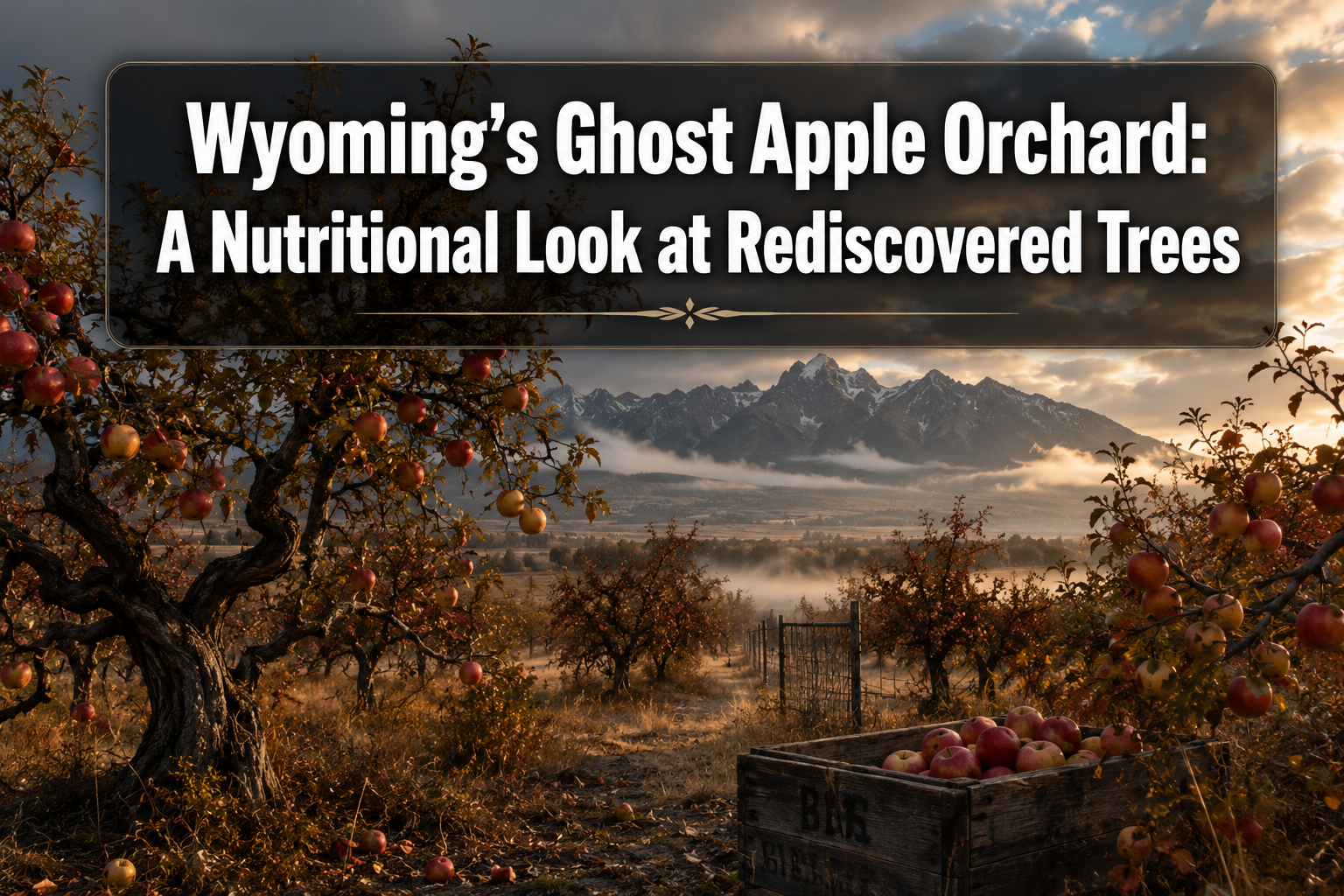
Quick Answer: Wyoming’s ghost apple orchards are collections of heritage apple trees, many planted by homesteaders in the 1800s and early 1900s, that were largely forgotten until researchers began rediscovering them across the state. These trees carry unique genetic profiles, survive in harsh climates without modern inputs, and are now being studied for their nutritional value and used by local cider producers. Wyoming’s Ghost Apple Orchard: A Nutritional Look at Rediscovered Trees is a growing area of interest for food historians, nutritionists, and agricultural researchers alike.
Key Takeaways
- Researchers have identified over 150 unique genetic fingerprints from Wyoming apple trees that don’t match any known commercial cultivars, suggesting genuinely lost varieties [1]
- Jonathan Magby and his team used DNA fingerprinting to analyze 510 trees at 91 locations across 19 Wyoming cities, including Lander, Sheridan, Buffalo, and Casper [1]
- About one-third of surviving trees are the ‘Wealthy’ and ‘Haralson’ varieties, both bred in Minnesota for cold-climate resilience [1]
- Heritage apples generally contain higher levels of polyphenols and antioxidants than many modern commercial varieties bred for appearance and shelf life
- Central Wyoming College is actively restoring an orchard originally planted in the 1800s, with community volunteers contributing over 470 hours of labor [2]
- Local cider producers, including Farmstead Cider in Jackson Hole, are already using these rediscovered varieties to create Wyoming-made products [1]
- A 2019 study identified 47 known cultivars among Wyoming’s heritage trees, with ‘Wealthy’ being the most frequently cited in historic literature [3]
- Early 20th-century Wyoming orchards once held up to 1,775 apple trees and 180 different cultivars at a single site [2]
What Is Wyoming’s Ghost Apple Orchard and Why Does It Matter
Wyoming’s ghost apple orchards are not a single location but a scattered network of heritage apple trees found on old homestead sites, abandoned farms, and historic nursery grounds across the state. They are called “ghost orchards” because they represent the remnants of a once-thriving agricultural culture that largely disappeared from public memory. These trees survived decades of neglect, harsh winters, and drought without any human care.
The significance of Wyoming’s Ghost Apple Orchard: A Nutritional Look at Rediscovered Trees goes beyond nostalgia. These trees may carry genetic traits, flavor profiles, and nutritional characteristics that have been lost from the commercial food supply. Researchers, cider makers, and community organizations are now working together to document, preserve, and use what remains.
Where Is the Ghost Apple Orchard in Wyoming Located
There is no single ghost apple orchard in Wyoming. The rediscovered trees are spread across at least 91 locations in 19 cities statewide, including Lander, Sheridan, Buffalo, and Casper [1]. Many are found on former homestead properties, in old town parks, or near historic irrigation ditches.
One of the most active restoration sites is at Central Wyoming College in Riverton, where an orchard originally planted in the 1800s is being brought back to productivity [2]. This site serves as both a research hub and a community education center for heritage apple cultivation.
Why Are They Called Ghost Apples
The term “ghost orchard” refers to orchards that were planted, thrived, and then disappeared from active use, leaving behind trees that continue to grow and fruit with no one tending them. The “ghost” label captures both the eerie persistence of these trees and the lost history they represent.
In Wyoming’s case, many of these orchards were planted by homesteaders and early settlers who relied on fruit trees for food and trade. When farms were abandoned or consolidated, the orchards were left behind. The trees kept growing, essentially invisible to modern agriculture, until researchers began looking for them.
What’s the History of Wyoming’s Ghost Apple Orchard
In the early 20th century, Wyoming had a surprisingly active apple-growing culture. Some orchards held up to 1,775 trees and 180 different cultivars at a single location [2]. Settlers brought apple varieties from the Midwest and East Coast, selecting for cold hardiness and productivity in a challenging climate.
As agriculture industrialized and commercial fruit became widely available, small-scale orchard farming declined sharply. By mid-century, most of these orchards were forgotten. A 2019 study identified 47 known cultivars still surviving in the state, with the ‘Wealthy’ variety appearing most frequently in historic literature [3]. The broader DNA survey led by Jonathan Magby later found over 150 genetic profiles that don’t match any documented cultivar, suggesting that some varieties may be entirely unique to Wyoming [1].
Who Discovered Wyoming’s Ghost Apple Orchard
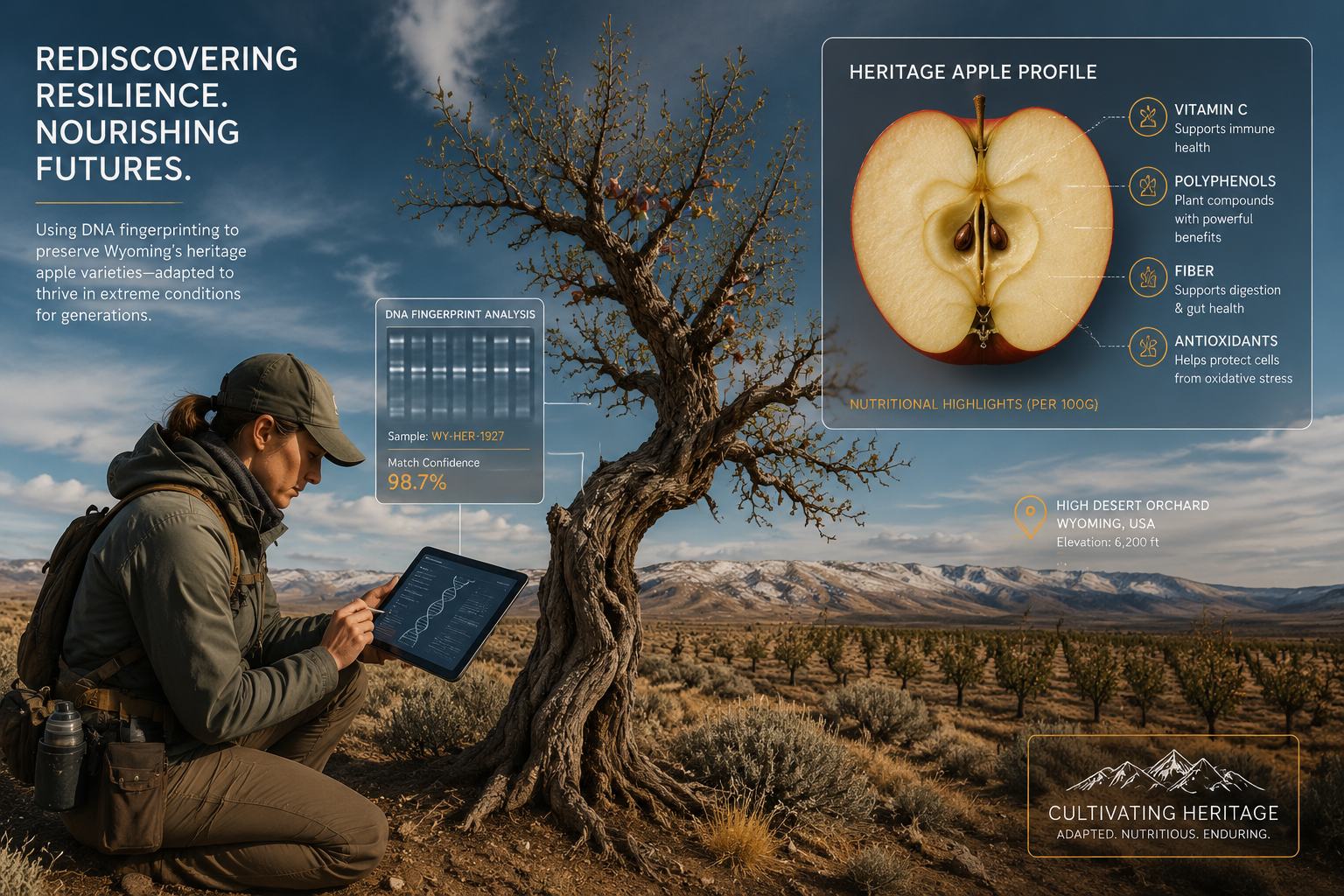
Jonathan Magby and his research team are credited with the most systematic rediscovery effort. Using DNA fingerprinting, a technique borrowed from forensic science, they analyzed 510 trees across 91 locations in 19 Wyoming cities [1]. Their work built on earlier research, including a 2019 peer-reviewed study that catalogued known cultivars still present in the state [3].
Dr. Steve Miller has also played a key role, leading educational workshops on pruning, grafting, and planting to help community members care for and propagate these trees [2]. The Wyoming Apple Project, supported by institutions including Central Wyoming College, has provided the organizational backbone for much of this work [4].
What Nutritional Benefits Do Ghost Apples Have
Heritage apples, including the varieties found in Wyoming’s ghost orchards, are generally richer in polyphenols, antioxidants, and dietary fiber than modern commercial apples bred primarily for uniform appearance and long shelf life. Specific nutritional analyses of Wyoming’s rediscovered varieties are still ongoing, but apples as a food group are well-documented sources of vitamin C, quercetin, and soluble fiber [4].
The key nutritional advantage of heritage varieties comes from their growing conditions. Trees that survive without pesticides, irrigation, or fertilizer tend to produce fruit with higher concentrations of stress-response compounds, including flavonoids and tannins. These compounds are associated with anti-inflammatory and antioxidant activity in human health research.
What makes these apples potentially more nutritious than store-bought options:
- Higher tannin content from low-input growing conditions
- Greater genetic diversity, which may translate to a wider range of phytonutrients
- No post-harvest wax coatings or extended cold storage that can degrade nutrient content
- Smaller fruit size in some heritage varieties, which means a higher skin-to-flesh ratio (the skin contains the majority of antioxidants)
How Do Ghost Apples Compare to Modern Apple Varieties
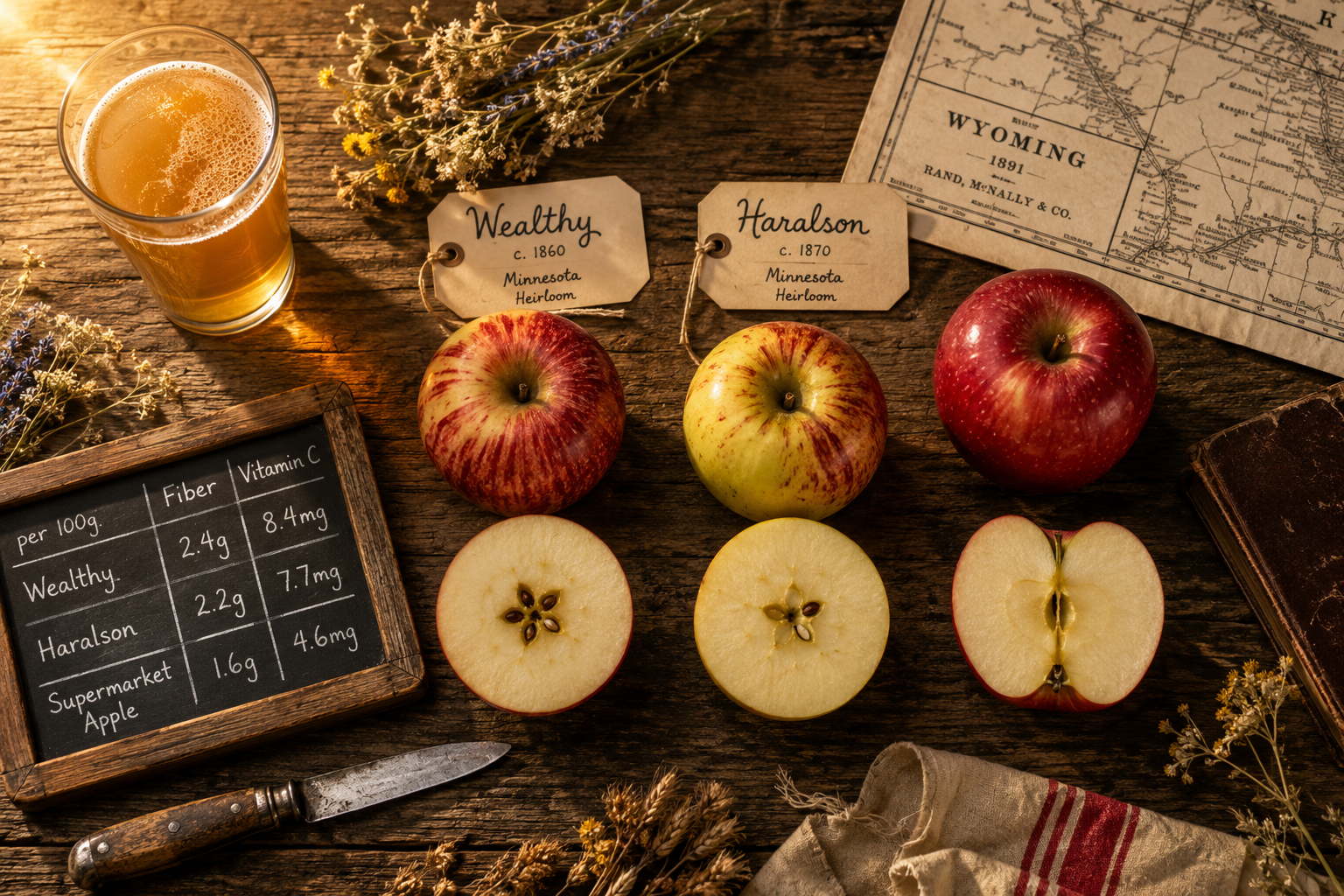
Modern commercial apples like Gala, Fuji, and Honeycrisp are bred for sweetness, visual appeal, and shelf stability. Heritage varieties like ‘Wealthy’ and ‘Haralson’, which make up roughly one-third of Wyoming’s surviving trees, were bred for cold hardiness and flavor complexity [1].
| Feature | Heritage Wyoming Apples | Commercial Supermarket Apples |
|---|---|---|
| Flavor profile | Tart, complex, tannic | Sweet, mild, uniform |
| Shelf life | Shorter, best used fresh or pressed | Extended via cold storage and coatings |
| Antioxidant content | Likely higher (stress-grown) | Moderate, varies by variety |
| Genetic diversity | High, including unidentified cultivars | Low, dominated by a few cultivars |
| Growing inputs | Minimal to none (surviving trees) | High pesticide and irrigation use |
| Commercial availability | Very limited | Widely available year-round |
Choose heritage varieties if the goal is nutritional density and flavor complexity. Choose commercial varieties if convenience and consistent sweetness are the priority.
What Makes Ghost Apples Nutritionally Unique
Wyoming’s Ghost Apple Orchard: A Nutritional Look at Rediscovered Trees reveals a key principle: trees that survive extreme conditions without human intervention often produce fruit with higher concentrations of protective compounds. Wyoming’s climate, cold winters, dry summers, and high altitude, creates significant physiological stress for apple trees. That stress triggers the production of polyphenols and tannins as a natural defense mechanism.
These same compounds are what make heritage cider apples so prized by craft producers. High tannin content gives cider structure and complexity that sweet dessert apples cannot provide. From a nutritional standpoint, tannins also have prebiotic properties that support gut health, though research in this specific area is still developing.
Are Ghost Apples Safe to Eat
Yes. Heritage apple varieties, including those found in Wyoming’s ghost orchards, are entirely safe to eat. They are the same species as any grocery store apple (Malus domestica) and carry no inherent health risks.
The one practical consideration is that trees growing without any management may have surface debris, bird damage, or insect activity on the fruit. Washing fruit thoroughly before eating is always recommended, and any visibly damaged sections should be removed. The absence of synthetic pesticide residue is actually a point in their favor for many consumers.
How Do Ghost Apples Taste Different from Regular Apples
Heritage varieties tend to be more tart, more tannic, and more complex in flavor than modern commercial apples. ‘Wealthy’ apples, for example, are known for a bright, wine-like acidity. ‘Haralson’ apples are firm and tart with a balanced sweetness that develops after a brief storage period.
Many of Wyoming’s unidentified cultivars, the 150-plus genetic profiles that don’t match known varieties, may have flavor characteristics that have never been formally documented. Cider producers like Farmstead Cider in Jackson Hole are essentially discovering these flavor profiles in real time as they press and ferment the fruit [1].
Can You Buy Ghost Apples from Wyoming Online
As of 2026, there is no established direct-to-consumer online market for Wyoming ghost orchard apples. The supply is limited, the harvest is inconsistent, and much of the fruit goes directly to research or local cider production.
The best way to access these apples or products made from them is through Wyoming-based cider houses, farmers markets, or orchard restoration events. Farmstead Cider in Jackson Hole is one producer actively working with heritage fruit [1]. Following local agricultural extension programs and the Central Wyoming College orchard project is the most reliable way to stay informed about availability [2].
Can You Visit the Ghost Apple Orchard in Wyoming
The Central Wyoming College orchard in Riverton is the most accessible public site connected to the ghost orchard restoration effort. The college has hosted community workshops, volunteer planting days, and educational events open to the public [2].
Other ghost orchard sites are on private property or in locations that require coordination with researchers to visit. Contacting the Wyoming Apple Project or Central Wyoming College directly is the recommended first step for anyone interested in a site visit or volunteer opportunity.
What Happened to the Ghost Apple Orchard Over Time and What’s Being Done Now
Wyoming’s heritage orchards declined sharply through the mid-20th century as commercial agriculture replaced small-scale homestead farming. Trees were left untended, many died, and the knowledge of what had been planted was largely lost.
The current restoration effort involves several parallel tracks:
- DNA documentation – Magby’s team is building a genetic library of surviving trees to preserve records of what exists [1]
- Physical restoration – Central Wyoming College has planted new trees, installed deer-proof fencing, and set up automated drip irrigation at its historic orchard site [2]
- Community engagement – Volunteers have contributed over 470 hours to restoration work, and workshops teach grafting and pruning skills to ensure knowledge transfer [2]
- Commercial use – Local cider producers are creating economic incentives to keep heritage apple cultivation viable [1]
Are Ghost Apples Better for You Than Store-Bought Apples
Heritage apples from Wyoming’s ghost orchards are likely more nutritionally dense than the average supermarket apple, primarily because of higher polyphenol and tannin content from stress-grown conditions. However, “better” depends on the specific variety, growing season, and how the fruit is handled after harvest.
For raw eating, a fresh heritage apple consumed shortly after picking will almost certainly outperform a commercial apple that has been in cold storage for months. For cider or juice production, the higher tannin content of heritage varieties creates a more complex and potentially more health-supportive product than juice made from sweet dessert apples alone.
The honest answer: heritage apples are not a superfood, but they represent a nutritionally richer option than most of what’s available in a standard grocery store, and they come with the added benefit of supporting local agricultural preservation.
Conclusion
Wyoming’s ghost apple orchards are more than a historical curiosity. They represent a living genetic library of apple varieties adapted to one of North America’s harshest growing climates, many of which carry nutritional and flavor profiles that have disappeared from the commercial food supply. The ongoing work by researchers like Jonathan Magby, institutions like Central Wyoming College, and producers like Farmstead Cider is turning a forgotten agricultural legacy into a viable, economically meaningful resource for the state.
Actionable next steps for readers interested in this topic:
- Contact Central Wyoming College to learn about volunteer opportunities or upcoming orchard events [2]
- Seek out Wyoming-made heritage ciders at local markets or directly from producers like Farmstead Cider in Jackson Hole [1]
- If you own property with old, unidentified apple trees in Wyoming, reach out to the Wyoming Apple Project or your county extension office for DNA identification assistance
- Support local food systems by choosing heritage or regionally grown fruit when available, as this creates the economic demand that makes orchard preservation financially sustainable
Wyoming’s Ghost Apple Orchard: A Nutritional Look at Rediscovered Trees is ultimately a story about what happens when communities choose to look backward in order to move forward. The fruit is already on the trees. The work now is making sure it doesn’t go to waste again.
FAQ
What are Wyoming’s ghost apple orchards? They are collections of heritage apple trees, many planted by homesteaders in the 1800s and early 1900s, that were abandoned and forgotten. Researchers have rediscovered them growing across 91 locations in 19 Wyoming cities, some carrying genetic profiles not found in any known cultivar database.
How many unidentified apple varieties have been found in Wyoming? Researchers have identified over 150 unique genetic fingerprints from Wyoming apple trees that don’t match any known cultivars, suggesting the presence of genuinely lost or undocumented varieties [1].
Are heritage apples more nutritious than commercial apples? Generally, yes. Heritage apples grown without pesticides or irrigation tend to have higher polyphenol and tannin content than commercial varieties bred for sweetness and shelf life. Specific nutritional analyses of Wyoming’s rediscovered varieties are still in progress.
What apple varieties are most common in Wyoming’s ghost orchards? About one-third of surviving trees are ‘Wealthy’ and ‘Haralson’ varieties, both bred in Minnesota for cold-climate resilience. A 2019 study identified 47 known cultivars in total, with ‘Wealthy’ appearing most frequently in historic records [3].
Who is leading the research on Wyoming’s heritage apple trees? Jonathan Magby has led the most comprehensive DNA fingerprinting effort, analyzing 510 trees across the state. Dr. Steve Miller has contributed through educational workshops and the Wyoming Apple Project [1][4].
Can I visit a ghost apple orchard in Wyoming? The most accessible public site is the heritage orchard at Central Wyoming College in Riverton, which hosts community events and volunteer days. Most other sites are on private property [2].
Why do heritage apples have more tannins than modern apples? Tannins are stress-response compounds that apple trees produce when facing environmental challenges like drought, cold, and pest pressure. Heritage trees growing without irrigation or pesticides experience more of these stressors, which increases tannin production in the fruit.
Are Wyoming ghost apples used in commercial products? Yes. Farmstead Cider in Jackson Hole is among the local producers using heritage apple varieties from Wyoming’s rediscovered orchards to make artisan cider [1].
How can I help preserve Wyoming’s heritage apple orchards? Volunteer with Central Wyoming College’s orchard restoration project, support local cider producers who use heritage fruit, or report old unidentified apple trees on your property to the Wyoming Apple Project or your county agricultural extension office.
What is the economic impact of Wyoming’s ghost orchard revival? The revival supports Wyoming’s growing craft cider industry by providing locally sourced, unique fruit. This keeps the value chain within the state and creates economic opportunities for small producers, researchers, and community organizations [1].
References
[1] Wyoming’s Forgotten Apple Trees Are Helping Cider Houses Rule Across The State – https://cowboystatedaily.com/2026/06/27/wyomings-forgotten-apple-trees-are-helping-cider-houses-rule-across-the-state/?utm_source=openai
[2] Orchard – Central Wyoming College – https://www.cwc.edu/orchard/?utm_source=openai
[3] Heritage Apple Cultivars Study – Science Daily – https://www.sciencedaily.com/releases/2019/03/190326160507.htm?utm_source=openai
[4] Heritage Apples: Miller Focuses On Wyoming Apple Project – https://www.wylr.net/2013/12/28/heritage-apples-miller-focuses-on-wyoming-apple-project/?utm_source=openai
[5] Heritage Apple Cultivars Grown In Homesteads Nurseries And Orchards In Wyoming – https://www.researchgate.net/publication/330857497_Heritage_Apple_Cultivars_Grown_in_Homesteads_Nurseries_and_Orchards_in_Wyoming?utm_source=openai
