

Last updated: June 19, 2026
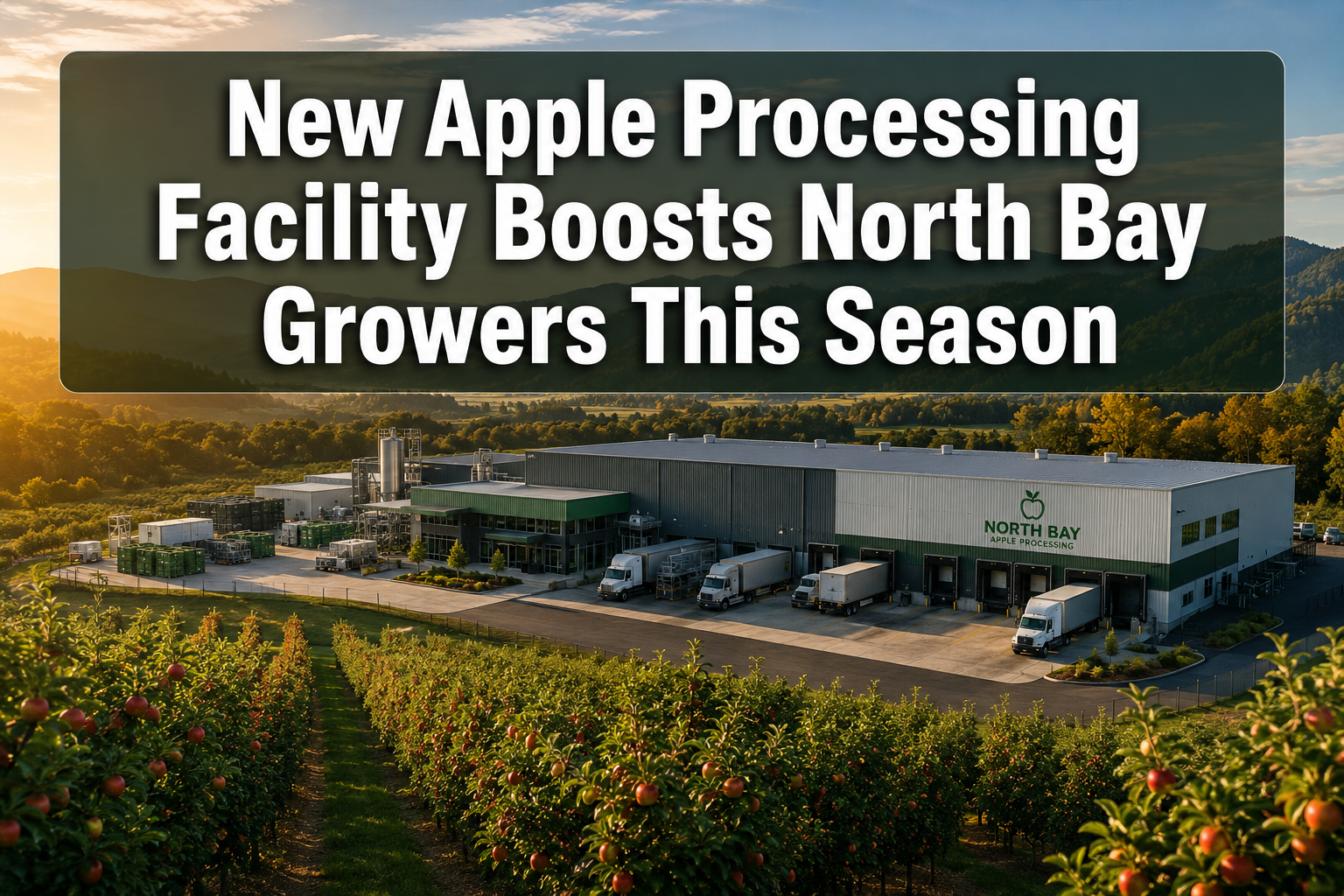
Quick Answer: A new 20,000-square-foot apple processing facility is opening in Santa Rosa, California, in June 2026, giving North Bay apple growers direct local access to processing, cold storage, and value-added production for the first time in years. The facility is designed to serve growers of all sizes across Sonoma County and the broader North Bay region, with the potential to increase farm revenue and reduce post-harvest losses.
Key Takeaways
- A 20,000-square-foot apple processing facility is opening in Santa Rosa, California, in June 2026, specifically aimed at North Bay growers.
- The facility can handle fresh apple sorting, juice production, cider processing, and applesauce manufacturing, giving growers multiple revenue streams from a single harvest.
- Both small family farms and larger commercial growers are eligible to use the facility, with tiered access designed to accommodate varying volumes.
- Local growers stand to reduce transportation costs and post-harvest waste by processing closer to the orchard.
- The facility is expected to create jobs in Santa Rosa and support the regional agricultural economy.
- North Bay Produce has reported strong apple market demand heading into 2026, making the timing of this opening strategically sound. [3]
- Manzana Products Co., founded in 1922 in Sebastopol, California, remains the last apple cannery in Sonoma County, making this new facility a meaningful addition to the region’s processing capacity. [4]
- Environmental benefits include reduced trucking miles, lower carbon output, and more efficient use of fruit that would otherwise go to waste.
- Growers can expect to see financial results within the first full harvest cycle after the facility opens.
What Exactly Is This New Apple Processing Facility in Santa Rosa?
The new facility is a 20,000-square-foot apple processing center located in Santa Rosa, California, opening in June 2026. It is purpose-built to serve North Bay apple growers by converting raw harvests into marketable products including fresh-packed apples, juice, cider, and applesauce.
The facility fills a critical gap in the North Bay’s agricultural supply chain. For years, many local growers have had to truck their apples to processing plants outside the region, adding cost and reducing the freshness of the final product. This new center brings that capacity back to Sonoma County.
Key capabilities at opening include:
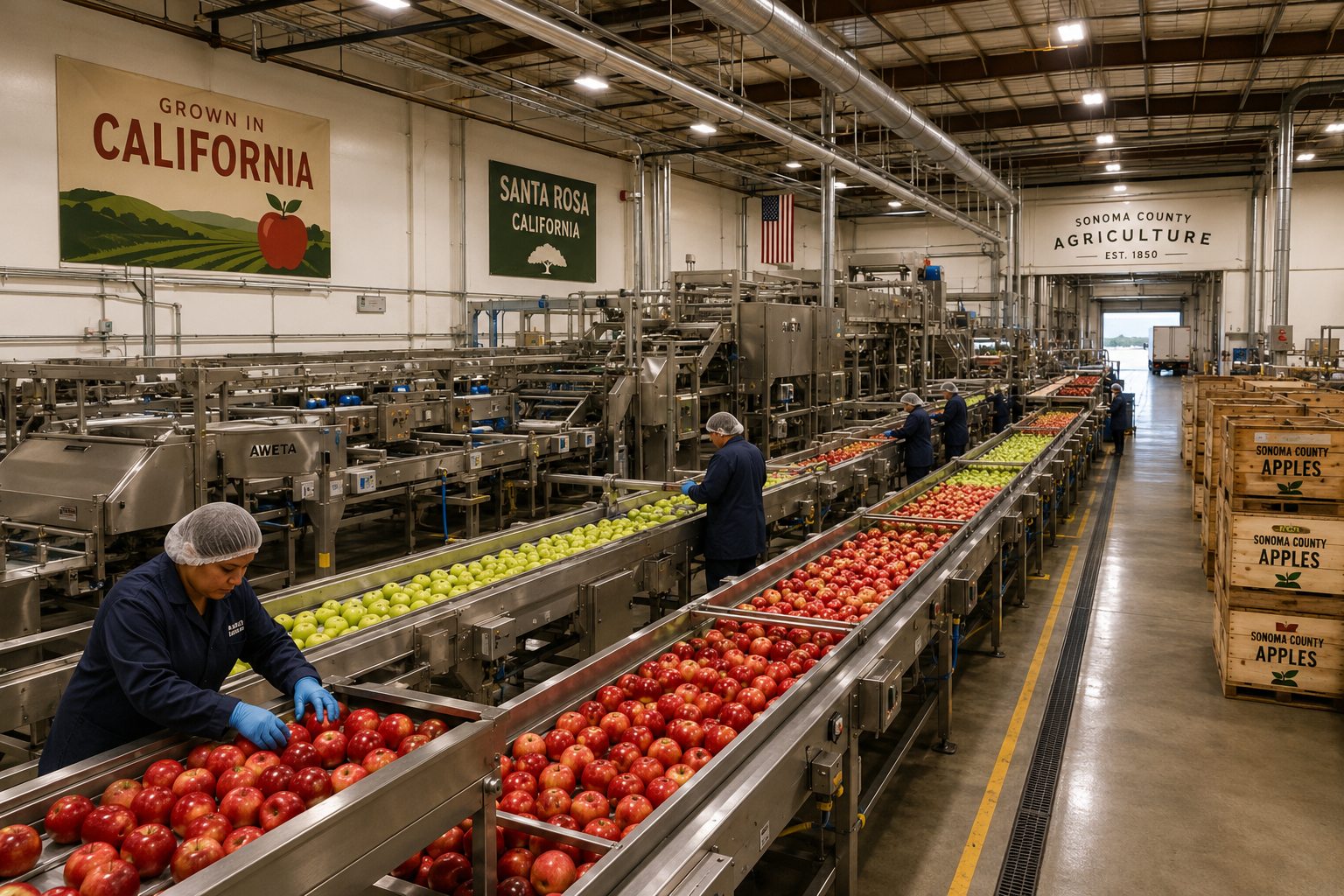
- Fresh apple sorting and grading for retail-ready packing
- Cold storage to extend shelf life post-harvest
- Juice and cider pressing for value-added product lines
- Applesauce and puree production to capture fruit that does not meet fresh-market standards
Where Is the New Facility Located in North Bay?
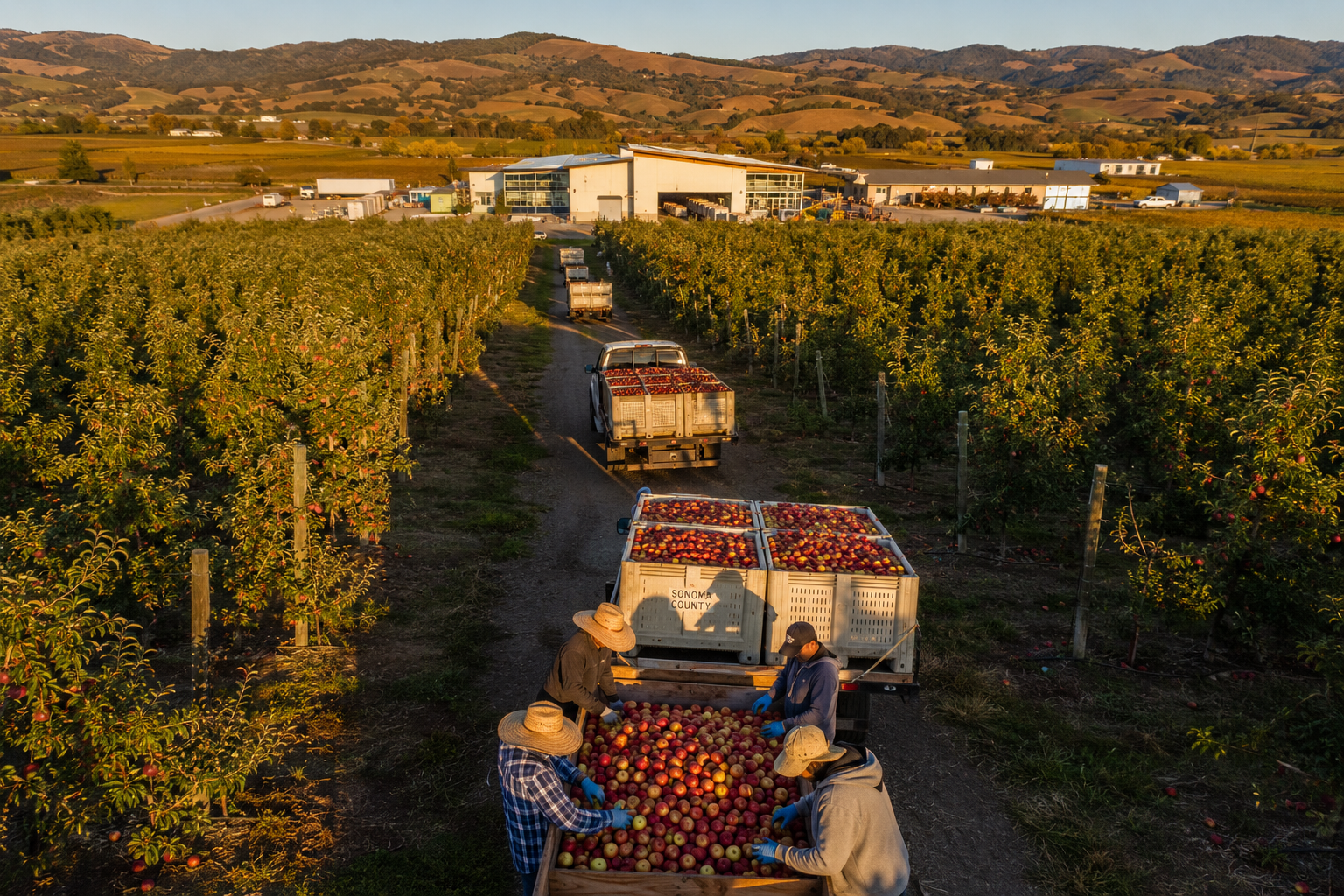
The facility is located in Santa Rosa, the largest city in Sonoma County and a central hub for North Bay agriculture. Santa Rosa sits within easy driving distance of major apple-growing areas including Sebastopol, Gravenstein Highway corridor, and the Sonoma Valley foothills.
This location is deliberate. Placing the processing center in Santa Rosa minimizes the distance growers must travel to deliver their harvest, which directly cuts fuel costs and reduces the time between picking and processing. Shorter transit times also mean less bruising and better product quality at the processing stage.
How Will This Facility Help Local North Bay Farmers?
The facility helps North Bay farmers by giving them a local outlet to process and sell apples that previously had no viable market. Growers who previously discarded or composted cosmetically imperfect fruit can now send it to the facility for juice or applesauce production, turning a loss into revenue.
Specific benefits for growers include:
- Reduced logistics costs: No need to contract long-haul transport to out-of-region processors.
- Higher price capture: Value-added products like cider and juice typically command better margins than bulk fresh apples sold at commodity prices.
- Faster turnaround: Local processing means quicker payment cycles for growers.
- Lower waste: Fruit that misses fresh-market grading standards can still generate income through processing.
North Bay Produce reported strong apple movement in both domestic and export markets as of early 2026, signaling healthy demand that this new facility is well-positioned to serve. [3]
How Much More Can Farmers Earn With This New Facility?
Exact income projections depend on each farm’s volume, apple variety, and the product mix chosen for processing. However, the general principle is well-established in regional agriculture: growers who access value-added processing typically earn more per pound of fruit than those selling only into the fresh market.
For context, Manzana Products Co. in Sebastopol processes approximately 50,000 tons of fresh organic apples annually into juice, applesauce, and apple cider vinegar, demonstrating the commercial scale that apple processing can reach in this region. [4] A smaller local facility like the Santa Rosa center gives mid-size and smaller growers access to similar economics without competing for capacity at a large industrial plant.
Growers should consider these variables when estimating returns:
- Volume of fruit delivered per season
- Percentage of harvest meeting fresh-market vs. processing-grade standards
- Product type selected (juice, cider, and applesauce each carry different price points)
- Contractual arrangements with the facility for tolling or co-packing
Can Small Farmers Use This Facility or Just Large Growers?
Small farmers can use this facility. The Santa Rosa center is designed with tiered access, meaning growers do not need to deliver truckload-scale volumes to participate. This is a meaningful distinction from large industrial processors, which often require minimum volume commitments that exclude family-scale operations.
For small growers, this opens the door to:
- Processing surplus or off-grade fruit that would otherwise go unsold
- Developing private-label juice or cider products under their own farm brand
- Accessing cold storage without investing in on-farm infrastructure
Decision rule: If a farm produces fewer than 50 tons per season, this facility is likely a better fit than a large regional processor. Growers above that threshold should evaluate both options based on contract terms and product mix.
Which Apple Varieties Will Be Processed Here?
The facility is built to handle a broad range of apple varieties grown across Sonoma County and the North Bay. The Gravenstein apple, a heritage variety long associated with the Sebastopol area, is a natural fit given its high juice content and strong local identity. Other varieties common to the region, including Fuji, Gala, Pink Lady, and Granny Smith, are also expected to be processed.
Variety selection matters for processing because different apples yield different juice sugar levels, acidity profiles, and applesauce textures. The facility’s equipment is designed to handle multiple varieties in sequence, giving growers flexibility rather than locking them into a single-variety contract.
What Technology Are They Using in This New Facility?
The Santa Rosa facility uses modern food-grade processing equipment consistent with current industry standards for apple handling. This includes automated sorting lines that grade apples by size, color, and surface defects, reducing the labor required for manual inspection.
The broader industry context is instructive. Okanagan Specialty Fruits opened a 110,000-square-foot apple processing facility in Moses Lake, Washington, in 2023, capable of processing over 50 million pounds of apples annually, with adjacent controlled-atmosphere storage. [2] Manzana Products announced a new facility in Sunnyside, Washington, in 2024, spanning 275,895 square feet and employing approximately 150 people. [1] The Santa Rosa facility is smaller in scale but applies similar technology principles to a community-focused model.
Key technology components expected at the facility:
- Optical sorting systems for rapid, accurate grading
- Controlled-atmosphere (CA) cold storage to preserve apple quality post-harvest
- Continuous-flow juice presses for high-yield extraction
- Pasteurization lines for shelf-stable juice and cider products
What Makes This Processing Facility Different From Others?
Most large apple processors in the western United States are located in Washington State, which dominates national apple production. The Santa Rosa facility is different because it is sized and structured specifically for California’s North Bay, a region with a distinct growing culture, smaller average farm size, and strong consumer demand for locally sourced products.
This local identity is a competitive advantage. Products processed in Santa Rosa can carry “Sonoma County” or “North Bay” provenance labeling, which commands premium pricing at farmers markets, specialty grocery retailers, and direct-to-consumer channels.
Additionally, the facility’s proximity to the growing areas means it can operate on a shorter supply chain than any Washington-based competitor serving California growers.
How Many Jobs Will This Facility Create for the Local Community?
Exact job numbers for the Santa Rosa facility have not been publicly confirmed at the time of this writing. For scale comparison, Manzana’s planned Sunnyside, Washington facility, which is roughly 14 times larger at 275,895 square feet, is projected to employ approximately 150 people. [1] A 20,000-square-foot operation would logically support a smaller workforce, likely in the range of 15 to 40 full and part-time positions, including processing line workers, quality control staff, logistics coordinators, and facility management.
Seasonal employment will likely peak during the fall apple harvest, with a smaller year-round crew handling storage, distribution, and administrative functions.
Are There Environmental Benefits to This New Processing Center?
Yes. Localizing apple processing in Santa Rosa reduces the trucking miles required to move North Bay fruit to out-of-region facilities, which directly lowers fuel consumption and associated emissions. For growers who previously shipped to processors in Washington or the Central Valley, the reduction in transport distance can be substantial.
Additional environmental benefits include:
- Reduced food waste: Processing-grade fruit that previously went to compost or landfill now enters the food supply as juice, cider, or applesauce.
- Water efficiency: Modern processing facilities use closed-loop water systems that recycle wash water, reducing overall consumption.
- Local supply chain resilience: Shorter supply chains are less vulnerable to fuel price spikes and transportation disruptions.
North Bay Produce adheres to Global Food Safety Initiative (GFSI) certifications and complies with FDA Food Safety Modernization Act (FSMA) standards, reflecting the kind of operational rigor that also tends to correlate with environmental best practices. [8]
How Soon Will Farmers Start Seeing Results From This Facility?
Growers who deliver fruit in the 2026 fall harvest season, which runs roughly from August through October in the North Bay, should see financial results by the end of that harvest cycle. Processing contracts typically pay out within 30 to 60 days of delivery, meaning most participating growers could receive payments by November or December 2026.
Longer-term benefits, such as brand development around locally processed products and repeat retail partnerships, will take one to two full seasons to materialize.
What Impact Will This Have on Apple Prices for Consumers?
For consumers, local processing generally means fresher products with shorter time from orchard to shelf. Juice and cider produced in Santa Rosa and sold through local retailers or direct channels will likely carry a modest premium over mass-market brands, reflecting the regional sourcing story.
However, the facility is unlikely to significantly move commodity apple prices at a regional or national level. Its impact will be felt most in the specialty and local food market segment, where consumers already pay a premium for provenance and freshness.
Conclusion
The new apple processing facility opening in Santa Rosa in June 2026 represents a concrete, practical opportunity for North Bay growers to capture more value from their harvests. By processing locally, farmers reduce costs, cut waste, and gain access to product categories, including juice, cider, and applesauce, that carry better margins than bulk fresh fruit alone.
Actionable next steps for growers and stakeholders:
- Contact the facility directly to inquire about intake schedules, minimum volume requirements, and contract terms before the fall 2026 harvest begins.
- Audit your current harvest data to identify what percentage of your fruit meets fresh-market standards and what volume could go to processing.
- Explore co-branding options with the facility to develop private-label products under your farm name for direct-to-consumer or farmers market sales.
- Review food safety certifications your operation currently holds, and confirm alignment with GFSI and FSMA requirements to qualify for processing contracts. [8]
- Monitor North Bay Produce’s market reports for demand signals that can inform how much fruit to commit to processing versus fresh-market channels. [3]
For the North Bay’s apple-growing community, this facility is not just a building. It is infrastructure that can reshape how local farms operate, compete, and grow for years to come.
Frequently Asked Questions
What is the size of the new Santa Rosa apple processing facility? The facility is 20,000 square feet, located in Santa Rosa, California, and opened in June 2026 to serve North Bay apple growers.
Who can use the new apple processing facility in Santa Rosa? Both small family farms and larger commercial growers can use the facility. It is designed with tiered access to accommodate varying delivery volumes, making it accessible to growers who cannot meet the minimums required by large industrial processors.
What products will the Santa Rosa facility produce? The facility is expected to produce fresh-packed apples, apple juice, apple cider, and applesauce, giving growers multiple product options from a single harvest.
How does this facility compare to large Washington State processors? Washington-based facilities like Okanagan Specialty Fruits’ 110,000-square-foot plant in Moses Lake process over 50 million pounds annually. [2] The Santa Rosa facility is smaller and community-focused, serving North Bay growers specifically rather than competing for large-volume national contracts.
Will the Gravenstein apple be processed at this facility? The Gravenstein, a heritage variety central to Sebastopol and the North Bay’s apple identity, is a natural candidate given its high juice content. The facility is built to handle multiple varieties.
What is Manzana Products and how does it relate to North Bay apple processing? Manzana Products Co., founded in 1922 in Sebastopol, California, is the last remaining apple cannery in Sonoma County, processing approximately 50,000 tons of organic apples annually. [4] The new Santa Rosa facility adds processing capacity to the region without directly competing with Manzana’s established operations.
When will growers receive payment after delivering to the facility? Processing contracts typically pay within 30 to 60 days of delivery. Growers delivering in the fall 2026 harvest season can generally expect payment by late 2026.
Does the facility meet food safety standards? Modern apple processing facilities operating in California are required to comply with FDA Food Safety Modernization Act (FSMA) standards. North Bay Produce, a key regional player, also adheres to Global Food Safety Initiative (GFSI) certifications. [8]
What environmental benefits does local processing offer? Local processing reduces trucking miles, lowers fuel emissions, cuts food waste by converting off-grade fruit into sellable products, and supports more resilient regional supply chains.
How many jobs will the facility create? Exact figures have not been publicly confirmed. Based on comparable facilities, a 20,000-square-foot operation is estimated to support 15 to 40 positions, with seasonal peaks during the fall harvest.
References
[1] Manzana Products Co Inc Announces Plans – https://portofsunnyside.com/news/manzana-products-co-inc-announces-plans?utm_source=openai
[2] New Washington Apple Processing Facility Opens – https://www.freshplaza.com/north-america/article/9566693/new-washington-apple-processing-facility-opens/?utm_source=openai
[3] North Bay Produce Sees Strong Winter Apple Season – https://theproducenews.com/north-bay-produce-sees-strong-winter-apple-season?utm_source=openai
[4] Celebrating Apples – https://www.northbaybiz.com/2022/10/28/celebrating-apples/?utm_source=openai
[7] About Us – https://www.northbayproduce.com/about-us/?utm_source=openai
[8] Food Safety – https://www.northbayproduce.com/food-safety?utm_source=openai
