

Last updated: June 20, 2026
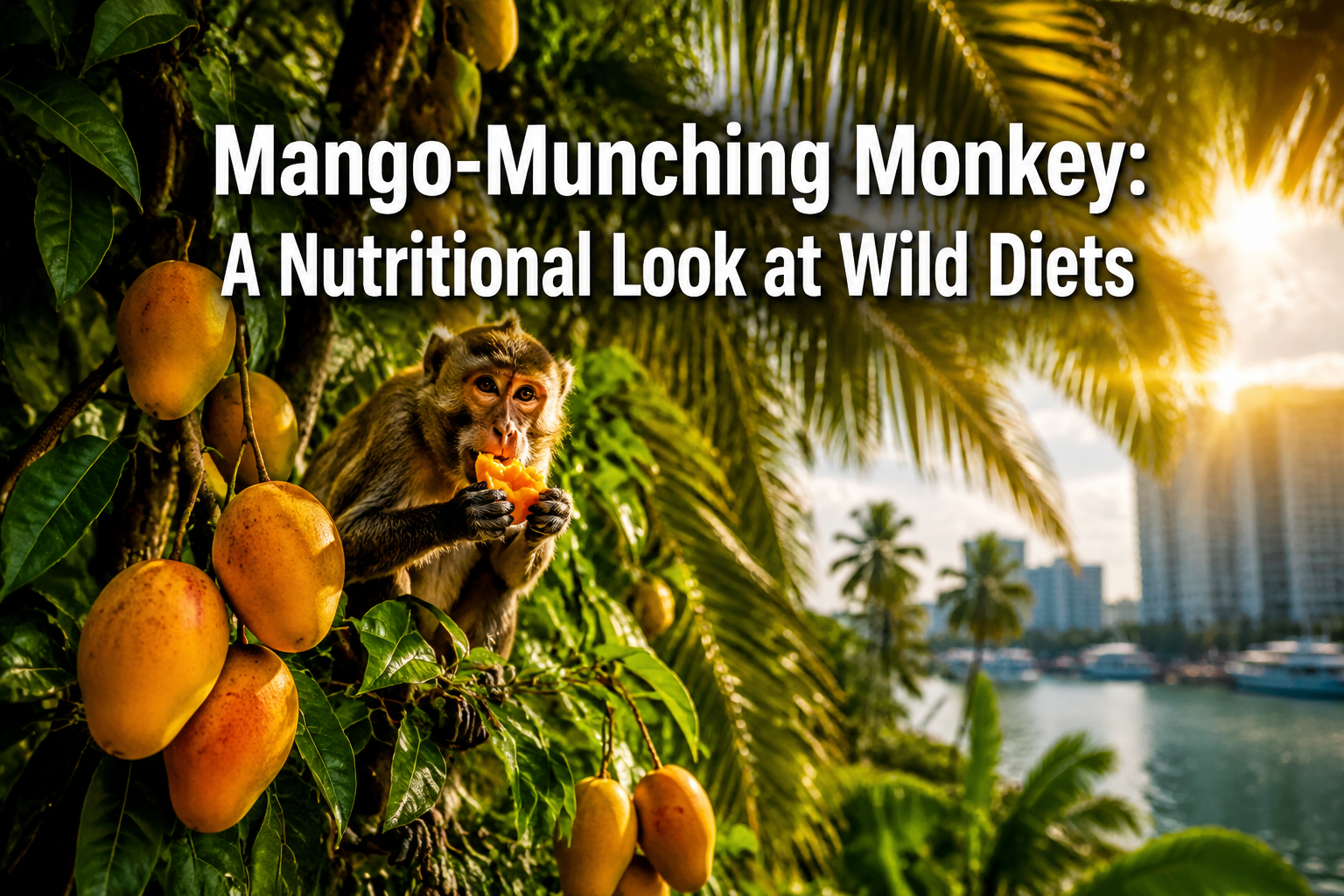
Quick Answer: A wild monkey spotted feasting on mangoes in a Fort Lauderdale neighborhood is more than a charming local story. It raises real questions about primate nutrition, the nutritional value of mangoes, and what happens when wild animals shift from diverse forest diets to urban food sources. Wild monkeys thrive on varied diets, and a heavy reliance on a single fruit like mangoes carries both benefits and risks.
Key Takeaways
- Wild monkeys naturally eat diverse diets including fruits, leaves, seeds, insects, and sap, with fruit making up 60-80% of intake for frugivorous species [1]
- Mangoes are nutritionally rich, providing vitamin C, dietary fiber, natural sugars, and antioxidants, but are high in fructose relative to protein
- A 1999 Berkeley study found that a 15-pound wild monkey consumes roughly 600 mg of vitamin C daily, ten times the human recommended daily allowance [2]
- Urban environments expose monkeys to human food sources that can disrupt gut health and nutritional balance [5]
- Wild primates actively select foods to meet specific protein, carbohydrate, and fat targets, not just to satisfy hunger [6]
- Seasonal food shifts are normal: frugivorous monkeys may get up to 90% of calories from fruit during peak season, then pivot to leaves or insects [3]
- Monkeys play a key ecological role as seed dispersers, making their fruit consumption essential to forest health [3]
- Human interaction with wild primates, whether through feeding or habitat overlap, consistently disrupts natural dietary patterns
What the Fort Lauderdale Mango Monkey Actually Reveals
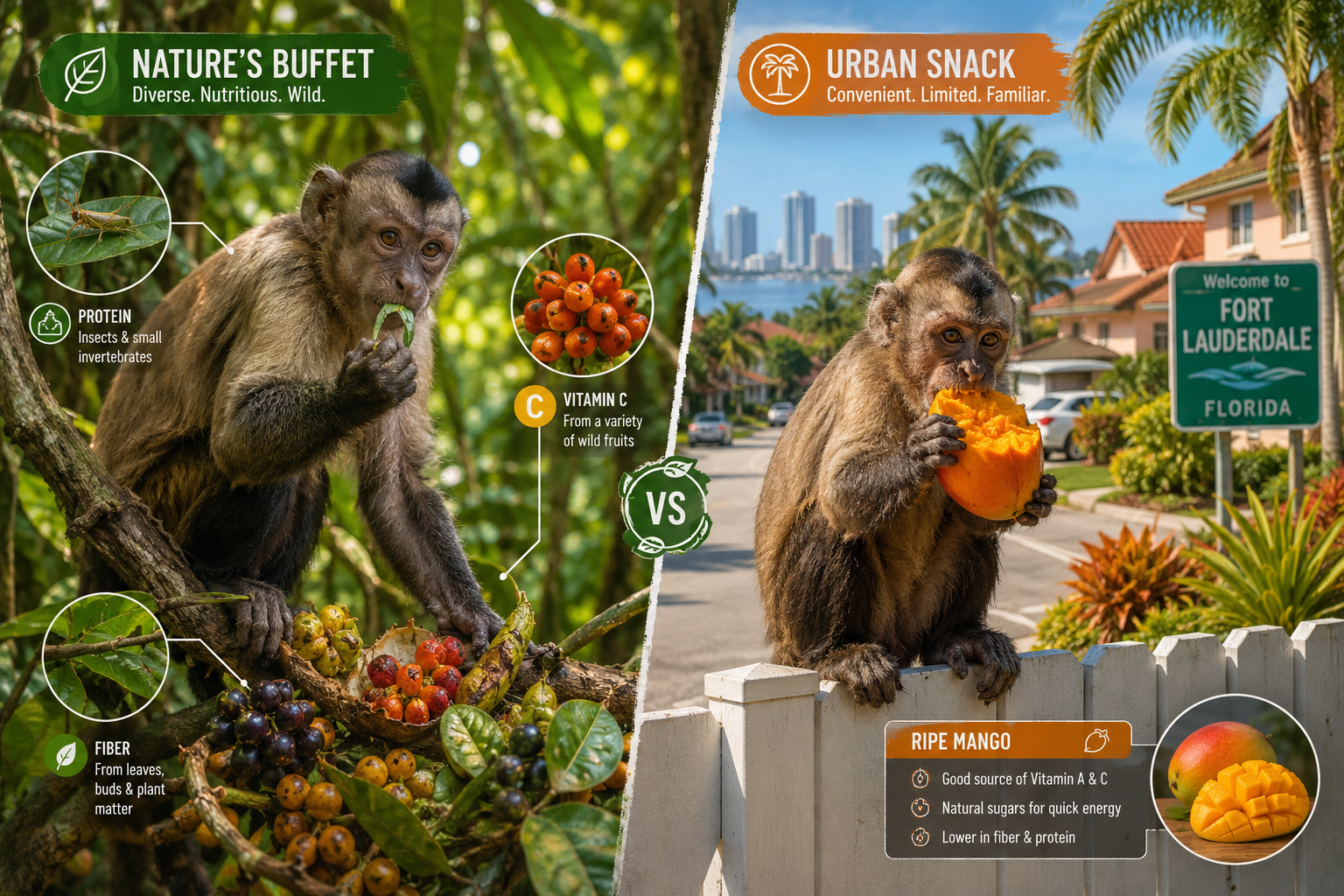
A monkey eating mangoes in a Fort Lauderdale backyard is not just an amusing neighborhood sighting. It points to a broader pattern of wildlife adapting to human-dominated landscapes, with real nutritional consequences.
Fort Lauderdale sits within South Florida’s subtropical corridor, where mango trees grow abundantly in residential yards. When a wild or escaped monkey finds a ripe mango tree, it is following instinct: primates are biologically drawn to ripe, calorie-dense fruit. The behavior itself is natural. The context, however, is not.
What makes this significant:
- The monkey is foraging outside its native habitat, relying on a single fruit source rather than a diverse forest menu
- Mangoes are nutritionally generous but lack the protein and fat balance that wild diets typically provide
- Repeated access to suburban fruit trees can condition wildlife to associate human spaces with food, increasing conflict risk
This is the core tension at the heart of the mango-munching monkey story: a wild animal doing something biologically sensible in an environment that cannot fully support its nutritional needs.
What Do Wild Monkeys Actually Eat?
Wild monkeys eat diverse, nutrient-dense diets calibrated to their species, habitat, and season. Fruit is central for many species, but it is rarely the only food source.
Lowe’s monkeys, for example, are primarily frugivorous, with fruit making up 60-80% of their daily intake. The remainder comes from buds, seeds, sap, and insects [1]. This diversity is not accidental. Research shows that wild primates actively select foods to meet specific nutritional targets, balancing proteins, carbohydrates, and fats rather than simply eating whatever is available [6].
Typical wild monkey diet components:
| Food Type | Role in Diet | Key Nutrients Provided |
|---|---|---|
| Ripe fruit | Primary calorie source | Simple sugars, vitamin C, antioxidants |
| Leaves and buds | Filler and fiber source | Fiber, some protein, minerals |
| Seeds | Calorie-dense backup | Fats, protein, complex carbohydrates |
| Insects | Protein supplement | Protein, B vitamins, fats |
| Sap and gum | Energy bridge in lean seasons | Simple sugars, minerals |
During peak fruit season, frugivorous species may derive up to 90% of their calories from fruit alone. When fruit becomes scarce, they shift to leaves, flowers, or insects to maintain nutritional balance [3]. This dietary flexibility, sometimes called dietary plasticity, is a survival trait that has allowed primates to thrive across vastly different environments.
Common mistake: Assuming monkeys eat only fruit. Even the most fruit-focused species supplement their diets with protein-rich insects or protein-dense seeds, especially during dry seasons when ripe fruit is scarce.
The Nutritional Profile of Mangoes: A Primate Perspective
Mangoes are a genuinely nutritious fruit, but their nutritional profile tells a specific story when viewed through the lens of primate dietary needs.
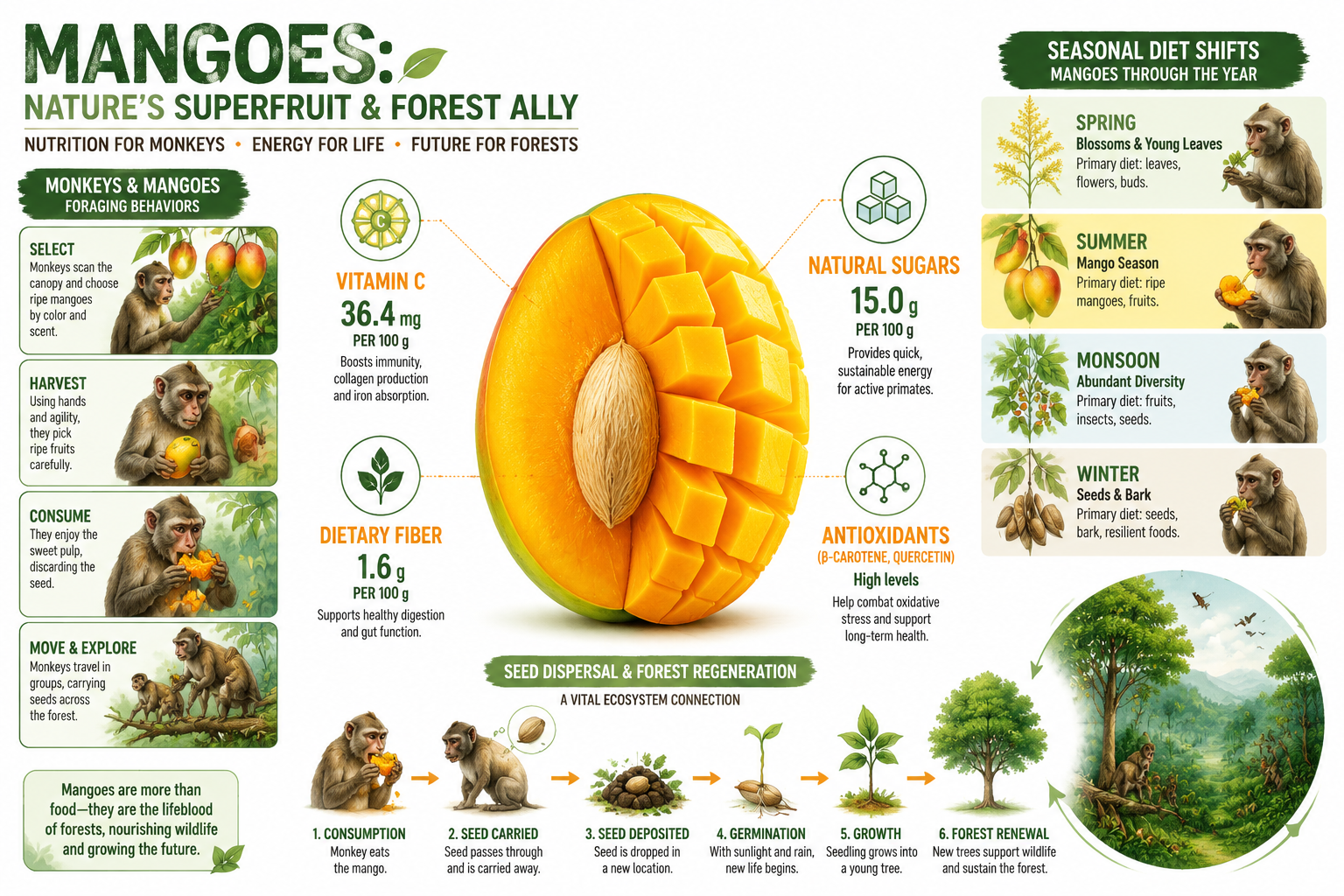
A ripe mango provides a strong dose of vitamin C, dietary fiber, beta-carotene (a precursor to vitamin A), and natural sugars for quick energy. For a monkey accustomed to a high-vitamin-C wild diet, this aligns well. The 1999 Berkeley study noted that a 15-pound wild monkey ingests approximately 600 mg of vitamin C daily, ten times the human recommended daily allowance [2]. Mangoes contribute meaningfully to this need.
Mango nutritional highlights (per 100g of raw fruit, approximate values):
- Vitamin C: roughly 36 mg
- Dietary fiber: approximately 1.6 g
- Natural sugars: around 14 g
- Beta-carotene: significant source
- Protein: less than 1 g
- Fat: negligible
The limitation: Mangoes are low in protein and fat. A monkey eating primarily mangoes in a Fort Lauderdale yard is getting plenty of sugar and vitamin C but missing the protein from insects and the healthy fats from seeds that a balanced wild diet would supply. Over time, this imbalance could affect muscle maintenance, immune function, and energy regulation.
“Wild primates select foods to meet specific nutritional goals, balancing intake of proteins, carbohydrates, and fats to maintain health and energy levels.” [6]
Choose mangoes as a dietary centerpiece only if other protein and fat sources are also available. As a supplemental fruit in a varied diet, they are excellent. As a sole food source, they fall short.
How Urban Environments Disrupt Natural Primate Nutrition
Urban food access changes wild primate diets in ways that go beyond simple calorie substitution. The effects can be measurable and harmful.
In Gibraltar, Barbary macaques have been observed eating soil, a behavior researchers believe is an attempt to alleviate digestive distress caused by consuming tourist-provided snacks high in sugar and low in fiber [5]. The macaques are essentially self-medicating against the consequences of a nutritionally poor urban diet. This mirrors what happens when any wild primate, including a Fort Lauderdale monkey, shifts from a diverse forest diet to whatever suburban environments offer.
Key disruptions urban diets cause in wild primates:
- Sugar overload: Ripe suburban fruits and human snacks deliver concentrated fructose without the fiber buffer of whole wild fruits
- Protein deficit: Urban food sources rarely provide the insect protein that balances a wild frugivorous diet
- Gut microbiome disruption: Processed foods and novel sugars alter gut bacteria, reducing digestive efficiency
- Behavioral conditioning: Repeated access to easy urban food reduces natural foraging behavior, which has cognitive and physical health implications
Some primate species do show self-medicating behaviors in response to dietary stress. Chimpanzees have been observed consuming specific plants to combat gastrointestinal issues and parasites [4], suggesting primates have some capacity to correct nutritional imbalances. But this capacity has limits, especially outside a native habitat where medicinal plants are not available.
The Ecological Role of Fruit-Eating Monkeys
Monkeys eating fruit, including mangoes, are not just feeding themselves. They are performing an ecosystem service that benefits entire forests.
When a monkey eats a mango and moves through its territory, it excretes the seed in a new location, often with a natural fertilizer package included. This seed dispersal is critical to forest regeneration and plant biodiversity [3]. In native tropical habitats, this relationship between frugivorous primates and fruit-bearing trees is tightly co-evolved.
In a suburban Fort Lauderdale yard, this dynamic plays out in a simplified and ecologically disconnected way. The mango tree benefits from potential seed dispersal, but the broader forest regeneration function is absent. The monkey gains calories but loses the nutritional diversity of a full forest ecosystem.
Why this matters for conservation:
- Habitat loss forces primates into urban areas, disrupting both their nutrition and their ecological function
- Protecting forest corridors preserves the diverse food web that keeps wild primate diets balanced
- Urban wildlife sightings like the Fort Lauderdale monkey are often symptoms of habitat pressure, not just curiosity
What Happens When Monkeys Rely Too Heavily on One Fruit?
A diet dominated by a single fruit, even a nutritious one like mango, creates nutritional gaps that compound over time. This applies directly to the mango-munching monkey scenario in Fort Lauderdale.
Potential consequences of mango-dominant diets in primates:
- Protein deficiency: Insufficient amino acids for tissue repair, immune response, and enzyme production
- Fat-soluble vitamin imbalance: Without dietary fat, fat-soluble nutrients like vitamin A (from beta-carotene) are poorly absorbed
- Caloric surplus with micronutrient gaps: High sugar intake without corresponding fiber diversity can stress metabolic systems
- Reduced foraging complexity: Less cognitive stimulation from simplified food-seeking behavior
Wild primates naturally avoid this problem through dietary flexibility. Capuchin monkeys, for example, use stones to crack nuts and sticks to extract insects, actively seeking out protein and fat sources to complement fruit-heavy diets [3]. A monkey confined to a suburban yard lacks access to these behavioral options.
FAQ
Why was a monkey spotted eating mangoes in Fort Lauderdale, Florida? Fort Lauderdale’s subtropical climate supports abundant mango trees in residential areas. A wild or escaped monkey encountering ripe mangoes is following natural frugivorous instinct, seeking calorie-dense food. The sighting reflects both the monkey’s biology and the pressures of habitat overlap with human communities.
Are mangoes good for monkeys nutritionally? Mangoes provide useful nutrients including vitamin C, beta-carotene, fiber, and quick-release sugars. They are a reasonable component of a varied primate diet. As a primary or sole food source, however, mangoes are too low in protein and fat to meet a monkey’s full nutritional needs.
What do wild monkeys normally eat? Wild monkeys eat varied diets that typically include ripe fruit, leaves, seeds, insects, and sometimes sap or bark. Frugivorous species like Lowe’s monkeys get 60-80% of their diet from fruit, with the remainder from other sources that supply protein, fat, and fiber [1].
How much vitamin C does a wild monkey consume daily? A 1999 University of California, Berkeley study found that a 15-pound wild monkey consumes approximately 600 mg of vitamin C per day, which is ten times the recommended daily allowance for humans [2].
Do urban environments harm wild primate diets? Yes. Urban food sources tend to be higher in sugar and lower in fiber and protein than natural wild diets. Gibraltar’s Barbary macaques have been documented eating soil to relieve digestive distress caused by tourist food, illustrating the real physiological impact of urban diet disruption [5].
Do monkeys self-medicate when their diet is off? Some primates do show self-medicating behaviors. Chimpanzees have been observed eating specific plants to address gastrointestinal problems and parasites [4]. However, this capacity depends on access to appropriate plants, which urban environments typically do not provide.
What is dietary plasticity in primates? Dietary plasticity refers to a primate’s ability to shift food choices based on seasonal availability or environmental change. Lowe’s monkeys, for example, maintain nutritional balance year-round by adjusting their intake of fruits, seeds, and insects as conditions change [1].
Should people feed wild monkeys mangoes or other fruit? No. Feeding wild primates, even with natural foods like mangoes, disrupts their foraging behavior, conditions them to associate humans with food, and can introduce pathogens. It also removes the nutritional variety that wild foraging provides.
How do monkeys contribute to ecosystems through fruit eating? Frugivorous monkeys disperse seeds by consuming fruit and excreting seeds in new locations. This process supports plant reproduction and forest regeneration, making primates key contributors to biodiversity maintenance [3].
What is the biggest nutritional risk for a mango-only diet in monkeys? Protein deficiency is the primary concern. Mangoes contain less than 1 gram of protein per 100 grams. A monkey relying heavily on mangoes without access to insects, seeds, or other protein sources will struggle to maintain muscle, immune function, and metabolic health over time.
Conclusion
The mango-munching monkey spotted in Fort Lauderdale is a vivid reminder that wild animals carry complex nutritional needs into environments that were not designed to meet them. Mangoes are genuinely nutritious, offering vitamin C, fiber, and antioxidants that align with a frugivorous primate’s natural diet. But no single fruit, however rich, replaces the diversity of a full wild diet.
Actionable next steps for those who care about wild primate health:
- Do not feed wild monkeys, even with natural fruits like mangoes. It disrupts their foraging behavior and nutritional balance.
- Report wild primate sightings in urban areas to local wildlife authorities so animals can be safely assessed and, if needed, relocated.
- Support habitat conservation efforts that preserve the forest diversity wild primates depend on for nutritionally complete diets.
- Educate neighbors about why well-intentioned feeding of urban wildlife causes long-term harm.
The Fort Lauderdale monkey eating mangoes is charming. The nutritional story behind it is a call to take wild animal welfare seriously, starting with understanding what these animals actually need to thrive.
References
[1] Lowes Monkey – https://neprimateconservancy.org/lowes-monkey/?utm_source=openai
[2] 5 18 1999 – https://newsarchive.berkeley.edu/news/media/releases/99legacy/5-18-1999.html?utm_source=openai
[3] What Do Monkeys Eat In The Wild Diet Foraging Facts – https://biologyinsights.com/what-do-monkeys-eat-in-the-wild-diet-foraging-facts/?utm_source=openai
[4] Pmc9735707 – https://pmc.ncbi.nlm.nih.gov/articles/PMC9735707/?utm_source=openai
[5] Gibraltars Famous Monkeys Are Eating Dirt Likely To Alleviate Stomach Aches From Munching On Tourists Junk Food 180988606 – https://www.smithsonianmag.com/smart-news/gibraltars-famous-monkeys-are-eating-dirt-likely-to-alleviate-stomach-aches-from-munching-on-tourists-junk-food-180988606/?utm_source=openai
[6] J.1365 2435.2008.01526 – https://besjournals.onlinelibrary.wiley.com/doi/10.1111/j.1365-2435.2008.01526.x?utm_source=openai
