

Last updated: July 5, 2026
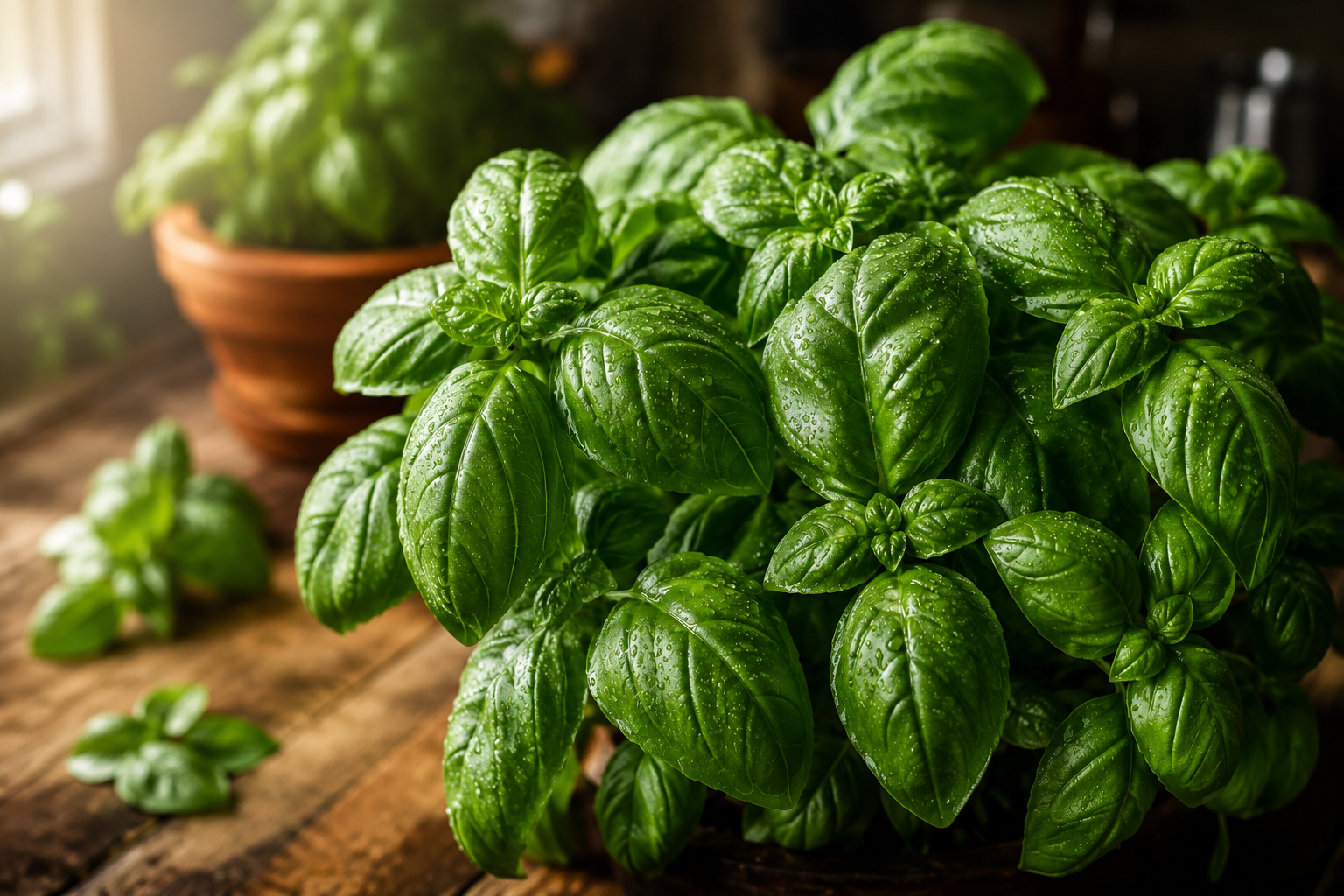
Quick Answer: Basil is a fragrant annual herb in the mint family, originally from tropical Africa and Asia, and now one of the most widely used culinary herbs in the world. It comes in dozens of varieties, grows easily at home with adequate sun and warmth, and offers both culinary versatility and documented antioxidant and anti-inflammatory properties. This guide covers everything all about basil, from seed to table.
Key Takeaways
- Sweet basil (Ocimum basilicum) is the most common culinary type, but Thai, holy, lemon, and purple basil each have distinct flavors and uses.
- Basil needs at least 6 hours of direct sunlight and warm temperatures above 50 degrees Fahrenheit to thrive.
- Harvest regularly by pinching stems just above a leaf node to encourage bushy, productive growth.
- Store fresh basil at room temperature in a glass of water, not in the refrigerator, where it turns black quickly.
- Basil contains eugenol, rosmarinic acid, and linalool, compounds with antioxidant and anti-inflammatory effects supported by preclinical research.
- Basil is considered safe for humans in food amounts, but it can be mildly toxic to cats and dogs in large quantities.
- Common growing mistakes include overwatering, too little sun, and letting the plant flower too early.
- Fresh basil costs roughly $2 to $4 per bunch at most grocery stores in 2026, with organic varieties priced slightly higher.
What Is Basil and Where Does It Come From?
Basil is a warm-weather herb belonging to the family Lamiaceae (the mint family), with the most cultivated species being Ocimum basilicum, commonly called sweet basil. It likely originated in tropical regions of Africa and Asia and has been cultivated for thousands of years across the Mediterranean, Southeast Asia, and the Indian subcontinent [2].
Today, basil is grown globally for fresh leaves, dried herb, and essential oil production. Its name derives from the Greek word basileus, meaning “king,” reflecting its historical status as a prized plant. The herb reached Europe through ancient trade routes and became a cornerstone of Italian, Thai, Vietnamese, and Indian cuisines [4].
Key facts at a glance:
- Family: Lamiaceae (mint family)
- Primary species: Ocimum basilicum (sweet basil)
- Origin: Tropical Africa and Asia
- Growth habit: Annual herb, typically 12 to 24 inches tall
- Climate preference: Warm, frost-free conditions
Different Types of Basil Varieties Explained
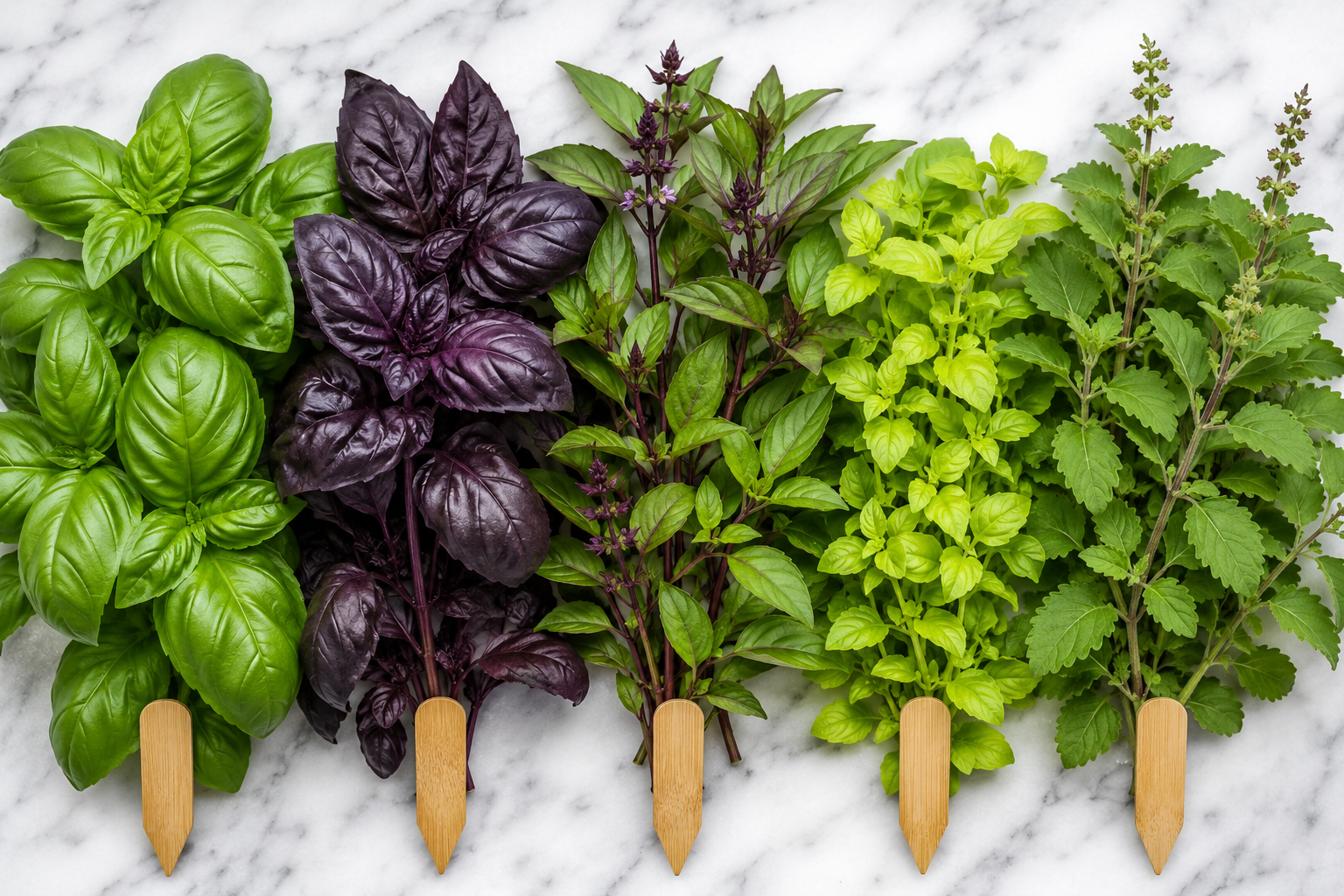
Not all basil tastes the same. The flavor differences between varieties come from varying concentrations of essential oils such as linalool, eugenol, and methyl chavicol [8].
The most common basil varieties:
| Variety | Flavor Profile | Best Use |
|---|---|---|
| Sweet basil | Mild, slightly sweet, clove-like | Italian dishes, pesto, salads |
| Thai basil | Anise-like, spicy | Stir-fries, curries, pho |
| Holy basil (Tulsi) | Peppery, clove-forward | Thai cooking, herbal teas |
| Lemon basil | Citrusy, light | Seafood, desserts, salads |
| Purple basil | Mild, slightly spicy | Garnishes, infused oils |
| Genovese basil | Rich, aromatic | Classic pesto, Caprese salad |
Sweet basil and Genovese basil are often used interchangeably, though Genovese has larger, more tender leaves. Holy basil, also called tulsi, is central to Ayurvedic tradition and has a sharper, more medicinal flavor than sweet basil [2].
How to Grow Basil at Home Indoors or Outdoors
Basil grows well both indoors and outdoors as long as it gets enough sun and warmth. Outdoors, plant after the last frost when soil temperatures reach at least 60 degrees Fahrenheit. Indoors, a south-facing windowsill or a grow light works well year-round [7].
Step-by-step growing guide:
- Choose a container or bed. Use well-draining soil with a pH of 6.0 to 7.0. A pot at least 6 inches deep works for most varieties.
- Plant seeds or transplants. Sow seeds 1/4 inch deep, or transplant seedlings after hardening off for a week.
- Provide 6 to 8 hours of direct sun daily. This is non-negotiable for strong flavor development.
- Water at the base, not overhead. Wet leaves invite fungal disease. Water when the top inch of soil feels dry.
- Pinch flowers as they appear. Once basil bolts (flowers), leaf production slows and flavor turns bitter.
- Fertilize lightly. A balanced liquid fertilizer every 3 to 4 weeks supports growth without reducing flavor.
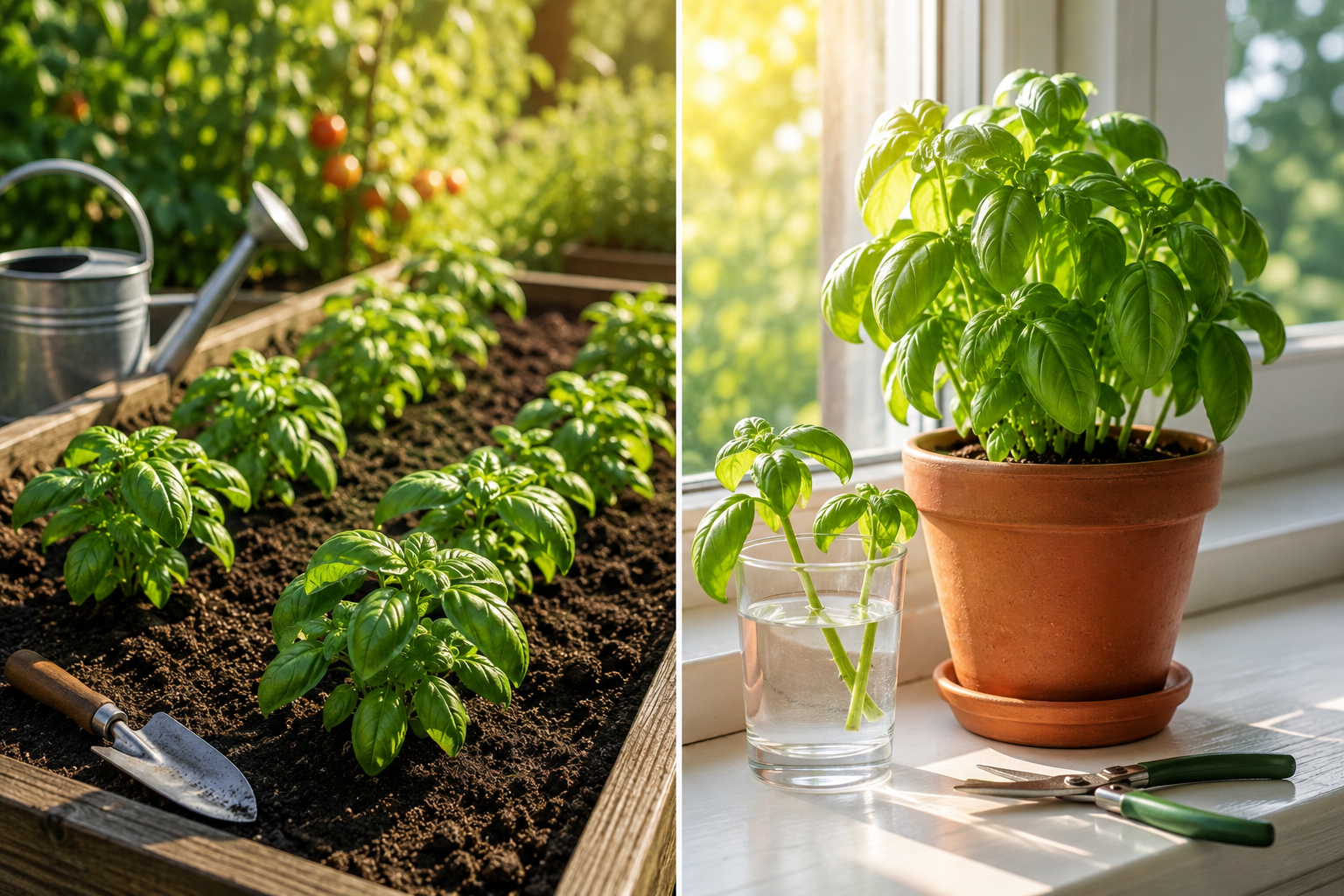
Choose indoor growing if you live in a cold climate, want year-round supply, or have limited outdoor space. Choose outdoor growing if you want higher yields and more natural airflow.
Basil Plant Care: Watering and Sunlight Needs
Basil is not a low-maintenance herb. It needs consistent warmth, strong light, and careful watering. Underwatering causes wilting; overwatering causes root rot, which is the leading cause of basil death indoors [7].
- Sunlight: Minimum 6 hours of direct sun; 8 hours is ideal.
- Temperature: Keep above 50 degrees Fahrenheit at all times. Temperatures below 40 degrees cause leaf damage.
- Watering: Water deeply every 2 to 3 days outdoors; every 3 to 4 days indoors, checking soil moisture first.
- Humidity: Basil prefers moderate humidity. Avoid placing it near air conditioning vents.
When to Harvest Basil for Best Flavor
Harvest basil once the plant has at least 6 to 8 sets of leaves, typically 60 to 90 days after seeding. The best time to harvest is in the morning after dew has dried, when essential oil concentration is highest.
Always cut just above a leaf node (the point where two leaves branch off the stem). This encourages the plant to branch out rather than grow tall and spindly. Never remove more than one-third of the plant at a single harvest.
Pinching off flower buds as soon as they appear extends the harvest window by several weeks and keeps leaves flavorful.
Why Is My Basil Turning Yellow or Dying?
Yellow leaves on basil are almost always caused by overwatering, poor drainage, or insufficient light. These three factors account for the majority of basil plant failures at home [7].
Common causes and fixes:
- Yellow leaves: Overwatering or nitrogen deficiency. Let soil dry slightly between waterings and add a diluted liquid fertilizer.
- Wilting despite wet soil: Root rot from poor drainage. Repot into fresh, well-draining soil.
- Brown leaf edges: Cold drafts or underwatering. Move plant away from windows in winter.
- Leggy, sparse growth: Not enough light. Move to a sunnier spot or add a grow light.
- Sudden collapse: Frost exposure. Basil dies quickly below 40 degrees Fahrenheit.
Common mistake: Many gardeners water on a fixed schedule rather than checking soil moisture. Always test the top inch of soil before watering.
Best Way to Store Fresh Basil and Can You Freeze It?
Fresh basil stored in the refrigerator turns black within 24 to 48 hours because cold temperatures damage its cell walls. The best method is to trim the stems and place the bunch in a glass of water at room temperature, like cut flowers, loosely covered with a plastic bag. This keeps basil fresh for up to 2 weeks [8].
To freeze basil:
- Blanch leaves briefly in boiling water for 2 seconds, then transfer to ice water.
- Pat dry and freeze flat on a baking sheet before transferring to a freezer bag.
- Alternatively, blend fresh basil with olive oil and freeze in ice cube trays for ready-to-use portions.
Basil pesto freezes exceptionally well. Make a large batch, portion into ice cube trays, freeze, then transfer cubes to a sealed bag. Frozen pesto retains good flavor for up to 6 months.
Health Benefits of Eating Basil
Basil contains bioactive compounds including eugenol, rosmarinic acid, and linalool, which have demonstrated antioxidant and anti-inflammatory effects in laboratory and preclinical studies. The Cleveland Clinic notes that basil’s antioxidants may help reduce the risk of chronic conditions such as heart disease, diabetes, and certain cancers, though it should be viewed as a supportive food rather than a treatment [9].
Fresh basil is very low in calories (approximately 1 kcal per tablespoon of chopped leaves) and provides small amounts of vitamin K, vitamin A, manganese, and copper [8].
Documented properties based on current research:
- Antioxidant activity from polyphenols and flavonoids
- Anti-inflammatory effects from eugenol
- Antimicrobial properties against certain bacteria
- Potential blood sugar regulation support (preclinical data)
Note: Most evidence comes from laboratory or animal studies. Large-scale human clinical trials are limited, so basil should complement, not replace, standard medical care [9].
How to Use Basil in Cooking
Basil is most flavorful when added fresh at the end of cooking, as heat diminishes its aromatic oils. Dried basil has a more muted flavor and works better in slow-cooked sauces and soups.
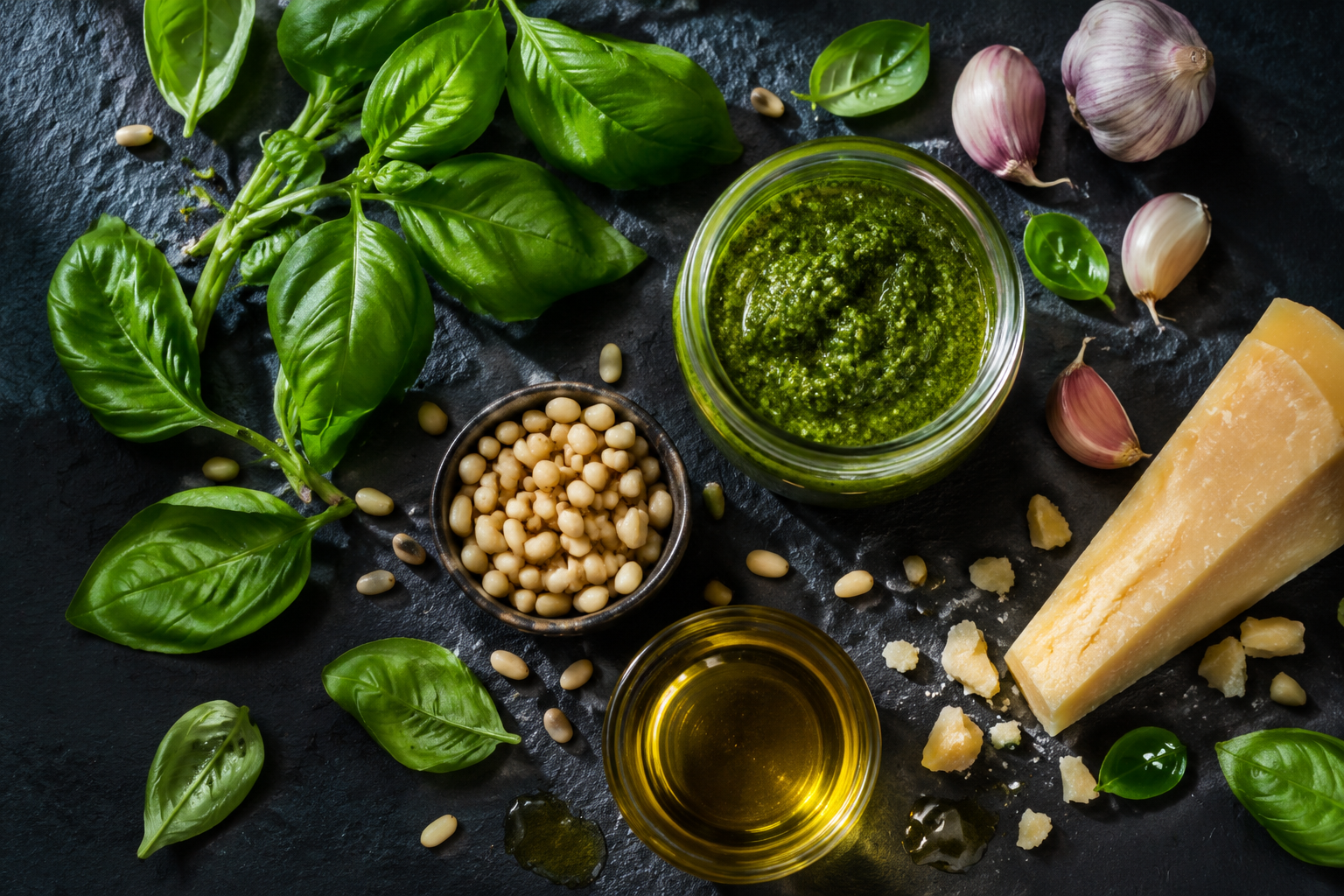
Popular culinary uses:
- Classic pesto: Blend fresh basil, pine nuts, garlic, parmesan, and olive oil.
- Caprese salad: Layer fresh basil with sliced tomatoes and mozzarella.
- Pizza and pasta sauces: Add torn fresh leaves just before serving.
- Thai and Vietnamese dishes: Thai basil holds up better to heat than sweet basil.
- Infused oils and vinegars: Steep fresh basil in warm olive oil for 1 to 2 hours.
- Cocktails and lemonades: Muddle fresh leaves for herbal drinks.
Basil vs. Other Herbs Like Oregano and Parsley
Basil, oregano, and parsley are all popular culinary herbs but serve different flavor roles. Basil is sweet and aromatic, best used fresh. Oregano is more pungent and earthy, holding its flavor well when dried. Parsley is mild and grassy, used primarily as a garnish or fresh finishing herb.
| Herb | Flavor | Best Form | Key Cuisine |
|---|---|---|---|
| Basil | Sweet, clove-like | Fresh | Italian, Thai |
| Oregano | Earthy, pungent | Dried or fresh | Mediterranean |
| Parsley | Mild, grassy | Fresh | European, Middle Eastern |
Choose basil when a dish needs brightness and sweetness. Choose oregano for depth in tomato-based sauces. Choose parsley for clean, neutral freshness.
Is Basil Safe for Pets?
Basil is generally safe for humans in food amounts, but pet owners should exercise caution. According to pharmacological safety references, basil contains estragole, a compound that has shown potential toxicity in high doses in animal studies [8]. For cats and dogs, small incidental amounts are unlikely to cause harm, but large quantities may cause gastrointestinal upset.
- Cats: Basil is not listed as severely toxic by most veterinary authorities, but large amounts may cause vomiting or diarrhea.
- Dogs: Similar to cats, small amounts are generally tolerated, but it is not recommended as a regular dietary addition.
When in doubt, keep basil plants out of reach of pets and consult a veterinarian if a pet consumes a large quantity.
How Much Does Fresh Basil Cost?
In 2026, a standard bunch of fresh basil at most U.S. grocery stores costs between $2 and $4. Organic basil typically runs $3 to $5 per bunch. Potted live basil plants, which yield far more over time, are available at many stores for $3 to $6 and represent better value for regular users.
Growing basil at home from seed costs less than $5 for a seed packet that can yield dozens of plants across a season, making it one of the most cost-effective herbs to grow yourself [7].
FAQ: All About Basil
Q: How often should I water basil? Water basil when the top inch of soil feels dry, usually every 2 to 3 days outdoors and every 3 to 4 days indoors. Overwatering is more damaging than underwatering.
Q: Can basil grow in shade? Basil can survive in partial shade but will produce fewer leaves with less flavor. It needs at least 6 hours of direct sunlight for optimal growth.
Q: Why does basil turn black in the fridge? Cold temperatures damage basil’s cell membranes, causing oxidation and blackening. Store it at room temperature in a glass of water instead.
Q: What is the difference between sweet basil and Genovese basil? Genovese basil is a cultivar of sweet basil with larger, flatter, more tender leaves and a stronger aroma. Both work well in Italian cooking, but Genovese is the traditional choice for pesto.
Q: How do I prevent basil from bolting? Pinch off any flower buds as soon as they appear. Once basil flowers, it redirects energy from leaf production to seed production, reducing yield and flavor.
Q: Can I grow basil from a grocery store bunch? Yes. Place cut stems in a glass of water in a sunny spot. Roots typically develop within 1 to 2 weeks, at which point you can pot the cuttings in soil.
Q: Is dried basil as good as fresh? Dried basil has a more concentrated but less complex flavor. Use it in cooked dishes like sauces and soups. For fresh applications like salads and pesto, fresh basil is significantly better.
Q: How long does a basil plant live? Basil is an annual herb and typically lives one growing season, about 4 to 6 months. With consistent harvesting and flower removal, a well-maintained plant can last the full season.
Q: Can basil be used as a medicinal herb? Basil has a long history in traditional medicine for digestive complaints and respiratory issues. However, clinical evidence in humans is limited, and it should not replace prescribed treatments [9].
Q: What pests affect basil? Common pests include aphids, spider mites, and Japanese beetles. Inspect leaves regularly and treat with neem oil or insecticidal soap at the first sign of infestation.
Conclusion
All about basil comes down to a few fundamentals: the right variety for your purpose, consistent sun and warmth, careful watering, and timely harvesting. Whether growing a pot on a kitchen windowsill or a full outdoor bed, the payoff is a steady supply of one of the most versatile and flavorful herbs available.
Actionable next steps:
- Start with sweet or Genovese basil if you are new to growing herbs indoors.
- Plant outdoors after the last frost, or start seeds indoors 6 weeks before the last frost date.
- Harvest every 1 to 2 weeks by pinching above leaf nodes to keep plants productive.
- Make a batch of pesto and freeze it in ice cube trays to preserve the summer harvest.
- If buying fresh, consider a potted plant over a cut bunch for better long-term value.
With the right care, basil rewards growers with abundant harvests, genuine flavor, and a surprisingly satisfying growing experience.
References
[2] All About Basil – https://usbasilconsortium.rutgers.edu/all-about-basil/
[4] Basil History And Culture – https://sites.rutgers.edu/us-basil-consortium/all-about-basil/basil-history-and-culture/
[7] Everything About Basil – https://seedsnsuch.com/blogs/gardeners-greenroom/everything-about-basil
[8] Basil – https://www.healthline.com/nutrition/basil
[9] Benefits Of Basil – https://health.clevelandclinic.org/benefits-of-basil
