

Last updated: June 14, 2026
Quick Answer: A medium apple with its skin contains approximately 4.37 grams of fiber, which covers about 16% of the recommended daily intake of 28 grams. Apples provide both soluble and insoluble fiber, making them one of the most well-rounded fruit choices for digestive health, blood sugar control, and heart health. [1]
Key Takeaways
- A medium apple (about 182 grams) with skin delivers roughly 4.37 grams of fiber per serving [1]
- Removing the skin cuts fiber content nearly in half, down to about 2.1 grams [2]
- Apples contain pectin, a soluble fiber that feeds beneficial gut bacteria and helps lower cholesterol [4]
- Both green and red apples offer similar fiber content; variety matters less than keeping the skin on
- One to two apples per day is a practical target for most healthy adults seeking fiber benefits
- Apple fiber supports digestion, blood sugar stability, weight management, and heart health [4]
- Cooking apples reduces their fiber content slightly but does not eliminate it entirely
- Organic and conventional apples have comparable fiber levels; growing method does not significantly change fiber content
How Many Grams of Fiber Are in a Medium Apple?
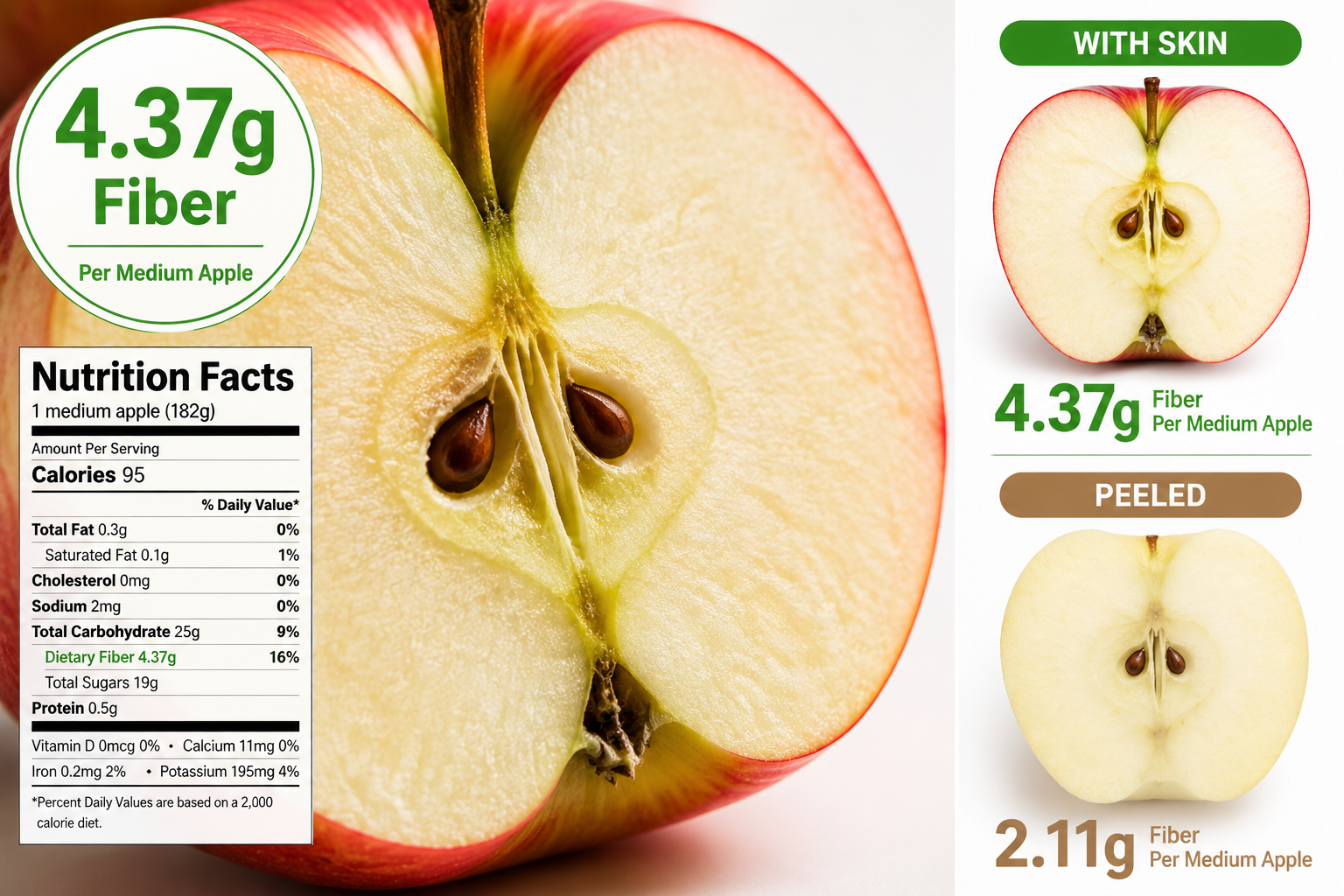
A medium apple with the skin on contains approximately 4.37 grams of dietary fiber. That single piece of fruit accounts for about 16% of the 28-gram daily fiber recommendation set by the FDA. [1]
This makes apples one of the more fiber-dense whole fruits available. To put it in perspective:
| Apple Size | Weight (approx.) | Fiber (with skin) |
|---|---|---|
| Small | 149 g | ~3.6 g |
| Medium | 182 g | ~4.37 g |
| Large | 223 g | ~5.4 g |
The key variable is whether the skin is left on. A medium apple without the skin drops to roughly 2.1 grams of fiber, because the peel holds a significant portion of the fruit’s insoluble fiber. [2]
Does Apple Skin Have More Fiber Than the Inside?
Yes, the skin is where most of the insoluble fiber lives. Removing it reduces total fiber by more than half in some cases, dropping from 4.37 grams to about 2.1 grams for a medium apple. [2]
The flesh still contains soluble fiber, particularly pectin, but the skin adds the bulk of the roughage that supports bowel regularity. For maximum fiber benefit, always eat apples with the skin on and wash them thoroughly first.
Common mistake: Many people peel apples before eating or cooking them, assuming the skin is just texture. In doing so, they discard the most fiber-rich part of the fruit.
Which Type of Apple Has the Most Fiber?
Most common apple varieties, including Gala, Fuji, Honeycrisp, Granny Smith, and Red Delicious, contain comparable amounts of fiber per gram of fruit. The differences between varieties are minor and unlikely to affect health outcomes meaningfully.
That said, larger apples naturally provide more total fiber simply because of their size. If maximizing fiber intake is the goal, choosing a large apple of any variety with the skin on is more effective than switching between varieties.
Are green or red apples better for fiber intake? Green apples (like Granny Smith) and red apples (like Fuji or Gala) have nearly identical fiber profiles. Green apples tend to be slightly lower in sugar and higher in certain antioxidants, but neither color category has a clear fiber advantage. The skin-on rule applies equally to both.
What Are the Two Types of Fiber in Apples?
Apples contain both soluble and insoluble fiber, and each type serves a different function in the body. [1]
Soluble fiber dissolves in water to form a gel-like substance. In apples, the primary soluble fiber is pectin. Pectin slows digestion, which helps moderate blood sugar spikes after meals and can reduce LDL (bad) cholesterol levels over time.
Insoluble fiber does not dissolve in water. It adds bulk to stool and speeds up transit through the digestive tract, reducing constipation and supporting regular bowel movements. Most of the insoluble fiber in apples sits in the skin.
Together, these two fiber types make apples a particularly balanced source of dietary fiber compared to many other fruits that lean heavily toward one type.
Can Eating Apples Help with Digestion?
Apples support digestion in two distinct ways. The insoluble fiber in the skin promotes regular bowel movements by adding bulk and reducing transit time. The soluble fiber, pectin, acts as a prebiotic, feeding beneficial bacteria in the gut and supporting a healthy microbiome. [4]
Pectin is fermented by gut bacteria in the large intestine, producing short-chain fatty acids that nourish the intestinal lining. This process is associated with reduced gut inflammation and a lower risk of digestive disorders over time.
For people dealing with occasional constipation, adding one or two apples daily (with skin) alongside adequate water intake is a practical, food-first approach before reaching for supplements.
How Does Apple Fiber Compare to Other Fruits?
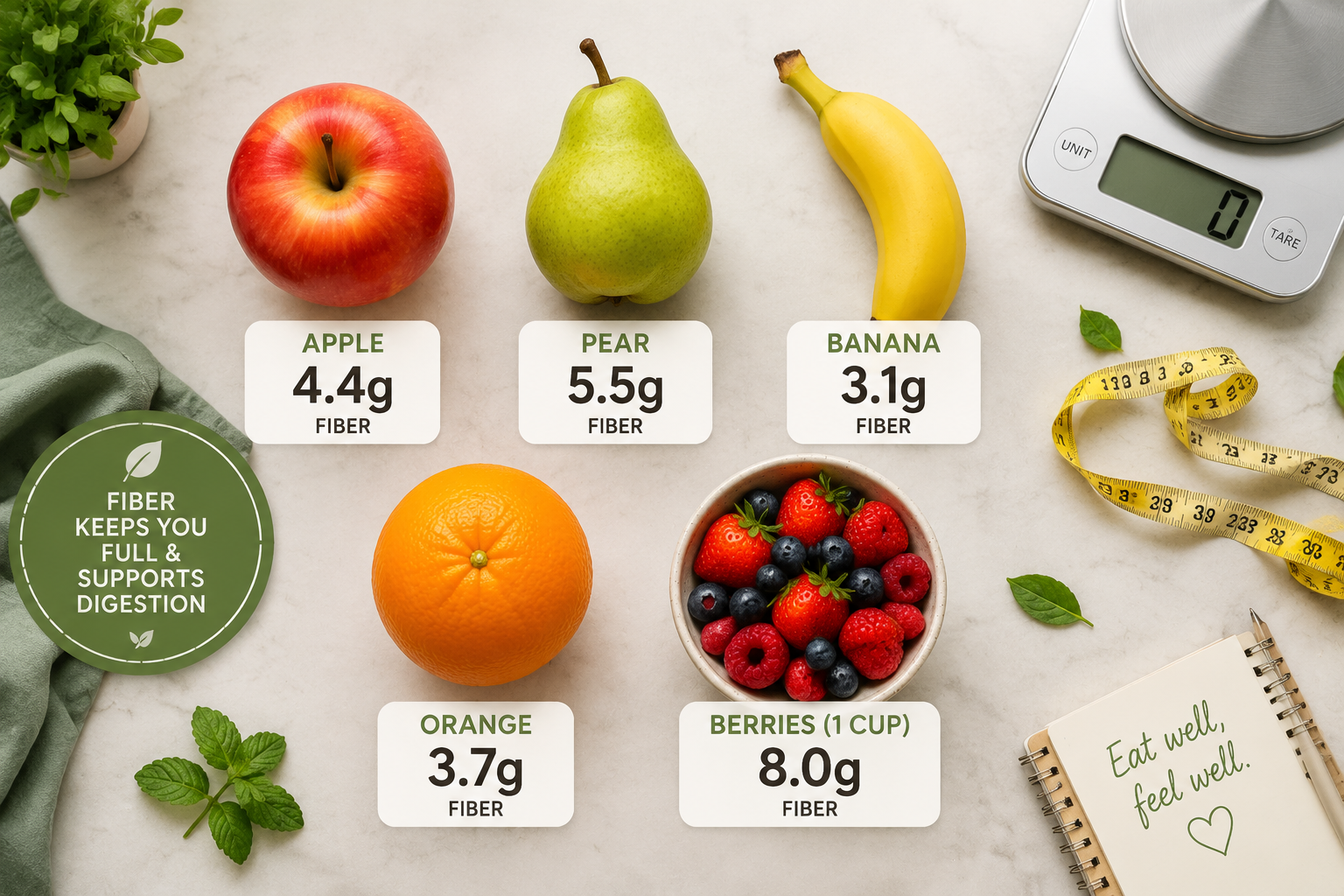
Apples rank well among common fruits for fiber content. Here is a straightforward comparison per medium serving:
| Fruit | Serving Size | Fiber Content |
|---|---|---|
| Apple (with skin) | 1 medium (182 g) | ~4.37 g |
| Pear (with skin) | 1 medium (178 g) | ~5.5 g |
| Banana | 1 medium (118 g) | ~3.1 g |
| Orange | 1 medium (131 g) | ~3.1 g |
| Strawberries | 1 cup (152 g) | ~3.0 g |
Pears edge out apples slightly, but apples are more widely available, portable, and shelf-stable, making them a practical everyday fiber source. Unlike many high-fiber fruits, apples also contain about 85% water, which supports hydration alongside fiber intake. [5]
What Are the Health Benefits of Apple Fiber?
Apple fiber contributes to several well-documented health outcomes. [4]
- Heart health: Soluble fiber (pectin) binds to cholesterol in the digestive tract and helps remove it before absorption, which can lower LDL cholesterol levels. Apples also contain quercetin, an antioxidant linked to reduced blood pressure.
- Blood sugar control: Fiber slows the absorption of sugar into the bloodstream, preventing sharp post-meal glucose spikes. This makes apples a suitable fruit for people managing type 2 diabetes or insulin resistance. [3]
- Gut microbiome support: Pectin feeds beneficial gut bacteria, promoting a diverse and resilient microbiome. [4]
- Cancer risk reduction: Some research suggests that the fiber and antioxidants in apples may be associated with a lower risk of colorectal and breast cancers, though this area of research is ongoing. [4]
- Nutrient density: Beyond fiber, apples provide vitamin C and potassium, both of which support immune function and cardiovascular health. [1]
Can Apple Fiber Help with Weight Loss?
Fiber-rich foods like apples support weight management primarily by increasing satiety. The combination of fiber and high water content (around 85%) means apples take longer to eat, slow gastric emptying, and help people feel full on fewer calories. [4][5]
A medium apple contains roughly 95 calories. As a snack, it delivers meaningful fiber and volume without a high caloric load, which can reduce overall calorie intake when substituted for processed snacks.
Choose apples if: you are looking for a portable, low-calorie snack that genuinely reduces hunger between meals. They are not a weight-loss solution on their own, but they fit well into a calorie-conscious diet.
Do Organic Apples Have More Fiber Than Regular Apples?
No, organic apples do not contain meaningfully more fiber than conventionally grown apples. Fiber content is determined by the fruit’s genetics and size, not by whether synthetic pesticides were used during cultivation.
The primary reason to choose organic apples, if desired, is to reduce pesticide residue exposure, particularly on the skin. Since eating the skin is important for maximizing fiber intake, people who are concerned about pesticide exposure may prefer organic. Either way, washing the apple thoroughly before eating is recommended regardless of growing method.
How Many Apples Should You Eat Daily for Good Fiber Intake?
One to two medium apples per day is a practical and sustainable target for most healthy adults. Two medium apples with skin provide roughly 8.7 grams of fiber, which covers about 31% of the daily recommended intake when paired with other fiber-rich foods throughout the day.
Eating more than two to three apples daily is generally unnecessary and could crowd out other nutrient-dense foods. Fiber needs are best met through a varied diet rather than relying on a single food source.
Edge case: People with irritable bowel syndrome (IBS) may find that the fructose and fermentable fibers in apples trigger symptoms. In that case, smaller portions or peeled apples may be better tolerated.
Are There Any Side Effects of Eating Too Many Apples?
For most people, apples are very well tolerated. However, eating large quantities can cause digestive discomfort, including bloating, gas, and loose stools, because of their fiber and natural sugar (fructose) content.
People with fructose malabsorption or IBS following a low-FODMAP diet may need to limit apple intake, as apples are classified as a high-FODMAP food. Peeling the apple and eating smaller portions can sometimes reduce symptoms.
Additionally, apple seeds contain amygdalin, which can release small amounts of cyanide when chewed. Accidentally swallowing a few seeds is not dangerous, but intentionally consuming large numbers of seeds is not advisable.
Do Cooked Apples Have the Same Fiber Content as Raw Apples?
Cooked apples retain most of their fiber, but the process changes its structure. Heat breaks down some of the insoluble fiber and softens the pectin, making it easier to digest. The total fiber gram count decreases slightly during cooking due to water loss and structural breakdown.
For example, a cup of unsweetened applesauce contains roughly 2.7 grams of fiber, compared to 4.37 grams in a whole medium apple. Baked apple slices fall somewhere in between depending on cooking time and temperature.
Bottom line: Raw apples with skin provide the most fiber per serving. Cooked apples are still a good fiber source and may be easier to digest for people with sensitive stomachs, but they should not be the primary form if fiber maximization is the goal.
Frequently Asked Questions
How much fiber is in an apple without the skin? A medium apple without skin contains approximately 2.1 grams of fiber, compared to 4.37 grams with the skin on. [2]
Is apple fiber good for cholesterol? Yes. The pectin in apples is a soluble fiber that binds to cholesterol in the digestive tract and helps reduce LDL cholesterol levels. [4]
Can diabetics eat apples? Yes. The fiber in apples slows sugar absorption and helps prevent blood glucose spikes, making apples a suitable fruit for most people managing diabetes when eaten in reasonable portions. [3]
Does apple juice contain fiber? Most commercial apple juices contain little to no fiber because the pulp and skin are removed during processing. Whole apples or unfiltered apple cider with pulp are far better fiber sources.
Which has more fiber, an apple or a banana? A medium apple with skin (4.37 g) contains more fiber than a medium banana (approximately 3.1 g).
Is it better to eat apples in the morning or at night for fiber benefits? Timing does not significantly affect how fiber works in the body. Eating apples when they fit naturally into meals or as a snack is more important than timing.
Can children eat apples for fiber? Yes. Apples are an excellent fiber source for children. Portions should be age-appropriate, and the skin should be washed thoroughly.
Does freezing apples reduce their fiber content? Freezing does not significantly reduce fiber content. However, thawed apples have a softer texture, similar to lightly cooked apples.
Conclusion
Apples earn their reputation as a nutritional staple, and fiber is a central reason why. A medium apple with skin delivers 4.37 grams of fiber, covering about 16% of the daily recommended intake in a single, portable snack. [1] The combination of soluble pectin and insoluble fiber supports digestion, heart health, blood sugar stability, and gut microbiome diversity, all from one whole food.
To get the most from apples:
- Always eat the skin, as it holds the majority of insoluble fiber
- Aim for one to two medium apples per day as part of a varied, fiber-rich diet
- Choose whole apples over juice, which strips away most of the fiber
- Pair apples with protein or healthy fat to further slow sugar absorption and extend satiety
For anyone looking to increase daily fiber intake without overhauling their diet, adding an apple with skin to a daily routine is one of the simplest and most effective first steps available in 2026.
References
[1] Apples – https://www.healthline.com/nutrition/foods/apples?utm_source=openai
[2] Apples Raw Without Skin – https://www.fibergoal.com/foods/apples-raw-without-skin?utm_source=openai
[3] Apples And Diabetes – https://www.healthline.com/nutrition/apples-and-diabetes?utm_source=openai
[4] 10 Health Benefits Of Apples – https://www.healthline.com/nutrition/10-health-benefits-of-apples?utm_source=openai
[5] Pick Apples For A Bushel Of Health Benefits – https://www.mayoclinichealthsystem.org/hometown-health/speaking-of-health/pick-apples-for-a-bushel-of-health-benefits?utm_source=openai
